The Uncomfortable Embrace of AI
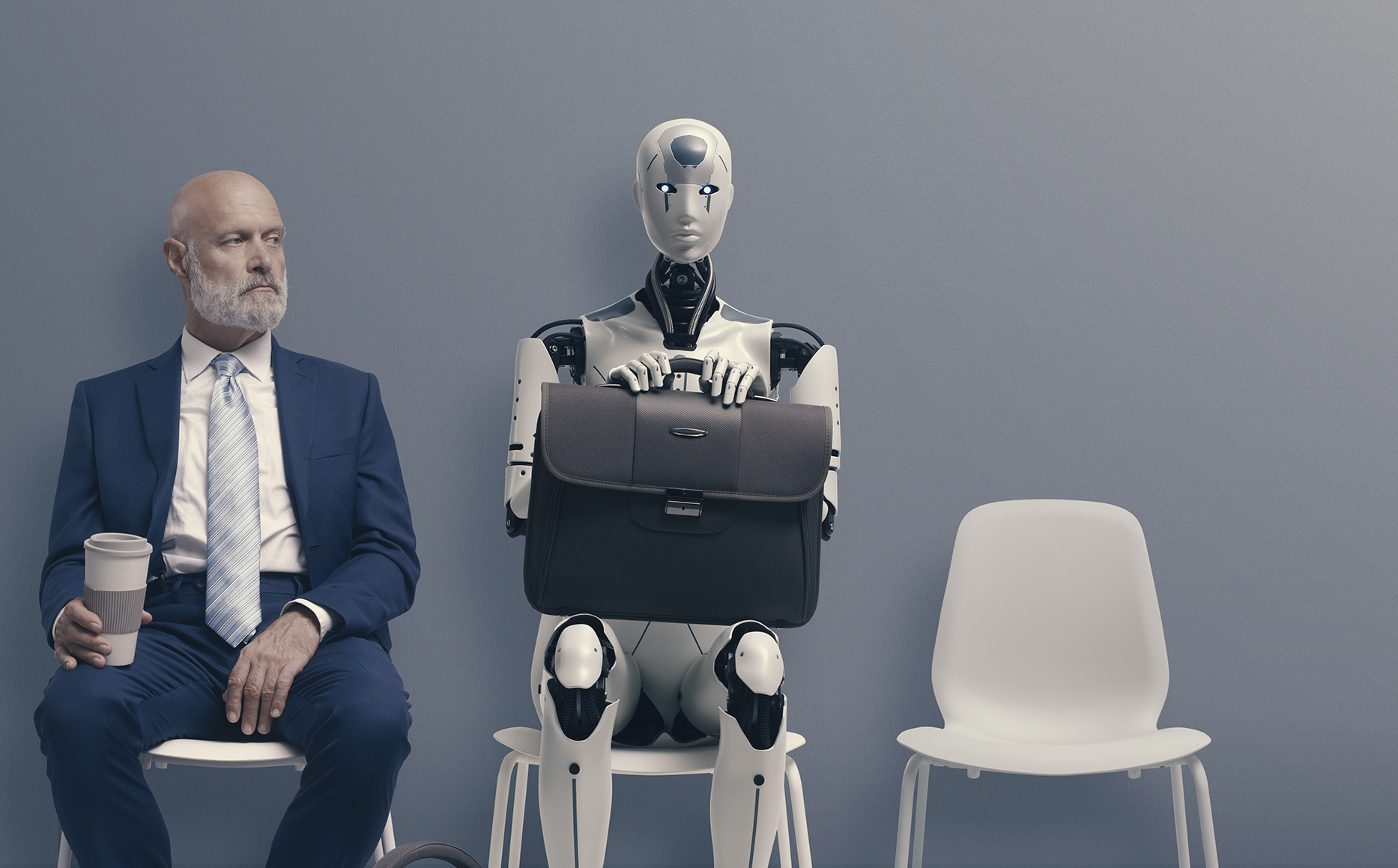
…there is nothing AI about this.
Anderson Cooper, CNN, on the Artemis Landing and return to Earth
…these things need to learn to adapt, Murph, like the rest of us
Interstellar
Does anyone know the name George Platzer?
It’s understandable if you haven’t heard of him, even though we live in an age where it feels like we know everything, everywhere, all at once. Engineer George Platzer introduced the concept of blind-spot management in a 1995 paper. He later obtained a patent for a mirror-based design, which was commercially launched in the 2003 Volvo XC90 SUV to reduce lane-change accidents.
I first experienced Platzer’s innovation when I bought a used 2016 Mazda 3. I admit I’m a late adopter, but I can’t deny how much this technology has improved driving safety. Now, features like rear-view cameras, radar-based self-driving, and self-parking are ubiquitous. Still, no matter how accustomed I become to these tools, I always find myself turning my head to check for a child on a bike or to ensure the lane is clear, acknowledging the warning chimes but trusting my instincts even more. In some ways, I’m slow to adopt new technology. You might call me a Luddite or a technophobe—I feel uneasy about driverless cars and robots, whether they are humanoids, cobots, or AMRs.
In a world that encourages swiping and skimming, I prefer the analog way of life. I like the experience of flipping through actual books and am not bothered by the inconvenience of carrying them rather than using a Kindle. I favour sticky notes over digital whiteboards, handwriting over typing, and meeting clients in person rather than meeting over Zoom.
I appreciate spontaneous moments and am against giving up my thought processes and sense of consciousness to algorithms or automation, even though this might mean losing some productivity.
I also have concerns—something that the MIT Media Lab study points out—that over-reliance on AI could result in “cognitive atrophy”. Most significantly of all, I am worried about my skilled colleagues in the fields of design, technology and programming, since the danger of humans becoming obsolete looms large over so many professions and ways of earning a living.
I openly admit that I embody the caution, “Serendipity fades with everything we hand over to algorithms,” from author, technology policy analyst, and educator Alec Ross. The hidden influence of algorithms on our choices feels increasingly obvious and widespread, and I find myself resisting the urge to give in completely for the sake of convenience. Still, I’m amazed by how quickly some people embrace AI, evident in the fandom surrounding OpenClaw and its legion of “lobsters” applying for a heartbeat system transplant that acts on its own initiative – YIKES!
Nevertheless, I do see the benefits. I’m hopeful that AI will help diagnose endometriosis more quickly, that CRISPR will enhance our understanding of biology, and that we may find a cure for dementia as I age. I also believe future technologies fueling transhumanism could benefit my longevity, cognition, and well-being. You see the dilemma—
It’s an uncomfortable embrace, a productive tension, both a benefit and a risk, a cautionary tale wrapped in a wish.
I doubt I’m the only one who feels conflicted. Watching the Artemis splashdown was amazing—a real tribute to science, technology, and human creativity. But what really caught my attention was Anderson Cooper on CNN, proudly saying, “There is nothing AI about this,” as he described the excitement of the manually performed ‘open hatch’ moment. That sounded like resistance of a kind to me.
The discourse about progress over ethics with AI is playing in real time. From the classroom, the neighbourhood intrusion of data centre farms to job obsolescence. I’ve always thought the strength of ethics lies in thorough, careful reflection, since speed has always been at odds with well-considered decisions.
Regarding the adoption of AI, it seems by no means careful since rapid progress is resulting in malintegration. This phenomenon, which I call the “Great Haste,” is now causing concern and leading to surprising omissions (or expressions of regret) from founders, innovators, and influencers. Geoffrey Hinton, whom many consider to be the father of AI, has expressed his fear of the ‘existential threat posed by a superintelligent machine’. In his 2008 lecture A Cautious Prometheus, Bruno Latour cautions against hubris and stresses the importance of humility and self-awareness concerning the consequences. In the social encyclical Magnifica Humanitas, Pope Leo XIV broke with tradition and the normal separation between church and state by taking part in the AI debate; he used terms such as ‘disarmament’, as though AI were a weapon, and emphasized the need to protect ‘authentic human relationships from its effects’. More recently, Bill Gates, founder of Microsoft, in his six-thousand-word essay titled The Turbulent AI Era, stated that “AI will either be the greatest equalizer ever invented or the worst source of injustice”.
It really feels like we’re playing catch-up, inventing the rules in real time rather than preemptively.
It may be our fascination and ambivalence towards AI that reveals something about ourselves as a species, not merely unresolved questions concerning the universe.Both research and a common belief hold that modern science is not so much concerned with major breakthroughs as it is with building on existing knowledge. According to the author Tony Fry, “As technology expands the reach of the mind, comprehension of what it actually is and how it ontologically designs diminishes.”
Maybe AI has come at the most suitable time, but I think that experience demands effort and that we must not allow convenience to take its place. We ought to use and preserve our excellent mammalian reflexes and instincts, or we may end up losing the traits that helped our species survive as hunter-gatherers. If we weren’t concerned that we are failing to realize we are losing these instincts, the desire to preserve them wouldn’t be an issue.
Therefore, venture out into the world, make your own choices, avoid instant gratification, embrace discomfort, explore and cherish tactile experiences over virtual ones and appreciate the slow rewards of discovery that come only with the gradual passage of time.
“The essence of the independent mind lies not in what it thinks,
but in how it thinks.”
– Christopher Hitchens
META: As this article is being written, Meta has let go of 8,000 employees, representing 10% of its workforce, as part of a major restructuring to shift focus and resources heavily toward artificial intelligence.
International Monetary Fund (IMF): Estimated that nearly 300 million full-time jobs globally could be exposed to AI automation, emphasizing that two-thirds of jobs will experience task-level augmentation rather than outright elimination
Goldman Sachs Research: Projects that the impact on overall employment will be mild and short-lived, estimating a baseline direct job displacement of roughly 6% to 7%, with a temporary 0.1 to 0.5 percentage point rise in frictional unemployment during the transition
By Keith Francis, Senior Associate, Human Factors, Forge Media + Design
_____________________________________________________________
This article intends to spark discussion and debate. If it resonates with you, please share your thoughts on the three simple questions below.
- Are you conflicted about the current and future use of AI? If so, why?
- Do you feel the fears and apprehension in the article are misplaced?
- Do you think regulations or controls are necessary to limit AI interventions?
- How has AI impacted you—positively (in a life-changing way) or negatively (as a threat to your livelihood)?
As this article is being written Meta has released 8,000 of its employees from 10% of its work force as part of a major restructuring to shift focus and resources heavily toward artificial intelligence.
Thank you for reading, and even more for sharing your perspective.