Why Tactile Freehand Expression in a Digital Age Matters
“I dream of my painting and I paint my dream.” – Vincent van Gogh
Giotto di Bondone (c. 1267–1337) was an innovative painter and architect from Florence and is usually regarded as the founder of European painting as well as the first great master of the Italian Renaissance. The well-known and unforgettable account of ‘Giotto’s Circle’ has been recorded by many people; it is still worthwhile repeating it simply in order to draw attention to the fact that freehand expression (the act of writing or producing designs by hand without the use of mechanical tools, templates, or digital aids) in the creation of art is dying at the expense of assisted technology and artificial intelligence.
The book, “Lives of the Most Eminent Painters, Sculptors and Architects,” translated from Italian by Mrs. Jonathan Foster, offers a wonderfully illustrative account.
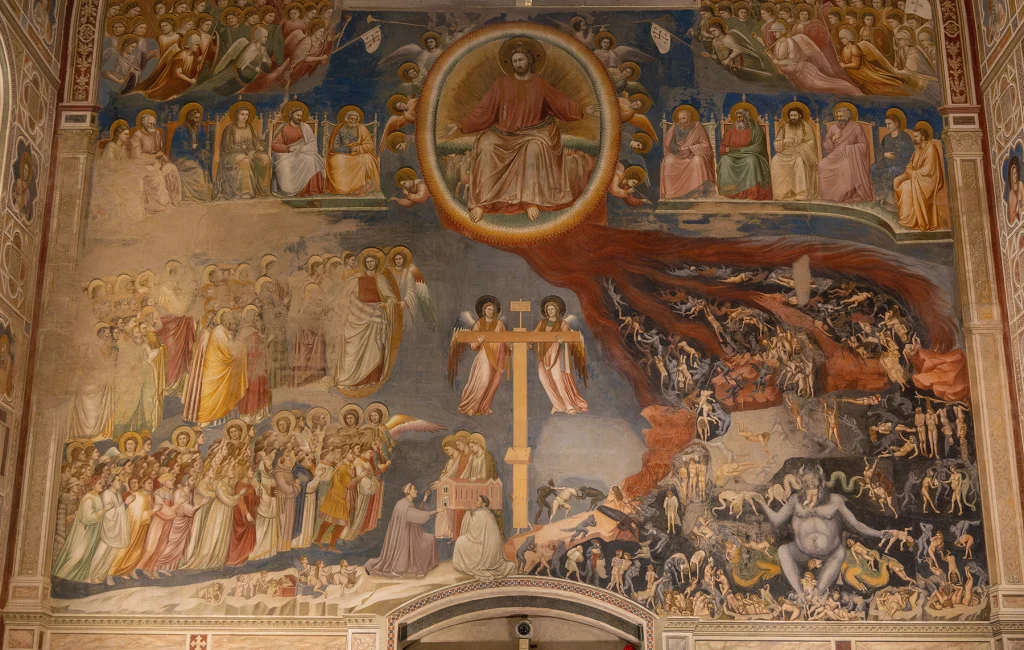
To paraphrase: Pope Benedict IX sent a courier from Treviso to Tuscany to learn about Giotto, as he wanted paintings for St. Peter’s Church. The courier first spoke with artists in Siena before visiting Giotto in Florence. He explained the Pope’s wishes and asked Giotto for a drawing. Giotto politely took a sheet of paper and a pencil dipped in red colour, and without moving his arm or using compasses, drew a perfect circle in one stroke. This moment highlighted Giotto’s superiority over other painters of his time. Proof enough to earn him an invitation to Rome to see the Pope.
“A painter should begin every canvas with a wash of black, because all things in nature are dark except where exposed by the light.” – Leonardo da Vinci
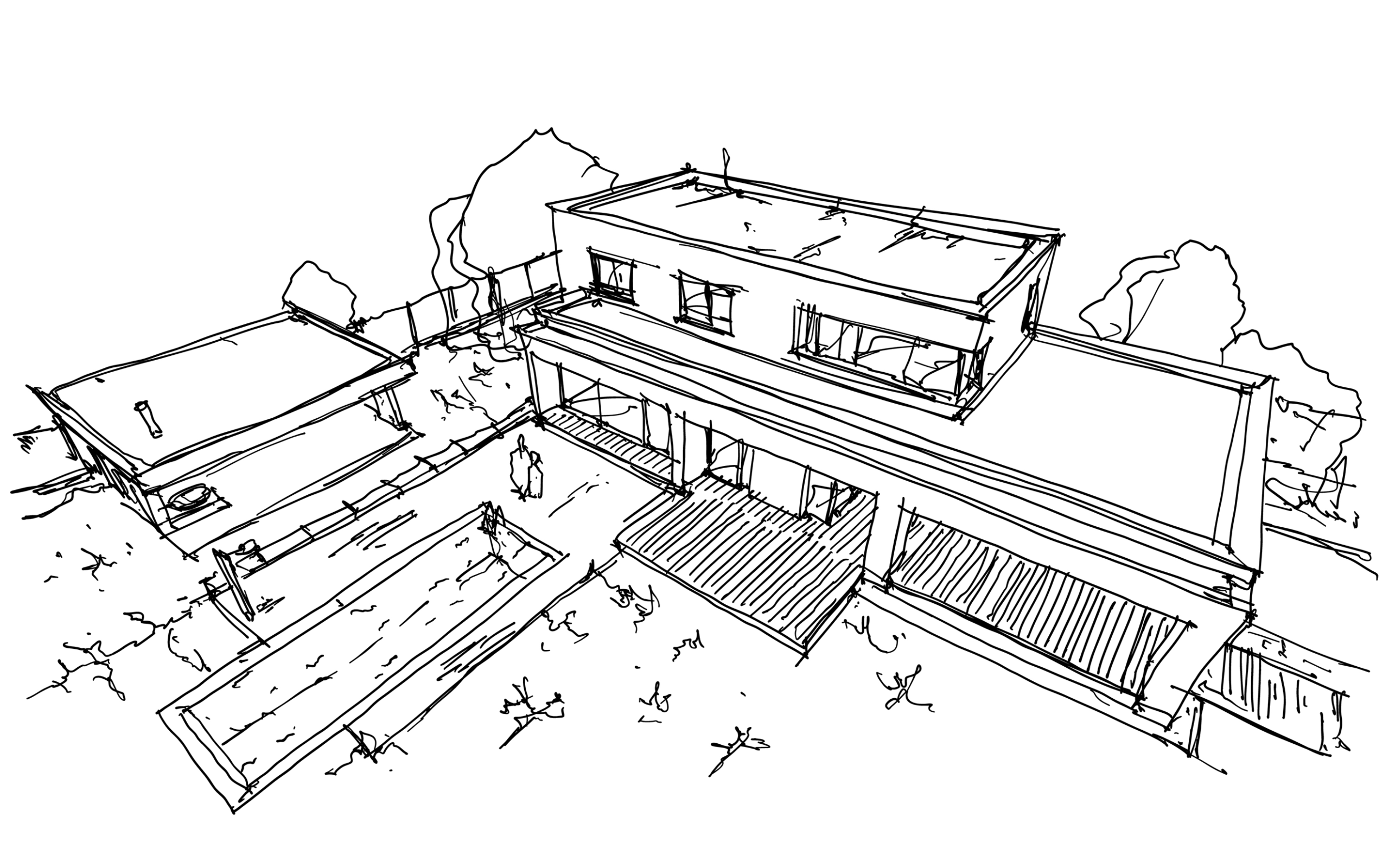
In February 2026, as Canada slumped into the winter doldrums, I was fortunate to be on assignment in Dubai, where the weather was in direct contrast. Stüssy Tschudin (Principal + Creative Director, Forge Media + Design) and I visited a prominent architectural firm in the Dubai Design District. As we sat in the boardroom, two resident architects—expats from Australia and Korea—joined us, British and Swiss Canadians. This diverse gathering exemplified Dubai’s global social environment, a city where over 200 nationalities live and work together. At one point, we began discussing a project’s design details. Like many, we naturally gravitated toward our laptops, checked dongle compatibility, and turned our chairs toward the sole monitor in the room. But before we could connect any devices, one of the architects gestured toward a pencil and paper, choosing to set the technology aside.
We gathered around the table and what happened next was truly memorable. He began to draw without saying a word, his hands moving across the paper with deft, economical, and purposeful strokes. He created a two-point perspective, starting with a horizon line, as his drafting pencil unfolded the vantage points through precise movements. I watched intently as his eyes guided each stroke, bringing the image to life. The room fell silent as we all focused on him illustrating a building set within a landscape. Though it was drawn in black-and-white pencil, it was perhaps the most colourful transformation I had ever witnessed.
After the long 14-hour flight back to Toronto, this memory remained vivid for many reasons. I kept reflecting on how this architect maintained a sense of craftsmanship in one of the most technologically advanced offices, filled with tools like CAD, Revit, BIM, and Illustrator. Yet he chose to rely on none of them to express himself. His confidence in his natural ability, along with his appreciation for the gradual reveal of his drawing, allowed freehand movement uninhibited by the constraints of a keyboard, screen, or time. His movements clearly stemmed from years of practice, and a hands-on practicum education rooted in craft rather than technology. The intimacy, immediacy and tactile simplicity of that moment outshone the technical utility of software and hardware.
The pencil and computer are, if left to their own devices, equally dumb and only as good as the person driving them.
— Sir Norman Foster
Both Giotto and this modern architect, separated by generations but connected by handcraft, understood the importance of gripping, grasping, welding, and drawing. In other words, appreciation for our unique prehensility (the quality of an appendage adapted for grasping or holding) and our opposable thumbs. These thumbs are anatomically opposed yet can draw a perfect circle or a building’s perspective. That might be why I’m comforted by Sir Norman Foster preferring hand-sketching over computers to conceptualize his buildings, or by Frank Gehry’s, Steven Holl’s or Tadao Ando sketches. There is something marvellously analog that makes you root for the freehand against the algorithm and revel in the realization that human expression of an idea is perfect in its imperfection.
Don’t get me wrong; I celebrate graphic design’s evolution and its pioneers. From John Whitney’s early computer-generated art, Ivan Sutherland’s Sketchpad, Frieder Nake and Georg Nees, Kenneth Knowlton and Leon Harmon, algorithmic patterns and pixel art and A. Michael’s “Gaussian-Quadratic” (1963). The impact of computer art and technology is undeniable. However, the human element should not be seen as an imposition on, or a deficiency in, what freehand can produce.
Giotto’s freehand circle demonstrates artistic mastery, showing that human ingenuity should never be underestimated, undervalued, or discounted in the face of technology, and that we should always be aware of the risk of de-instinctualization involved in that adoption.
Grazie mille Giotto di Bondone
매우 감사합니다
maeu gamsahabnida
_____________________________________________________________
By Keith Francis, Senior Associate, Human Factors, Forge Media + Design