Why Travel and In-Person Experiences Matter in Design
“One’s destination is never a place, but a new way of seeing things.” – Henry Miller
Design is inherently expressive, but it can become insular when offices, studios, and firms rely only on familiar experiences and desk research for inspiration. The working space often becomes a repository where we collect ideas, curate, and then project our experiences within the safety and comfort of our locality and centrality. I describe this as “folding in.” It can lead to sensory detachment from the broader world. As a result, our perceptions become overly influenced by our immediate surroundings, nomenclature and culture. These factors shape our sensibilities and preferences in expressing design ideas. Moreover, we can form contradictory beliefs that subconsciously privilege localized perspectives over others’ indigeneity, history, and cultural anthropology.
I often reflect on what I consider the Achilles’ heel of designers: an ocular-centric preoccupation, obsession and overreliance on the visual, focusing on seeing rather than feeling or experiencing. Juhani Pallasmaa’s book, ‘The Eyes of the Skin: Architecture and the Senses’, captures this idea well. He notes;
“But the world of the eye is causing us to live increasingly in a perpetual present, flattened by speed and simultaneity”.
I believe it is impossible to live outside the things you are designing for if your aim is to capture an authentic experience. Images may speak a thousand words, but journeyed memories last a lifetime and neurologically transform how we sense the world; we should seek the soul or spirit of a place, not just its image.
Don’t get me wrong, I completely understand and appreciate that travel is a pain. In Toronto, the 401 and Gardiner Expressway drives, not to mention the TTC to the office, can be soul-crushing and mentally exhausting, let alone a 14-hour flight to Dubai. Yet travel is still the most effective means of achieving immersion and education in terms of cultural and social understanding, comprising ‘acculturation’—which is the process of learning and adopting the customs, values, and language of a particular local culture; ‘enculturation’—the process of aligning oneself with the requirements and expectations of the surrounding culture; and ‘assimilation’—that being the absorption of local information and culture in order to feel a part.
“Life is an unfoldment, and the further we travel the more truth we can comprehend. To understand the things that are at our door is the best preparation for understanding those that lie beyond.” – Hypatia
The ‘unfoldment’ of personal beliefs, cultural norms, and perceptions, and the relinquishing of the comfort of your own situatedness, is the un-tethering needed to grow. If we are to embrace the beautiful and romantic notion from author Christopher Day that places have a soul, or embrace the notion of Christian Norberg-Schulz that “to dwell is to belong to a given place”, or according to Pallasmaa the skin is our most important receptor that informs our eyes then perhaps we must experience the world first hand or risk the loss of authenticity falling into ‘inauthentic everydayness’ never to truly understand the true meaning of ‘Genius Loci’ (Spirit and Sense of Place).
Travel should be inherent to the design experience, and for us, it’s been a collection of memorable, transformative moments. For brevity, we will share only three memorable moments.
Never underestimate the irresistible charm of Canadian Maple Syrup.
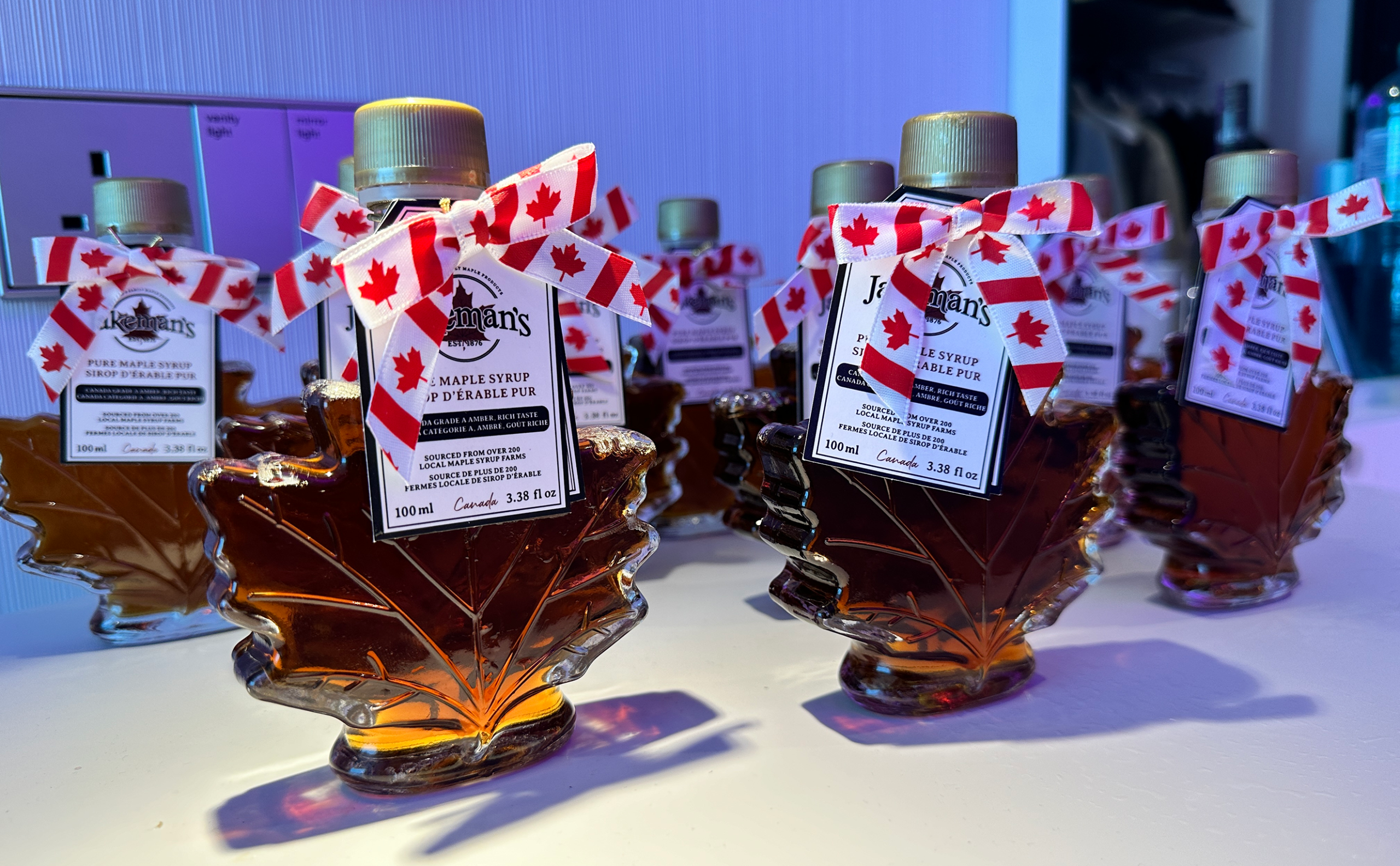
Stüssy Tschudin (Principal + Creative Director, Forge Media + Design) and I spent considerable time deliberating what gift would best represent Canada. We agreed that we would never enter an office empty-handed, and we carry ourselves as emissaries and ambassadors for the country we represent. Therefore, having a token of appreciation that embodied Canada’s cultural values was important to us. After some thought, we concluded that maple syrup was the ideal gift. Little did we know how coveted maple syrup is worldwide.
Before our meetings ended, we handed out small containers of maple syrup to all attendees and were taken aback by the warm responses. The smiles, enthusiasm, and moments of people clutching the small containers to their chests were heartwarming. Even a year later, people still spoke of the gift with fondness, along with the challenge of rationing portions to family and friends as long as possible.
As Canadians, we often take for granted what “Canadiana” means to others. Maple syrup, often called “amber gold,” has an enduring quality that evokes nostalgia and heritage. This connection may stem from the craft of making it and its deep Indigenous roots.
Maple syrup also helped us navigate a ‘sticky’ (couldn’t resist) situation at the airport. Security pulled Stüssy aside for screening, and I initially thought his distinctive yellow Pantone suitcase drew attention. It became serious when armed security personnel began questioning the suitcase’s contents. After he tried to explain it didn’t contain motor oil or anything toxic, I saw Stüssy gesture as if pouring and say the word “pancakes.” The security personnel immediately registered it, responded with huge smiles and laughter, and let him pass.
Flying with Falcons
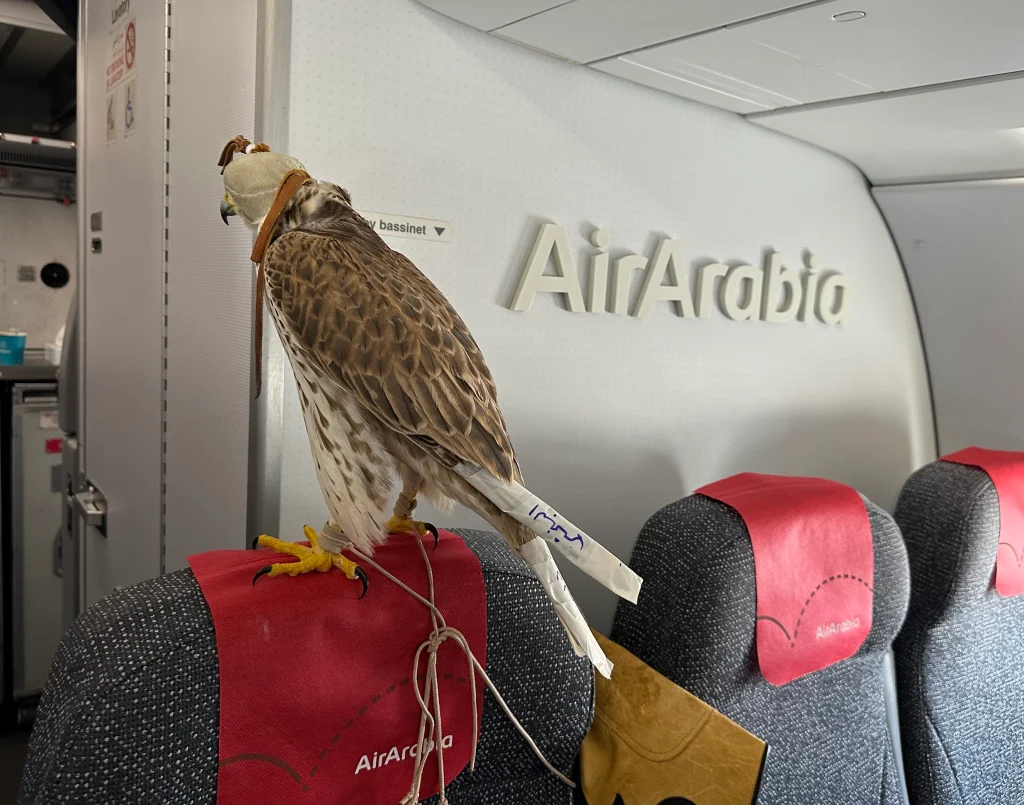
Falcons are already majestic creatures, mythical and highly prized, especially in the Middle East. So, you can imagine boarding a Saudi Air flight, walking down the aisle to your seat, only to find the row behind you occupied by three majestic falcons, neatly perched on a resting bar, complete with falconry hoods and plastic sanitary catch blankets suspended above the seat. The falcons were remarkably docile, but upon takeoff they sensed the gravitational lift of flight, and you can’t restrain a millennium of evolutionary instinct as they tried to flap their wings, settling once the plane reached altitude. Still, they were more behaved than some of the fellow unruly passengers we’ve read about of late.
Without a doubt, it’s one of the more surreal yet privileged sights that we have experienced.
The irreplaceability of being there.
We understood why being there matters. Simply showing up is a sign of respect and shows we are invested in partnership, not just a project, but a personal investment sealed with a warm handshake. This has led to new partnerships, trusted relationships, and a global reputation, all from a small office in Liberty Village, Toronto. It’s why we are often referred to as ‘the little engine that could’.
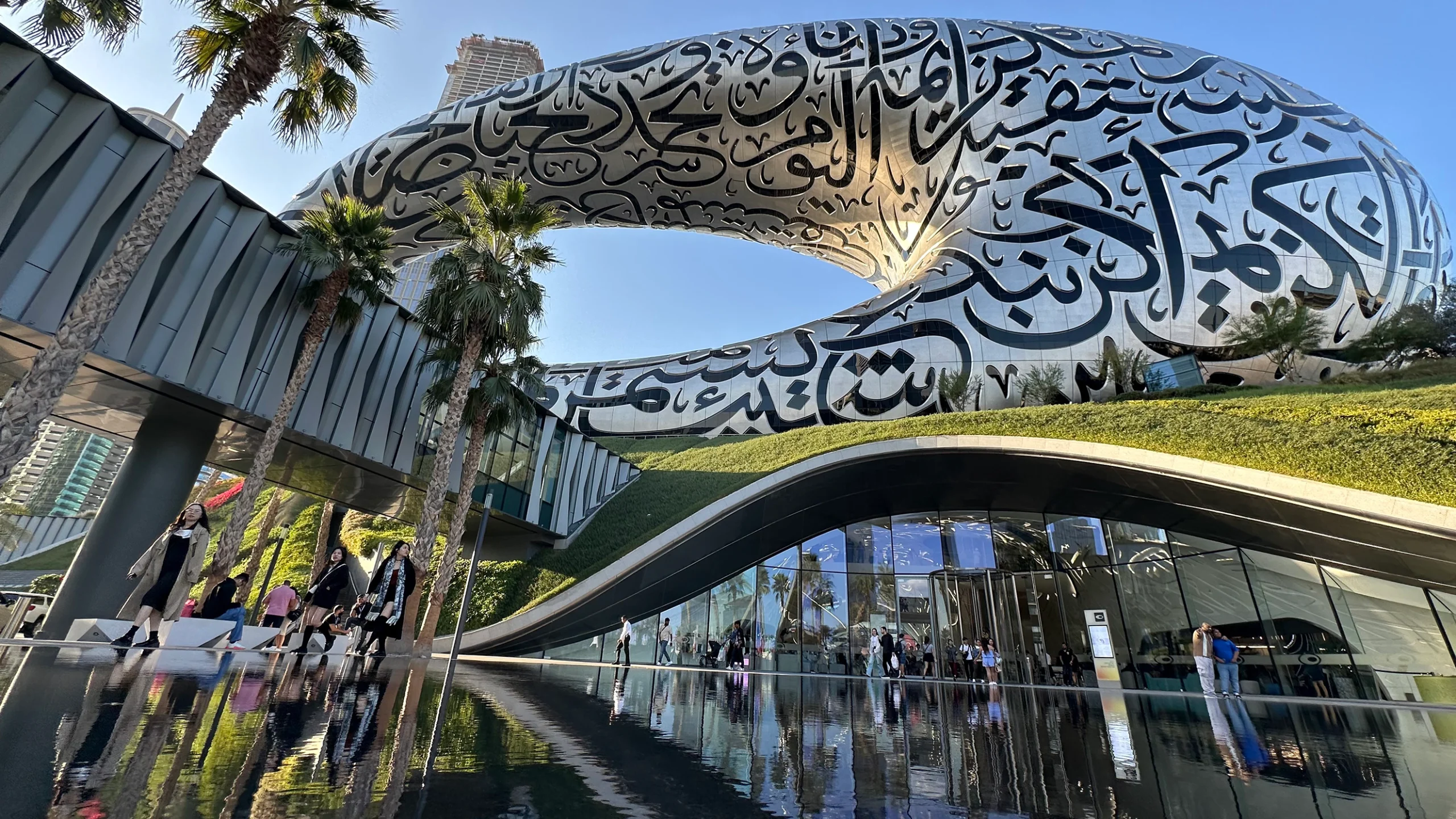
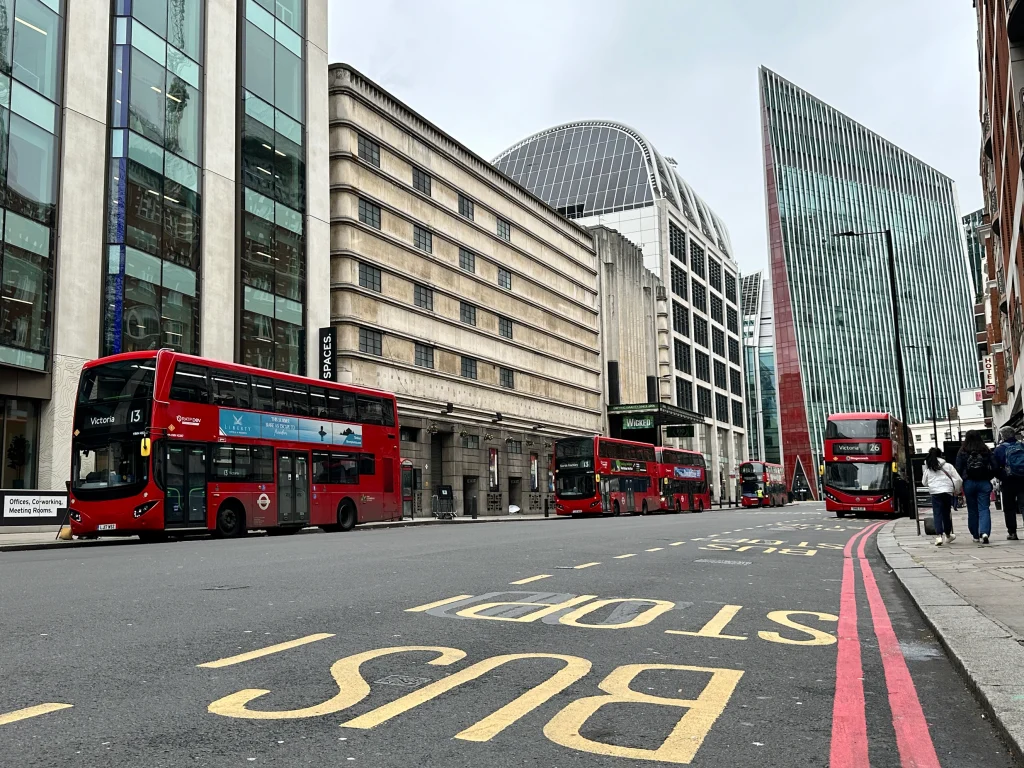
It feels surreal to watch a streetcar travel on tracks through the stress of Musharib, and to pinch yourself to make sure you’re not on King Street in Toronto. Watching the sunset paint the historic Najdi edifice at At-Turaif District, a UNESCO World Heritage Site. Marvelling at architecture in Abu Dhabi’s museum district. Walking over the bridge and canals in the port city of Sharjah. Revelling in the freedom of public expression in the streets of London, immersed in graffiti and street art on the walls of the Leake Street Tunnel. These indelible experiences shape the notion of place and, in turn, the brushstroke of design.
Our three-week itinerary in 2025 looked like this.
Toronto to London: 5,723 km (3,556 miles)
London to Jeddah: 4,749 km (2,951 miles)
Jeddah to Riyadh: 852 km (530 miles)
Riyadh to Dubai: 874 km (543 miles)
Dubai to Toronto: 11,103 km (6,899 miles)
_____________________________________________________________
By Keith Francis, Senior Associate, Human Factors, Forge Media + Design
Survey
We don’t share our thoughts or opinions just to get likes; we are a curious bunch, so we aim to spark discussion. We hope what we share is relevant and meaningful to you, and if so, we would be thrilled to hear your thoughts. This is how we connect and grow as a community.
- What is the most interesting place you have visited?
- What difference did it make to your point of view to have visited this place, its inhabitants, and its way of life compared to the research you had done from your desk?
- How have the place, the people, or the culture influenced the way you see the world or your design sensibility?