This website uses cookies.
Services Deliverables
  • Signage
  • Wayfinding
  • Brand Guide
  • Website
  • Stage Backdrop
  • Freestanding Banners
  • Keynote Presentations
  • Certificates
  • ID Badges
  • Vinyl Wall Decals
  • Photo Booth Props

Celebrating student creativity and the growing impact of Swift education

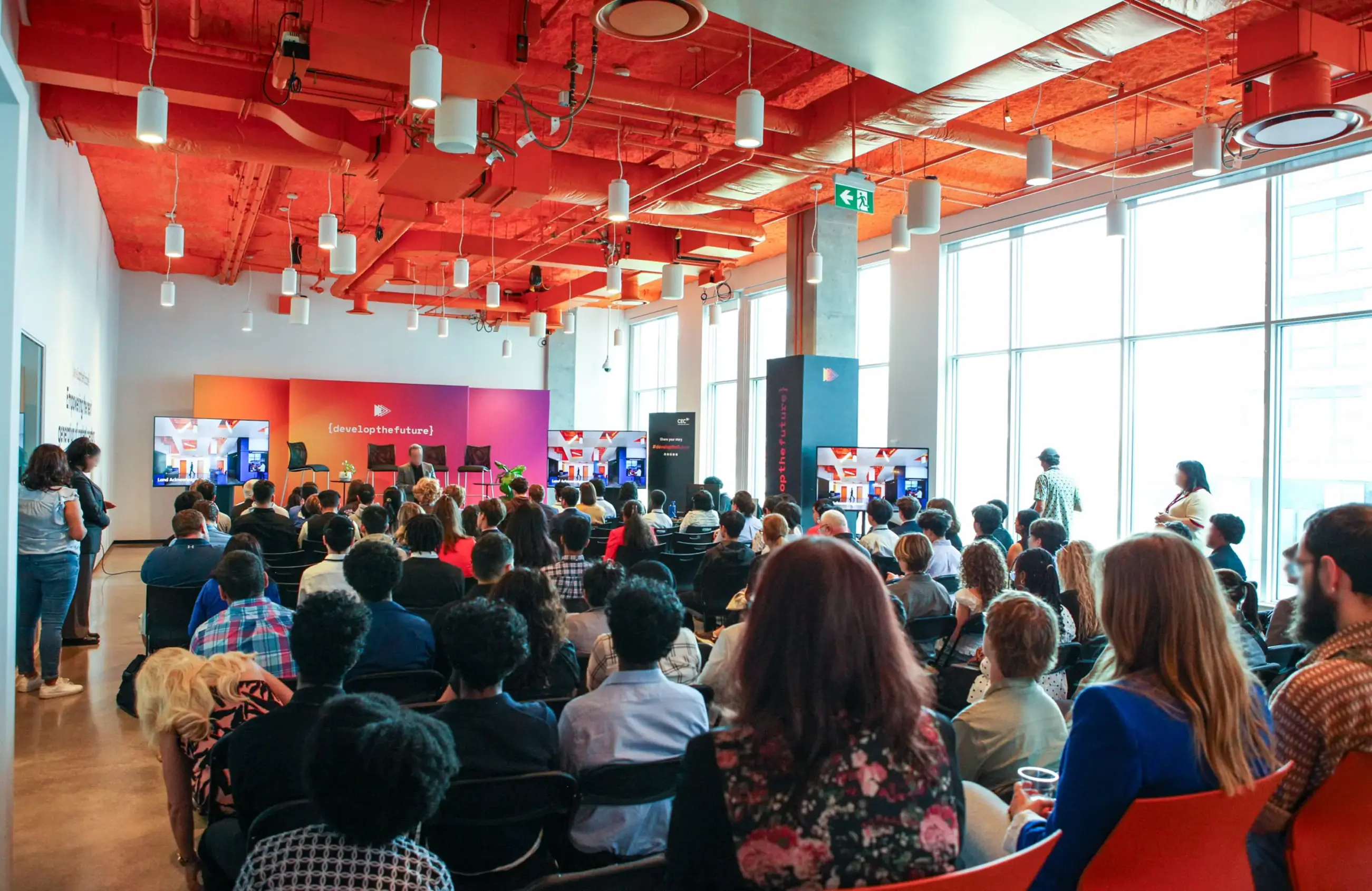
In 2025, nearly 1,000 students across Canada learned to code with Apple’s Swift curriculum through the Career Education Council (CEC), a registered charitable organization, culminating in a series of App Showcases in Vancouver, Toronto and Montreal. To build a visual identity for Develop the Future, we repurposed CEC’s signature chevrons, updating them with a vibrant gradient palette. By pairing these with a code-inspired monospace wordmark, the new brand honours its parent organization while reflecting the energy and coding ingenuity of the students. We translated this identity into an expansive suite of environmental and digital graphics, creating an immersive, high-energy atmosphere designed to celebrate the students’ hard work and achievements.
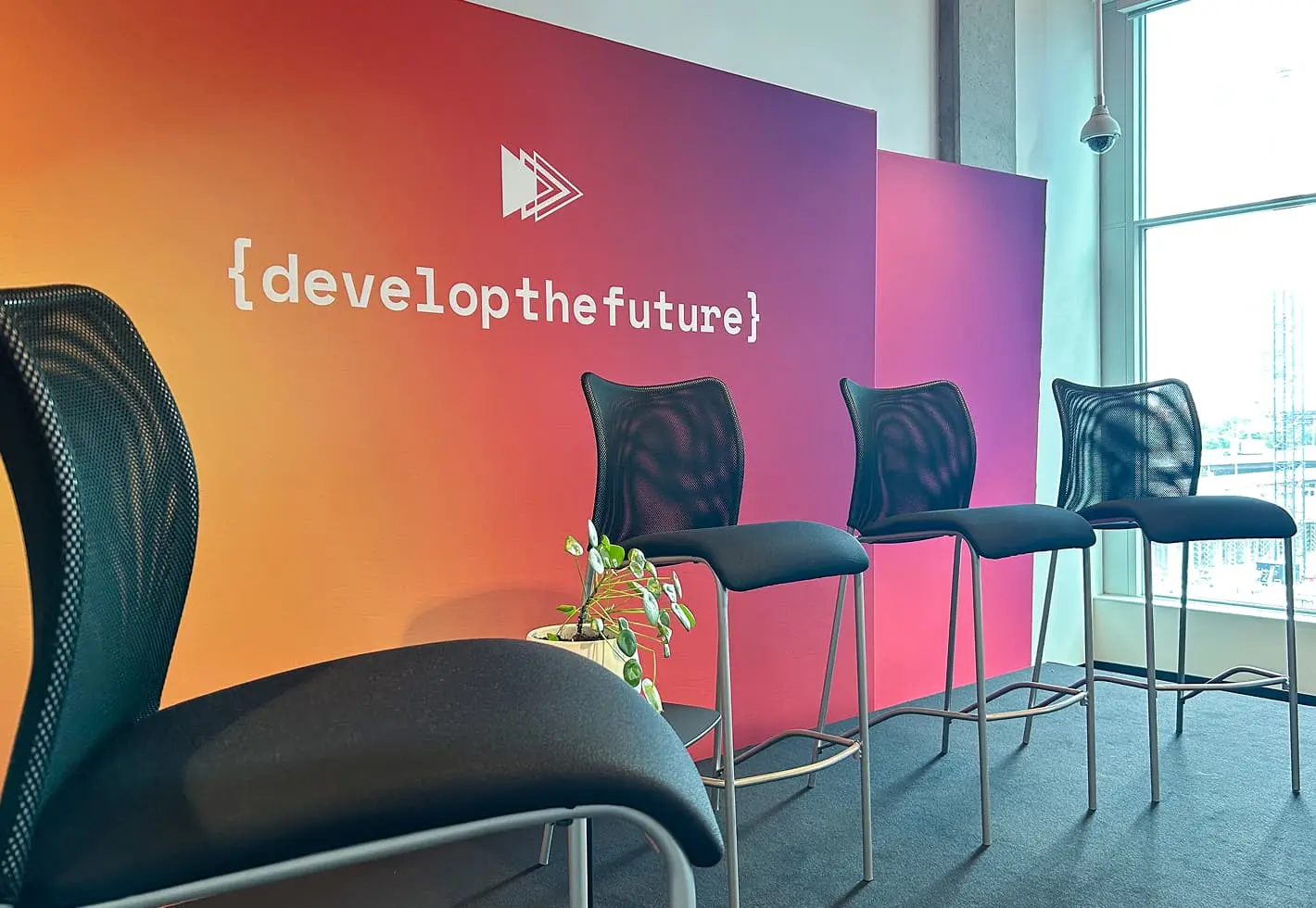
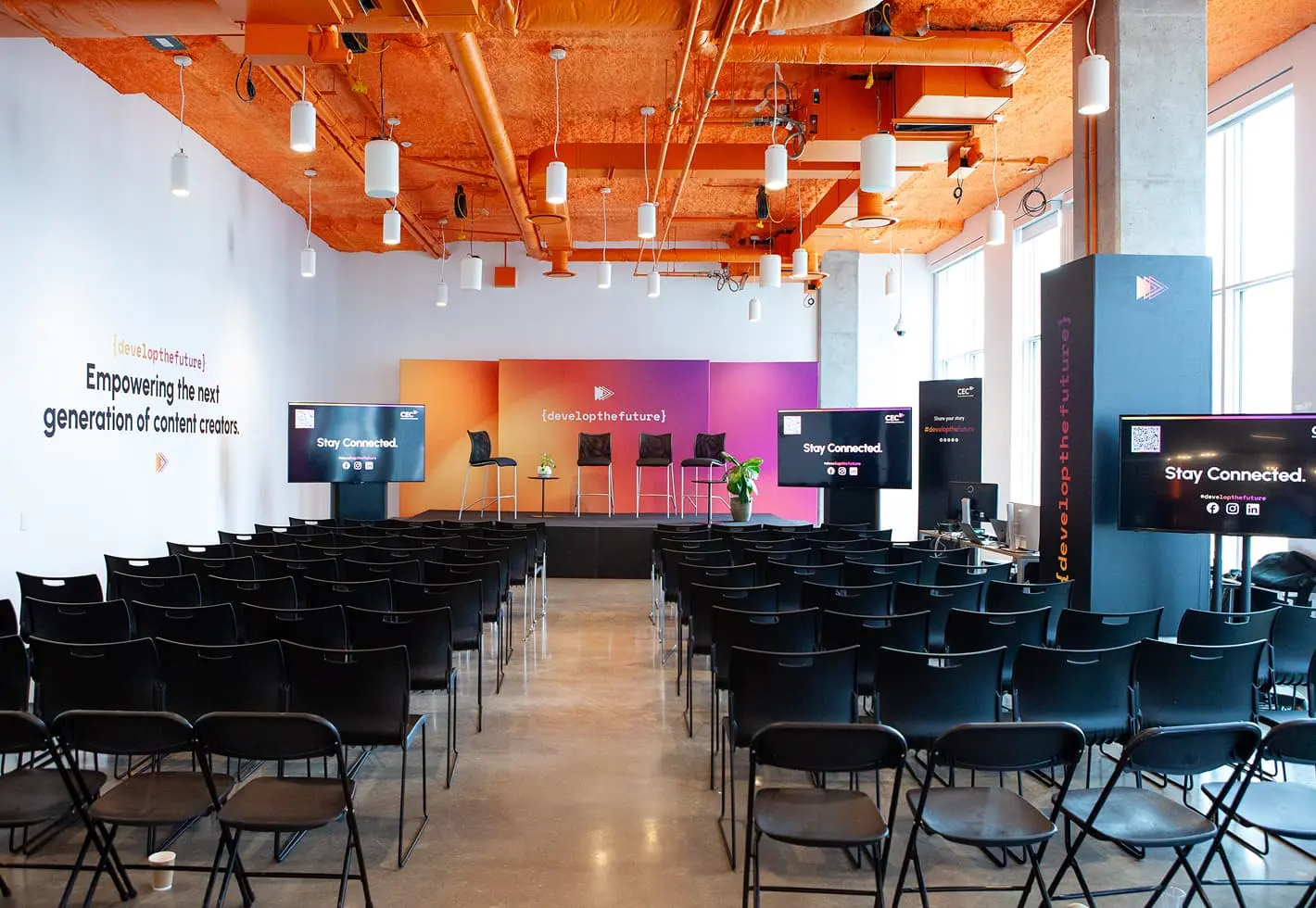
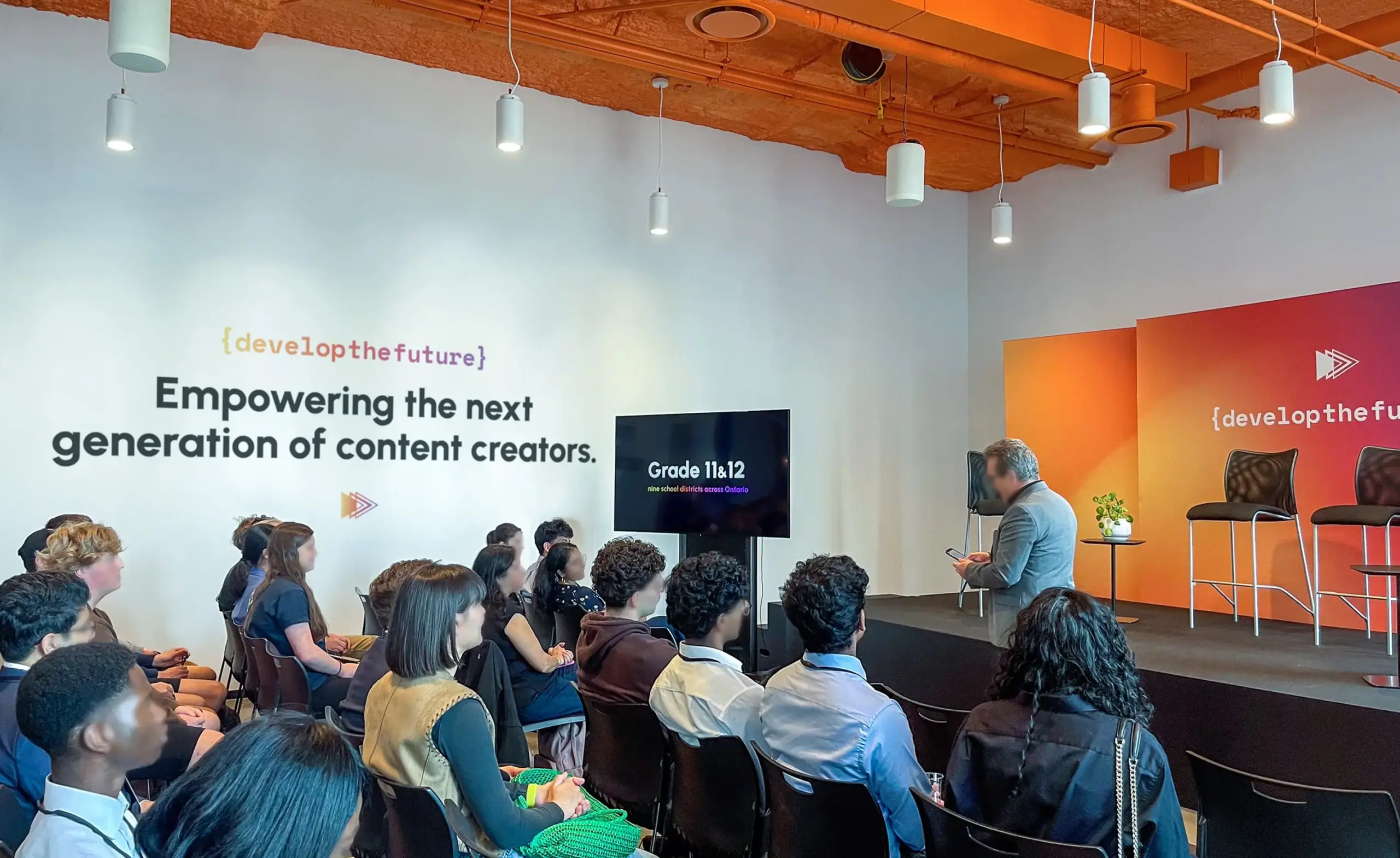
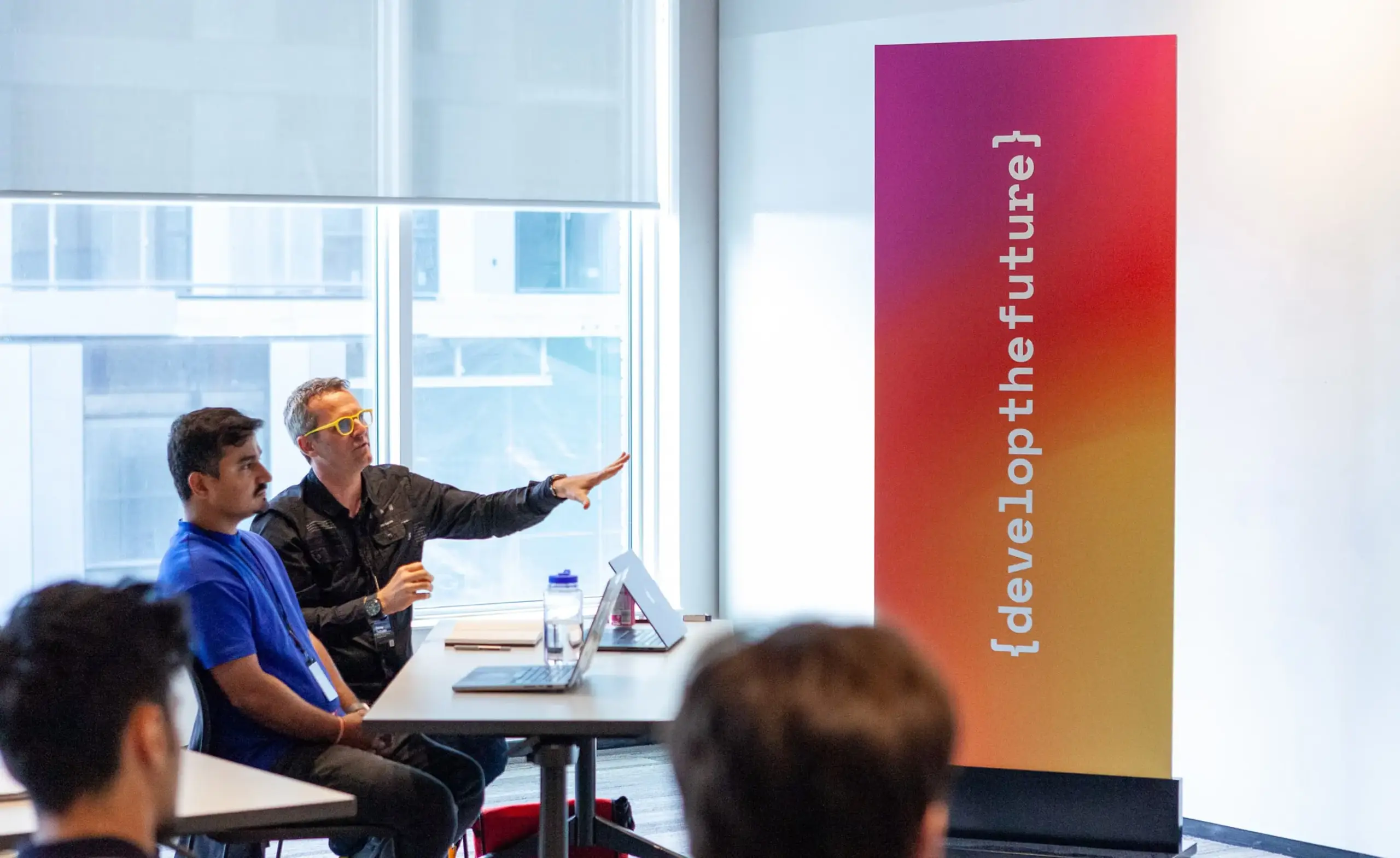
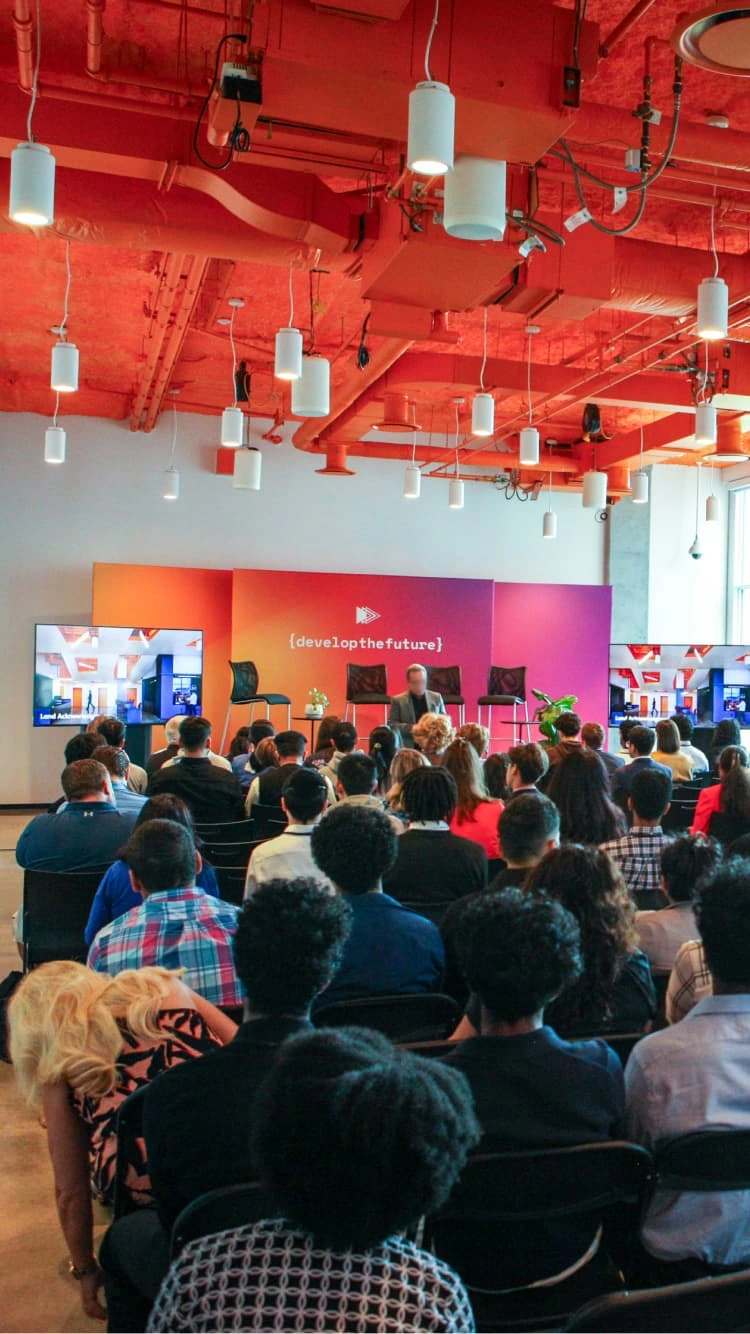
Branded environmental graphics and a main stage backdrop created an engaging event space (Toronto, ON)
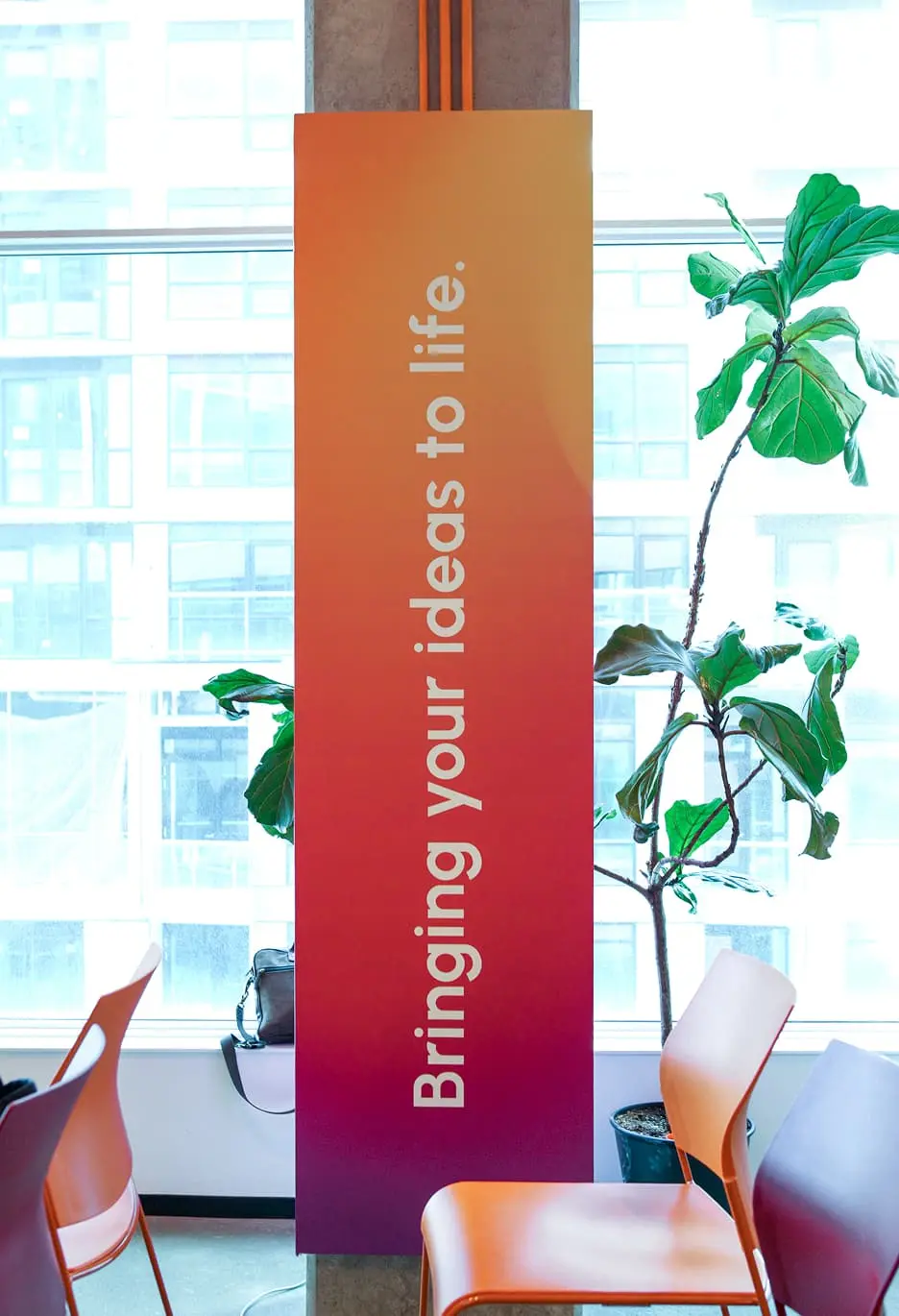
Inspirational and encouraging messages adorned the walls to engage students
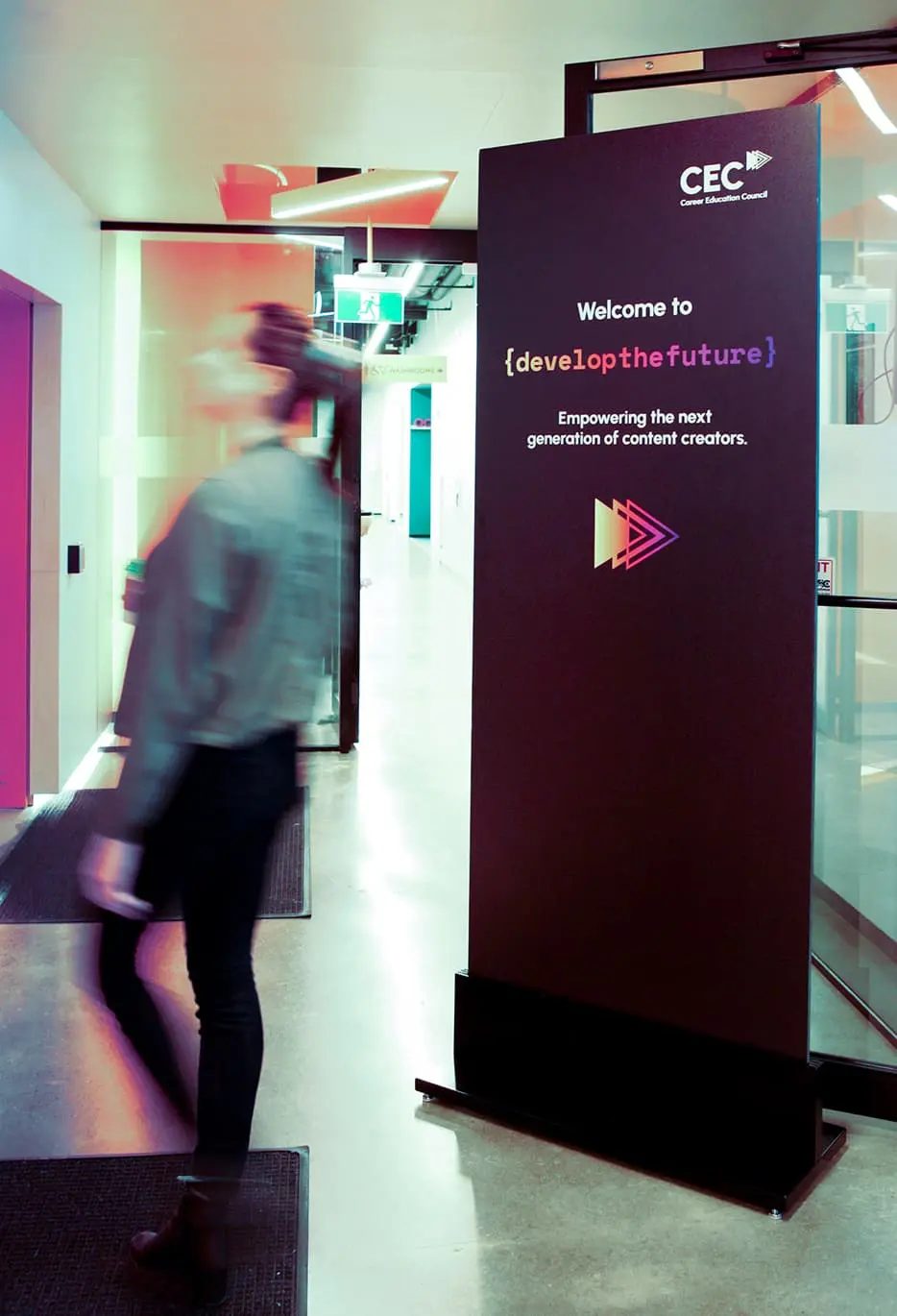
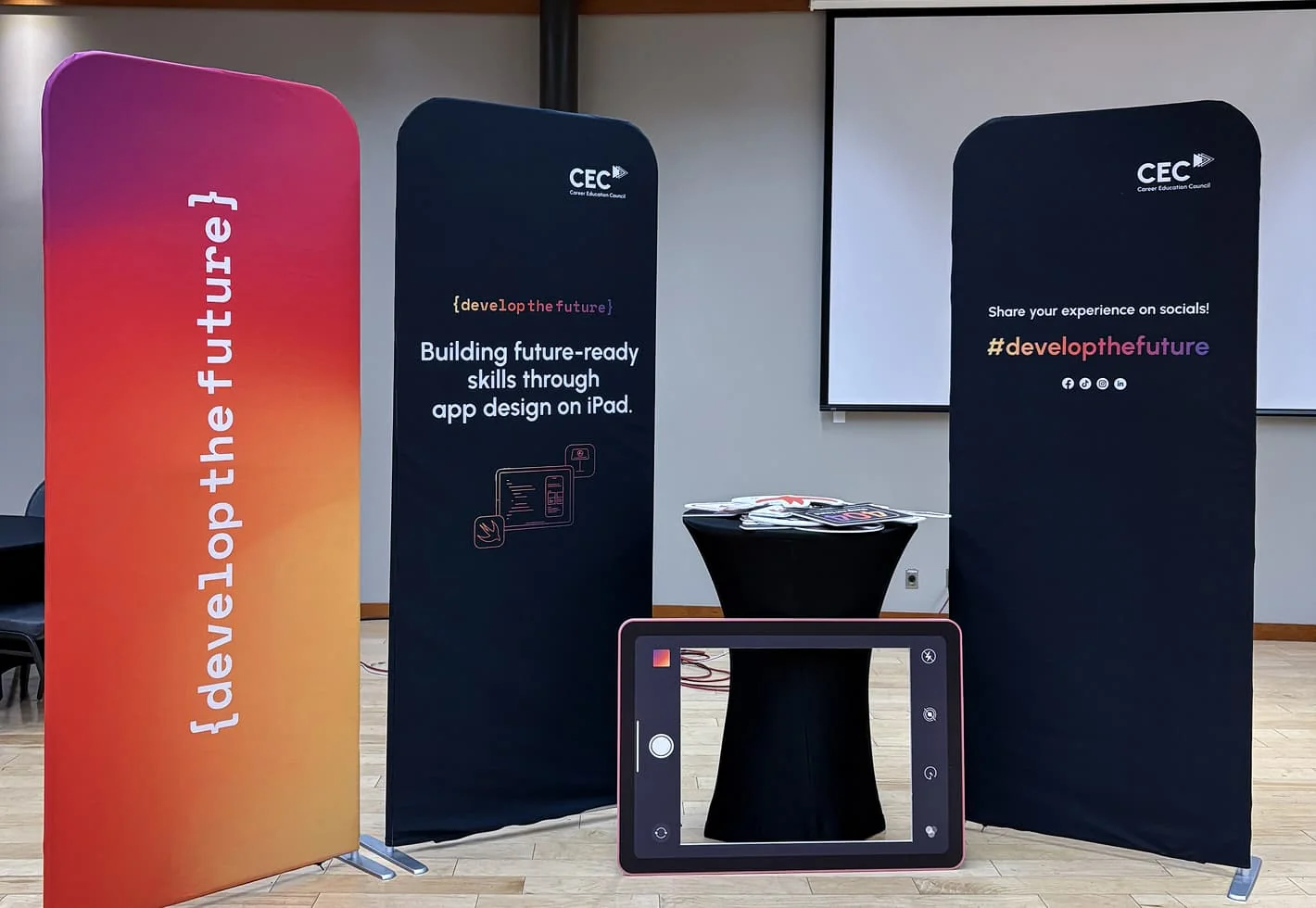
Forge designed a series of freestanding banners to welcome the students to the event and guide them throughout the space
Industry experts provided feedback on students’ presentations
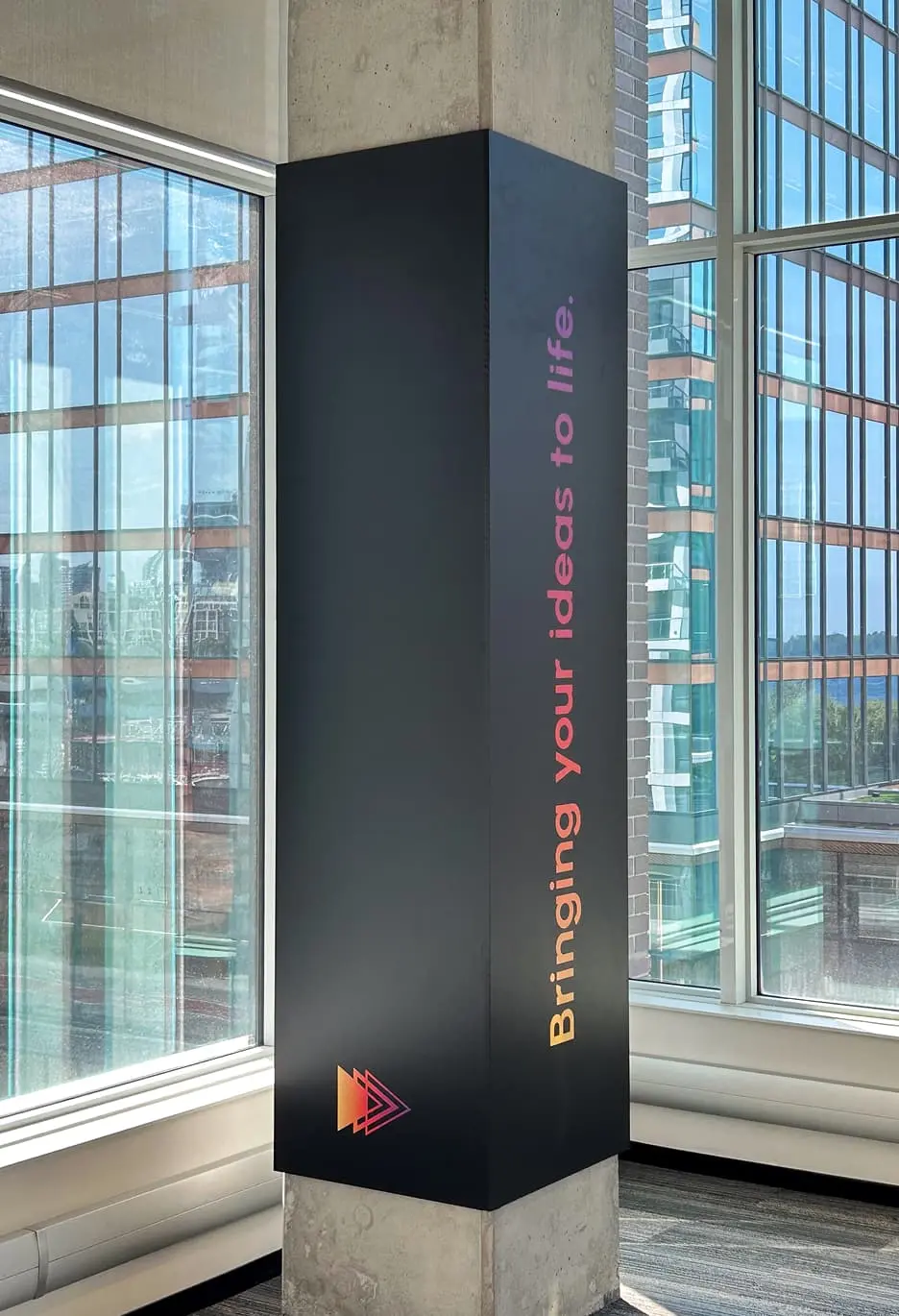
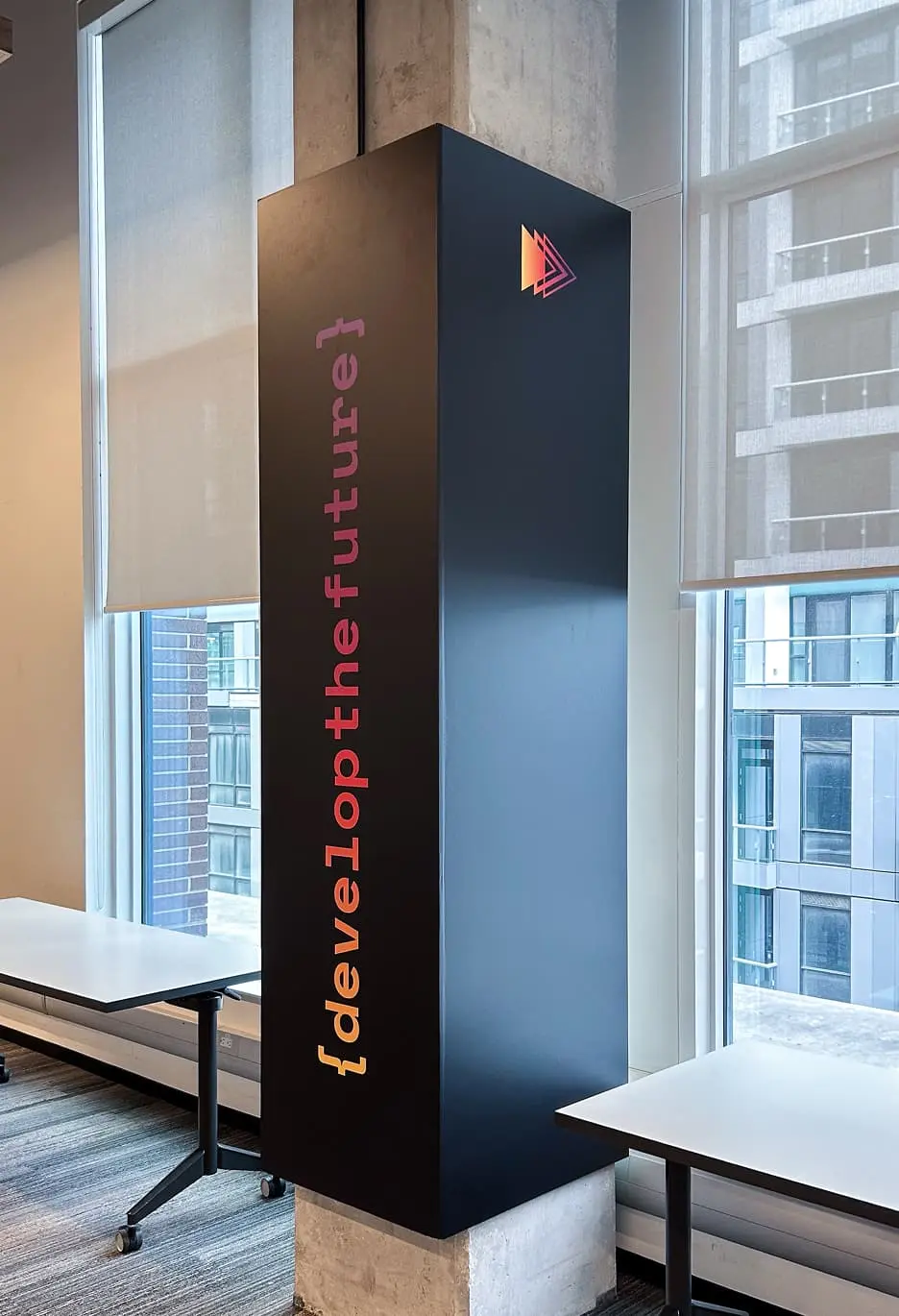
To enhance the event space, custom graphics were deployed across various touchpoints, including architectural column wraps
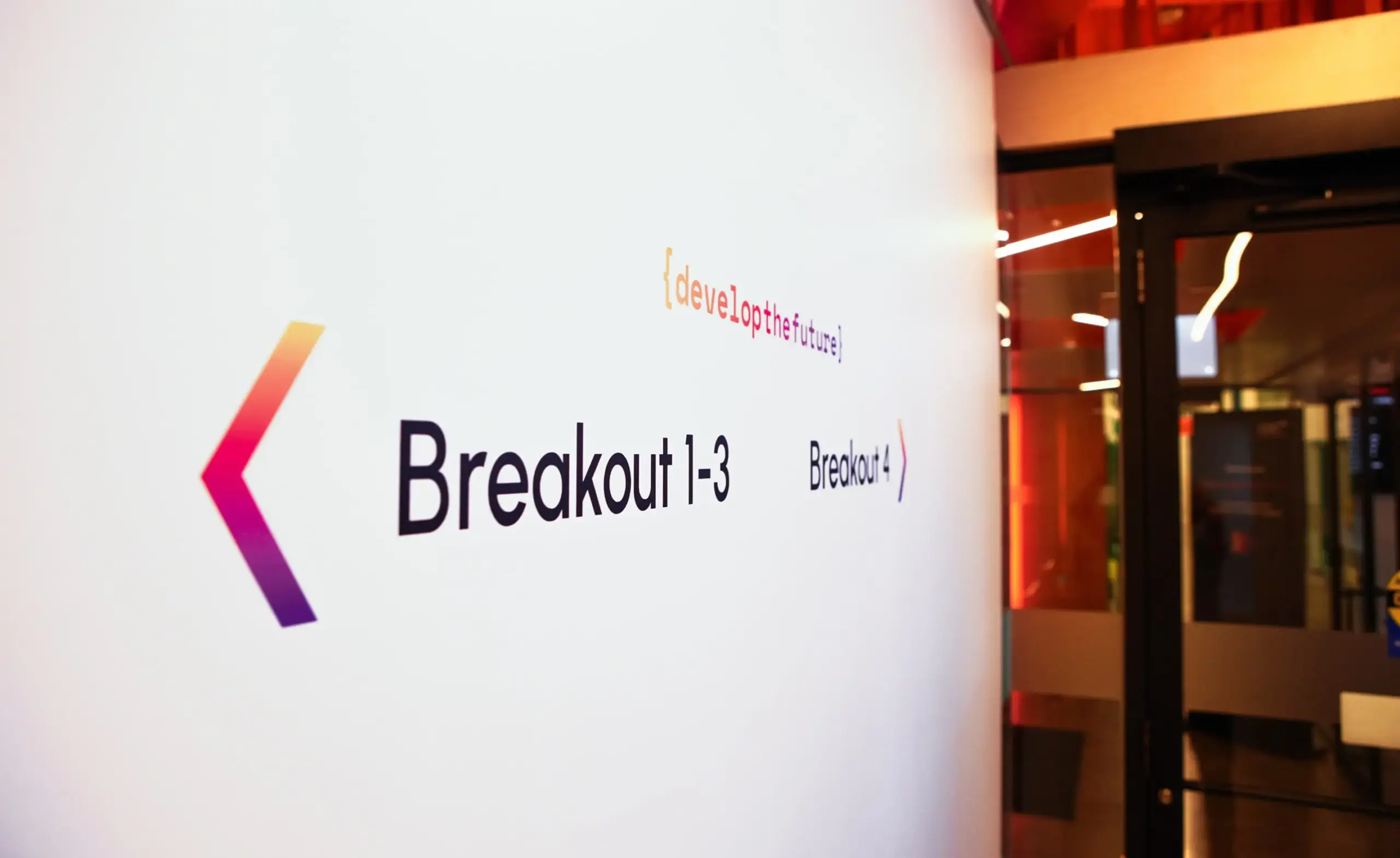
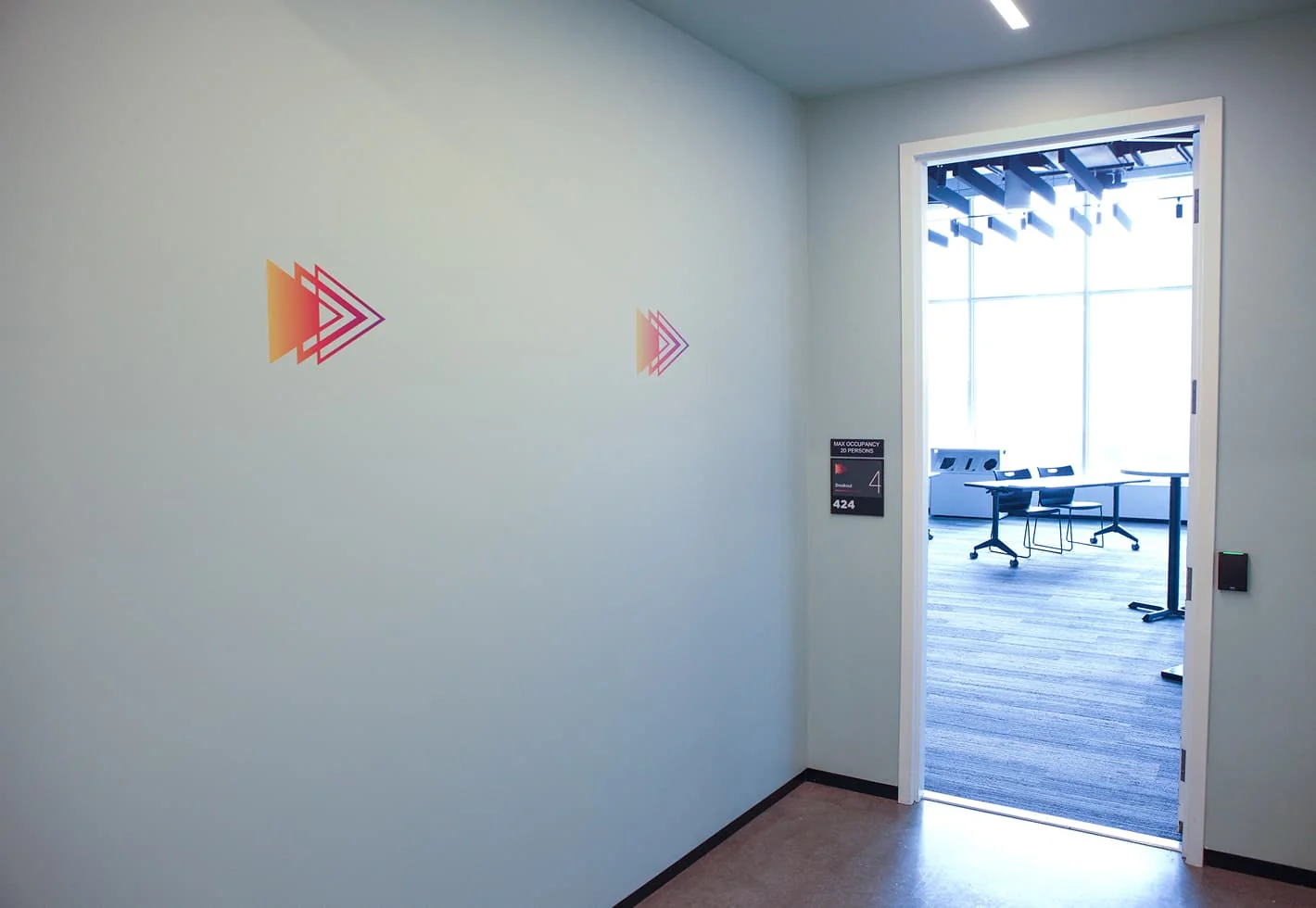
Directional wall decals helped guide students to the various breakout rooms
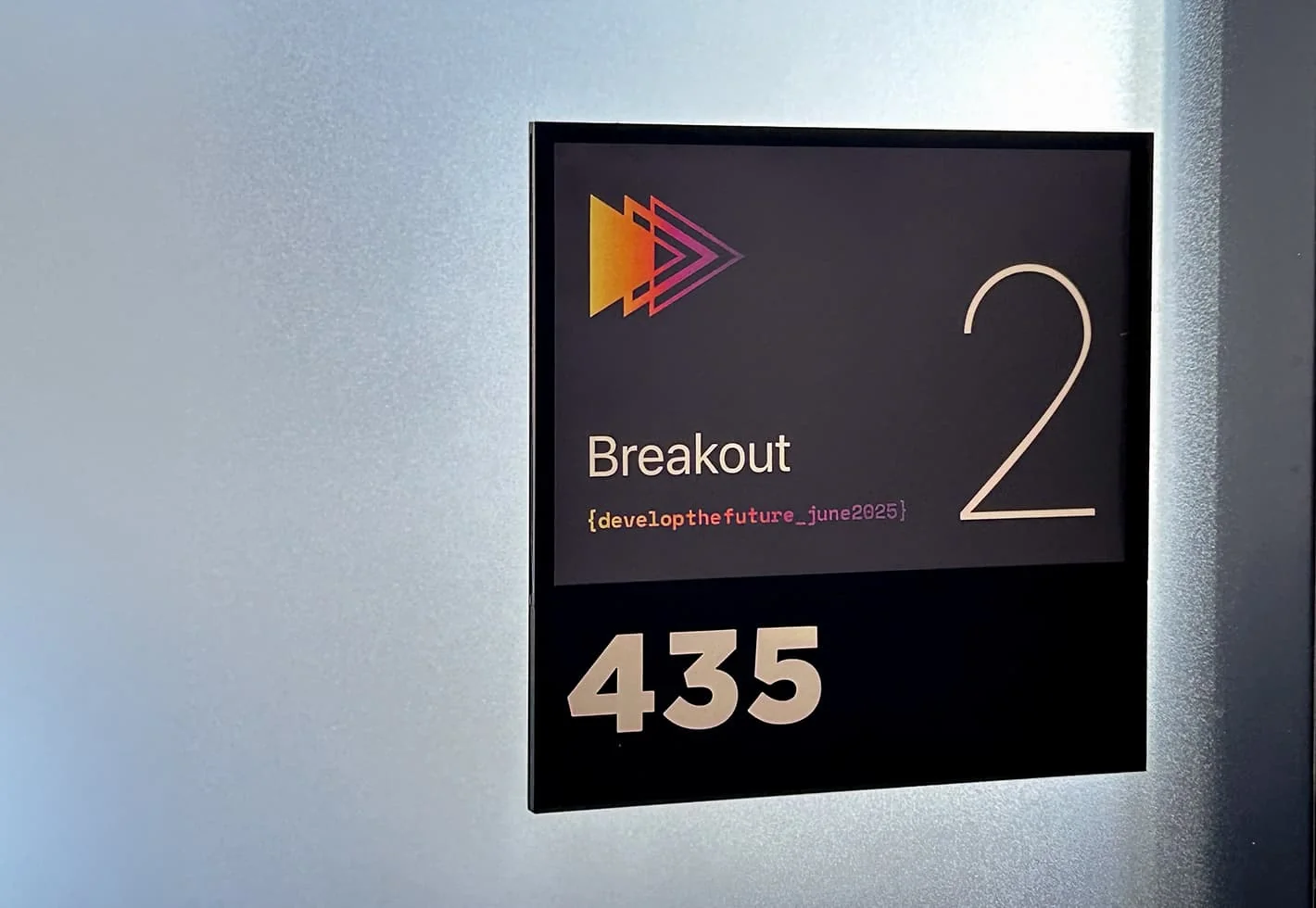
Branded room signage and wayfinding graphics were designed to guide students and make them feel welcome

Tactile brand touchpoints

Develop the Future utilizes Apple’s Swift curriculum to introduce students to the world of app development. We brought this online learning environment to life through a diverse range of physical assets, beyond the signage and wayfinding. Smaller brand applications included interactive photo booth props, branded cookies, table cards and personalized ID badges that made each participant feel special.
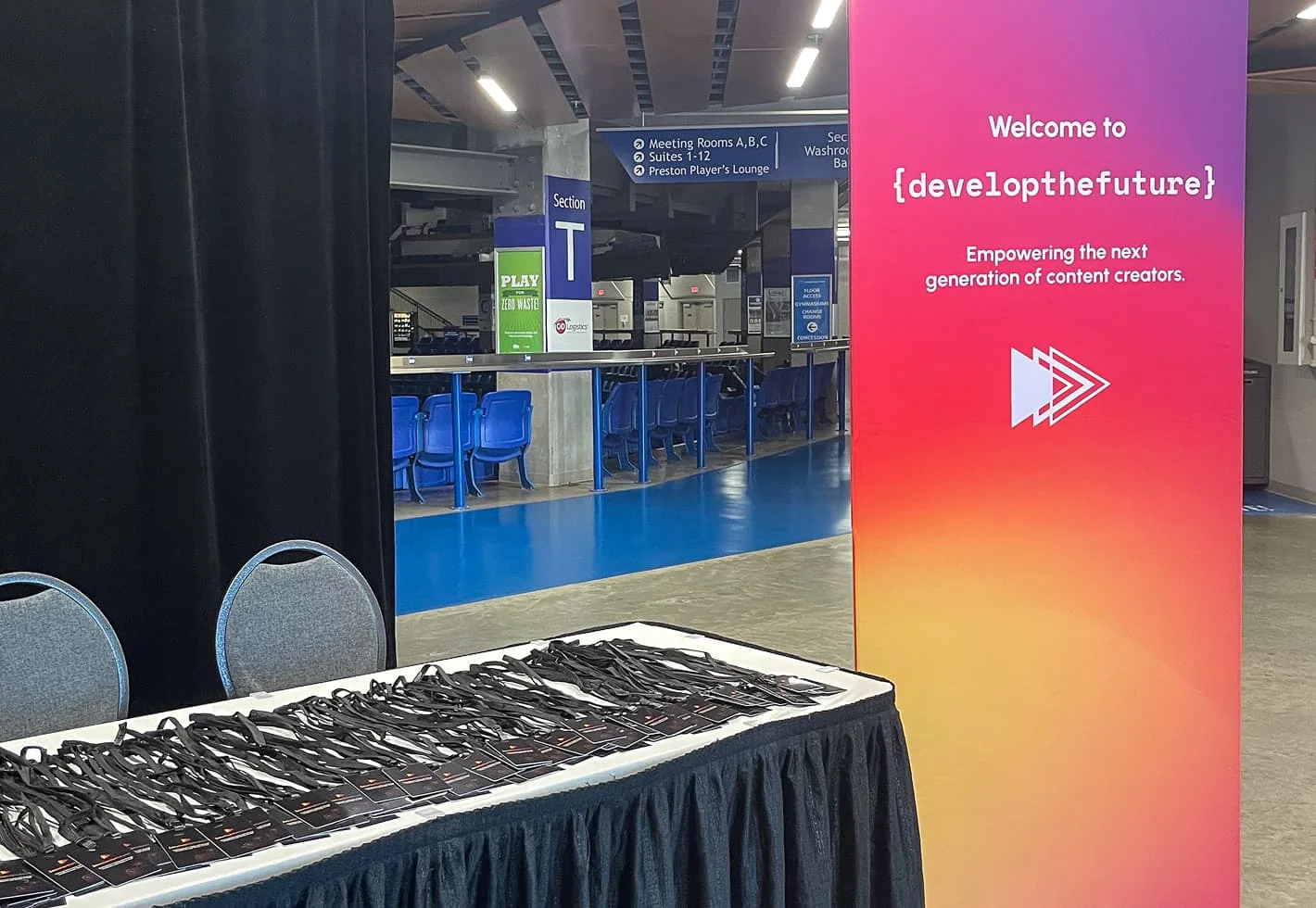
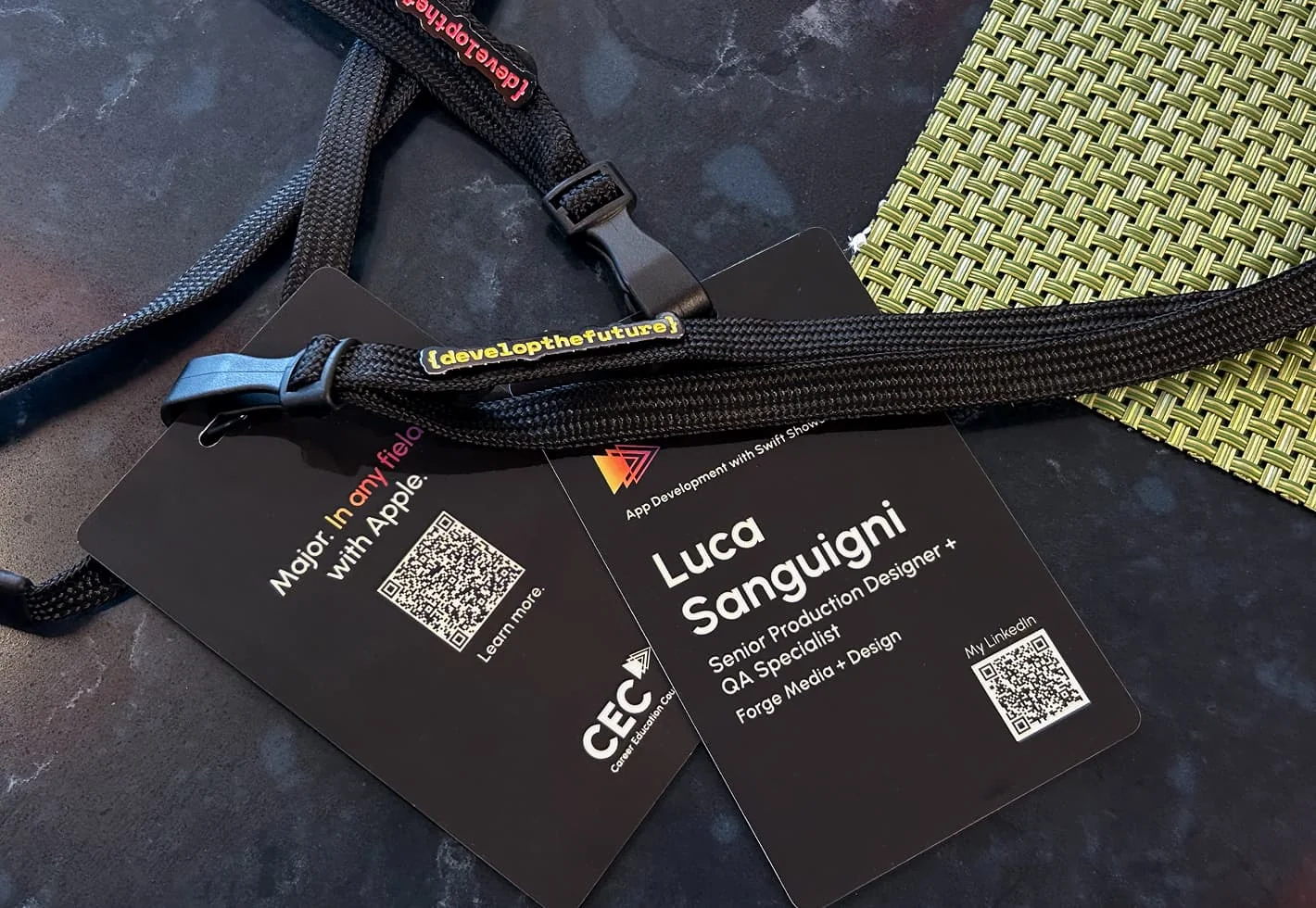
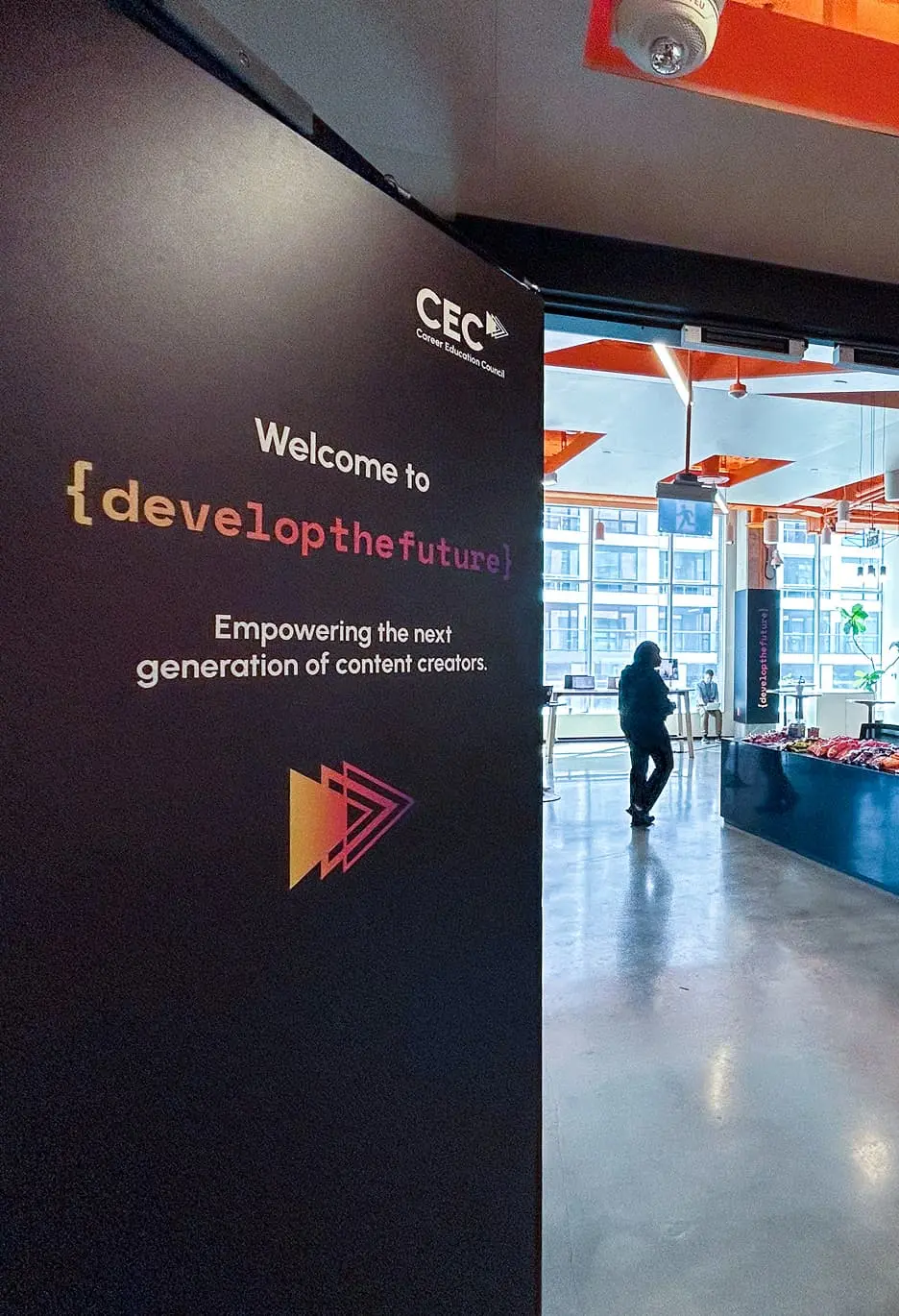
The students were welcomed with registration signage, personalized ID badges and branded enamel pins (Vancouver, BC)
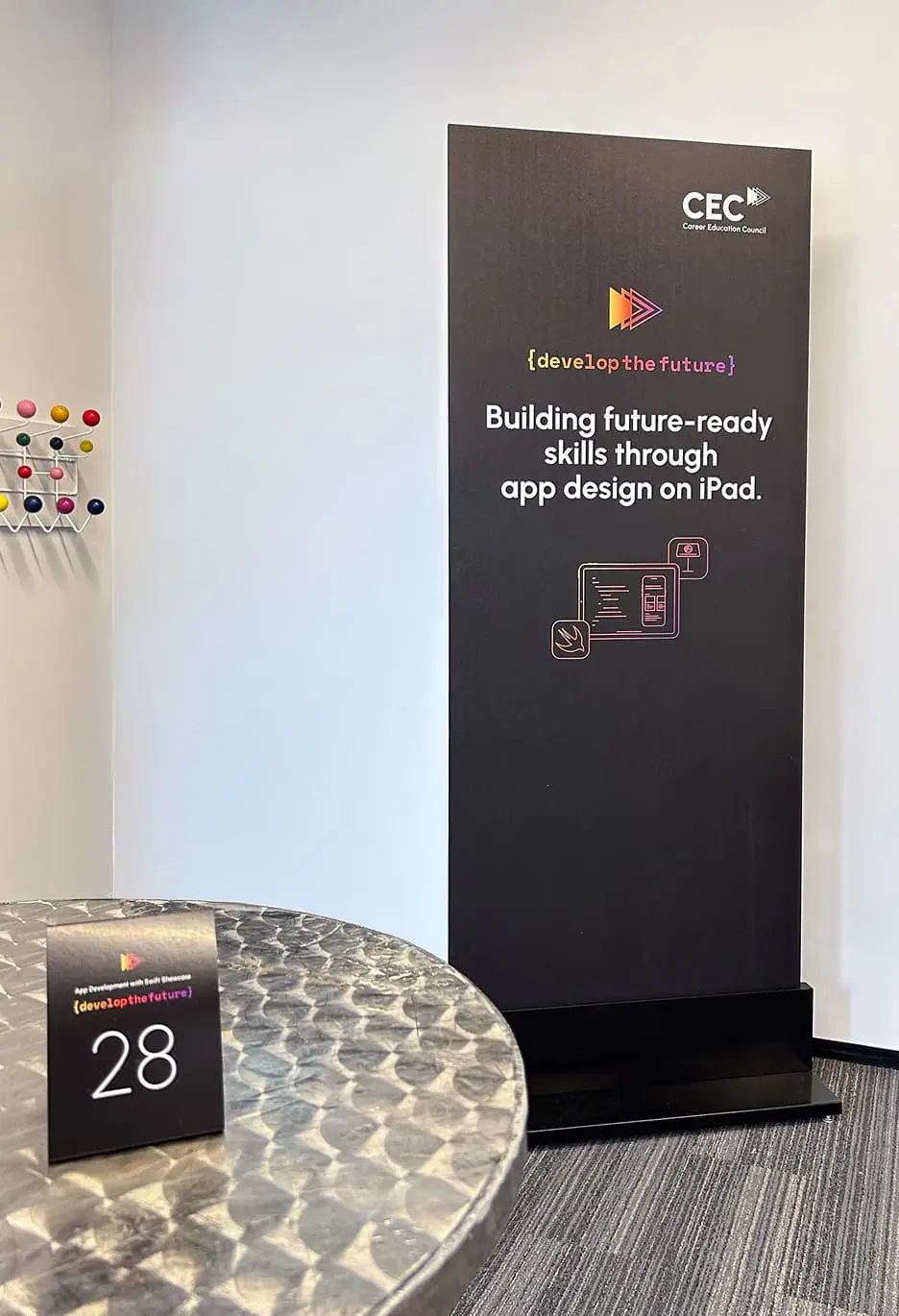
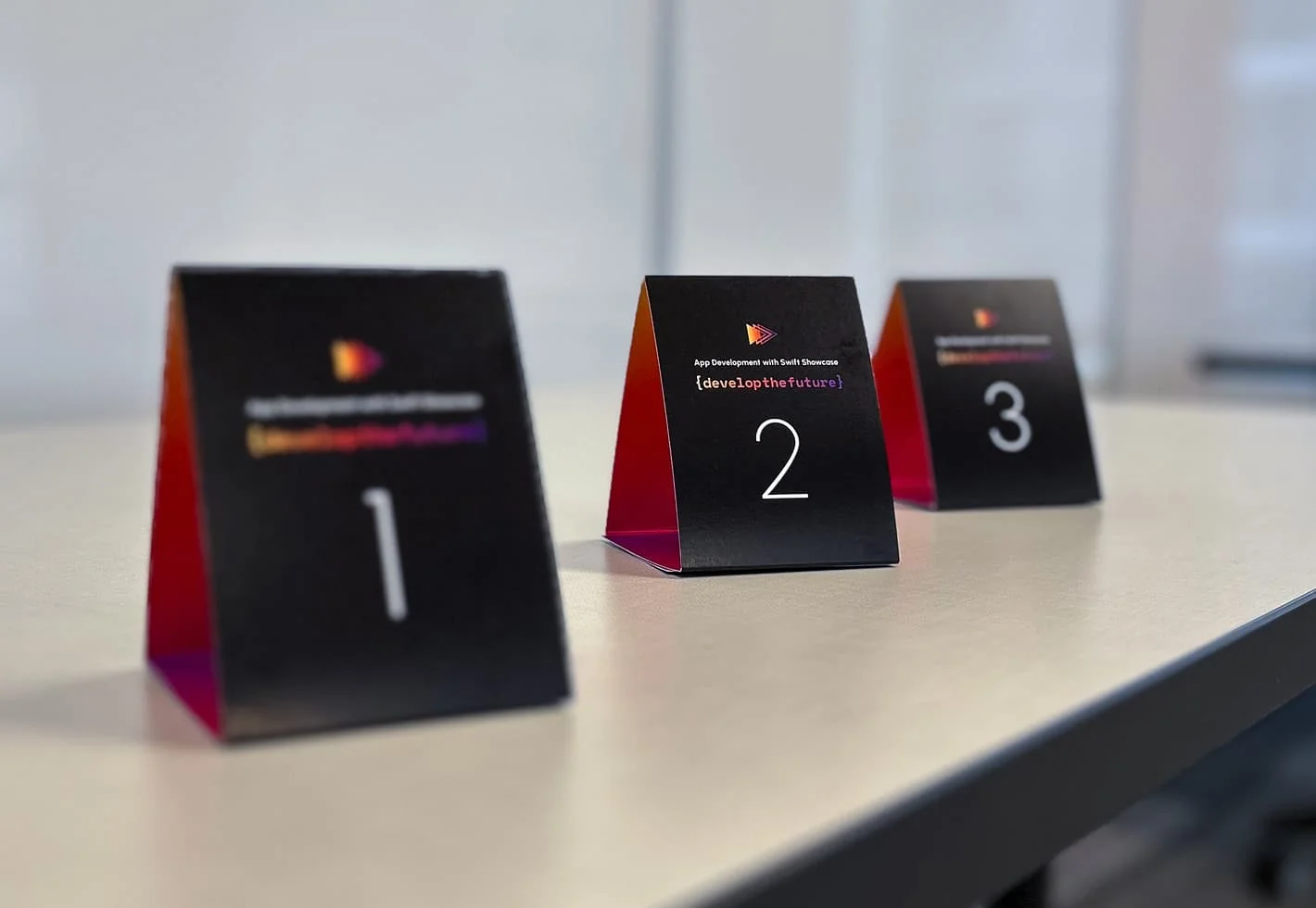
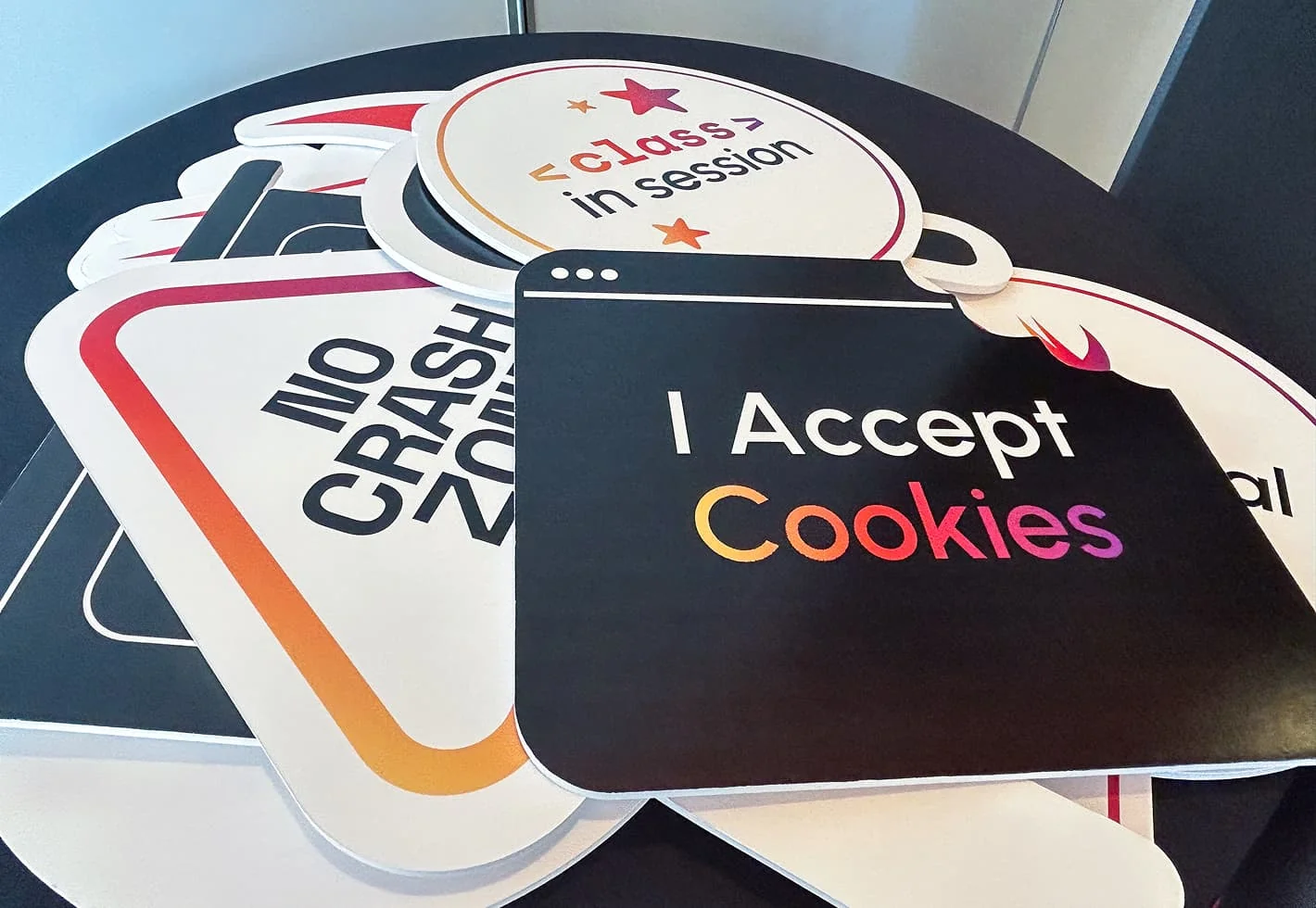
The event showcase room was enhanced through various graphics, including custom table signs
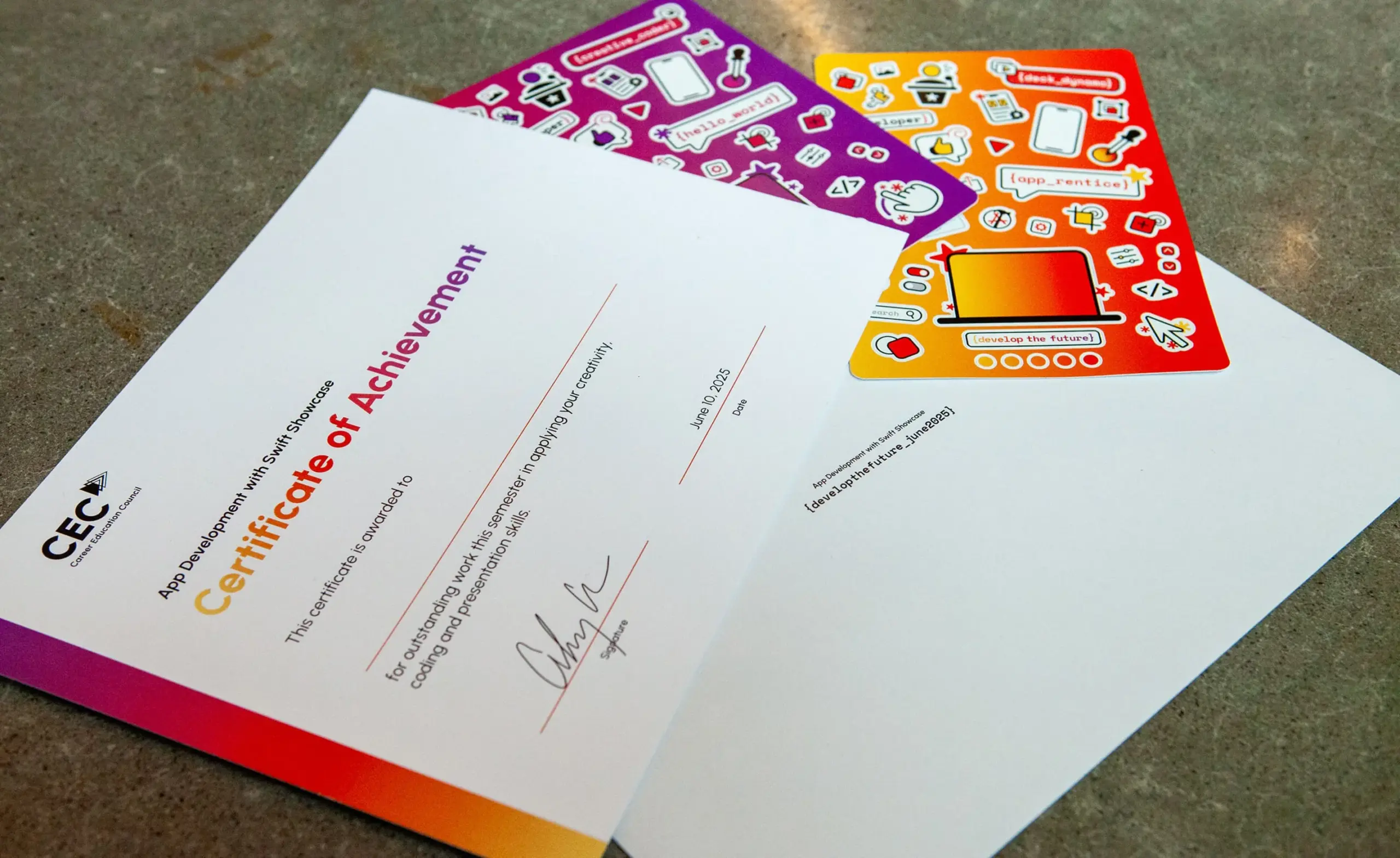
Upon completion of the program, students received an official Certificate of Achievement and custom program stickers (stickers courtesy of Duarte)
For a complete shareable experience, coding-themed banners and props were designed to invite students to partake in the photo booth (Vancouver, BC)
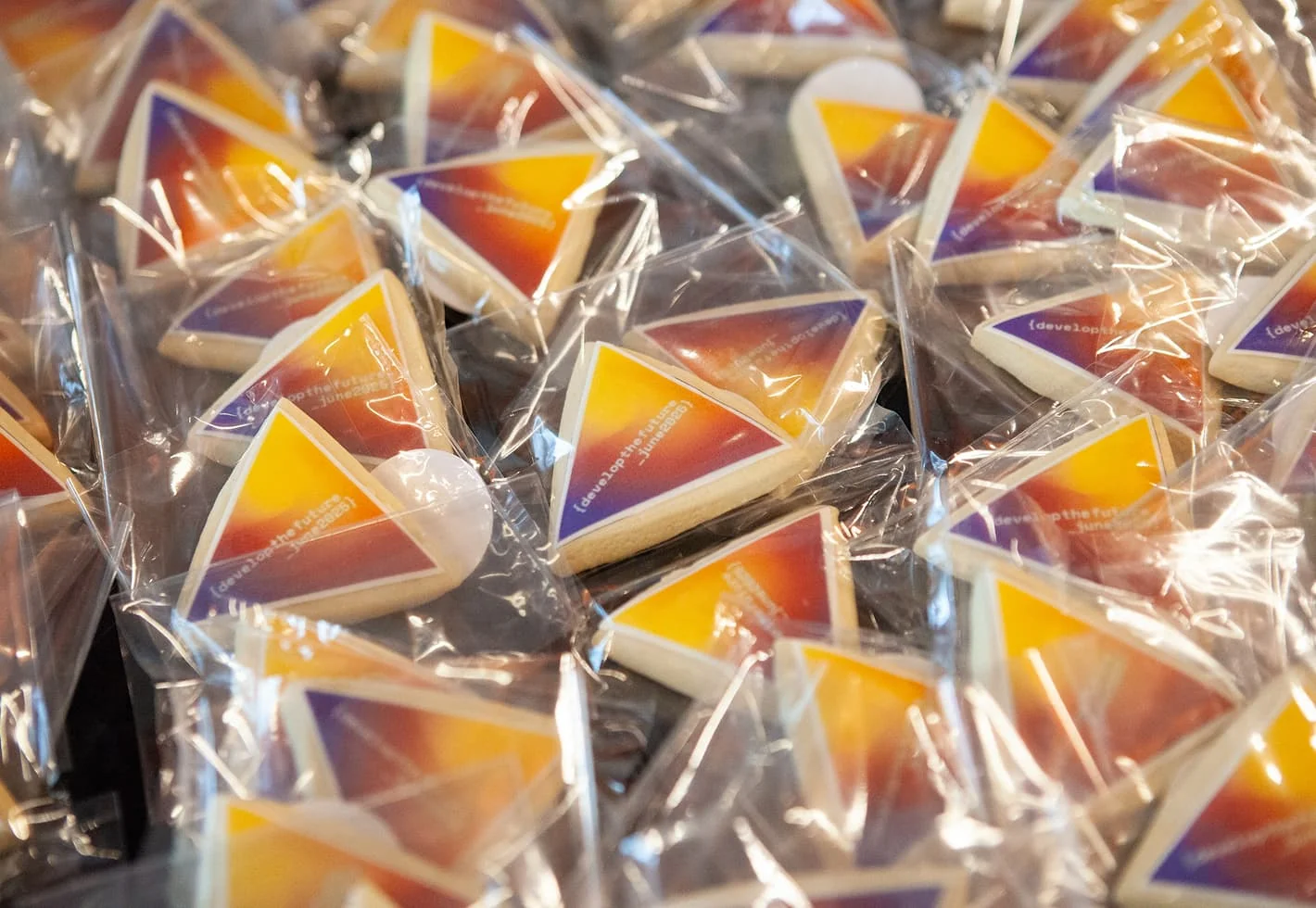

To round it all off, custom, branded cookies were offered as a take-home treat

Empowering educators, engaging students

We ensured the program’s visual identity felt as impactful in person as it did on screen. We equipped the CEC with a full toolkit of digital assets, including a dedicated website presence and templated keynote presentation slides for teachers to use as part of their lesson plans. By balancing deep-dive instructional guides with printable student worksheets and an App Showcase event manual, we ensured the program was as easy to execute as it was to learn.
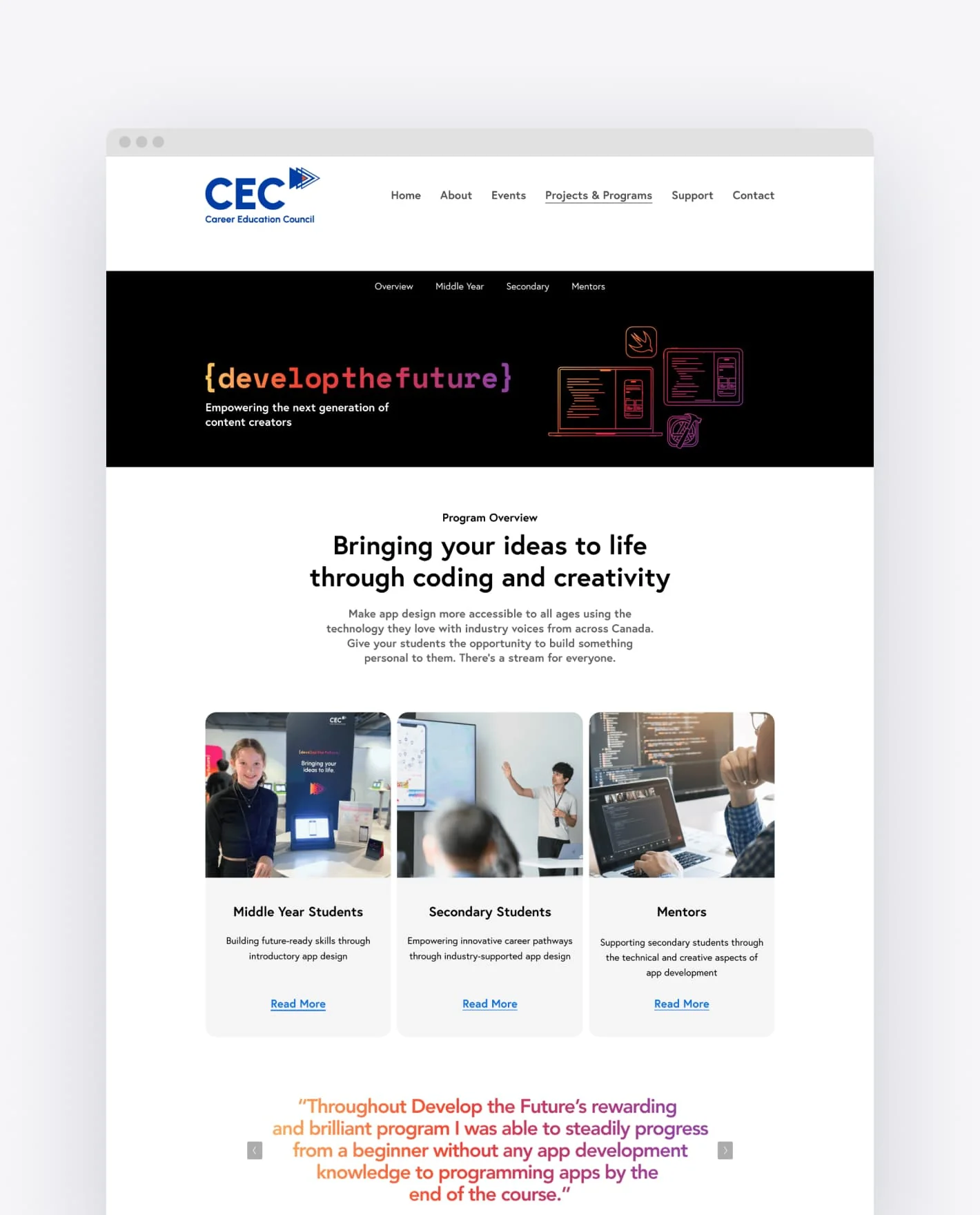
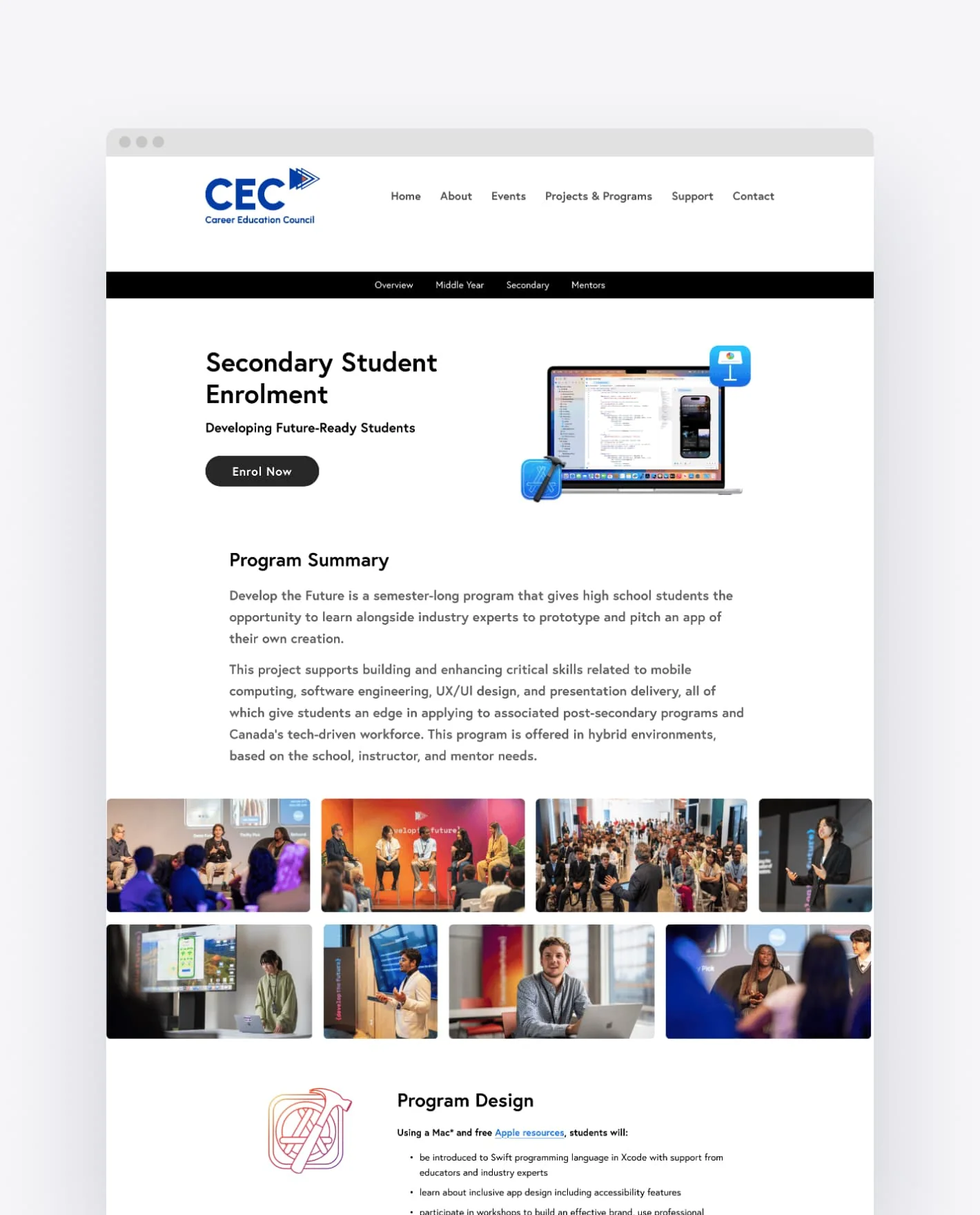
Develop the Future program landing page streamlines navigation for students, educators and mentors
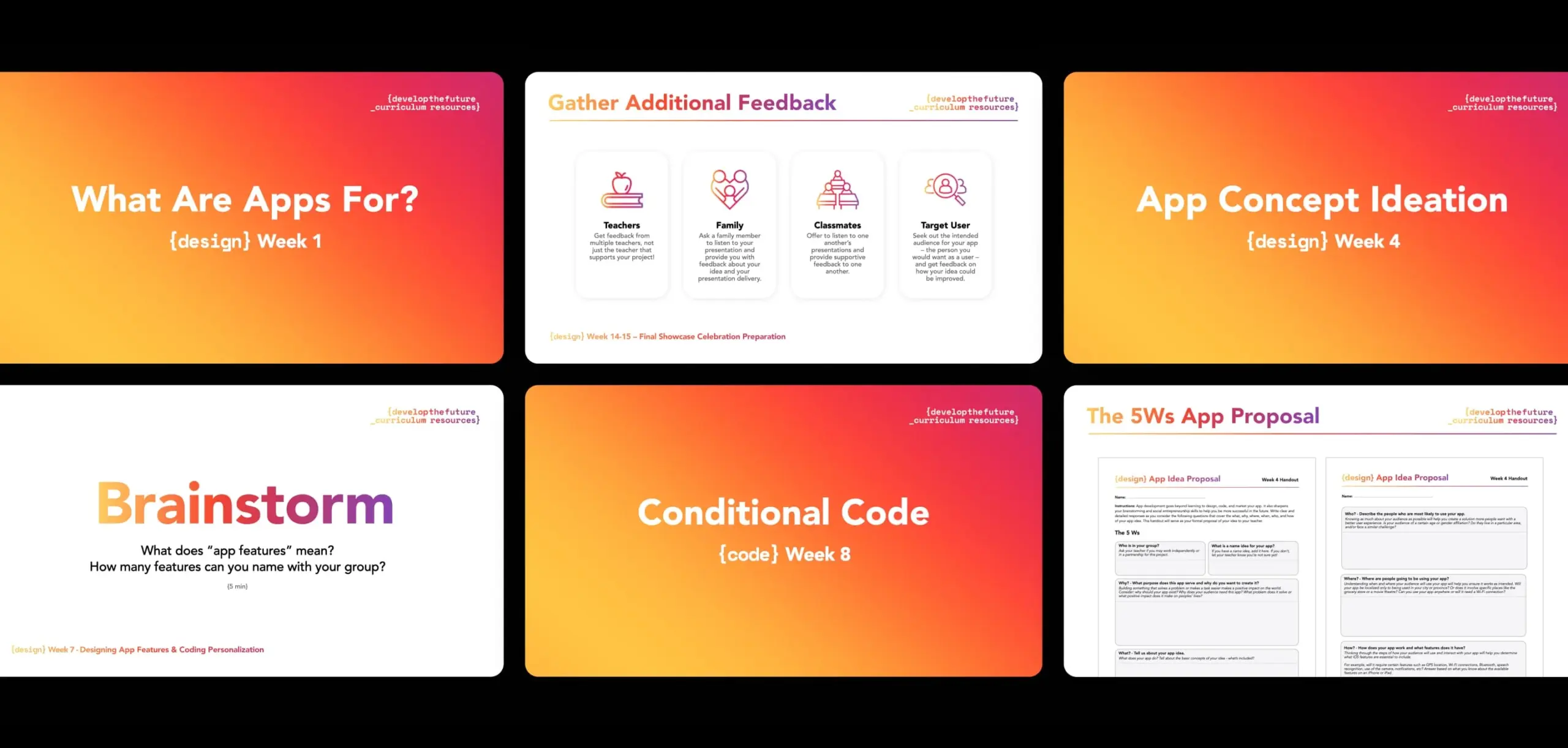
Weekly curriculum Keynote presentations were designed for effortless classroom delivery, covering everything from design thinking to final app prototyping
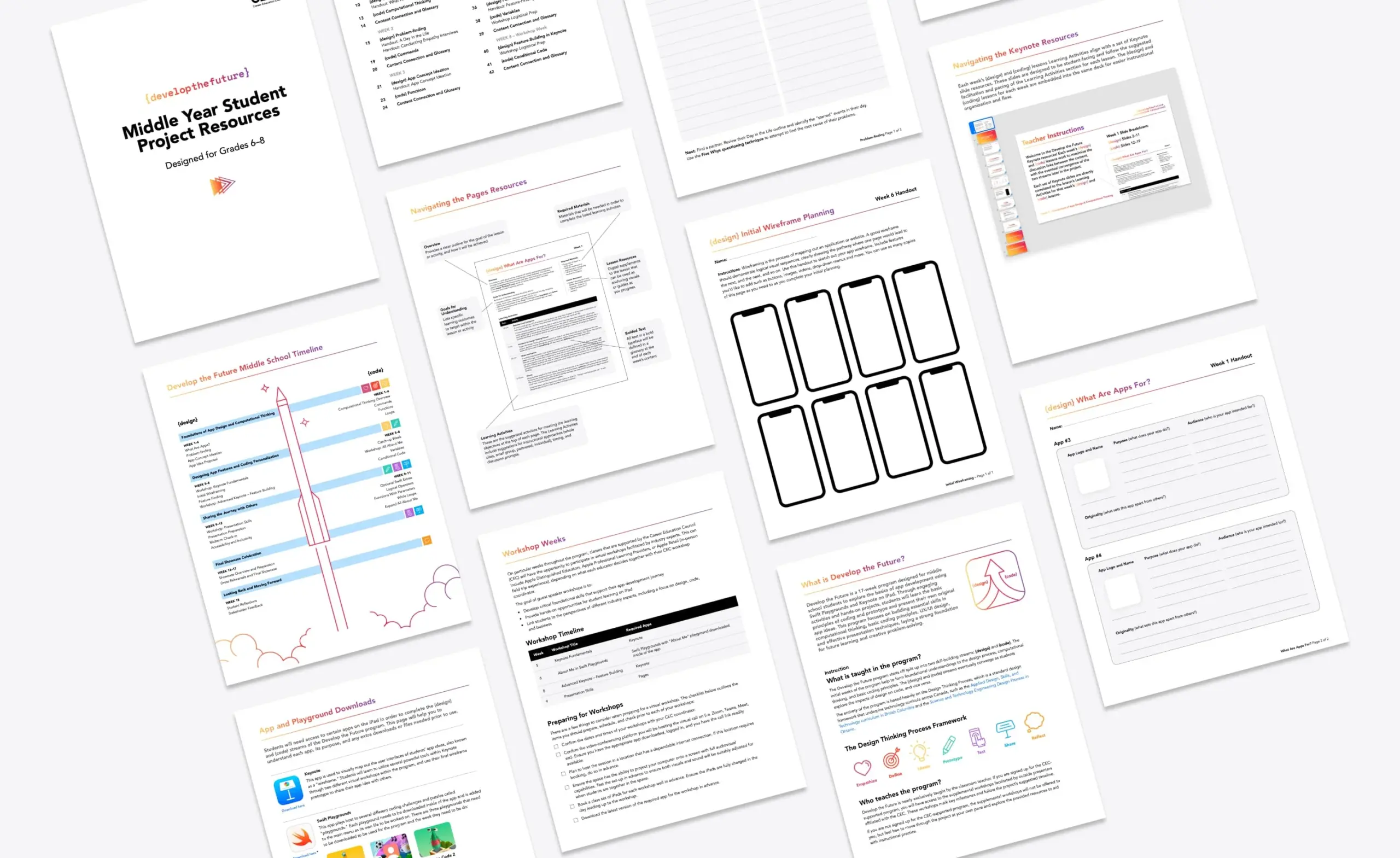
Comprehensive teacher resources featuring detailed lesson plans, instructional guides and printable student activity sheets
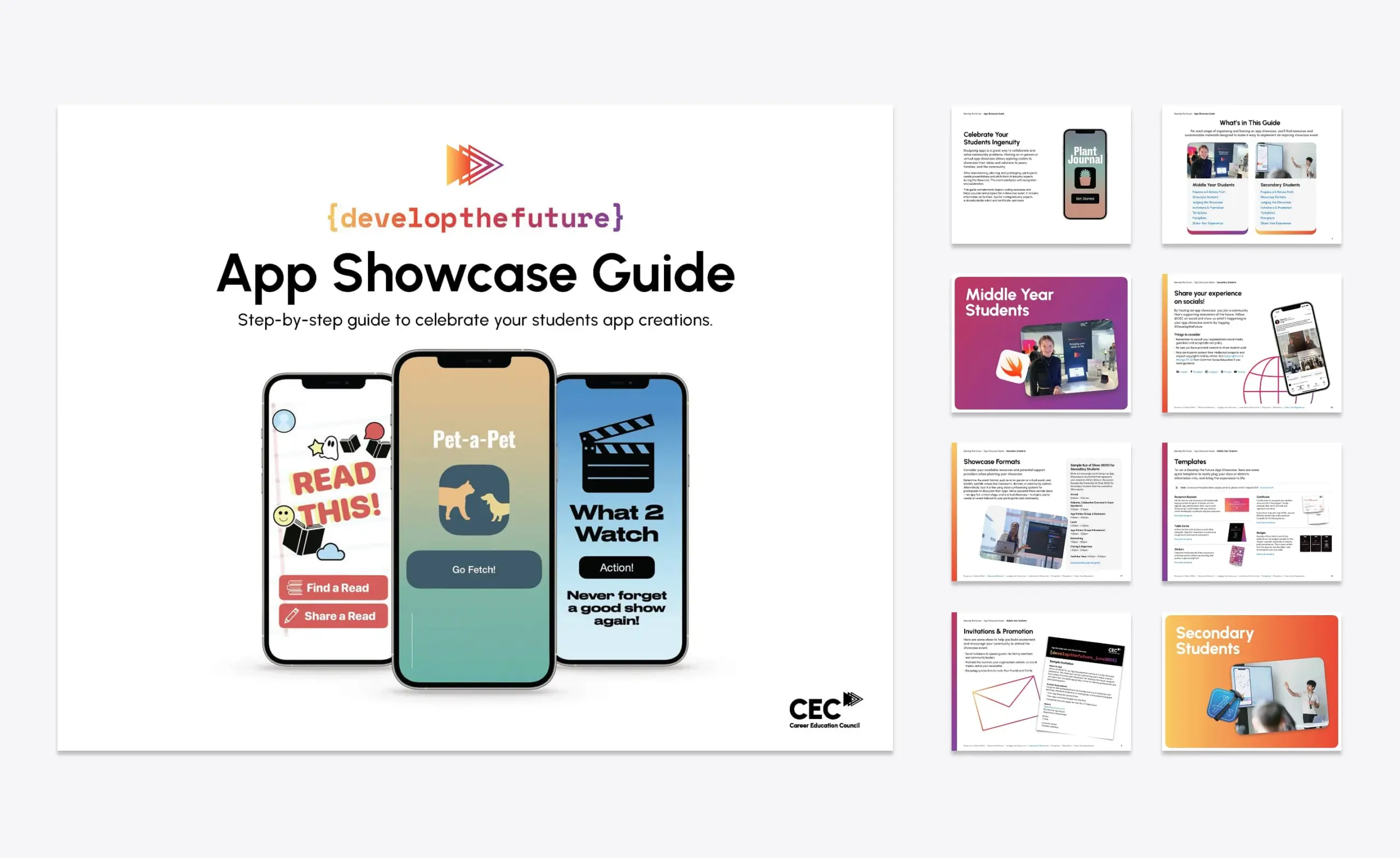
The App Showcase Guide provided a turnkey framework for the CEC staff to independently plan and execute branded celebratory events
  • 6 events
  • 5 days
  • 3 provinces
  • 2 languages
  • 1000 students
I love collaborating with Forge. They consistently deliver eye-catching, on-brand graphics that make our materials look polished and professional. Their creativity, reliability and understanding of our vision make them an invaluable partner. I look forward to teaming up with them on our next project!
Noah Carpenter, Program Manager, Develop the Future
West Lincoln Memorial Hospital

Grimsby, ON
Services Deliverables
  • Signage
  • Wayfinding
  • Masterplan
  • Placemaking
  • Donor Recognition

A vision of care with a local community feel

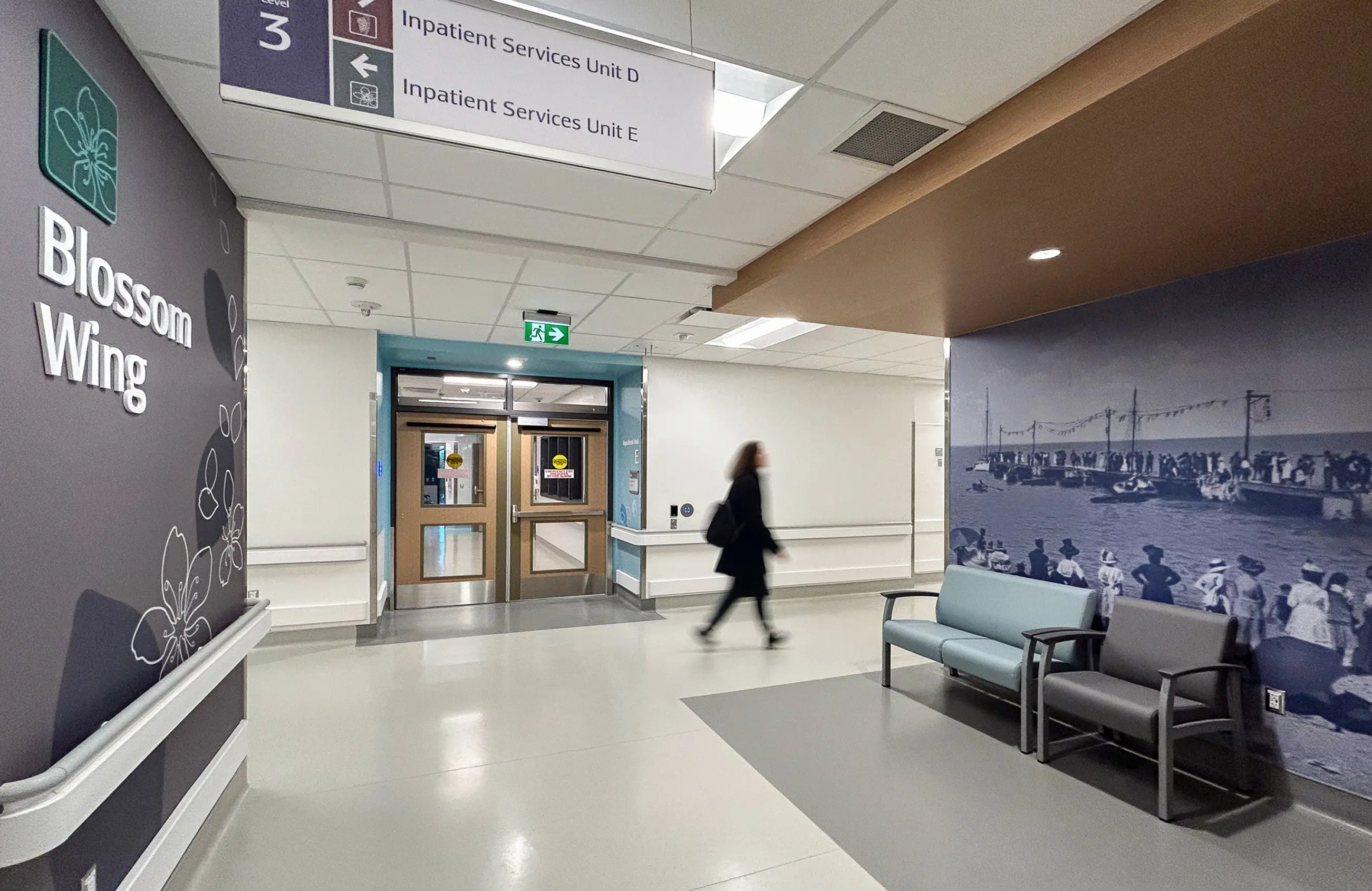
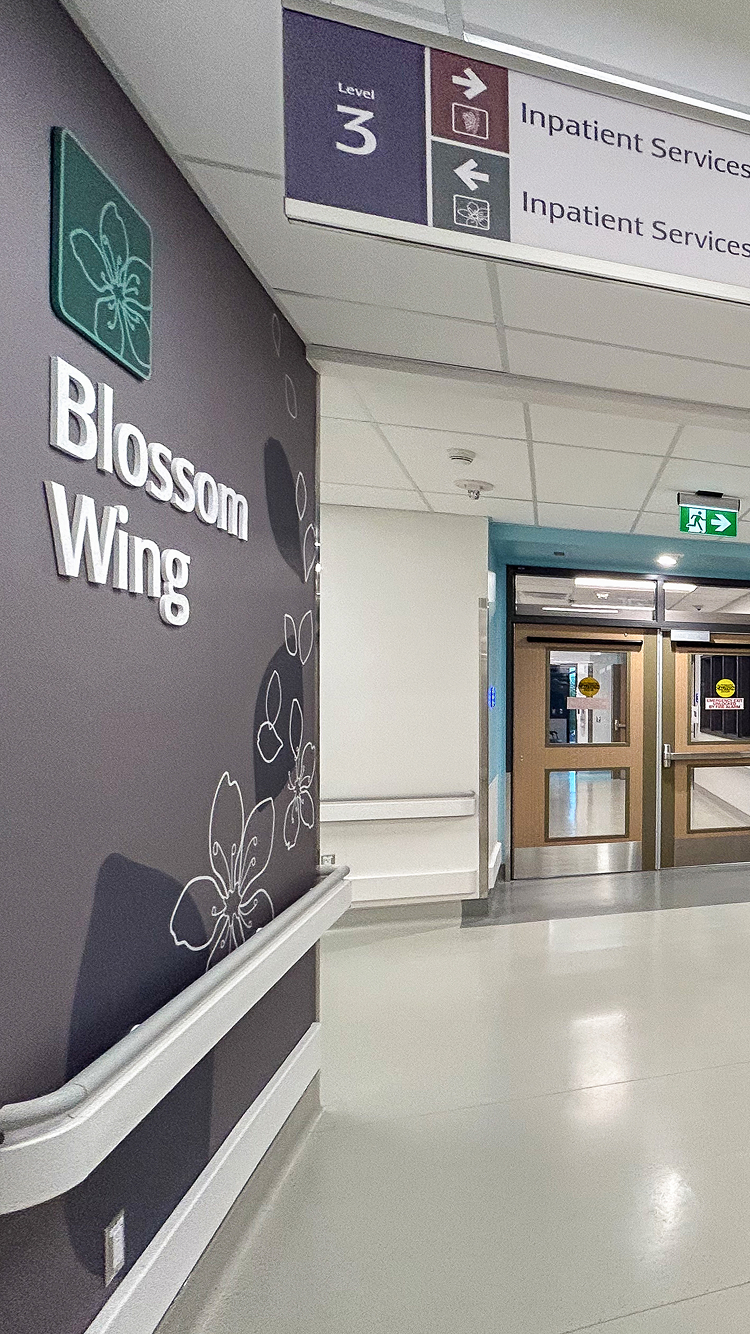
West Lincoln Memorial Hospital (WLMH) has a long and proud history in the community of Grimsby, Ontario. The redevelopment sought to ensure this building reflected the community and its history. Forge worked with the hospital to develop an experiential narrative theme through use of local biophilic theming and historic image placemaking. This approach became the framework for a wayfinding masterplan that integrated Hamilton Health Sciences Corporation (HHSC) standards for signage.

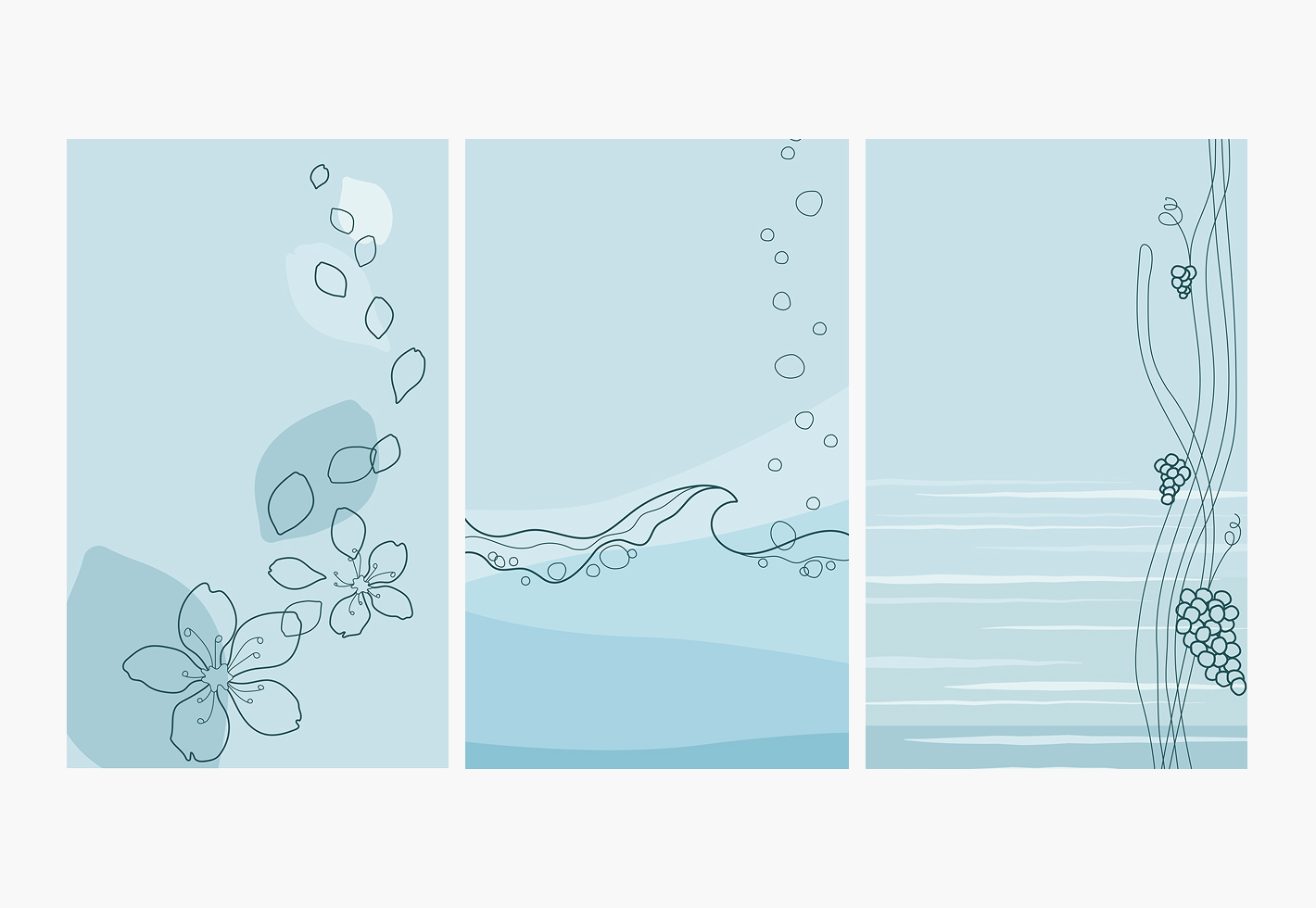
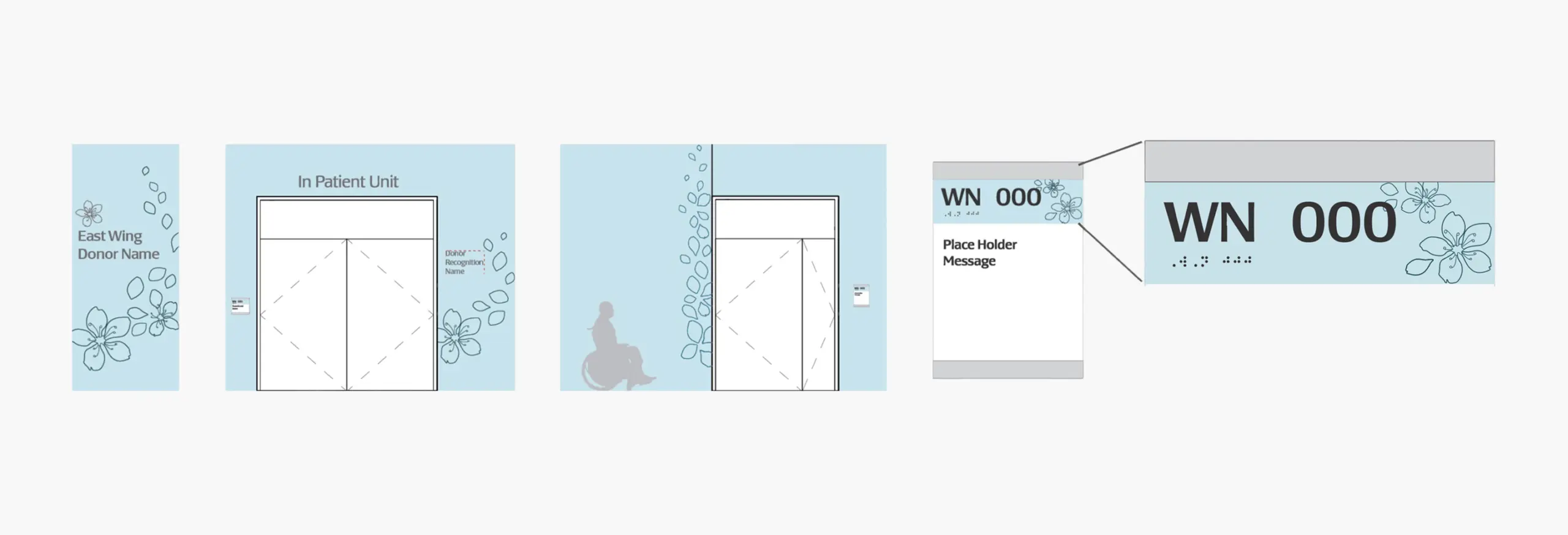
Initial wing-theming and planning
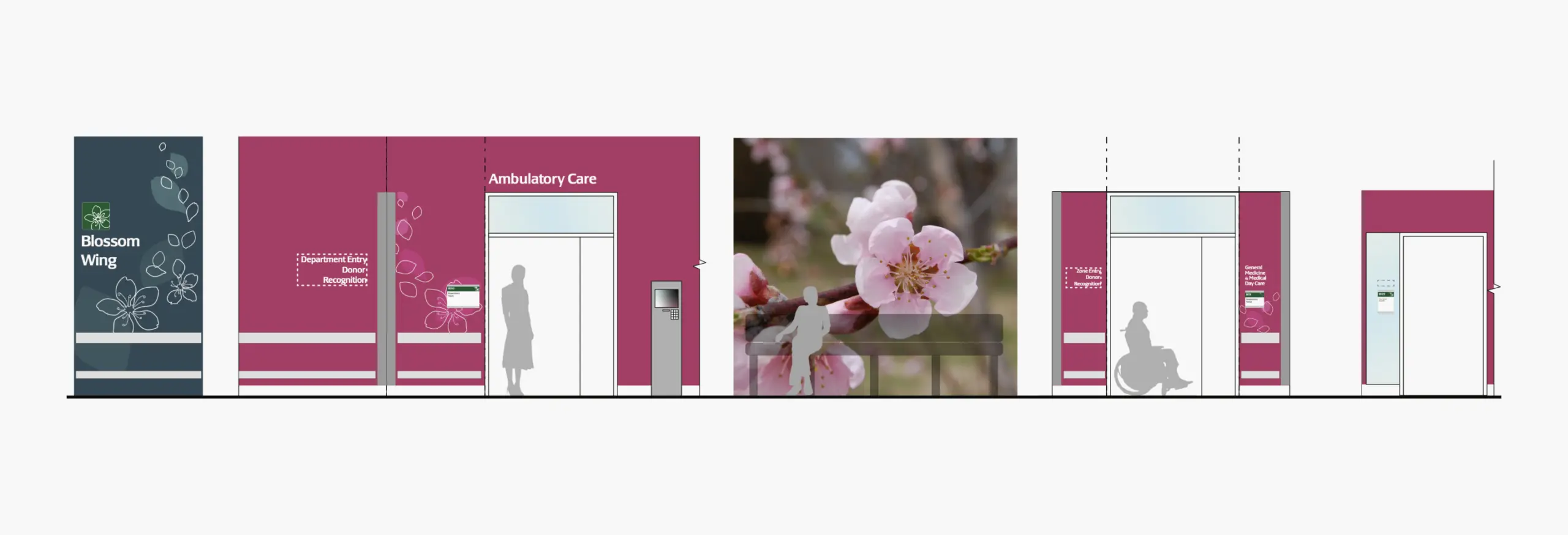
Wing-themed graphic development
Development of patient experience through typical journey
Placemaking establishes transitions of space and also provides an area of rest
Place distinction through colour and image
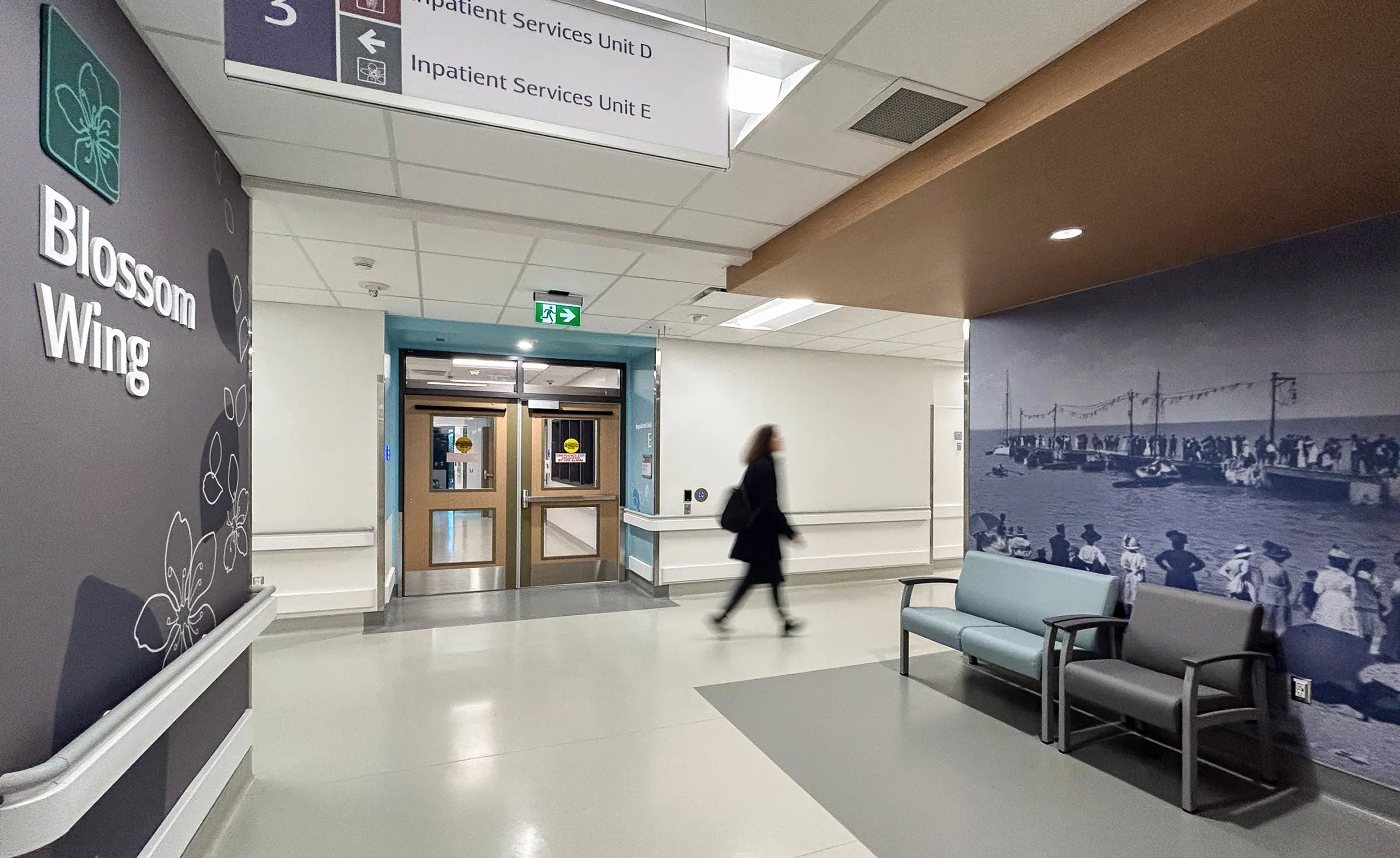
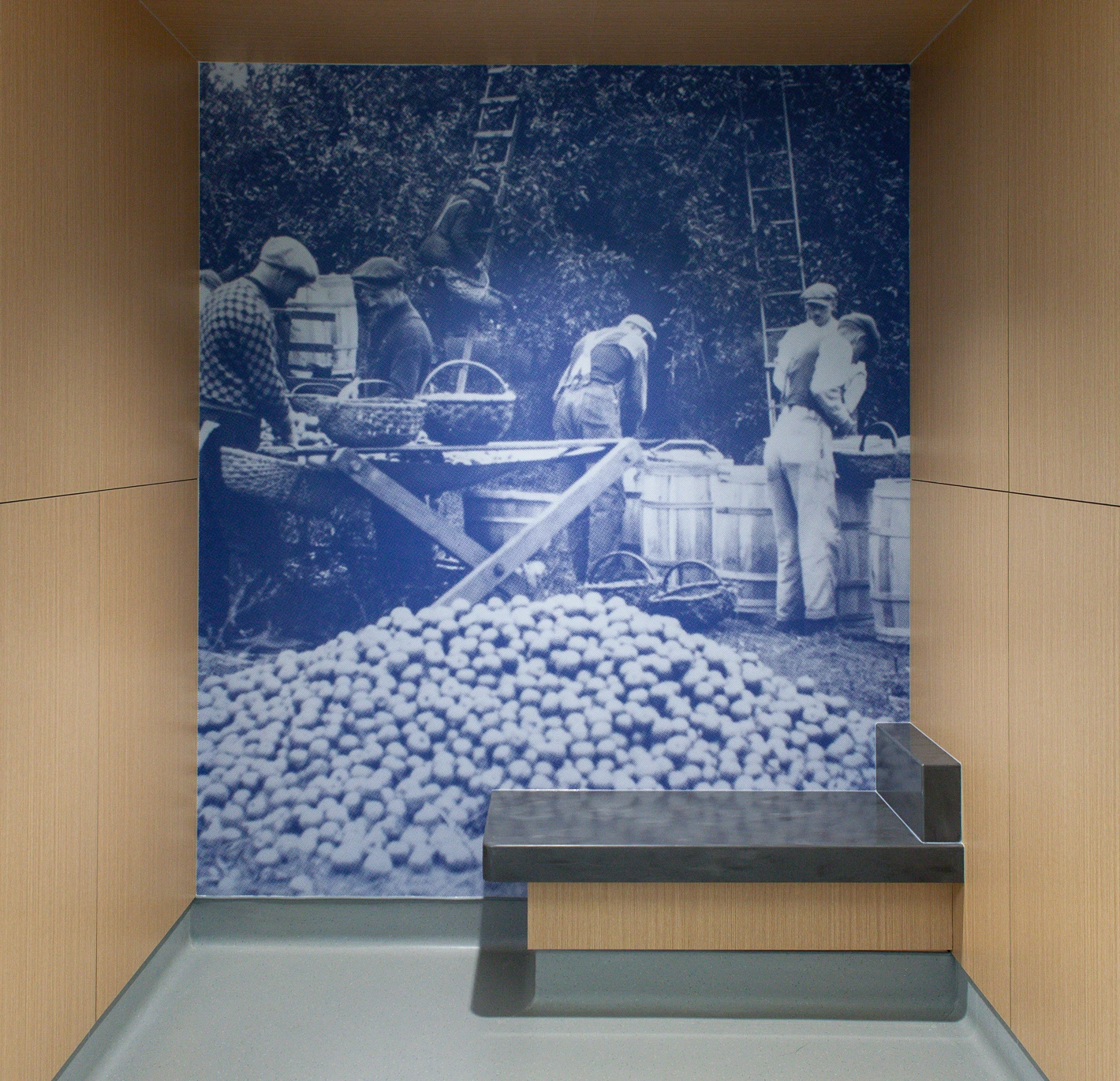
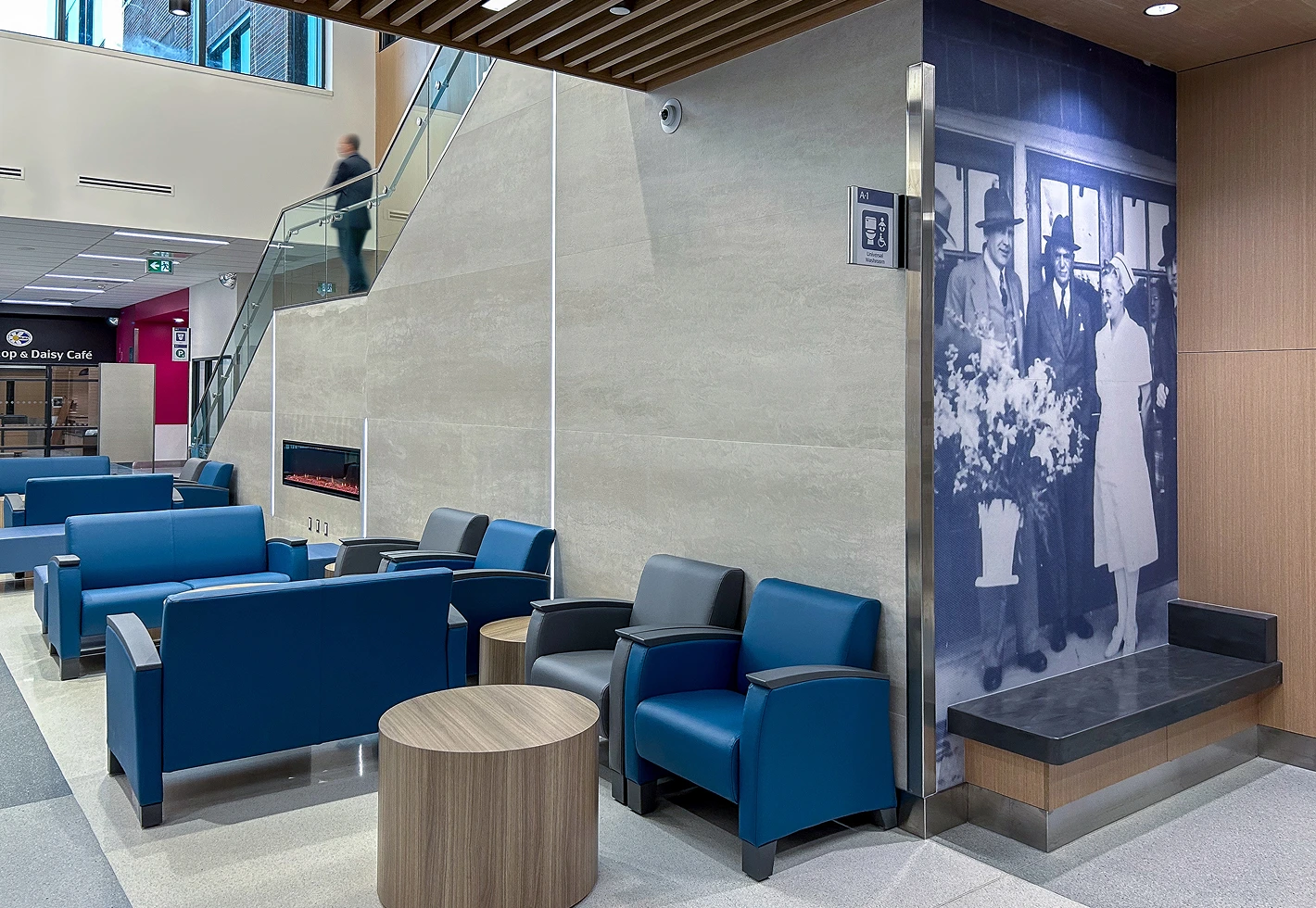
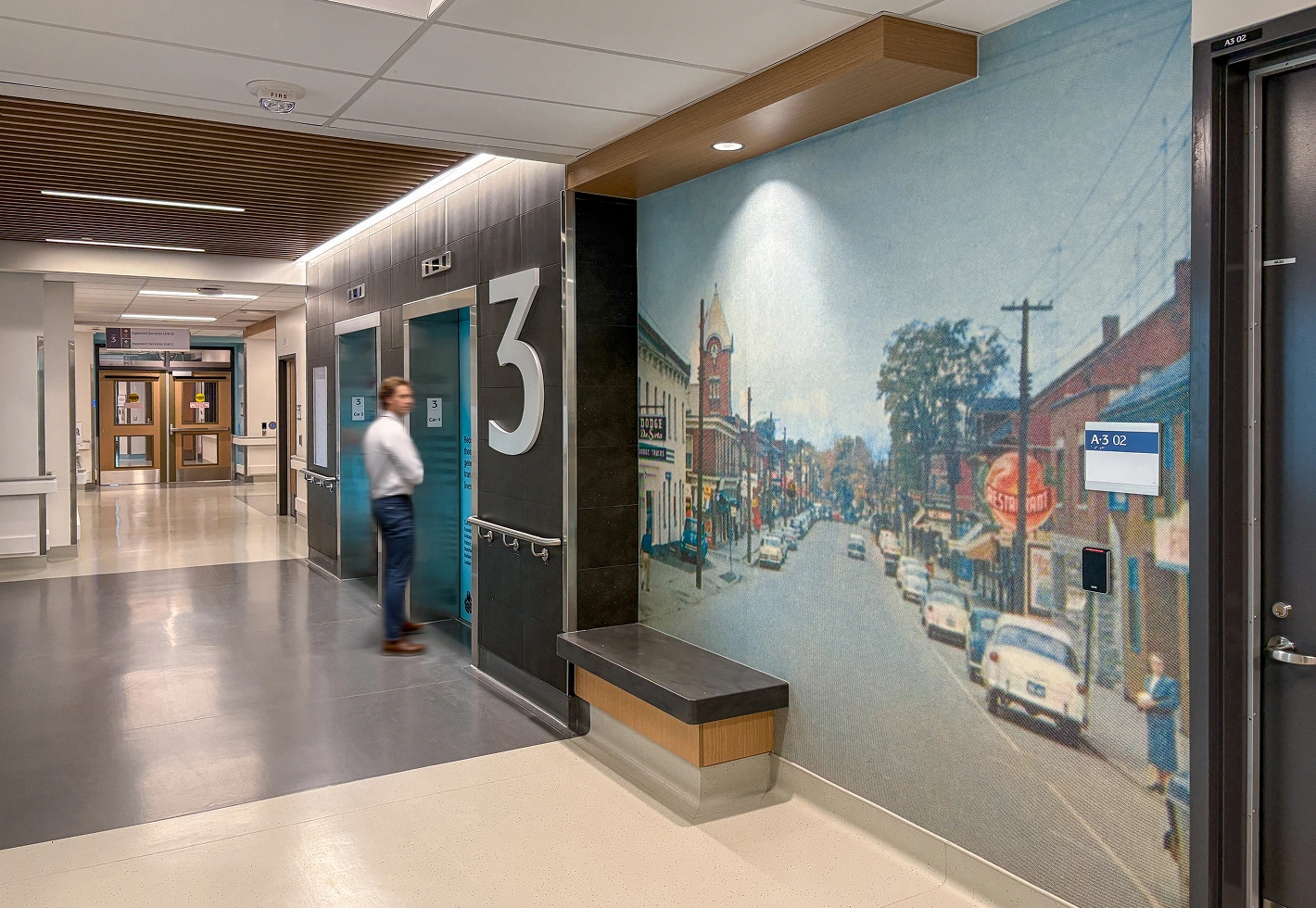
Images tell the story of Grimsby

Story, architecture and wayfinding working together

Delivering a high density of integrated graphics within a compact, modern hospital setting required navigating complex spatial constraints. We bridged these complexities through an iterative development process. By facilitating close workshops with the hospital team, end users and the architectural team, we translated the client’s unique identity and history into a cohesive, authentic visual language that resonates throughout the facility.

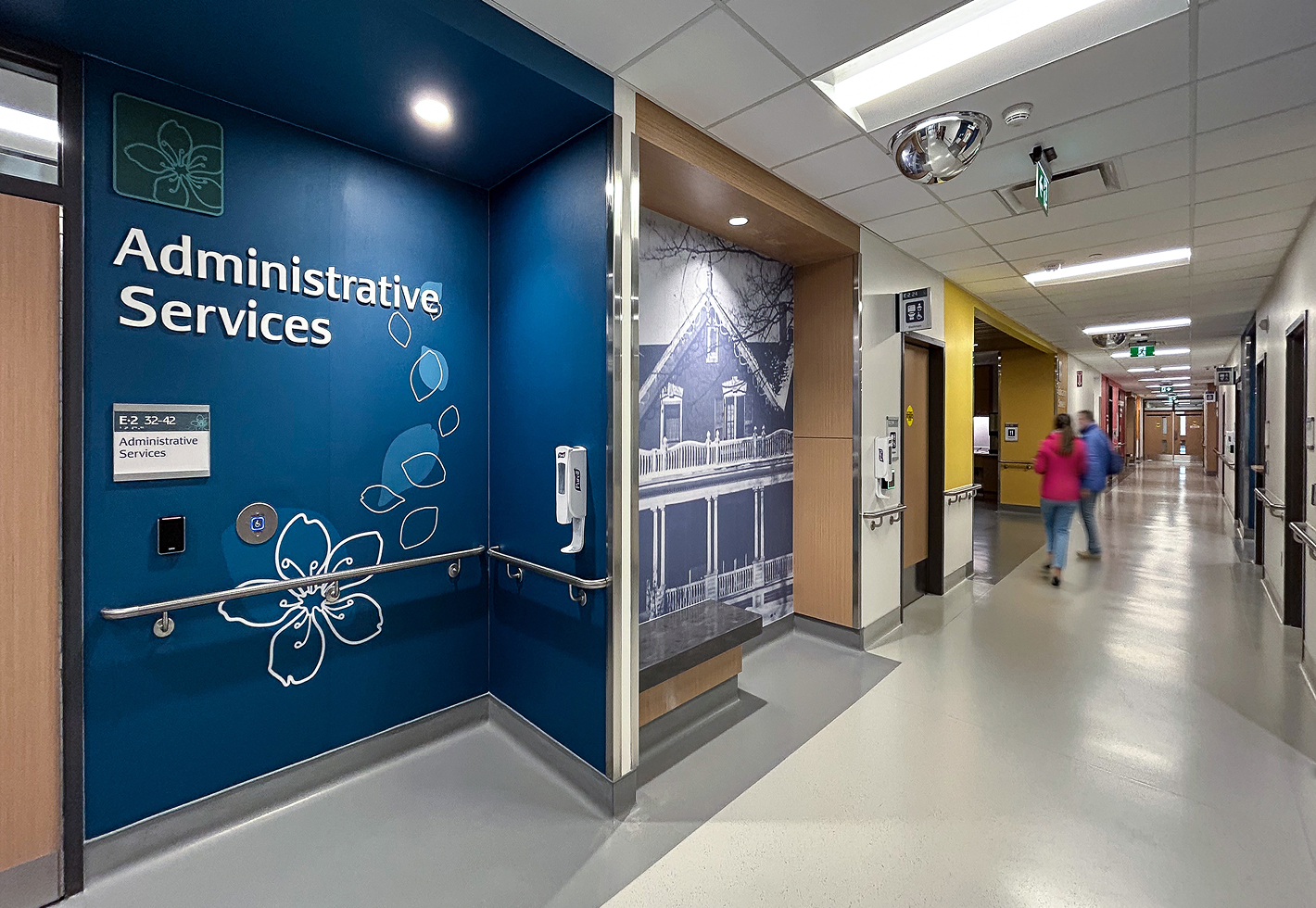
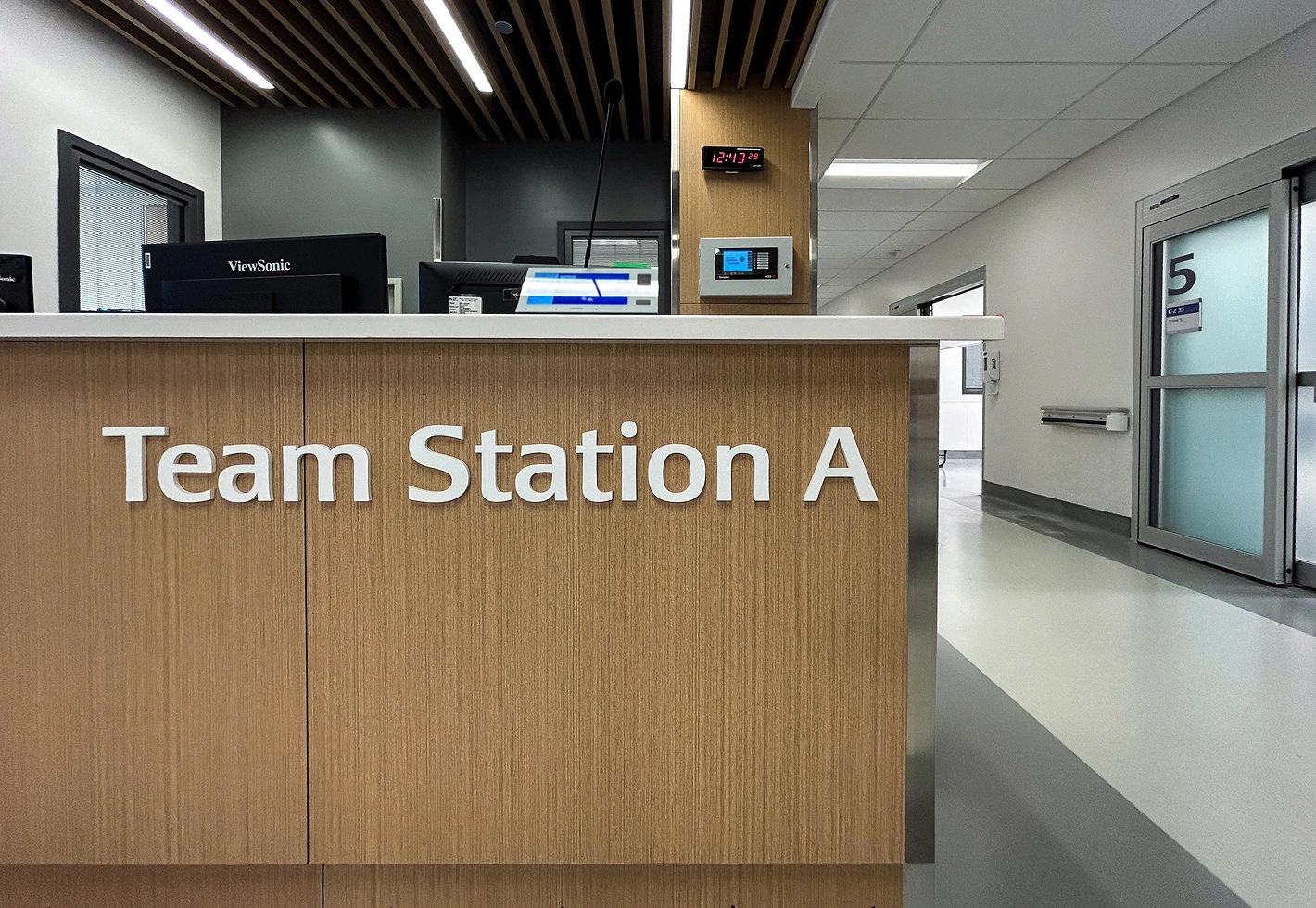
Integrated signage at a staff station and treatment room, and historic imagery to provide a restful pause moment
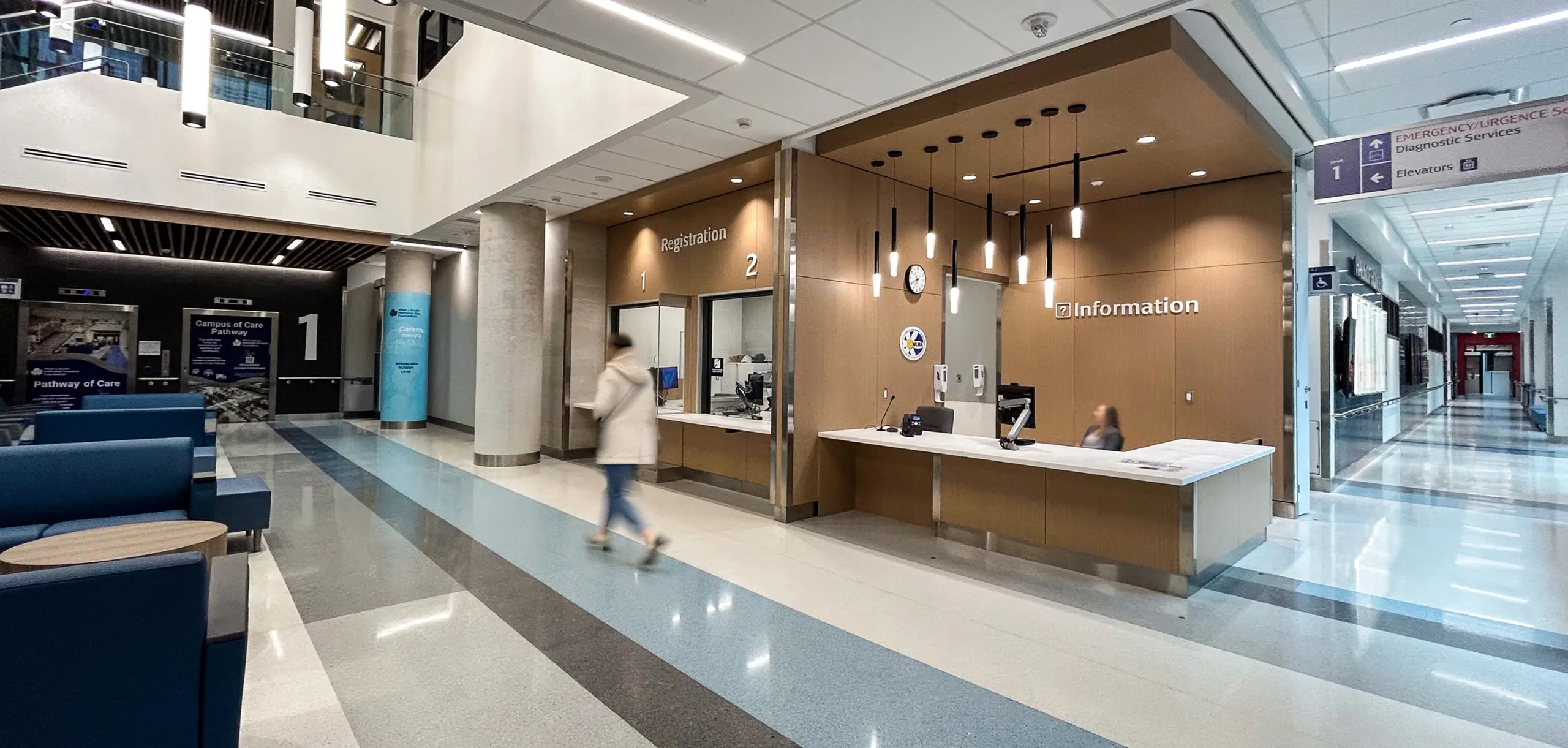
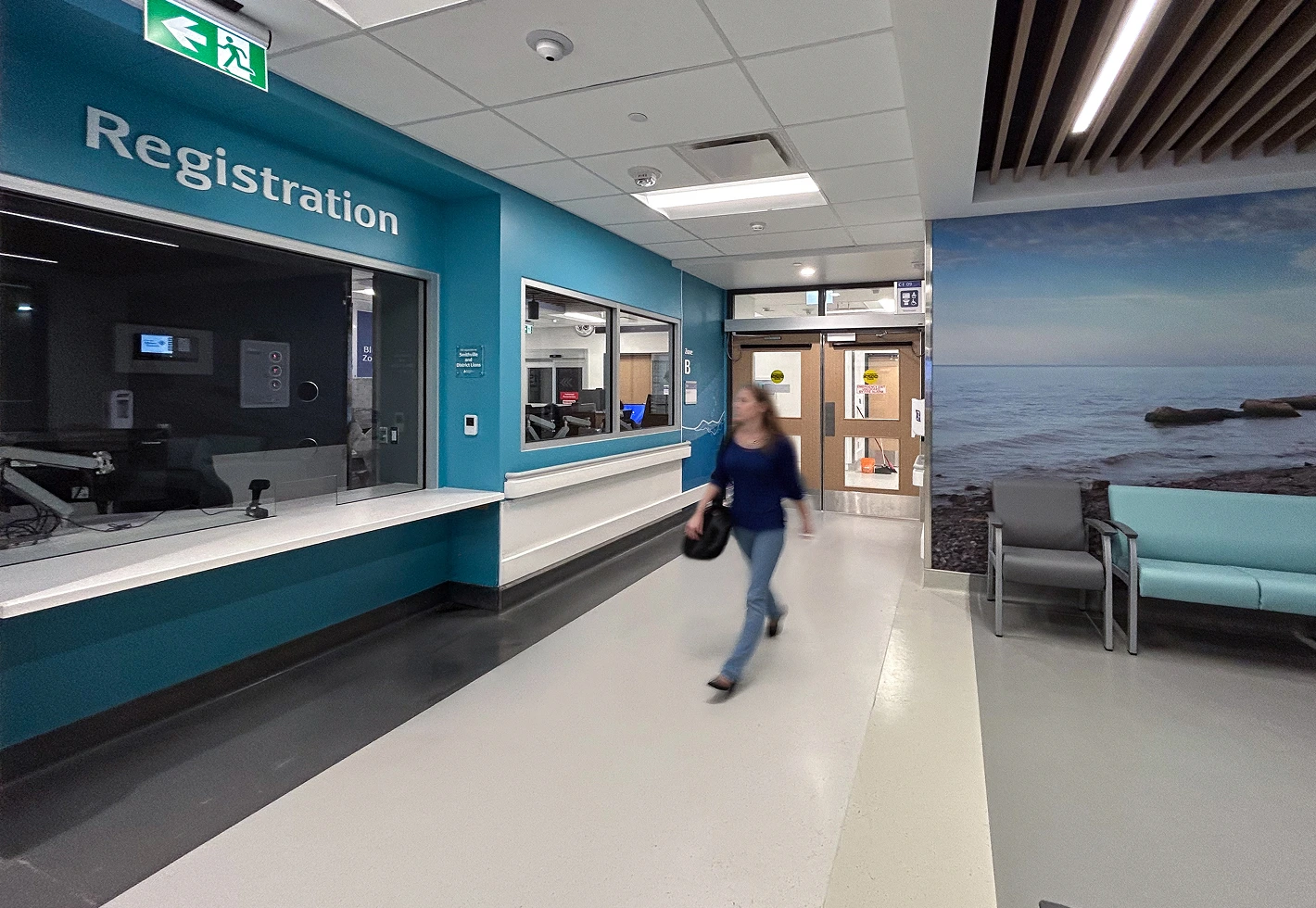
Signage and placemaking creates a welcoming and functional lobby experience
High-stress areas benefit from careful use of biophilic (nature) activation, while murals serve as both visual enhancements and memorable landmarks for navigation

A holistic wayfinding masterplan

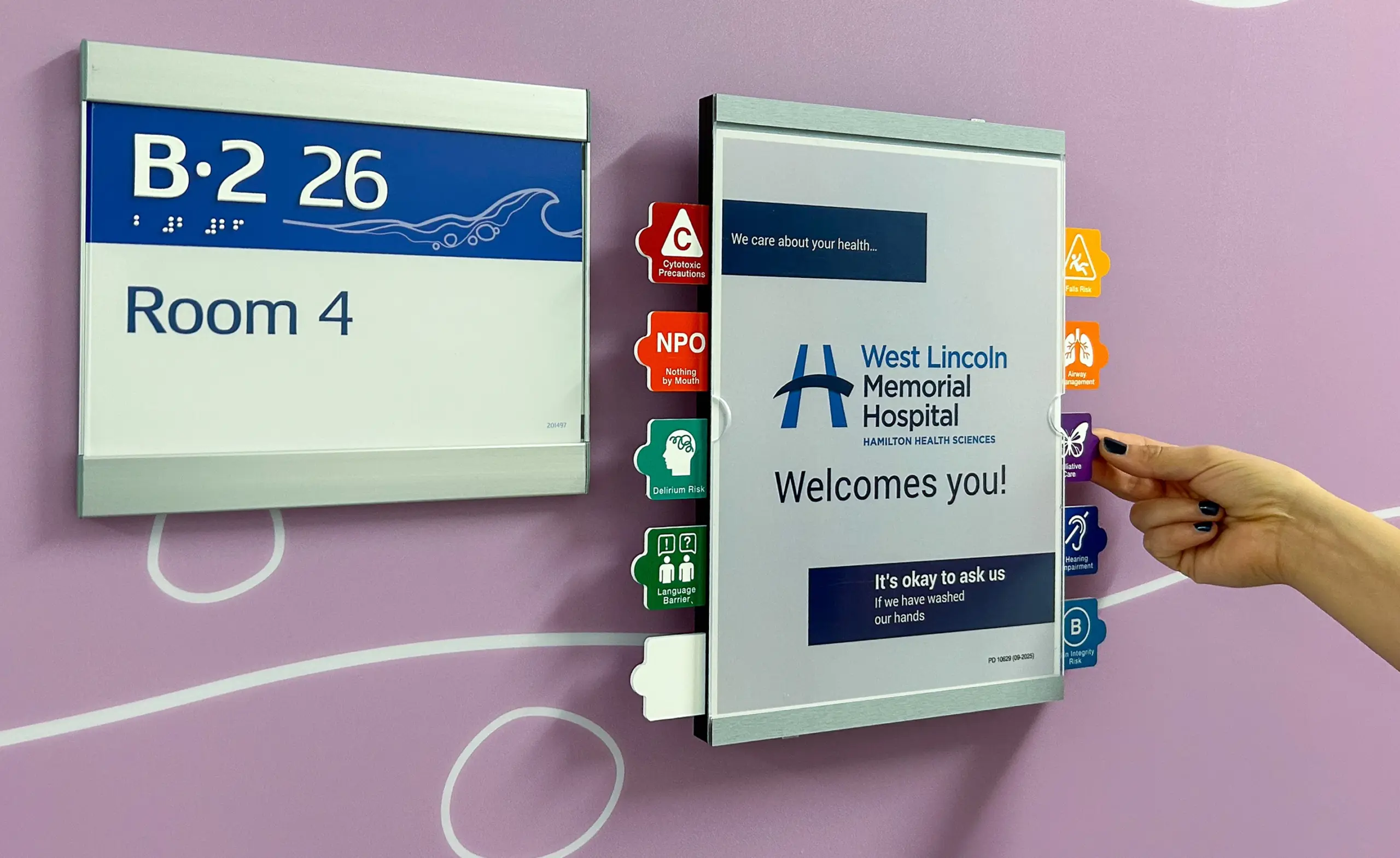
Our approach to creating a highly intuitive wayfinding experience for staff, patients and visitors also involved the development of static signage to meet the needs of people of all abilities. Using hospital standards as a guide, Forge crafted a robust sign program and identified where distinct information was needed for the new facility. This included designing signs with a sensibility of messaging and icons in specific cases for both staff and public.

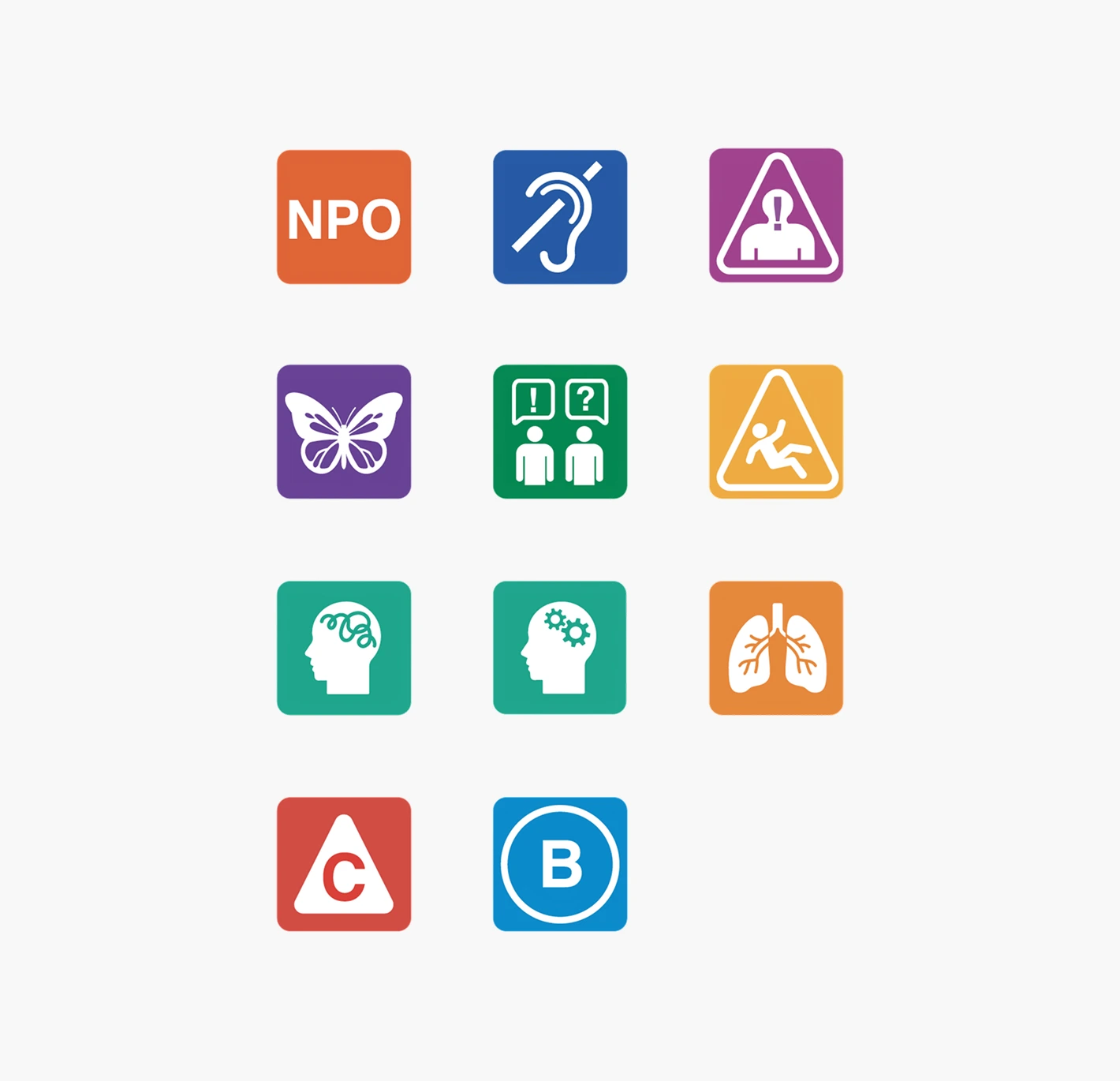
Initial public signage and staff icon developments
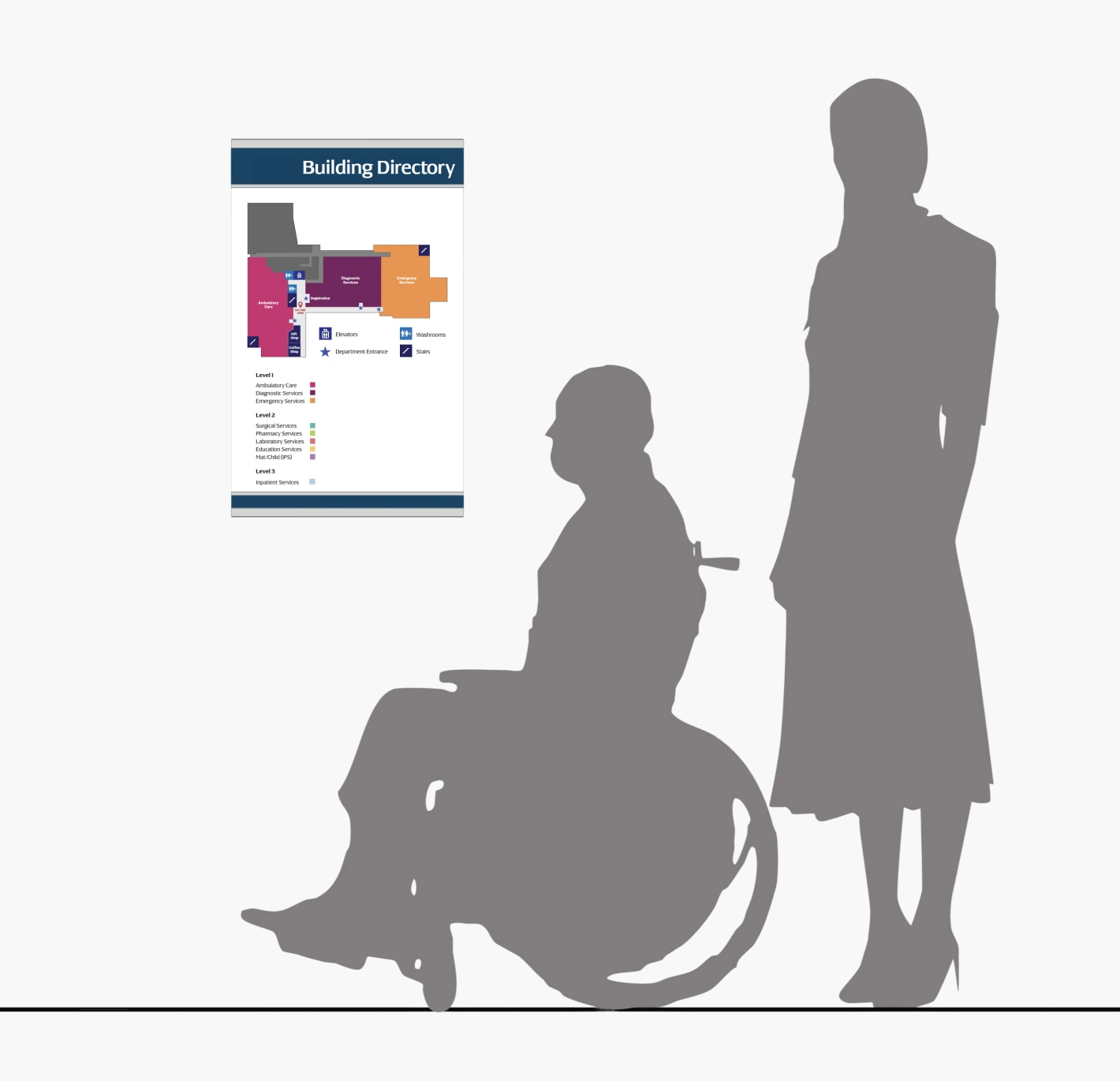
Accessible signage serves the needs of staff and public, while also being highly adaptable for day-to-day patient care

A joyous celebration of life

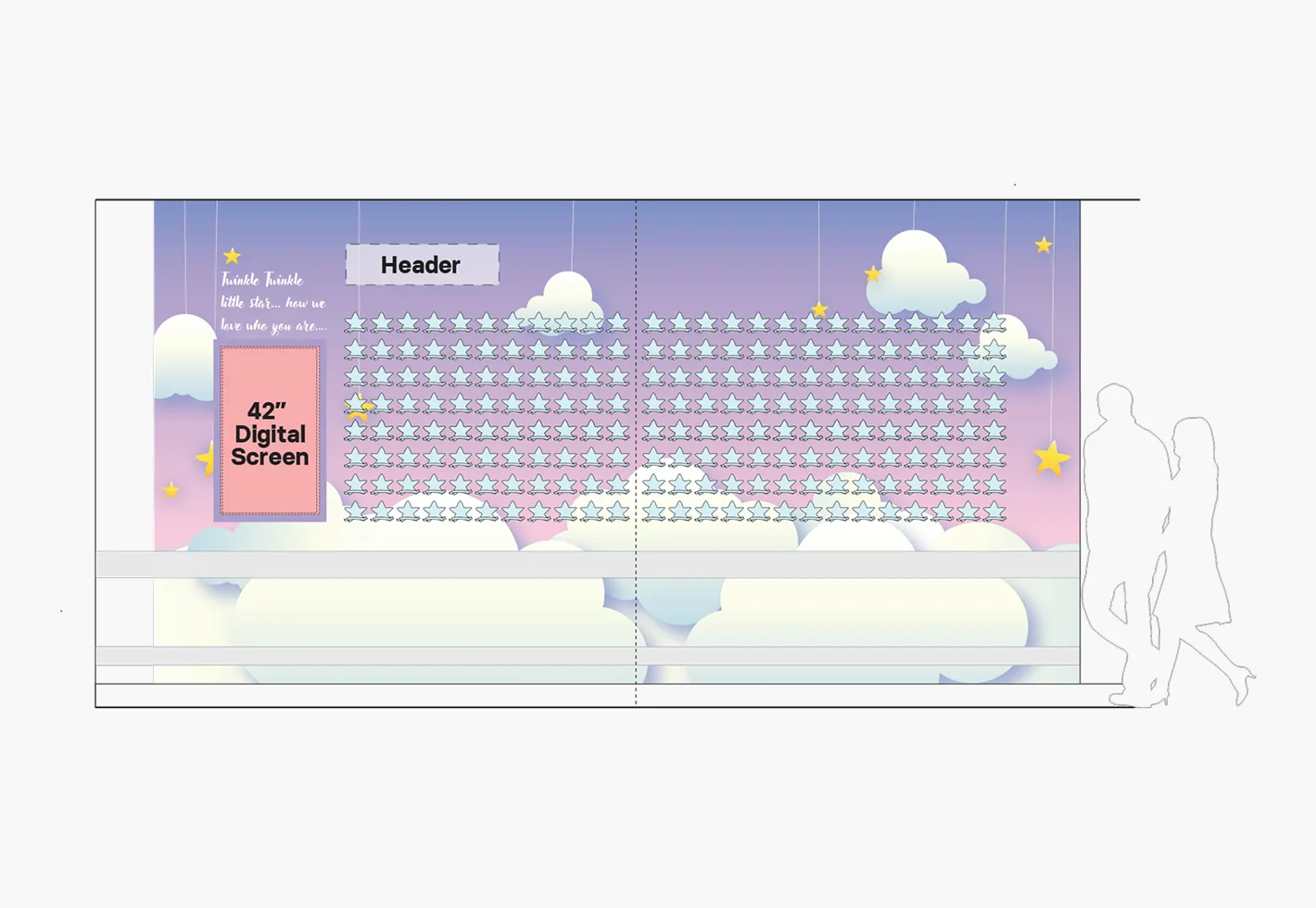
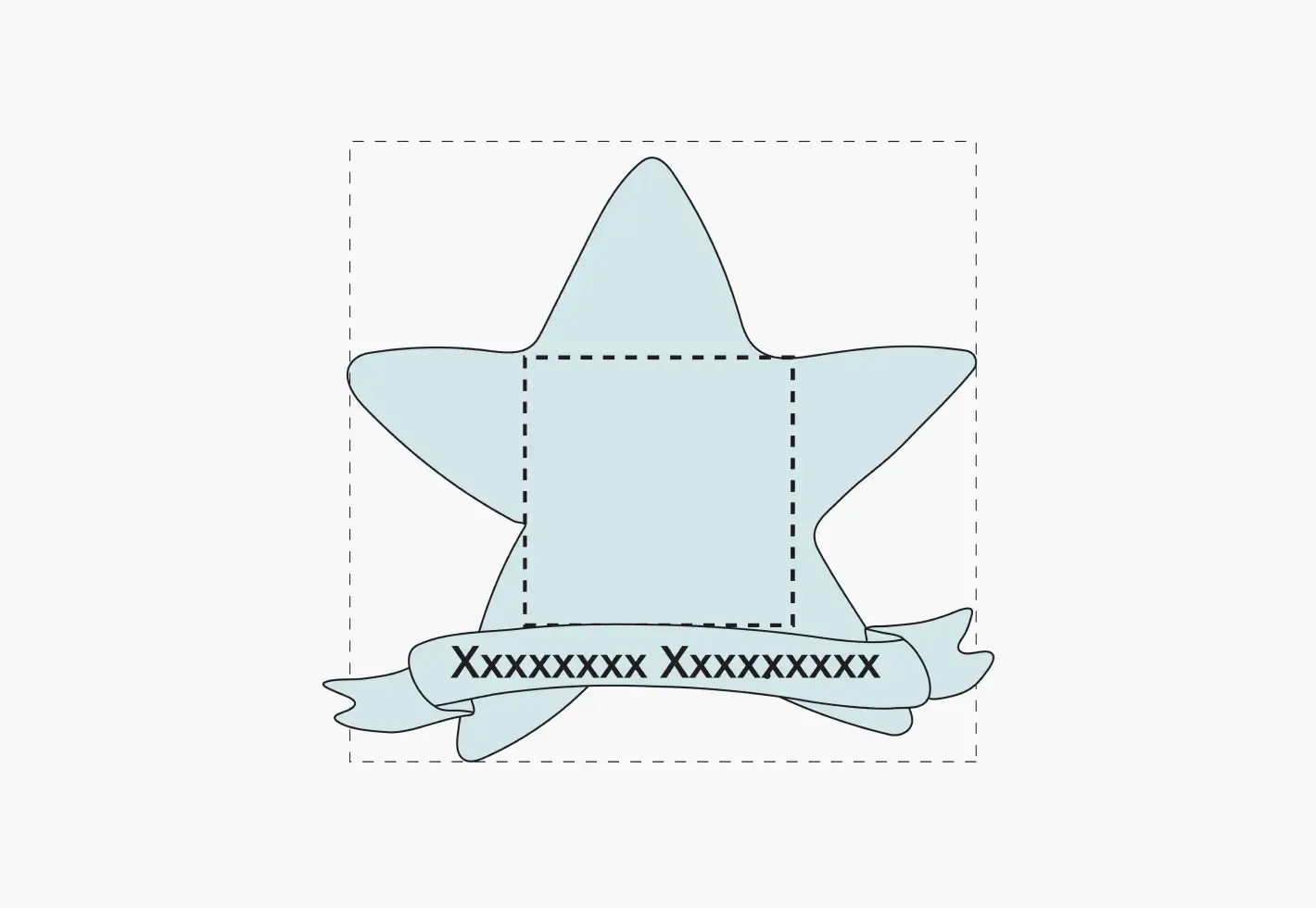
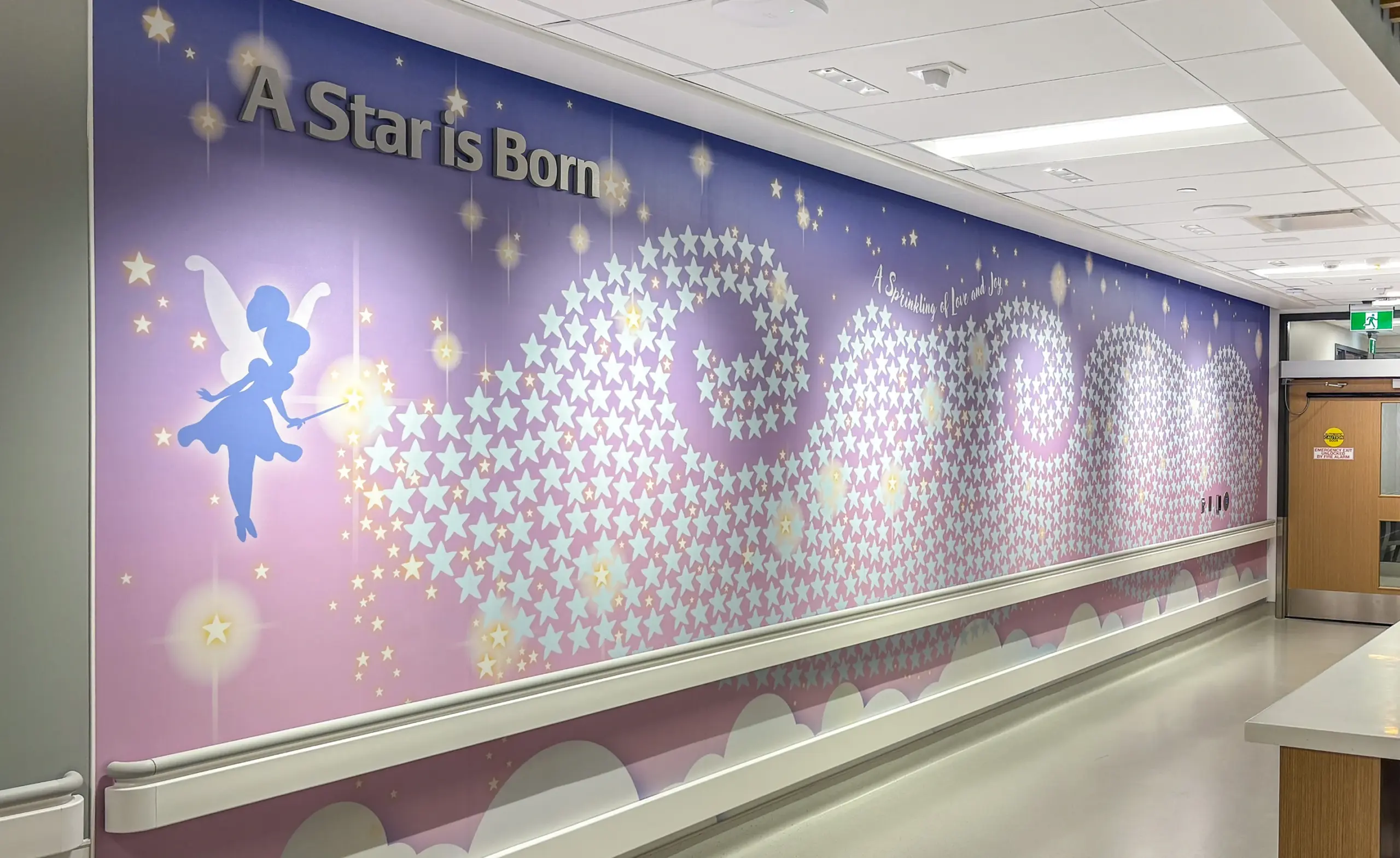
Part of the WLMH hospital experience is creating opportunities for the community to celebrate moments of joy. Working closely with the hospital foundation team, Forge developed a themed baby wall to help ensure new parents and staff can enjoy a shared place of connection. The ‘A Star is Born’ wall was developed with the intent for future application of newborn names as applied stars. The initial single lobby location was expanded to include a larger location inside the department.
Initial graphic and baby name plaque development
The entry experience for Obstetrics opens an opportunity for community building with applied newborn names, while also making for a joyful gateway walk
  • 3 storeys
  • 5K+ square metres
  • 61 beds
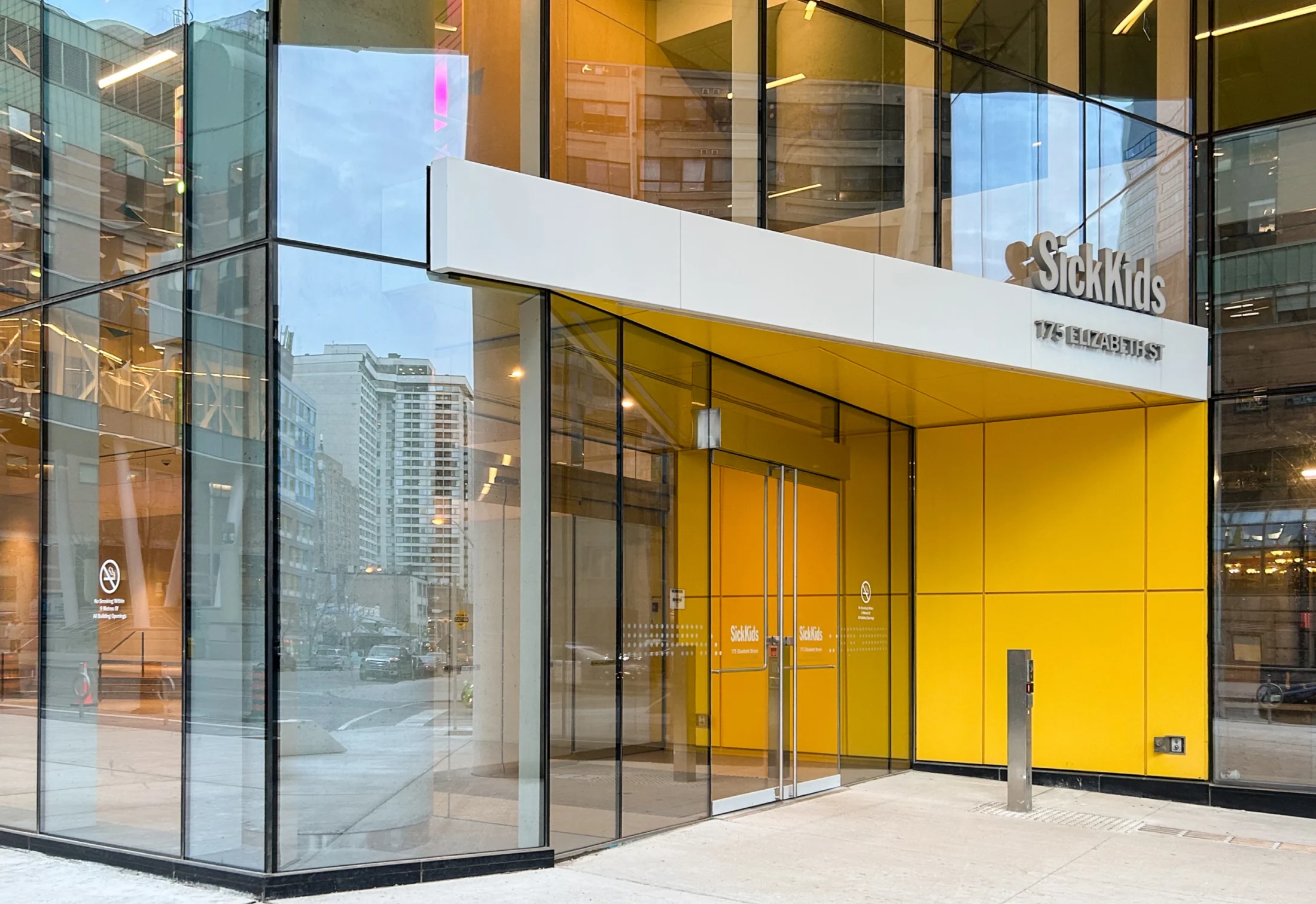
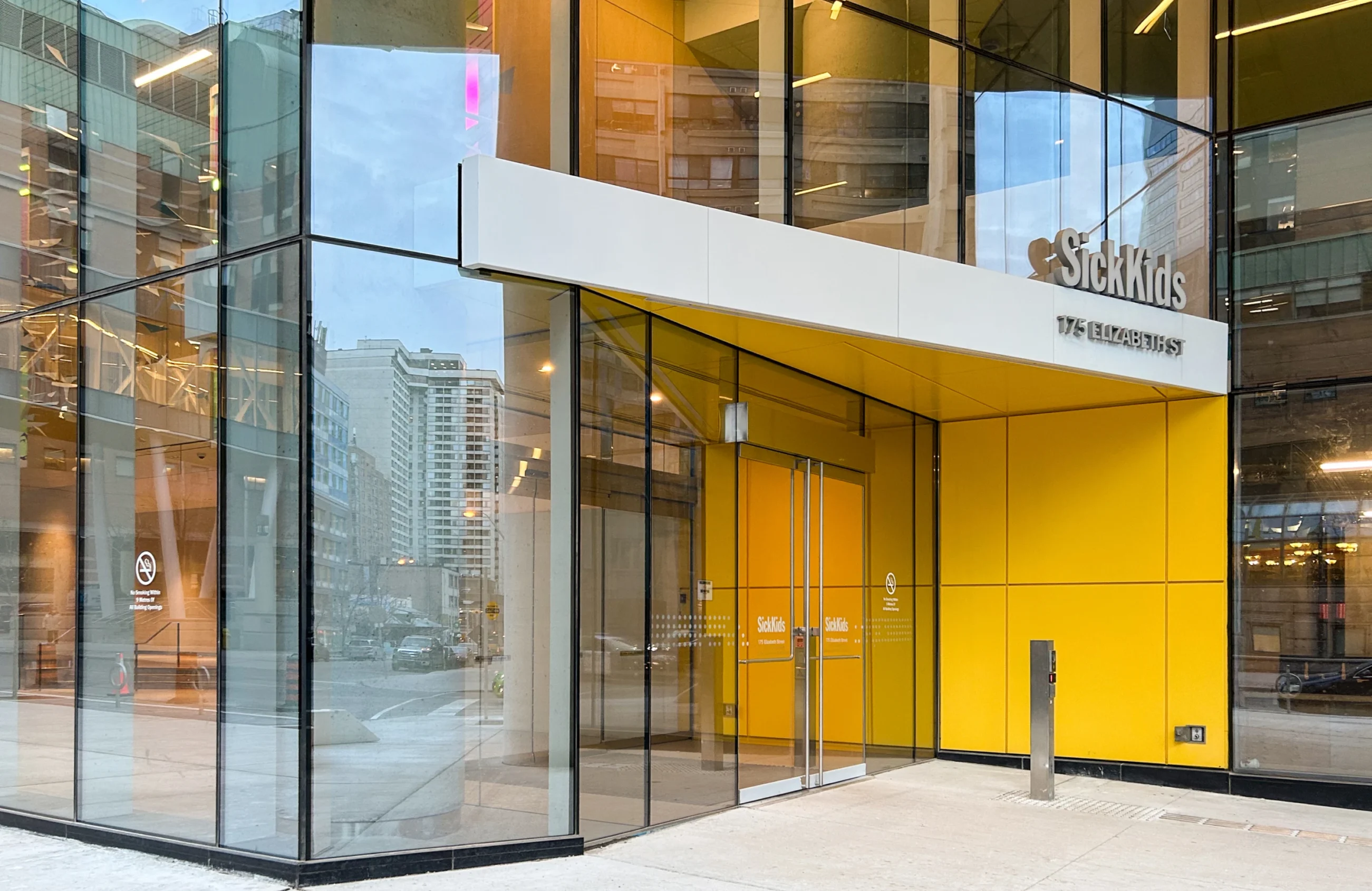
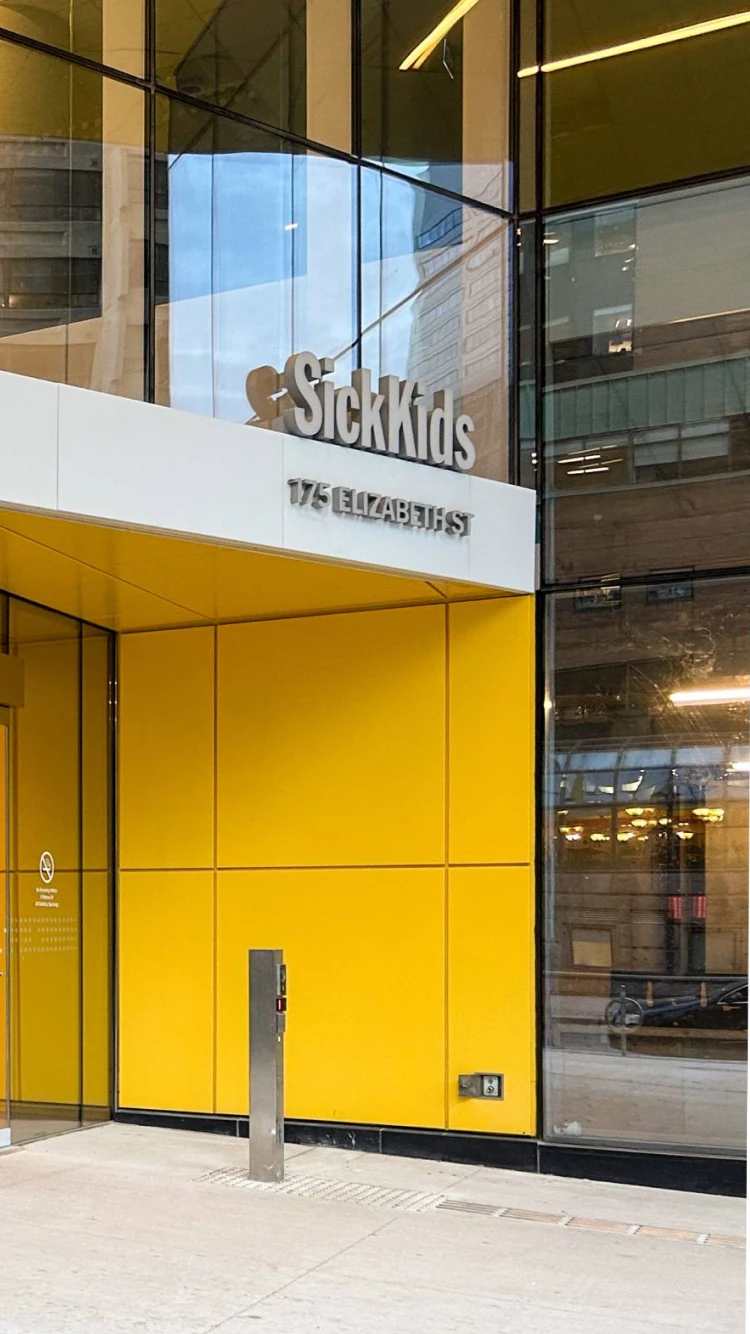
SickKids hospital entrance at 175 Elizabeth Street with yellow accents. SickKids logo and building entrance at 175 Elizabeth Street.

The Hospital for Sick Children

Toronto, ON
Services Deliverables
  • Wayfinding
  • Signage
  • Placemaking
  • Masterplan

A connected hub for collaboration, education and research

Designed as a hub for virtual care, collaboration, education, research and events—the new Patient Support Centre at The Hospital for Sick Children (SickKids) is a space that fosters innovation. In keeping with SickKids values, this ambitious new space meant developing an experience which expresses a feeling of welcome and support. Forge was invited by B+H Architects to create a wayfinding masterplan that ensured visitor peace of mind, while creating a distinct sense of place and community connectedness for staff and visitors.

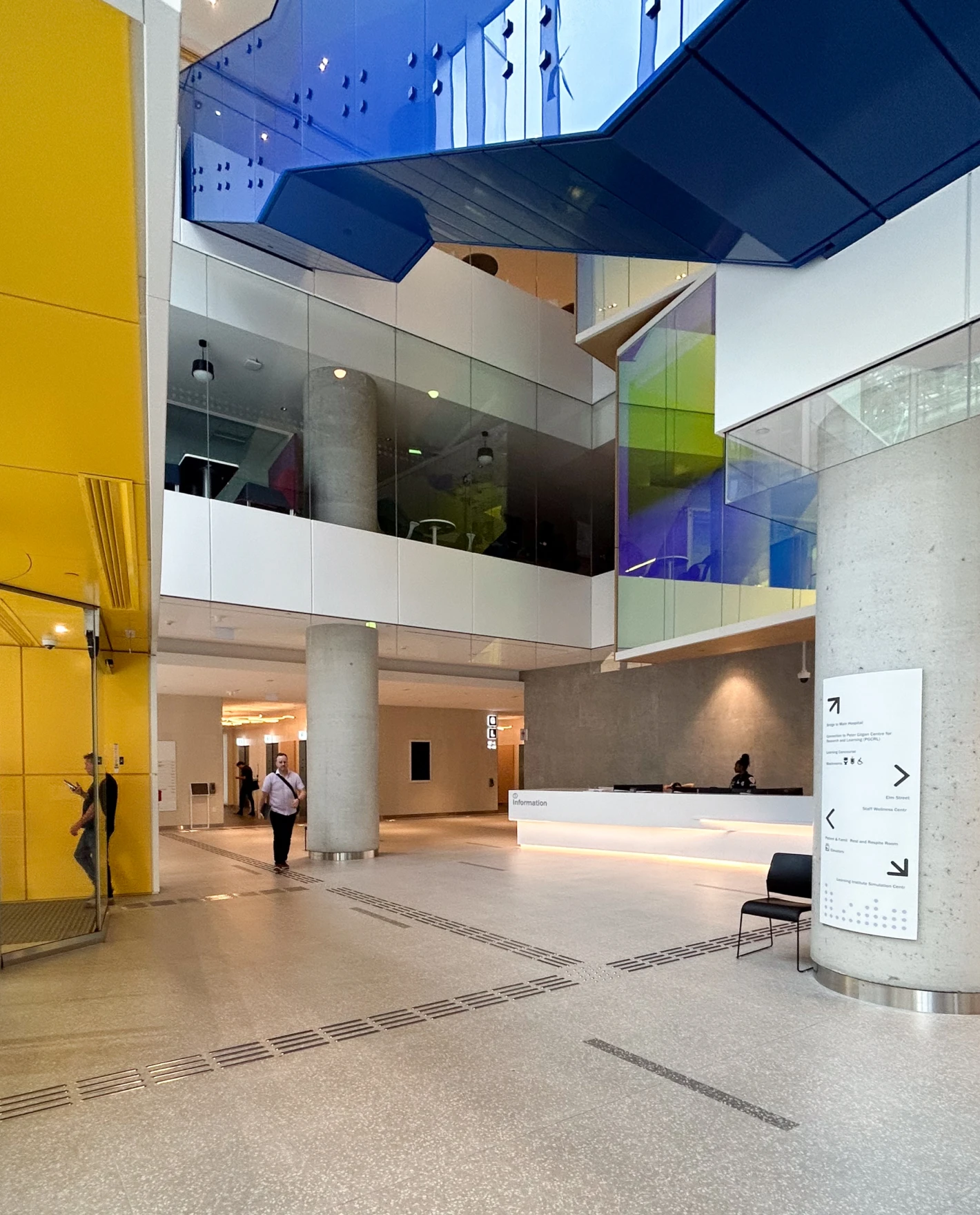
Modern hospital lobby with yellow and blue accents, a reception desk, and people walking.
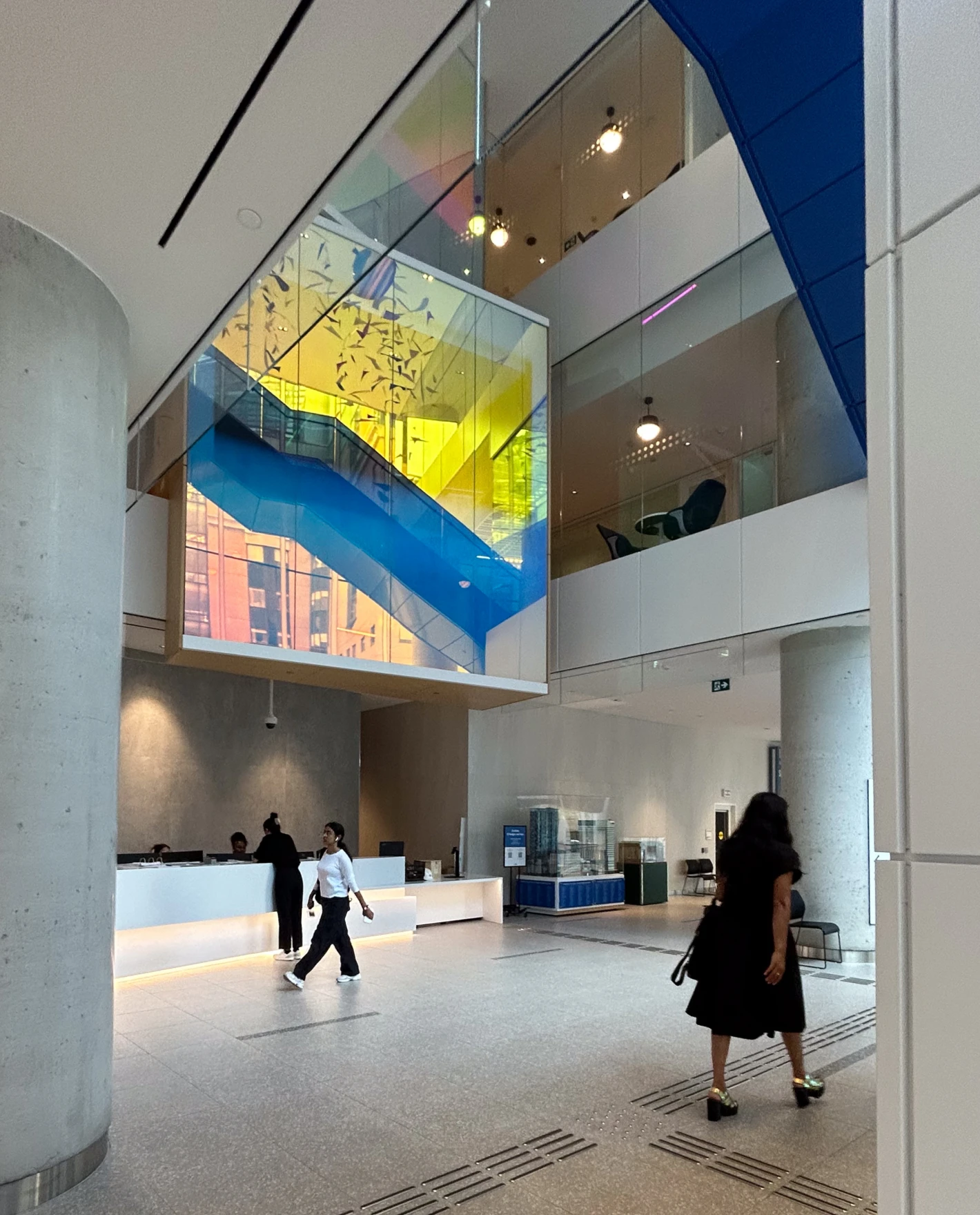
Modern interior with colourful glass staircase and people walking.
A vibrant lobby experience with colour accents visible at ground level

Intuitive wayfinding through purposeful placemaking

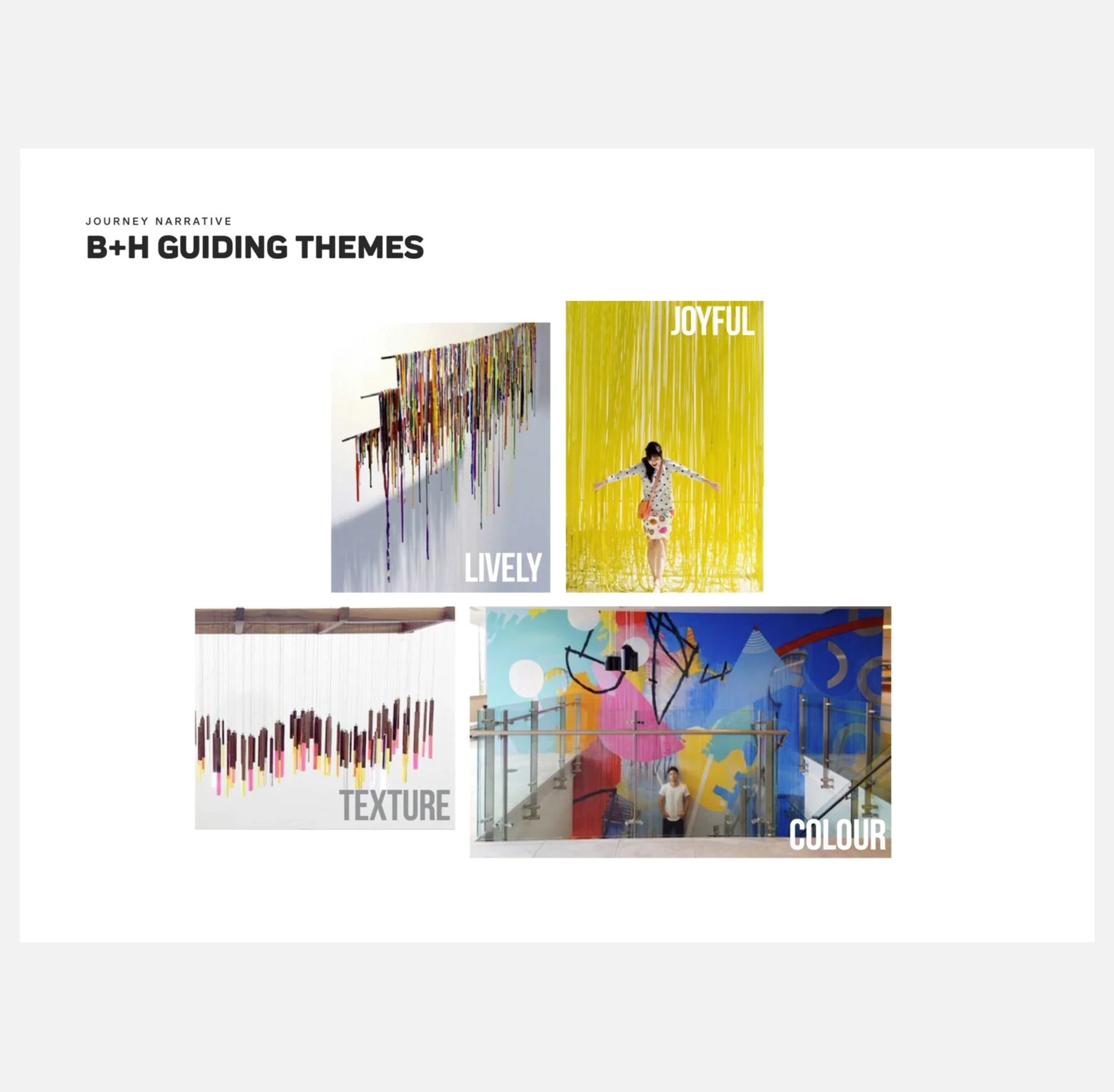
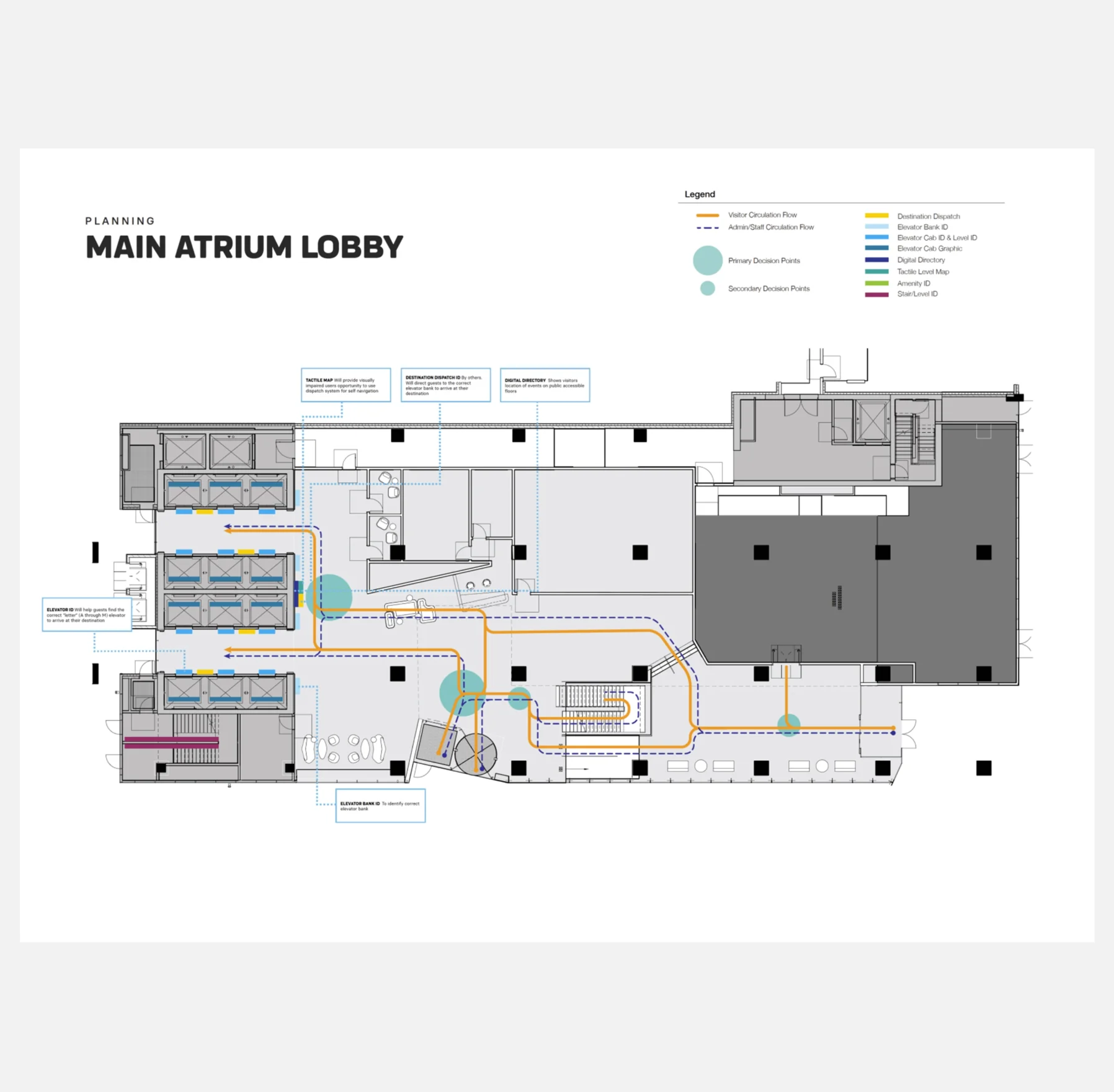
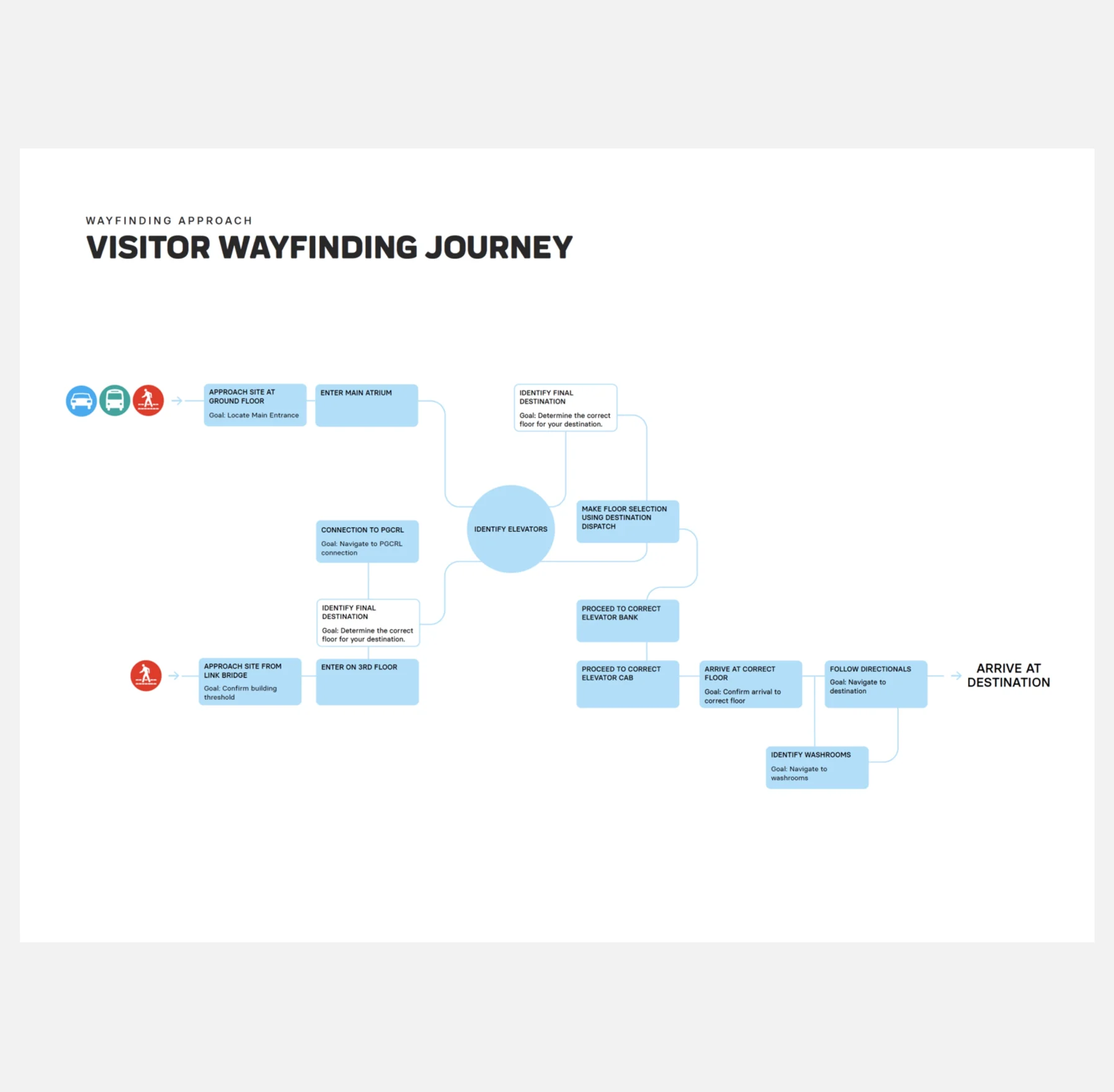
Forge began its masterplanning of the wayfinding journey through careful consideration of the voices that space and place concerns; namely kids. Ensuring an intuitive experience throughout all spaces meant collaborating with relevant groups to create a themed journey narrative. Our wayfinding approach also prioritizes intuitive paths of circulation through the use of placemaking.

Blue bicycle icon next to a parking sign with an arrow
Blue icons of people and arrows on a dotted background, indicating gender-neutral restrooms.
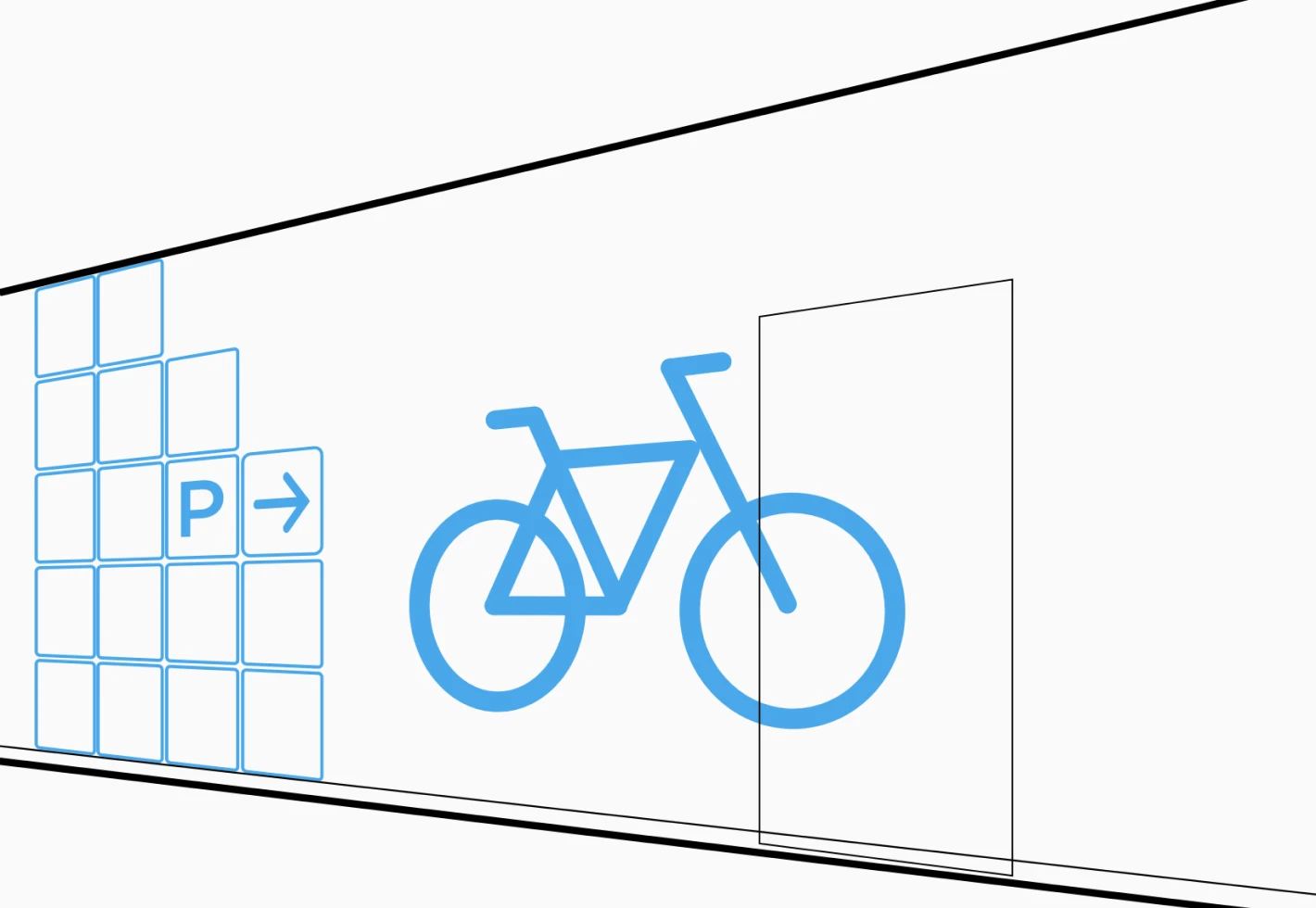
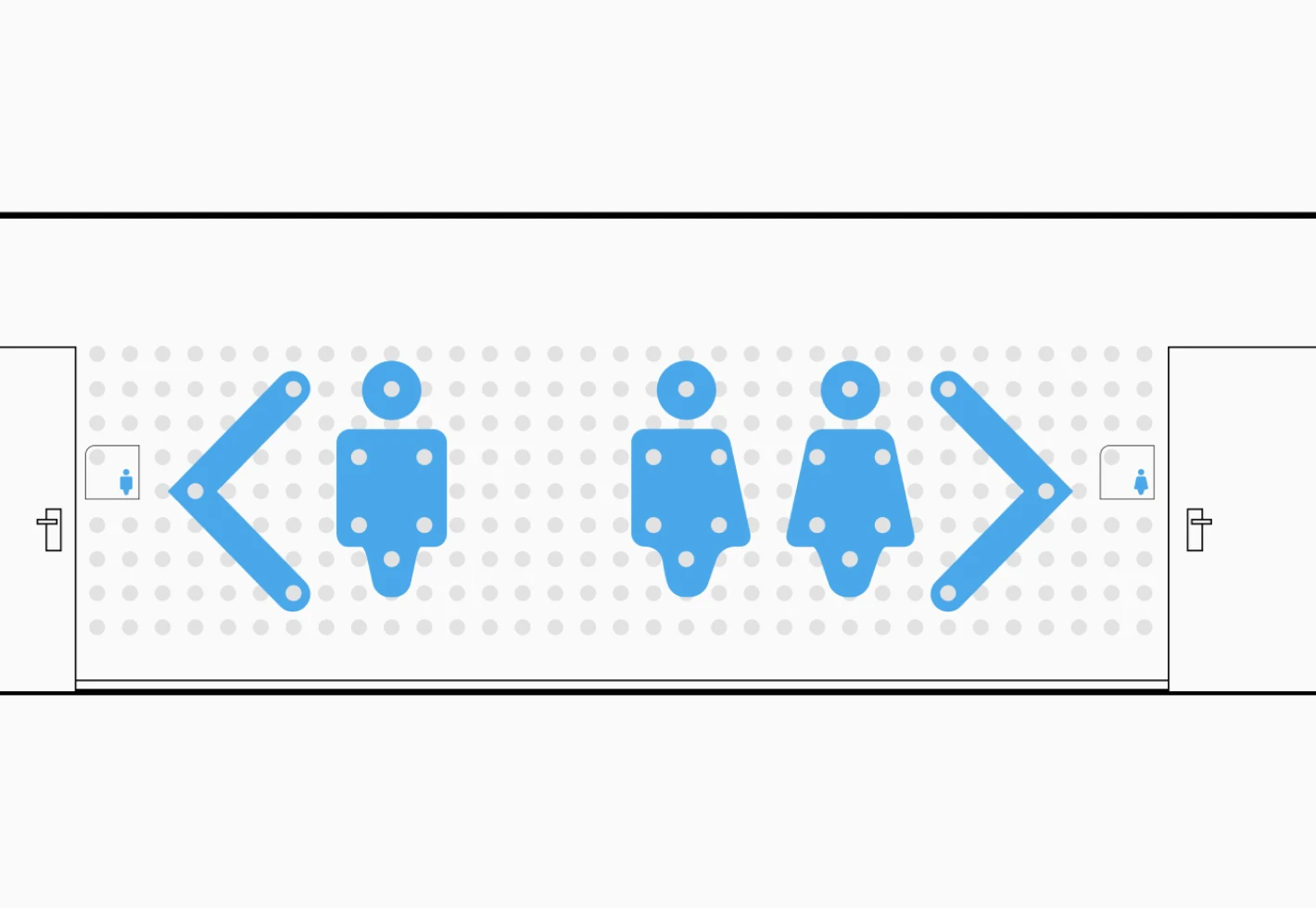
Initial exploration of iconography as supergraphic landmarking
Elevator lobby with yellow number 6 signage and modern lighting.
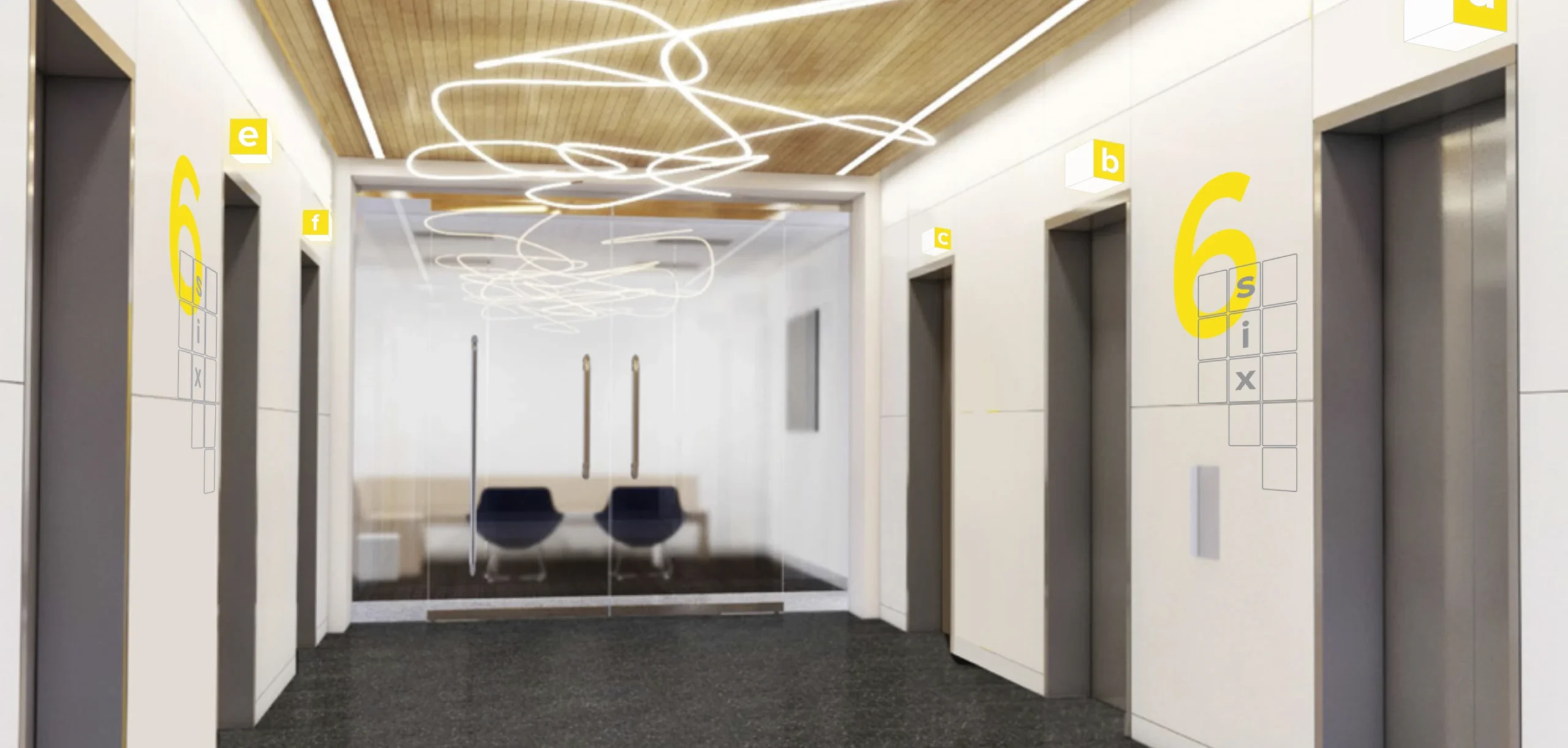
Elevator lobby signage conceptual render
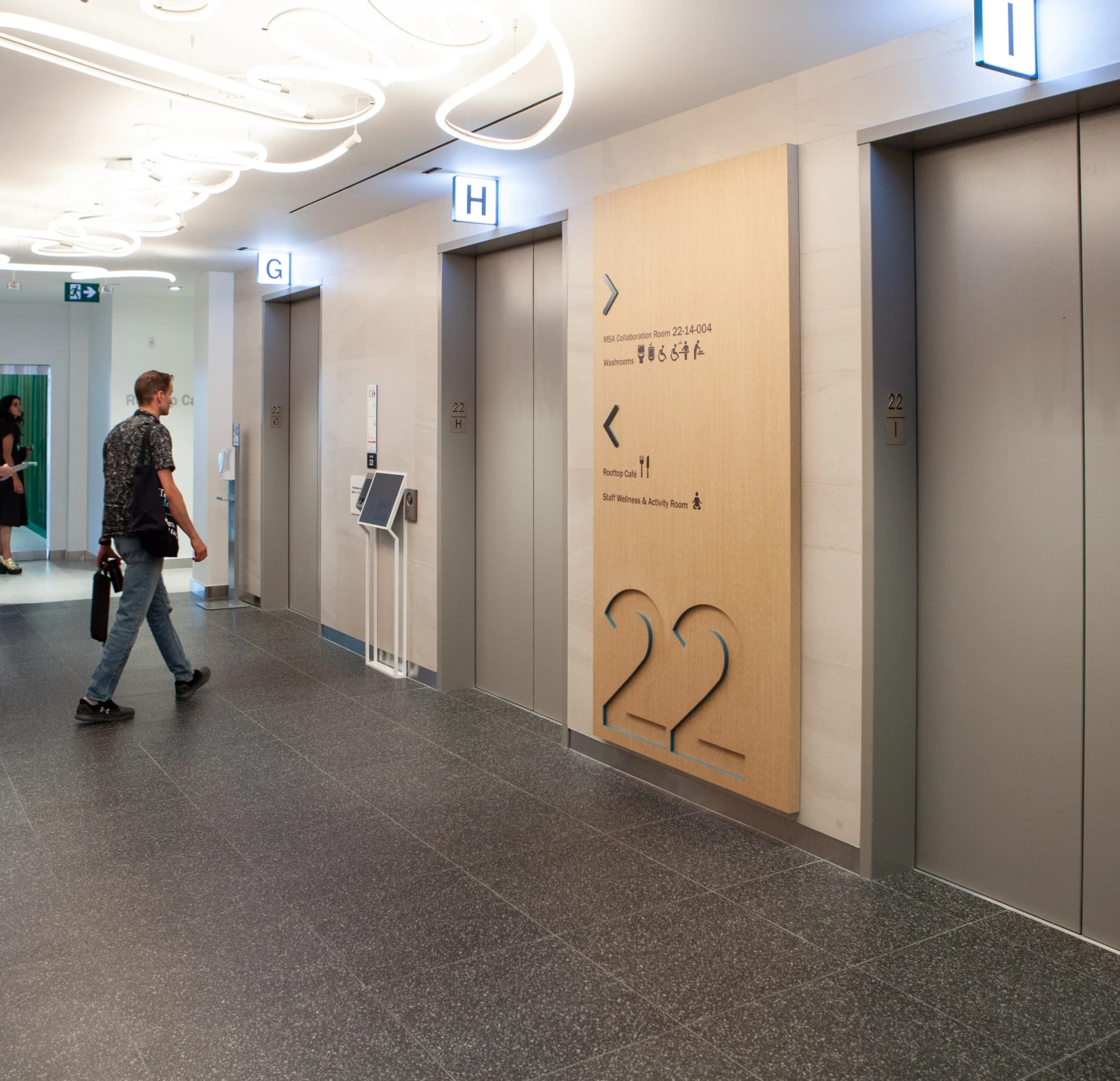
Close-up of the number 22 carved into a wooden surface with blue accents.
Modern office hallway with elevators and directional signage.
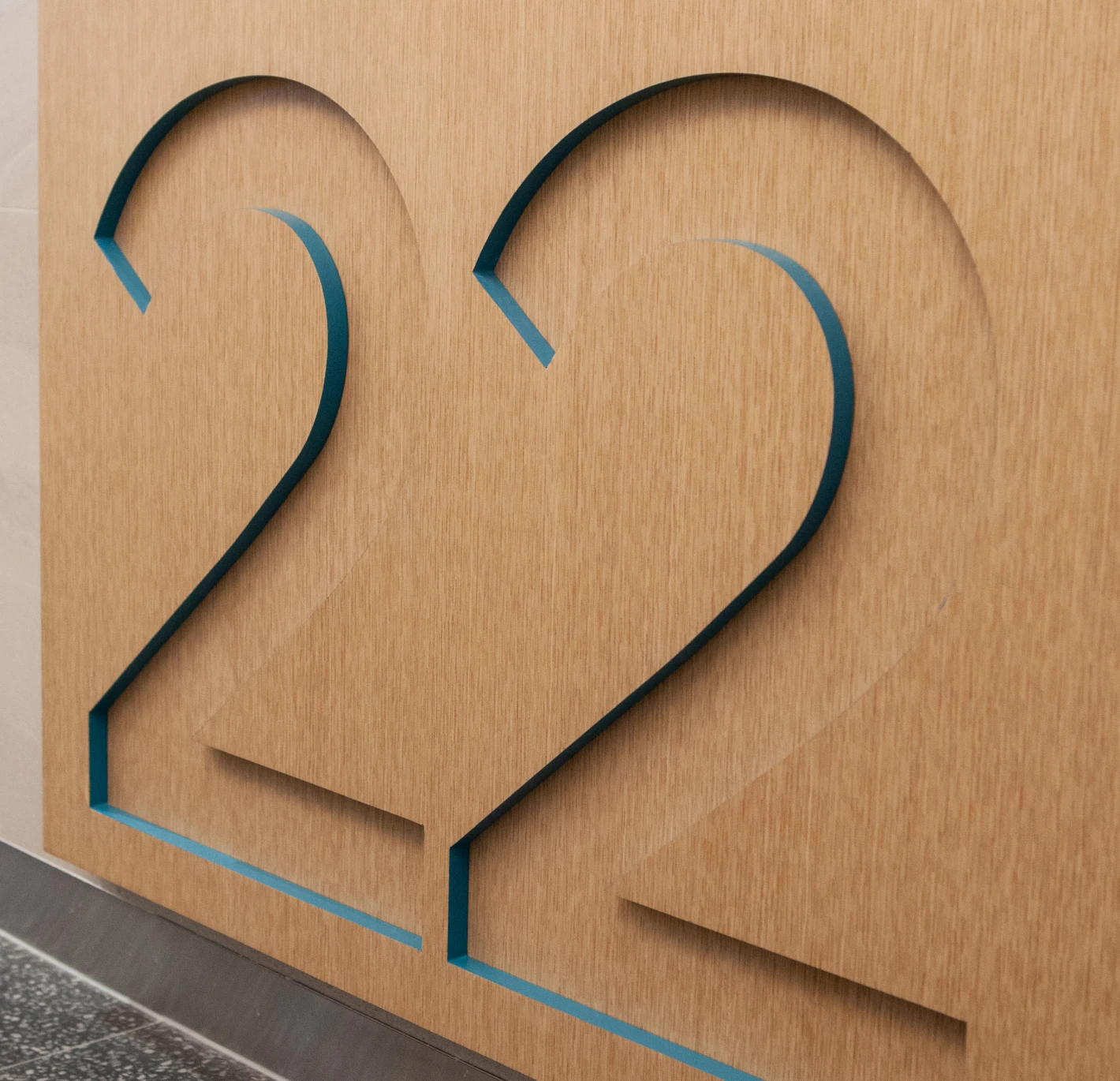
Final elevator lobby integrates level number as landmark element with iconography and level colours

A journey of colour

Colour was another layer of the expression of joy and play integrated throughout each level of the building. Working closely with stakeholders, Forge curated hints of colour cues into signage and murals that changed on each floor. Working in harmony with interior design palettes, this journey of colour strengthens the sense of place identity whether at street level or travelling floor to floor. 

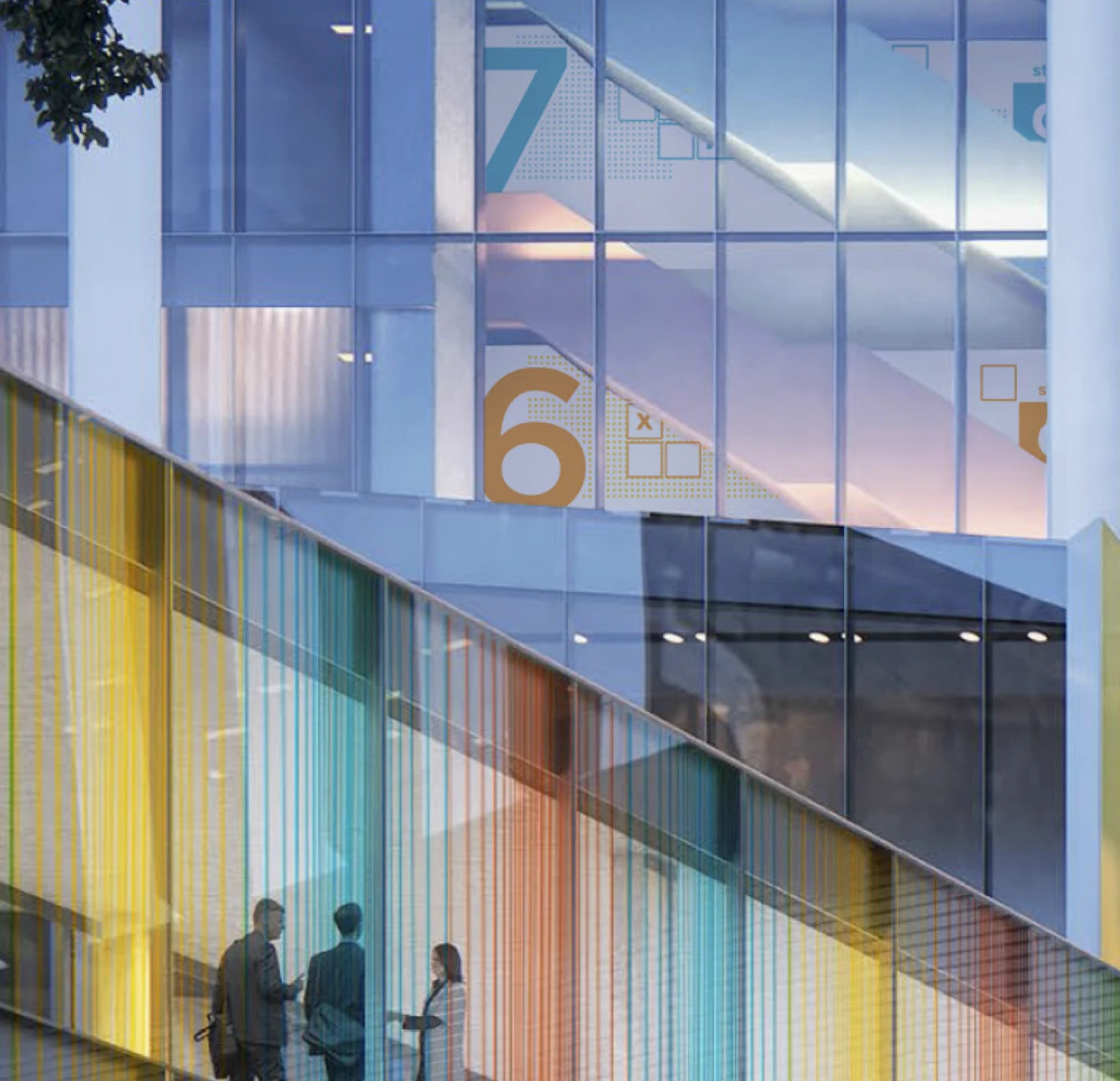
Modern building with colourful string facade and people walking on stairs.
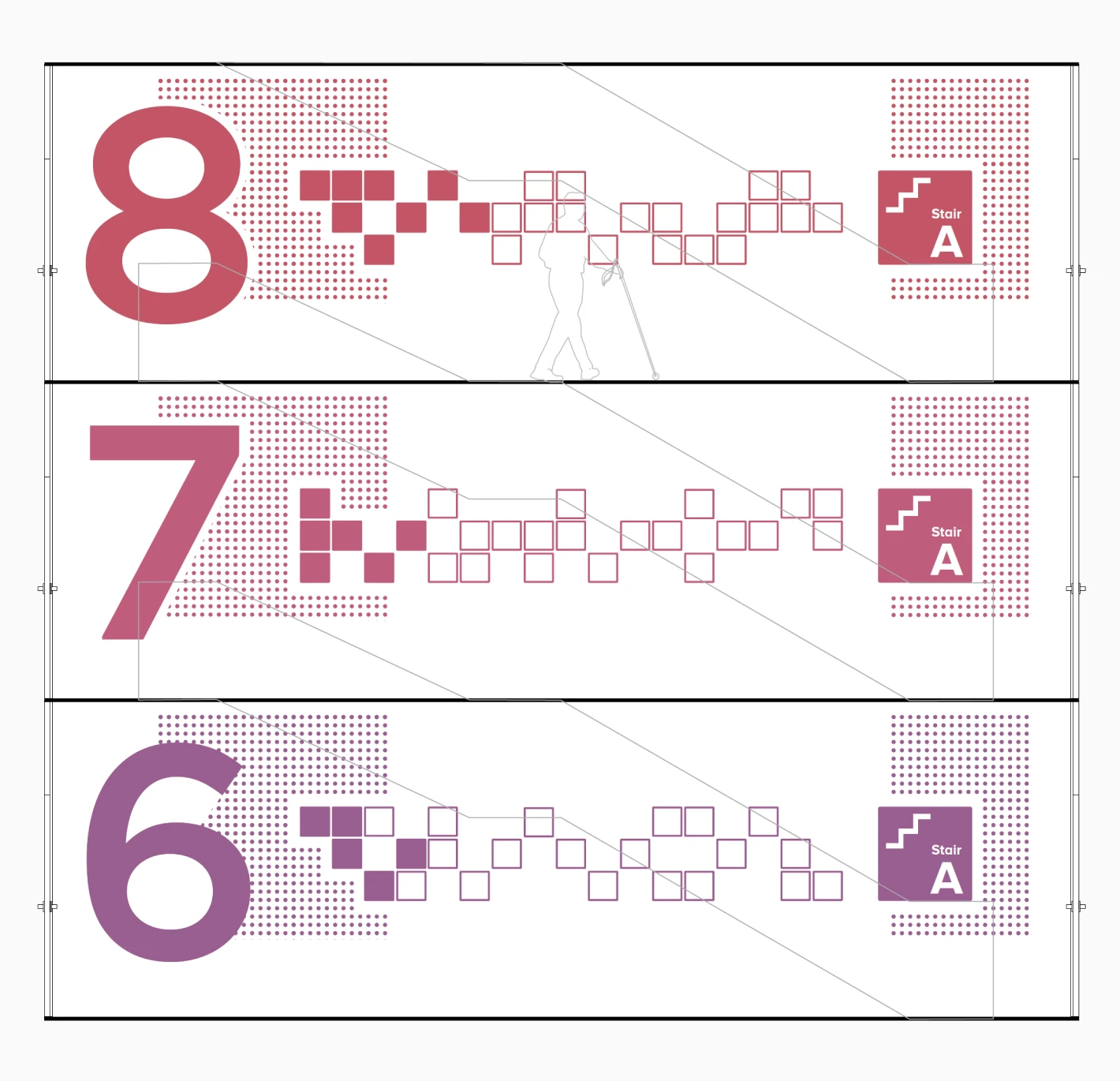
Floor markers for levels 8, 7, and 6 with
Level ID concept rendering and feature stairwell elevation
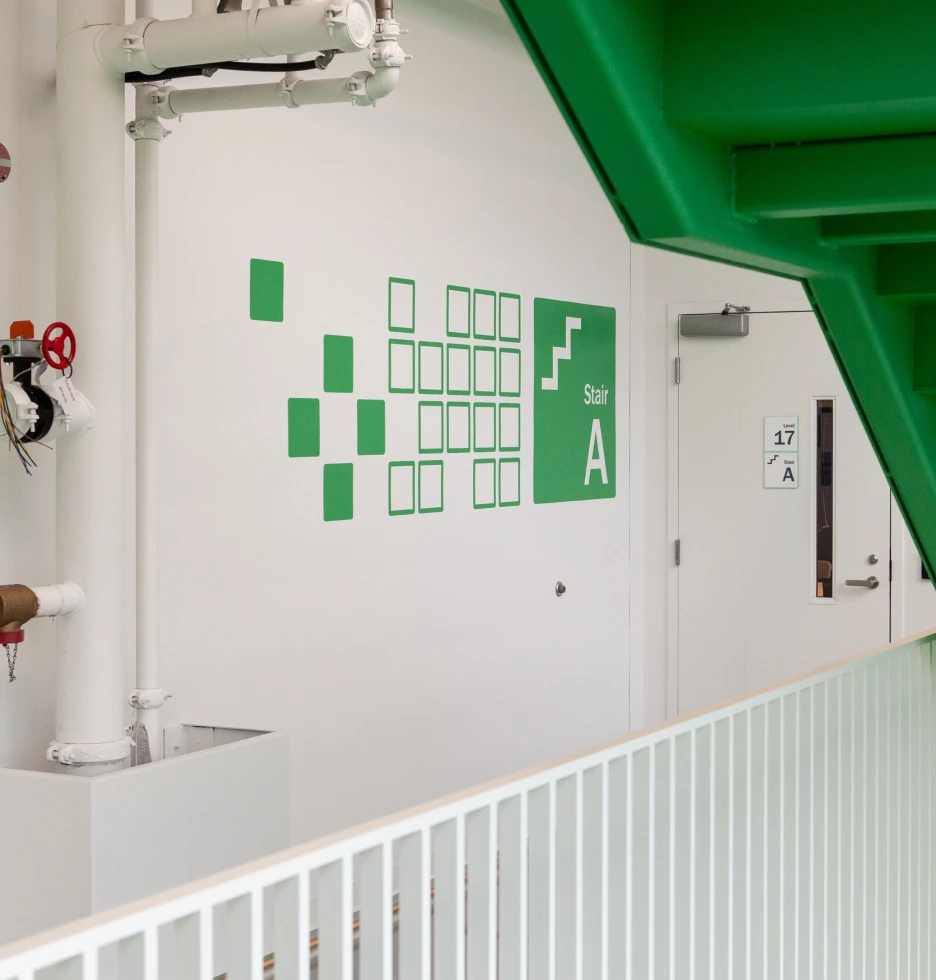
Green stairwell signage with abstract green squares on a white wall.
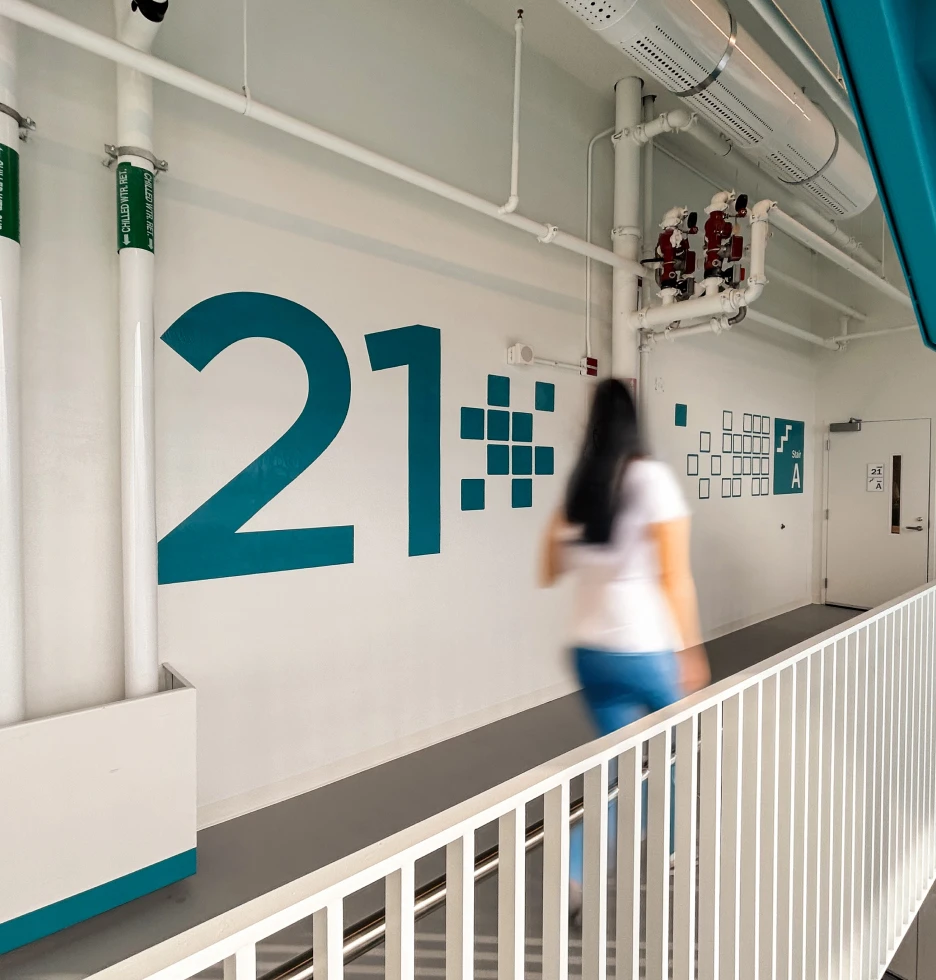
A person walks past a large number 21 on a white wall with pipes overhead.
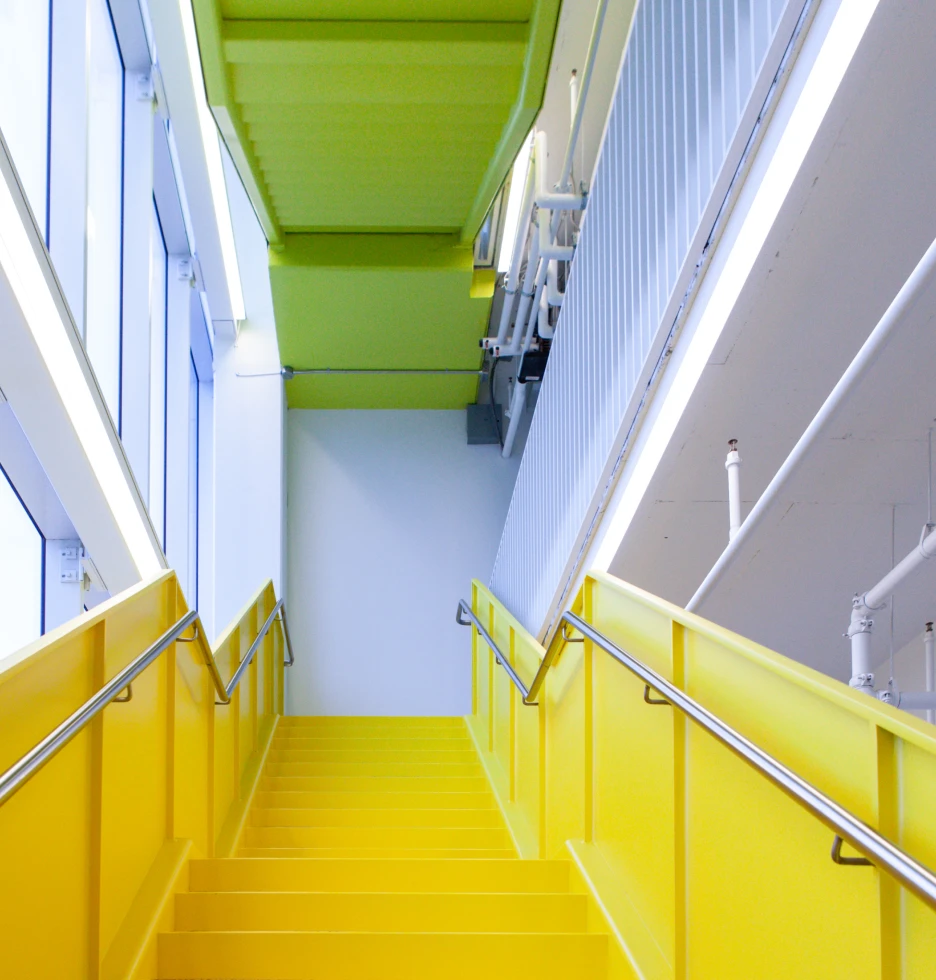
Bright yellow staircase with green ceiling and large windows.
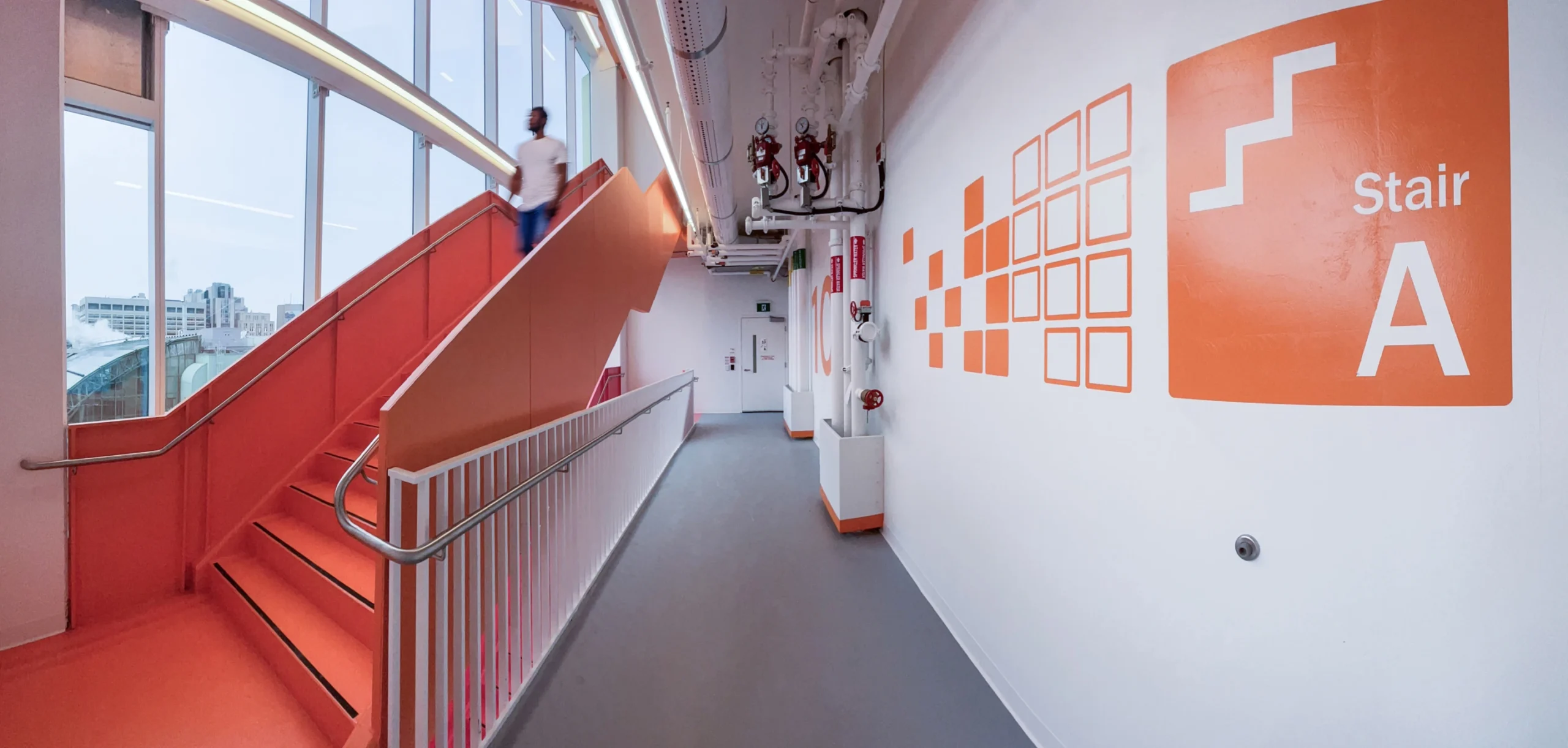
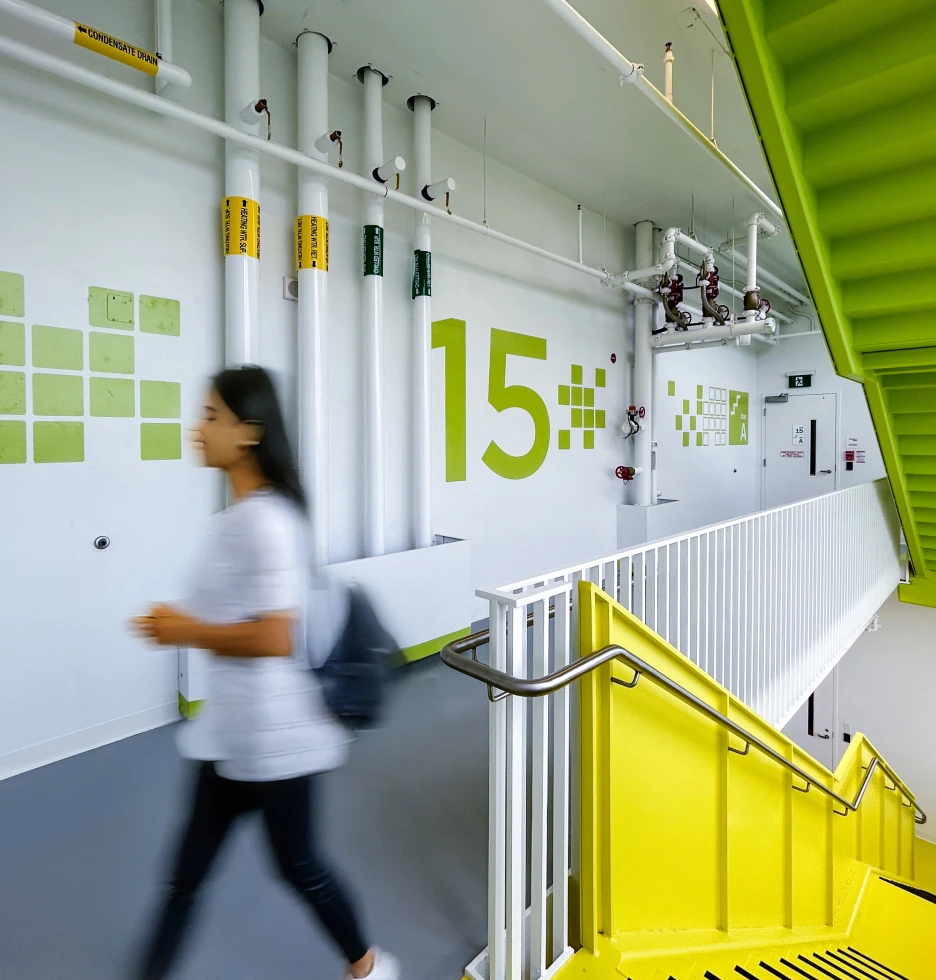
A colourful journey in this feature stairwell encourages use of an underused space to promote well-being
Modern orange staircase with a person walking down, leading to a hallway with
Modern hallway with bright yellow stairs and green accents, a person walks by.
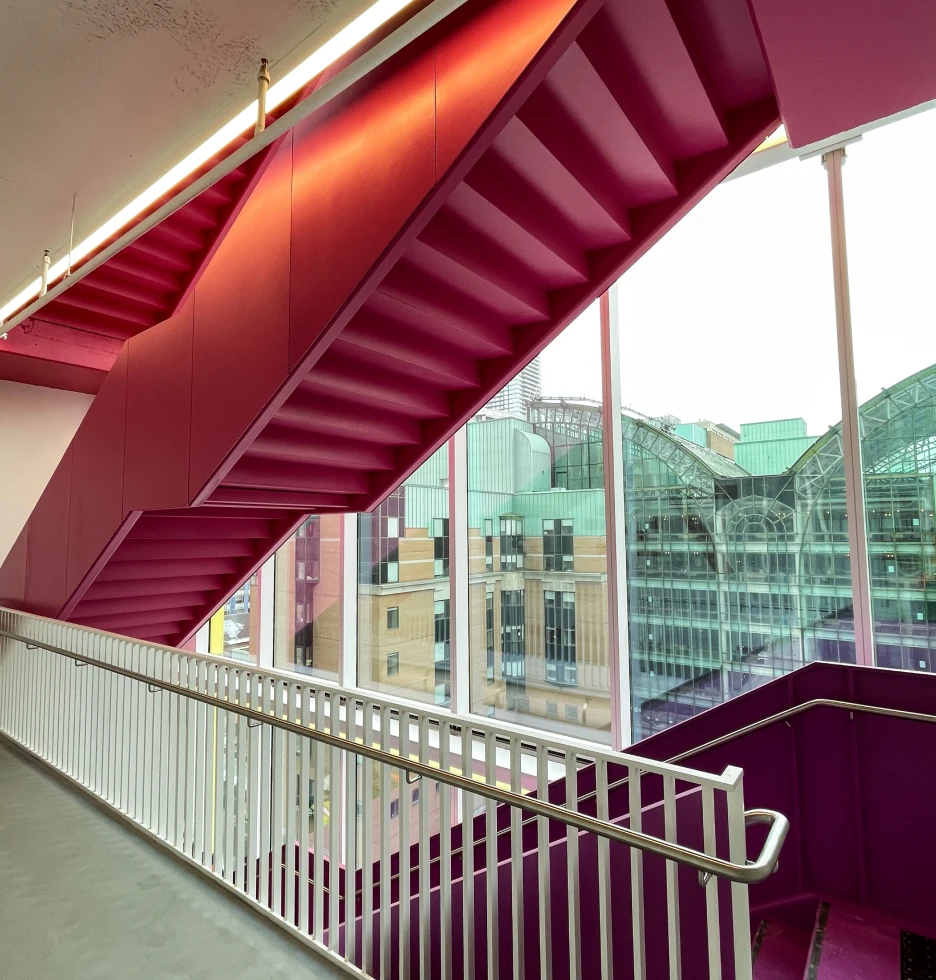
Modern pink staircase with a view of city buildings through a large window.
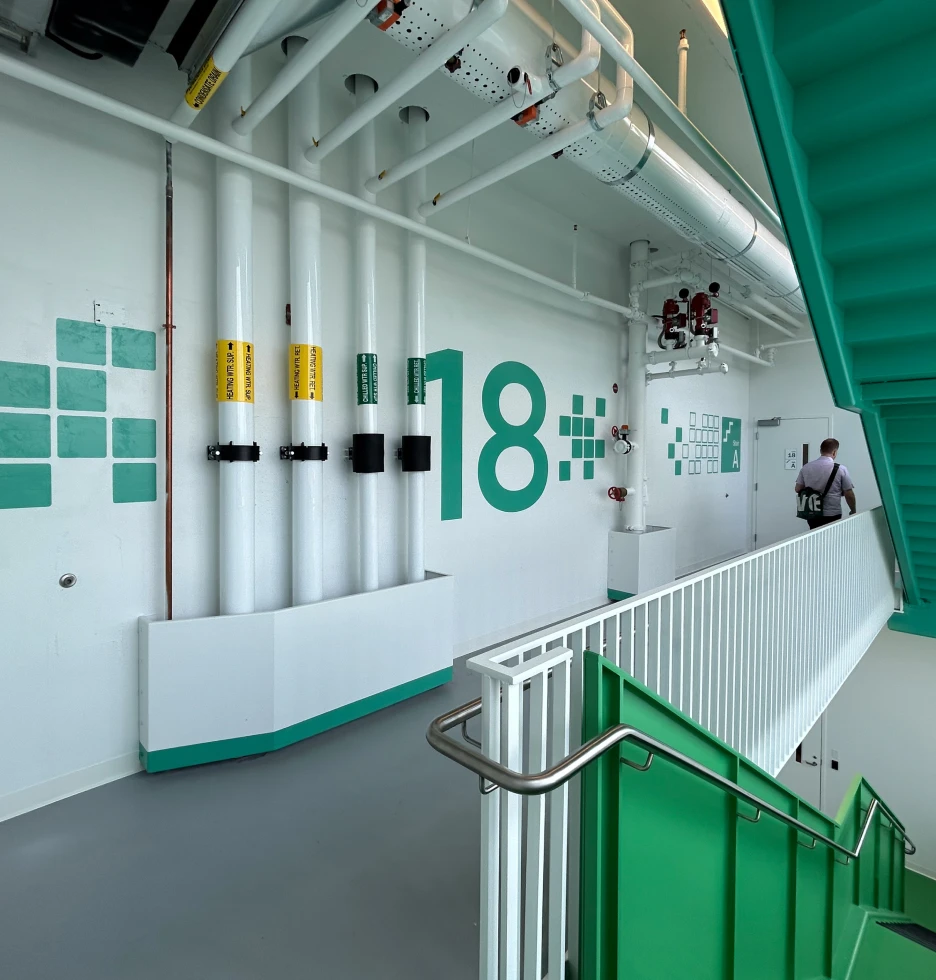
Interior view of a modern hallway with green accents and large number 18 on the wall.

A metaphor for play

Crafting the space’s influence on how people feel became foundational to establishing a theme for placemaking. Forge explored children’s perspectives of joy and play as metaphors for developing a consistent visual language that became integral to each element of the wayfinding design. Taking cues from block letters, peg and post toys, provided a visual framework that developed over the course of the project.

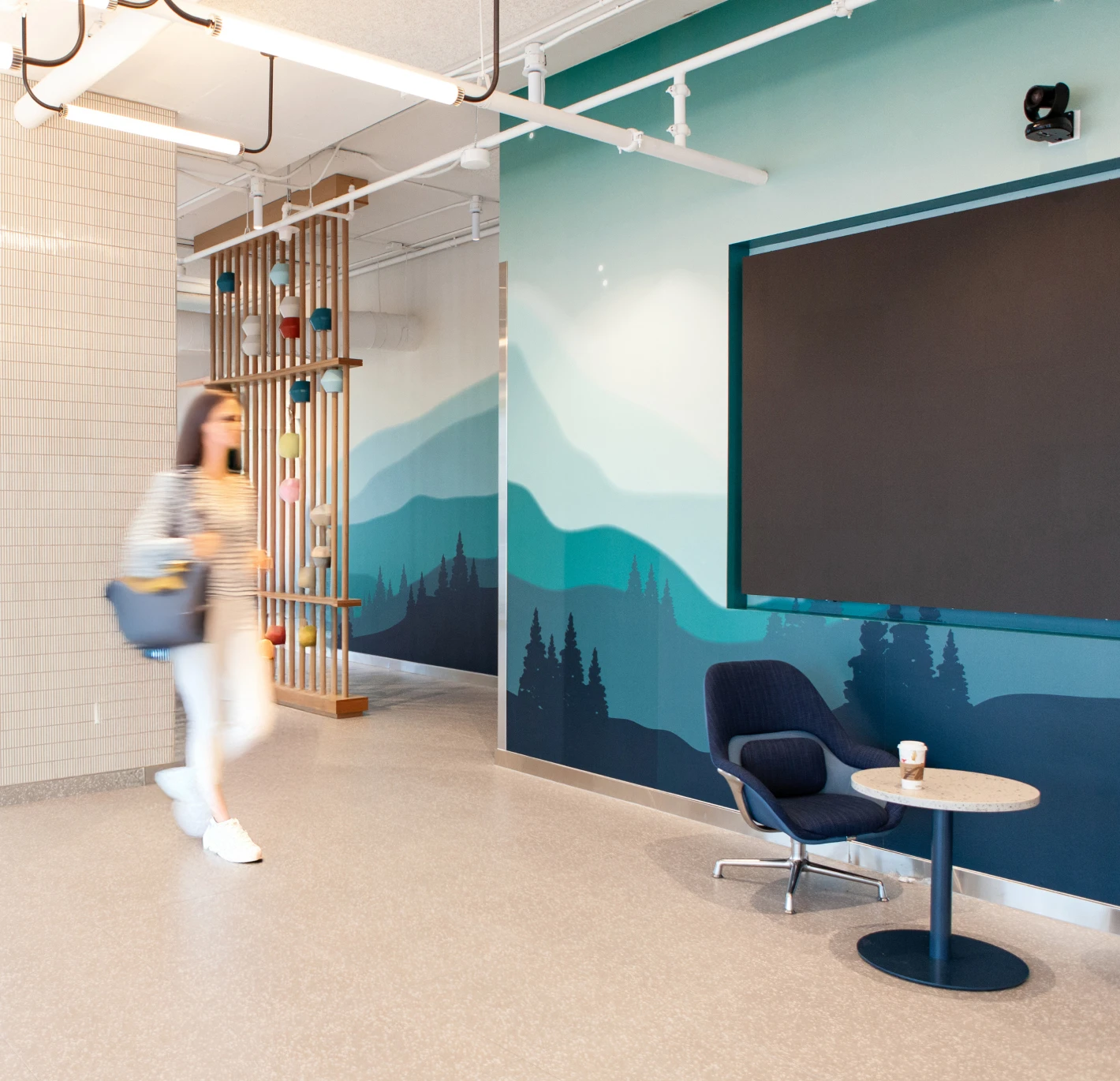
Modern office interior with a woman walking past a decorative screen and a mural.
Wall mural with text
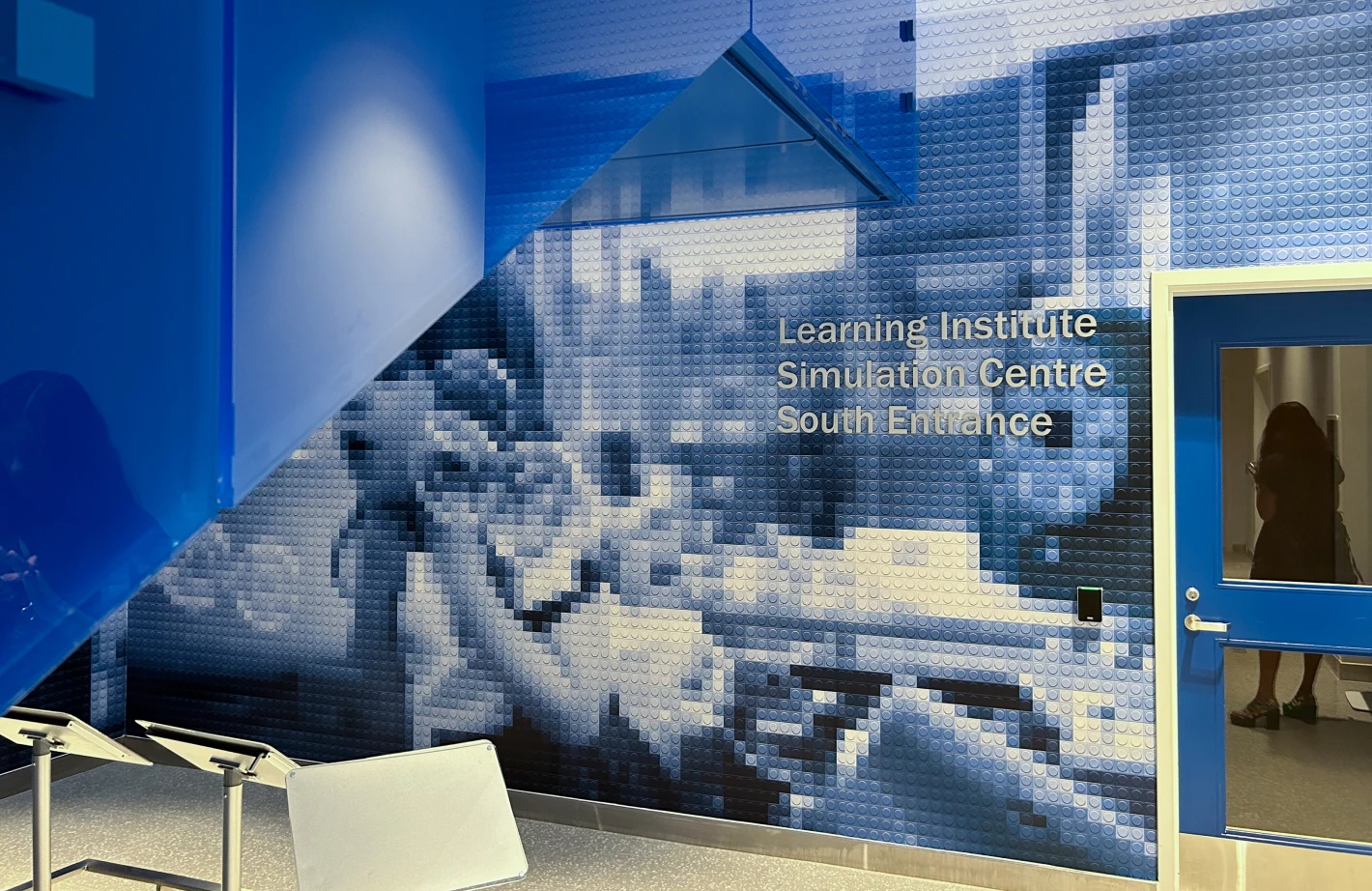
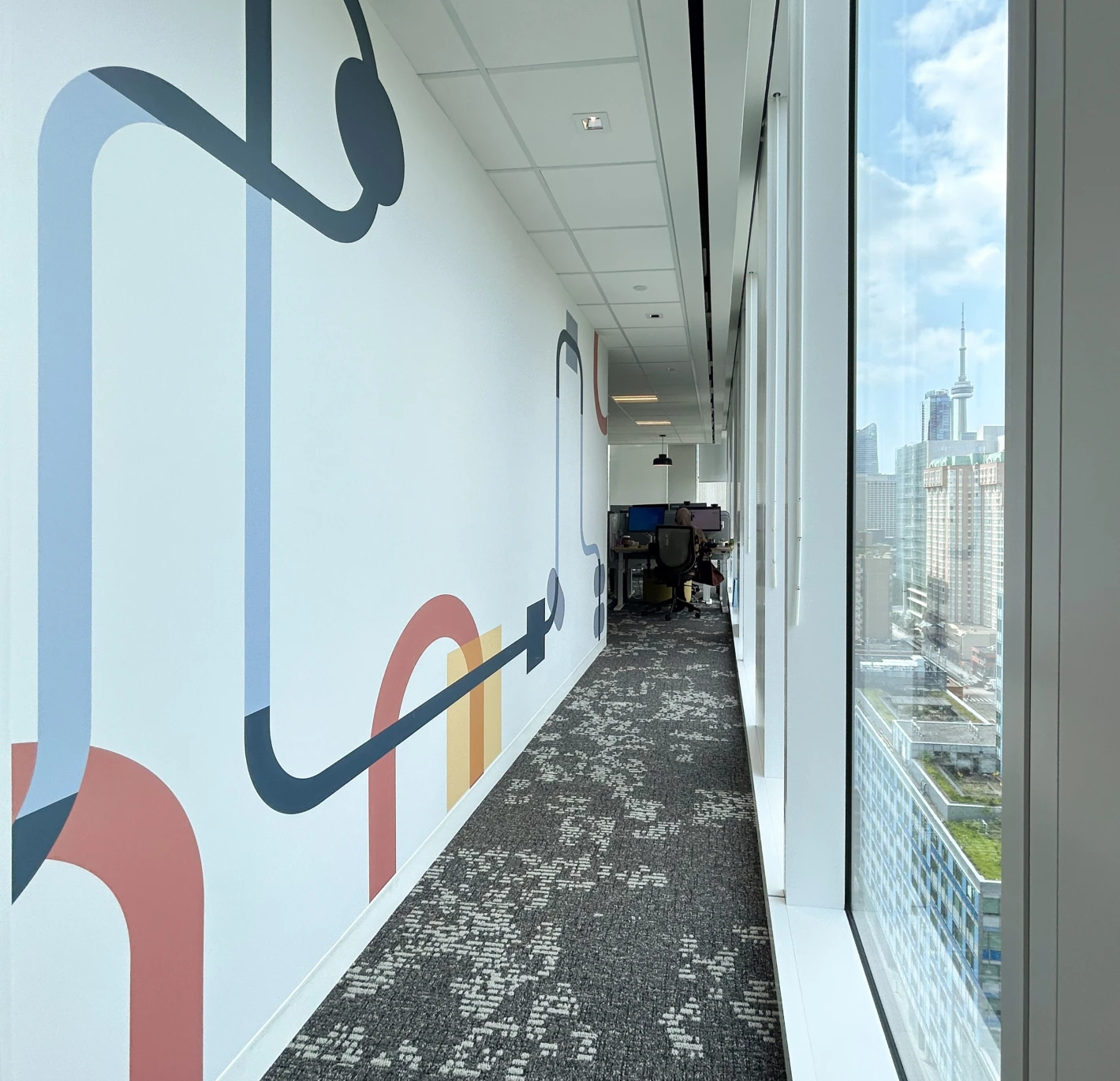
Murals depicting stylized landscapes and lego inspired supergraphics
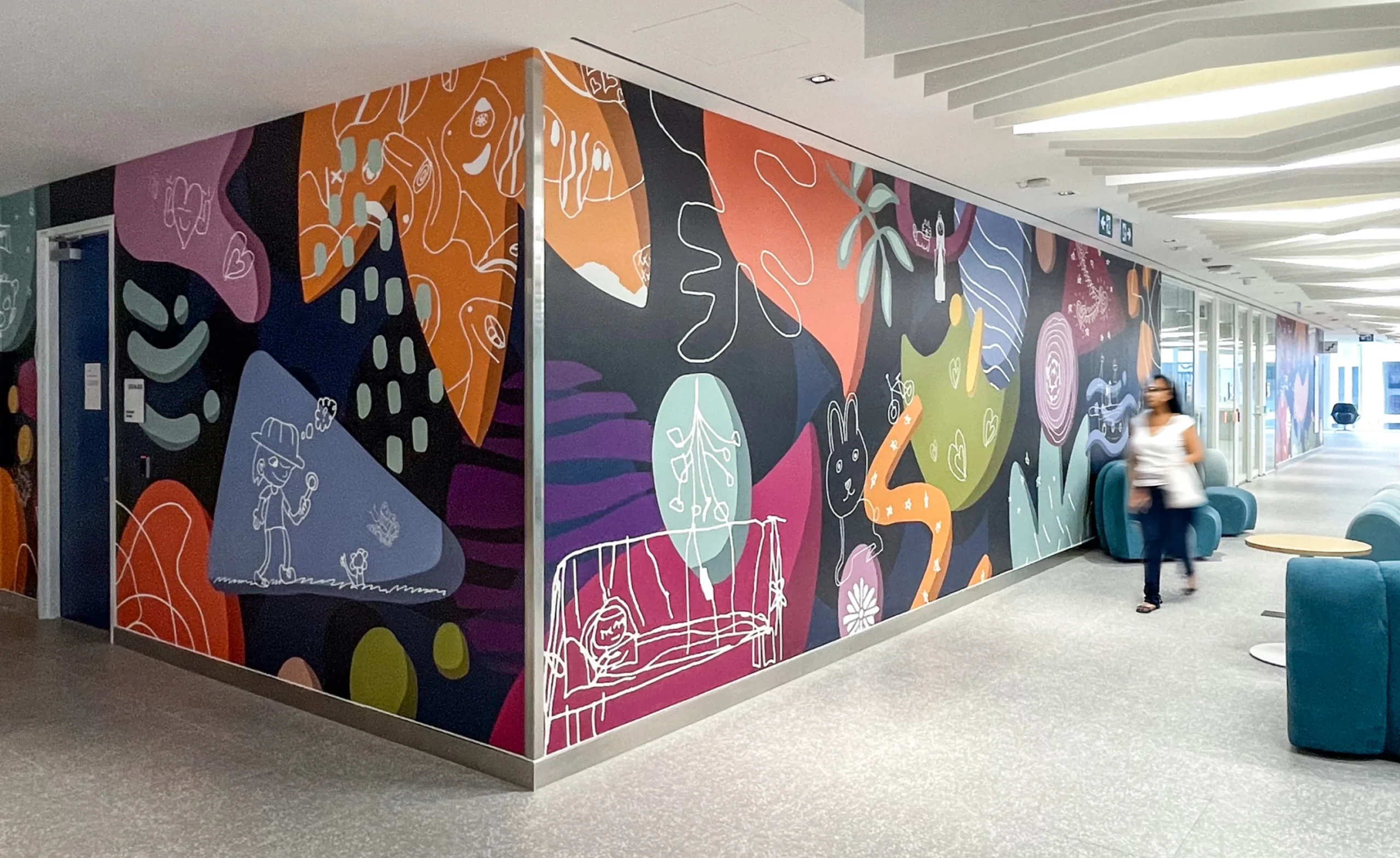
A colourful mural with abstract shapes and cartoon drawings adorns a hallway with teal seating.
Murals with drawings supplied by children liven up the space and ease the experience for staff and visitors
Silhouette of a person walking past abstract, colourful, coiled structures.
Silhouette of a person walking past a pattern of triangles in yellow, grey and blue.
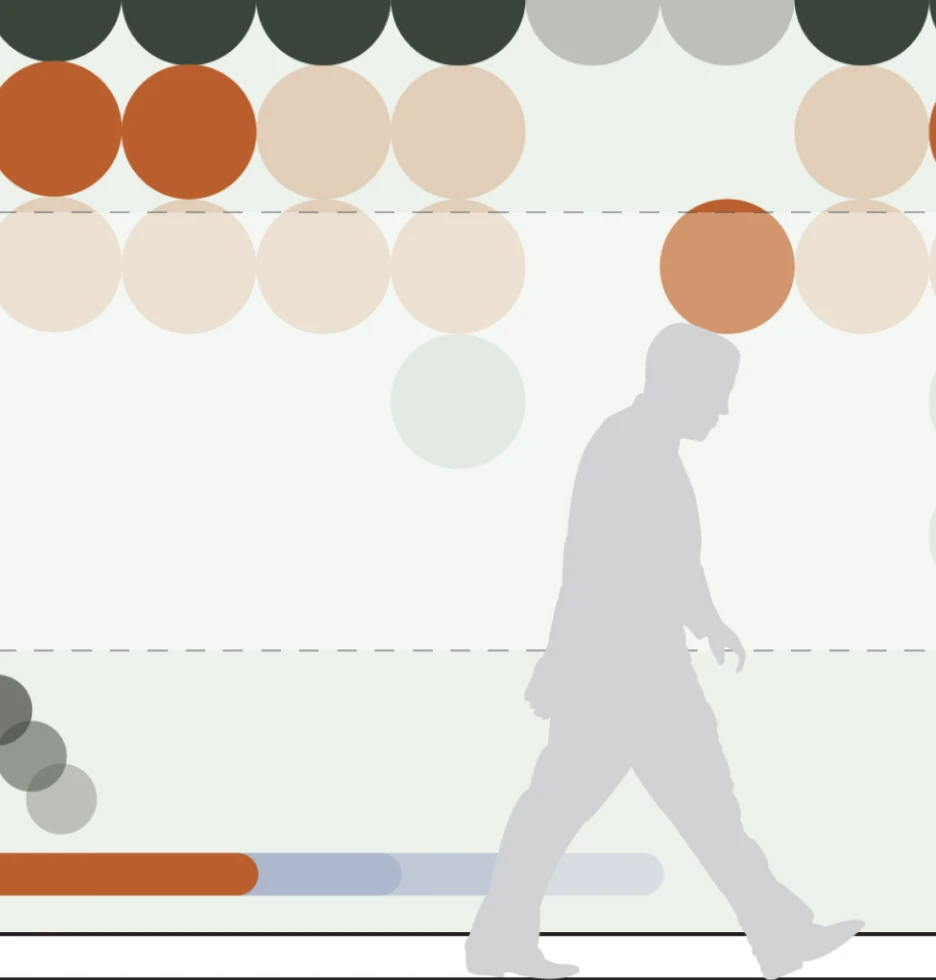
Silhouette of a person walking past a series of coloured circles and bars.
Preliminary renderings of mural artwork
Modern office hallway with abstract wall art and city view.
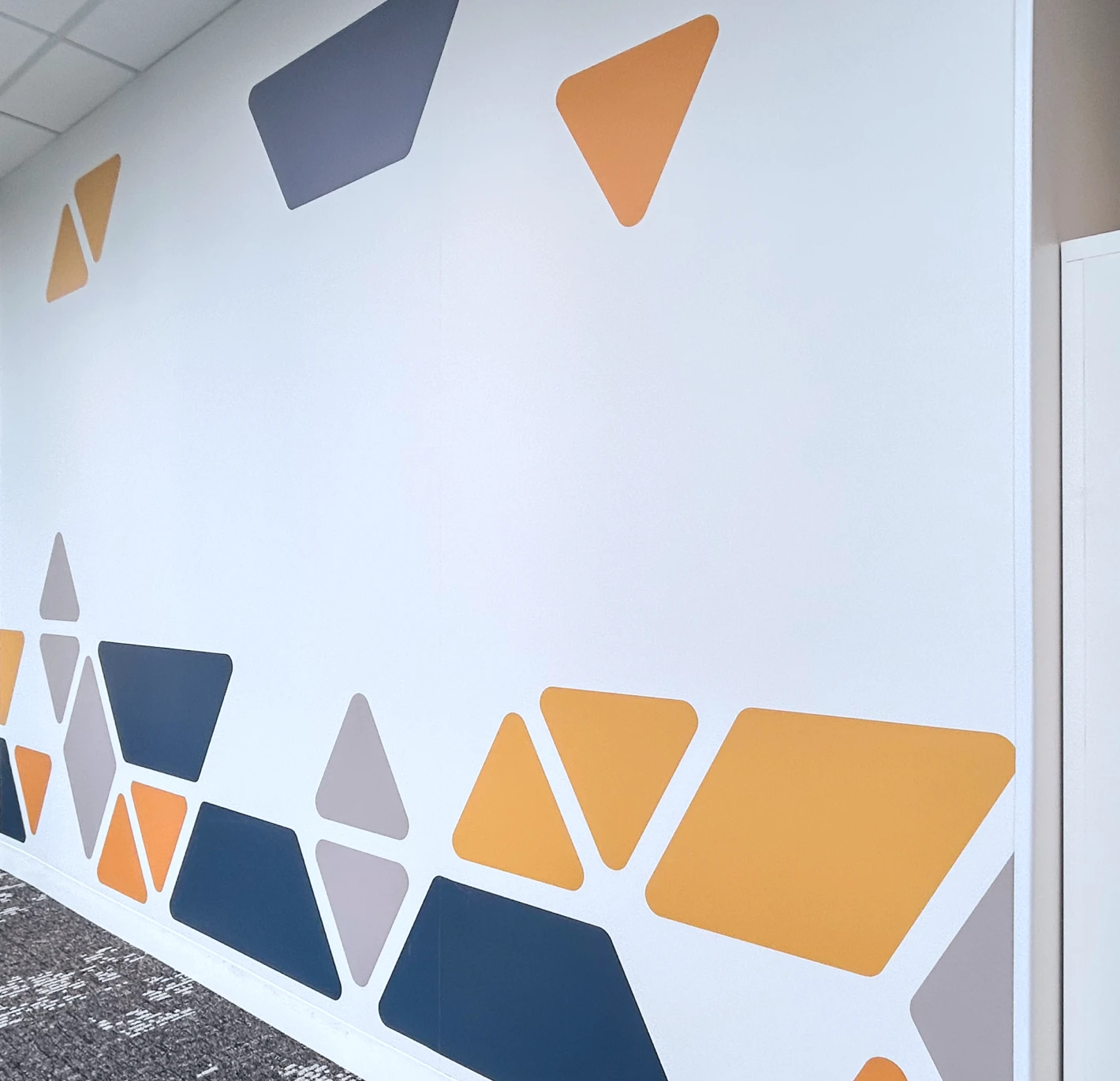
Abstract geometric pattern on a white wall with orange, grey and blue shapes.
Corridor supergraphics developed with games-inspired themes and input from the Children’s Council

Freeing the act of mobility

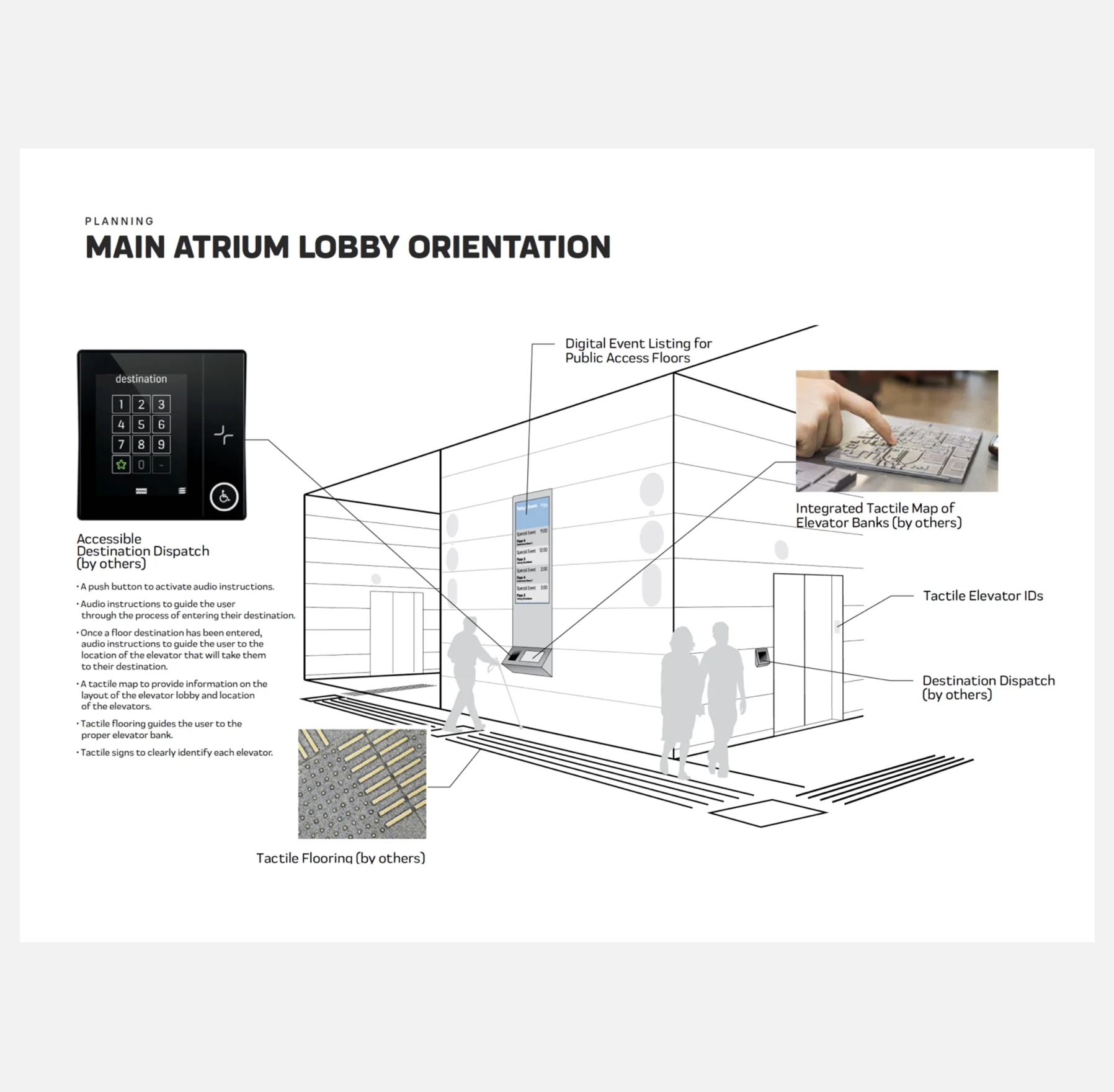
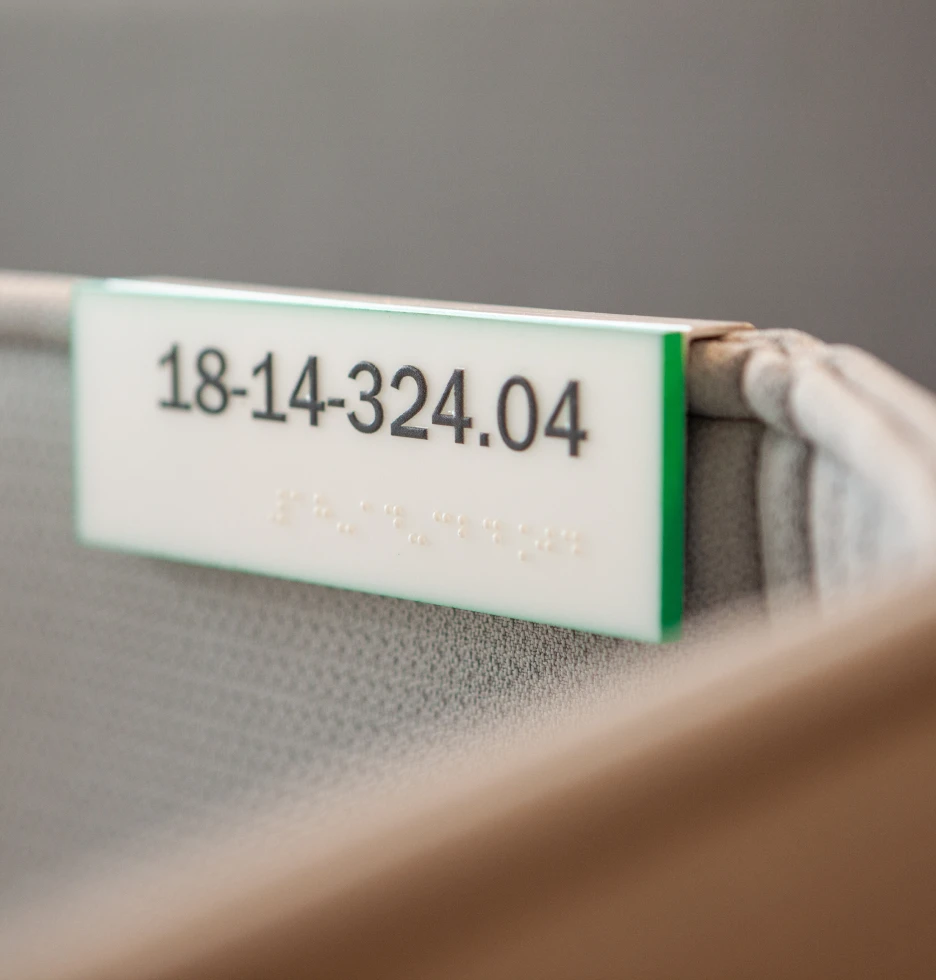
Promoting safe and independent movement for people of all abilities was also an important priority for SickKids. Wayfinding included development of tactile maps and cues at key locations for people with sight disabilities. Forge advised on proper semiotic use of pictographic language to be inclusive to a wide audience, ensuring that design of these elements felt aligned with the overall visual narrative.

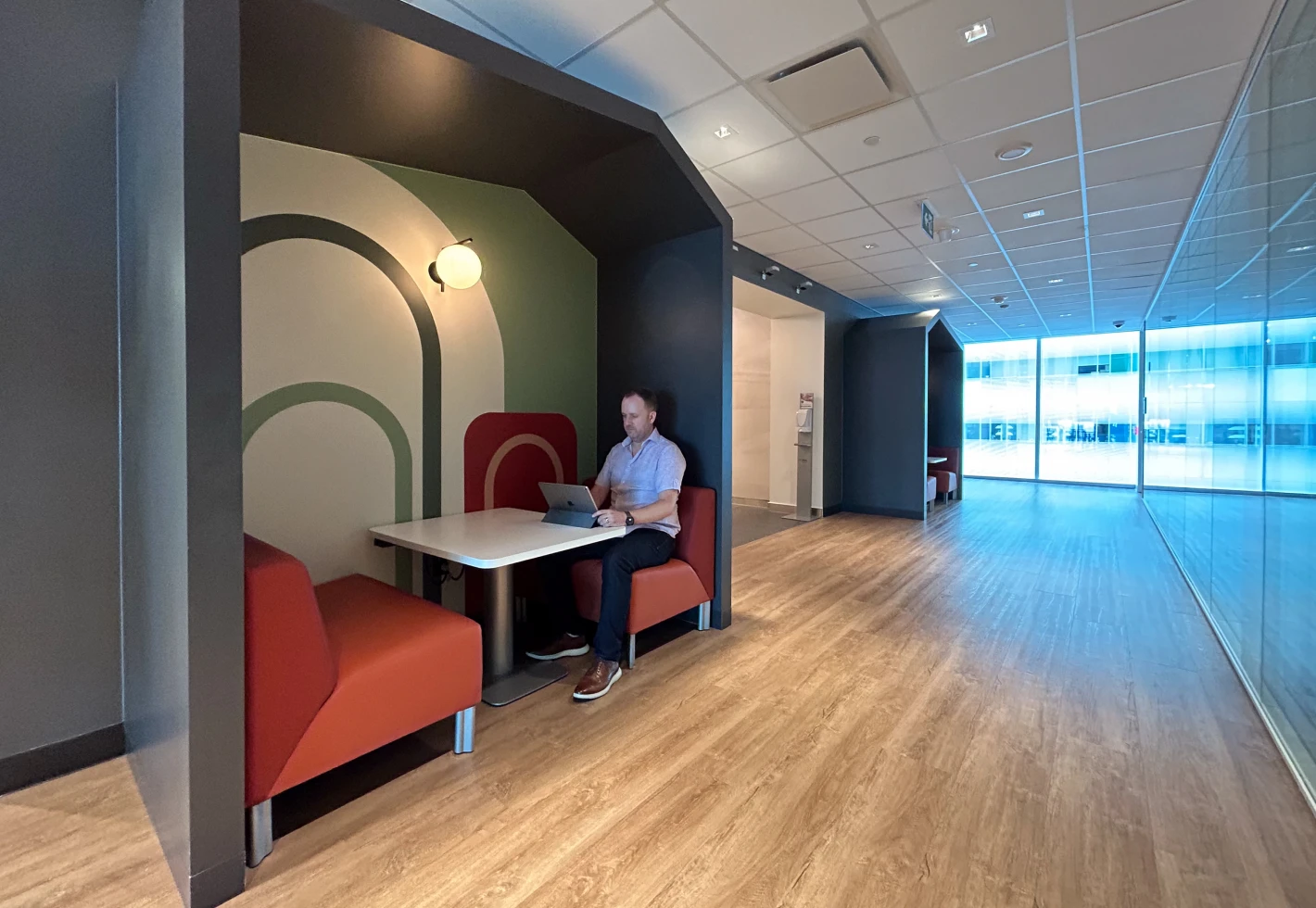
Man working on a laptop in a modern office booth with orange seating and a geometric mural.
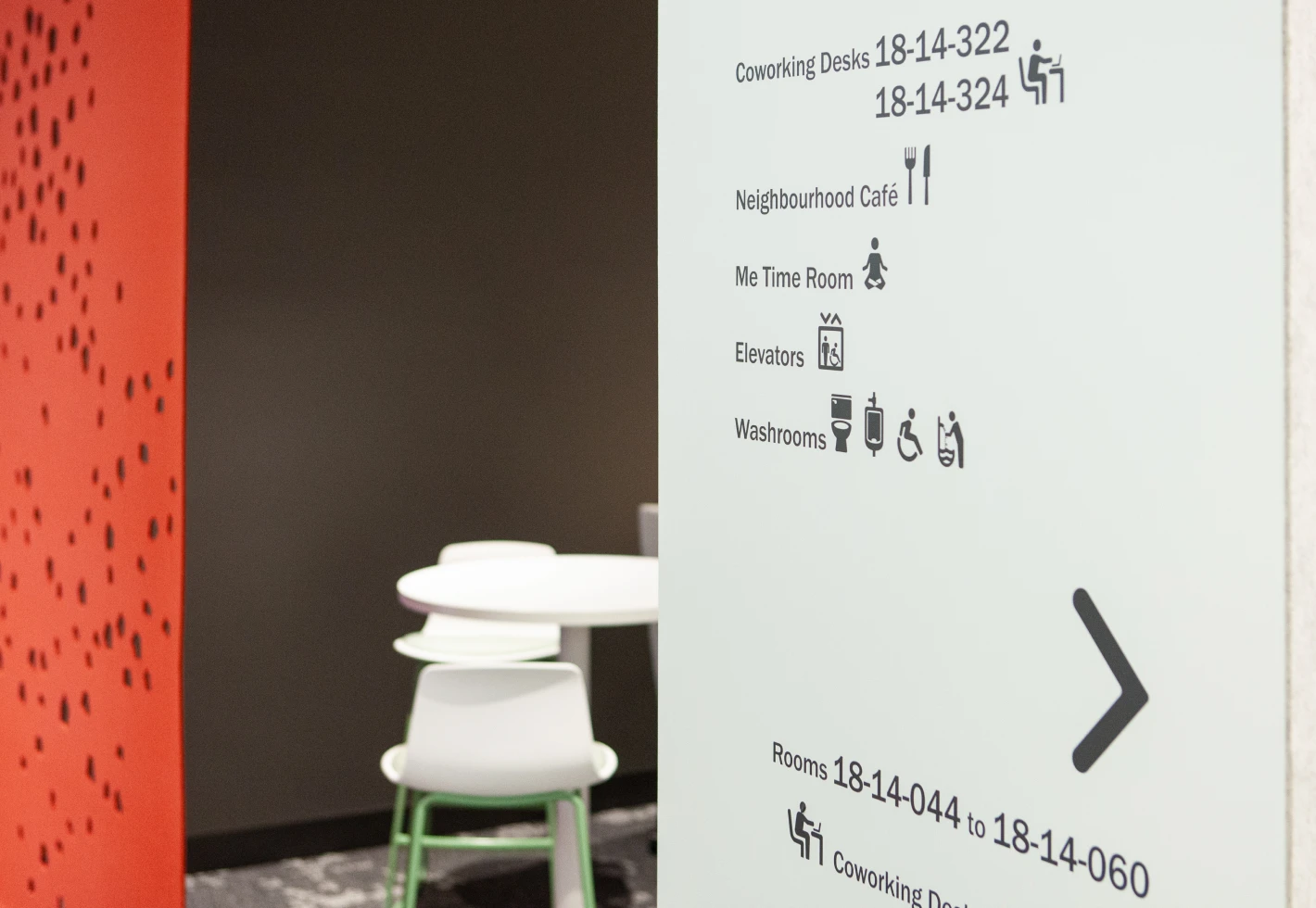
Signage with room numbers and icons for coworking desks, cafe, me time room, elevators, and restrooms.
Open collaboration spaces including pictograms aiding with self-navigation
A white label with black text
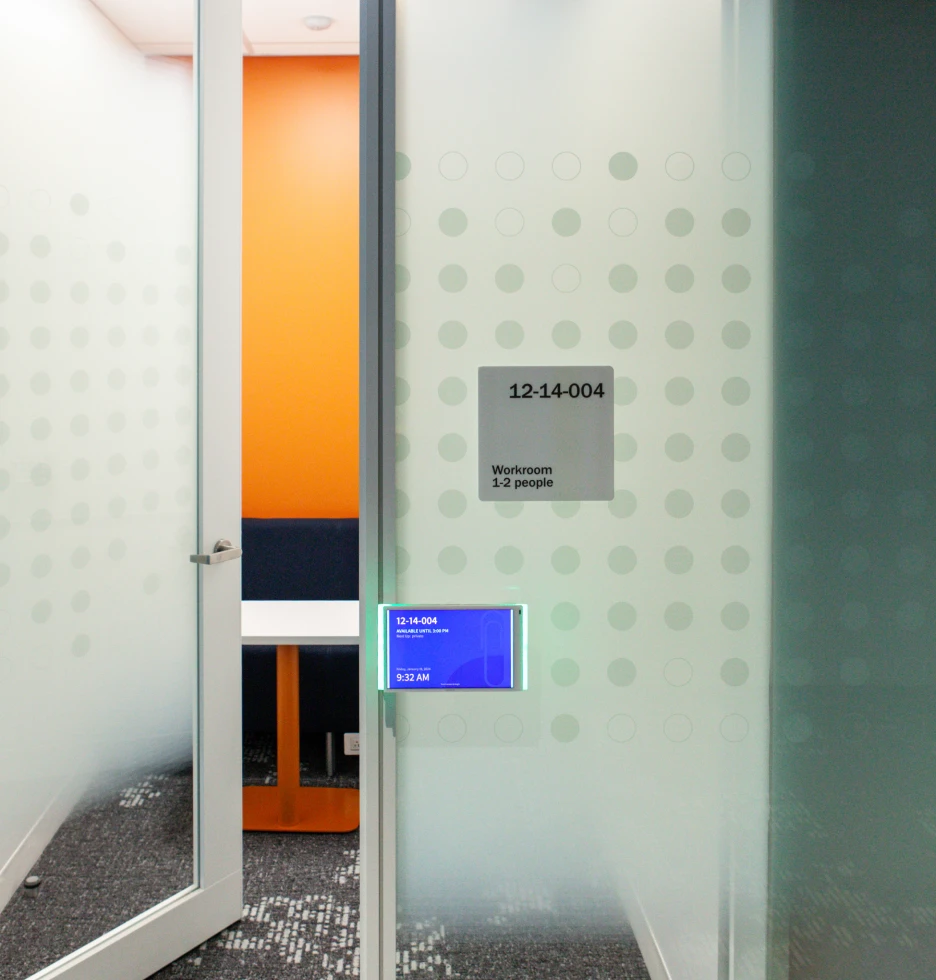
Door to a workroom with a digital display showing room availability.
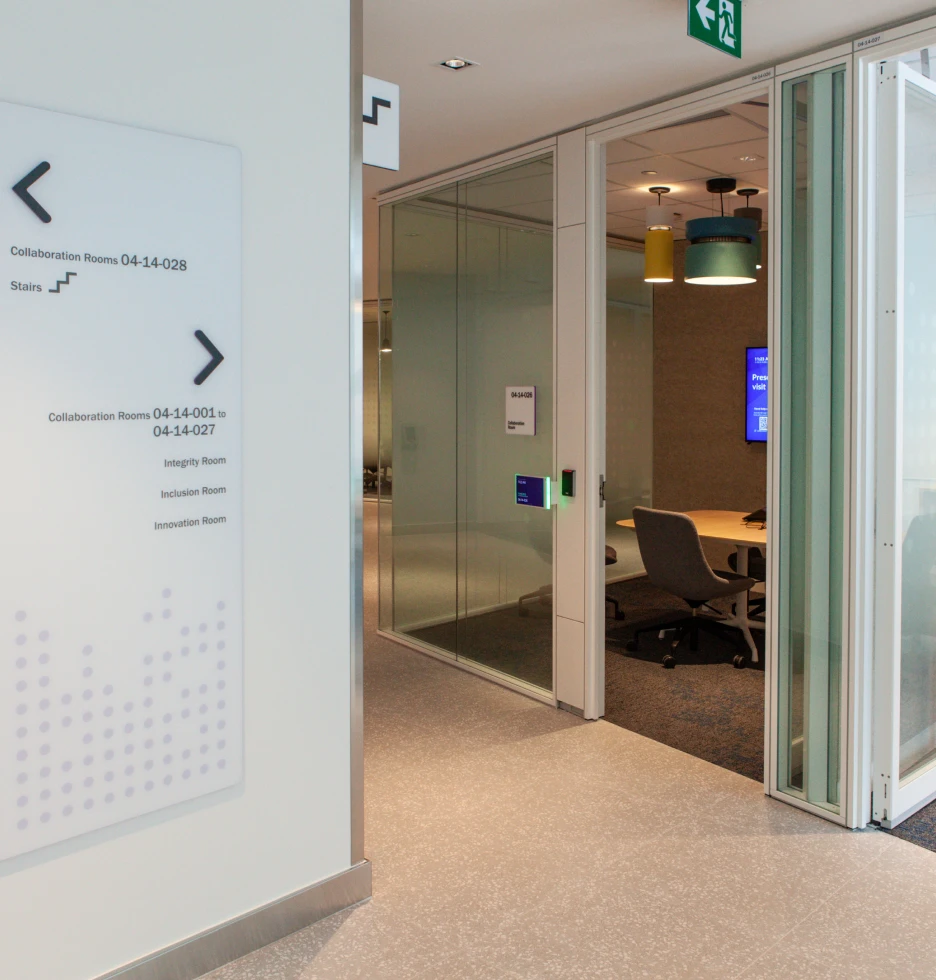
Modern office hallway with glass-walled meeting rooms and directional signage.
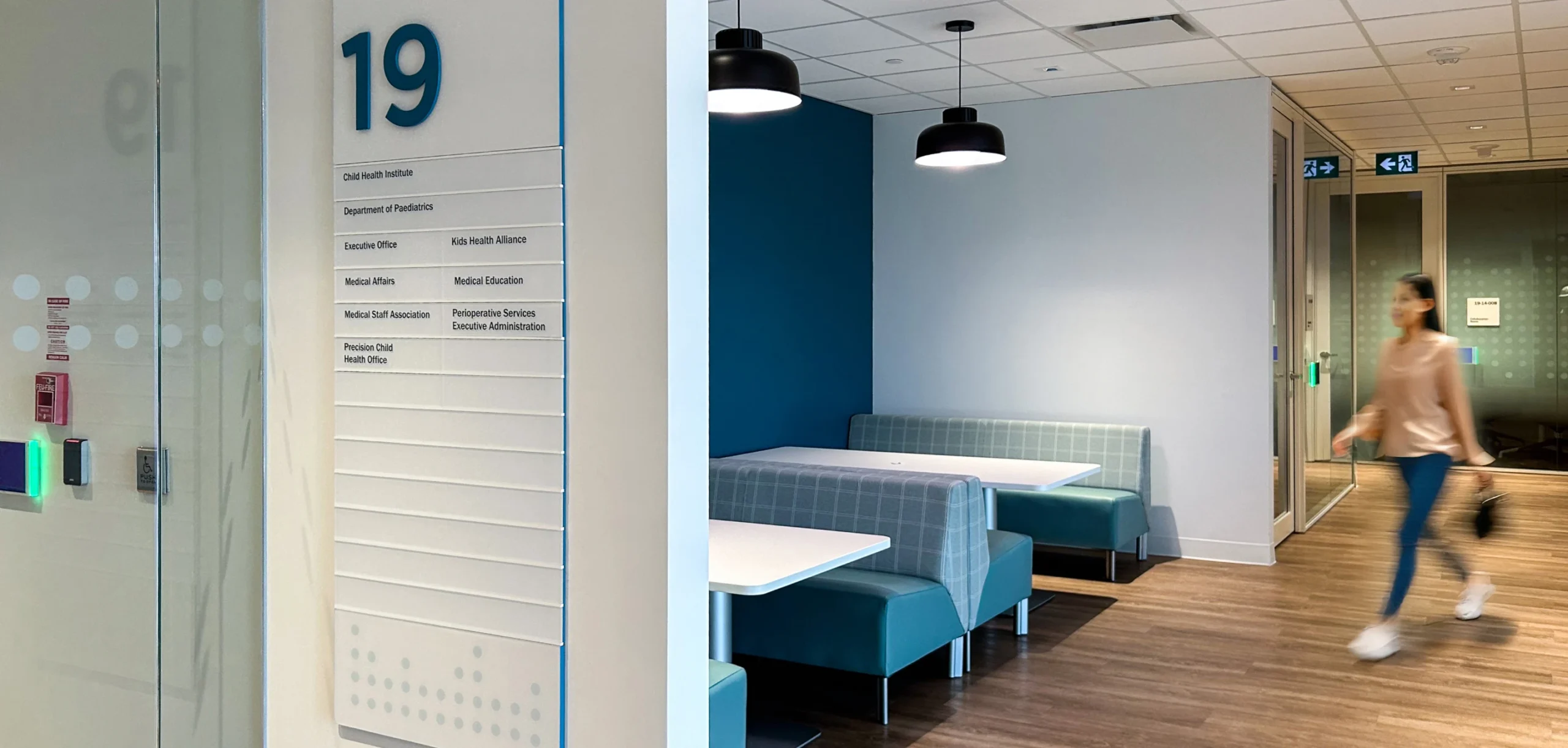
Interior view of a hospital hallway with a directory sign, seating area, and a woman walking.
Dot motif and colour coding harmonized with interior design cues
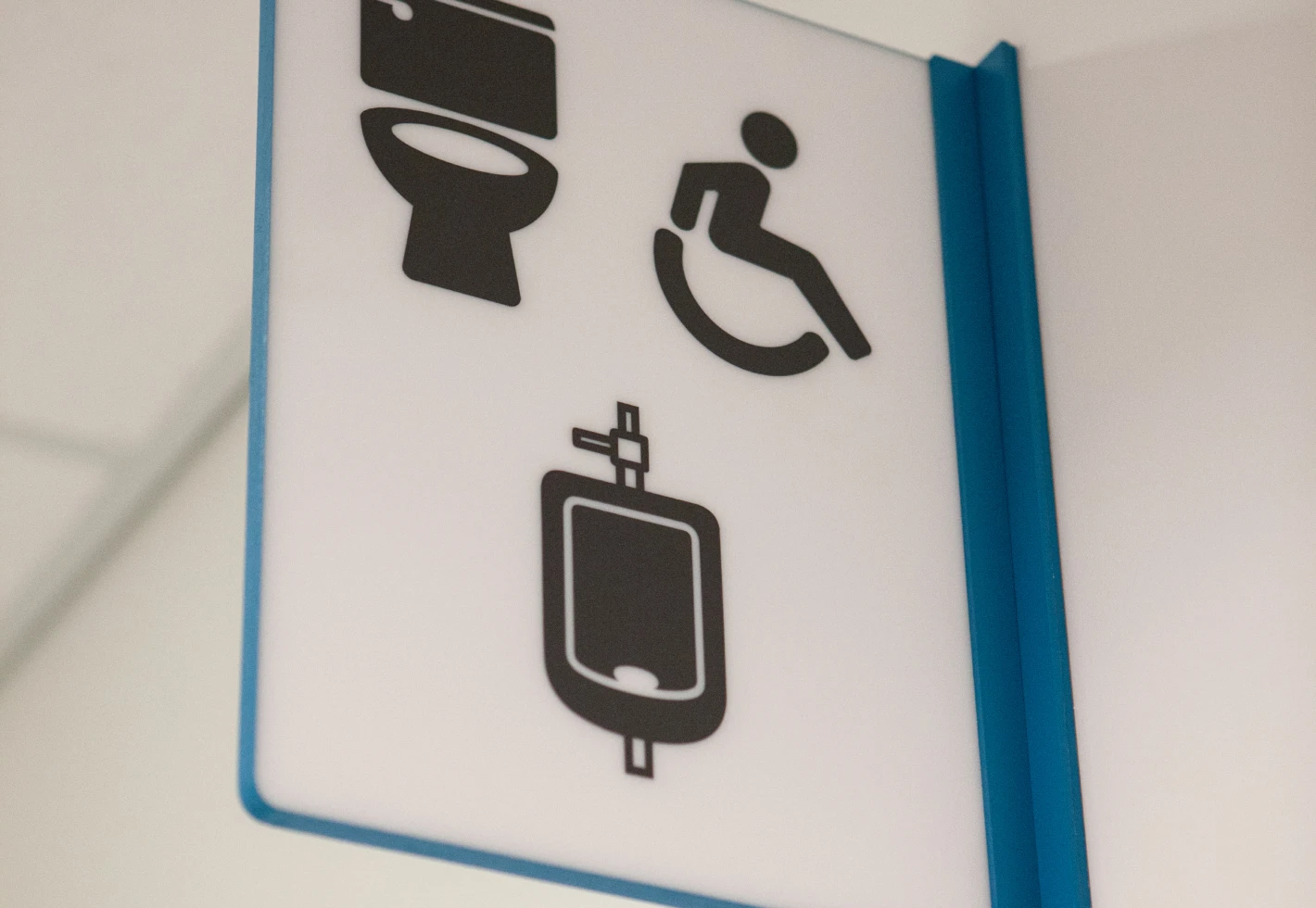
Restroom signs: toilet, accessible, and urinal icons.
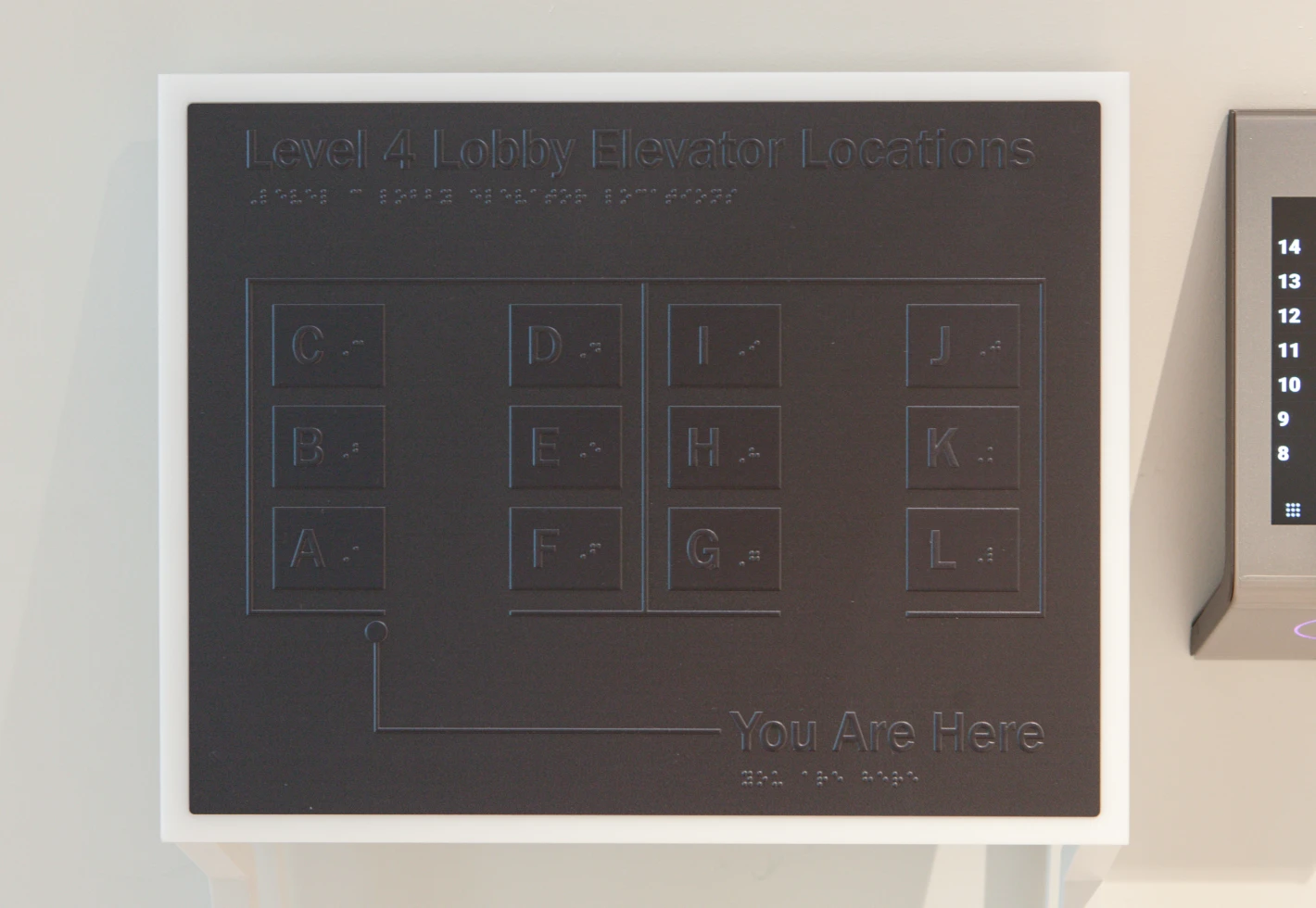
Braille and raised letter directory for Level 4 Lobby elevator locations.
Amenity directional signage and innovative tactile maps
Featured
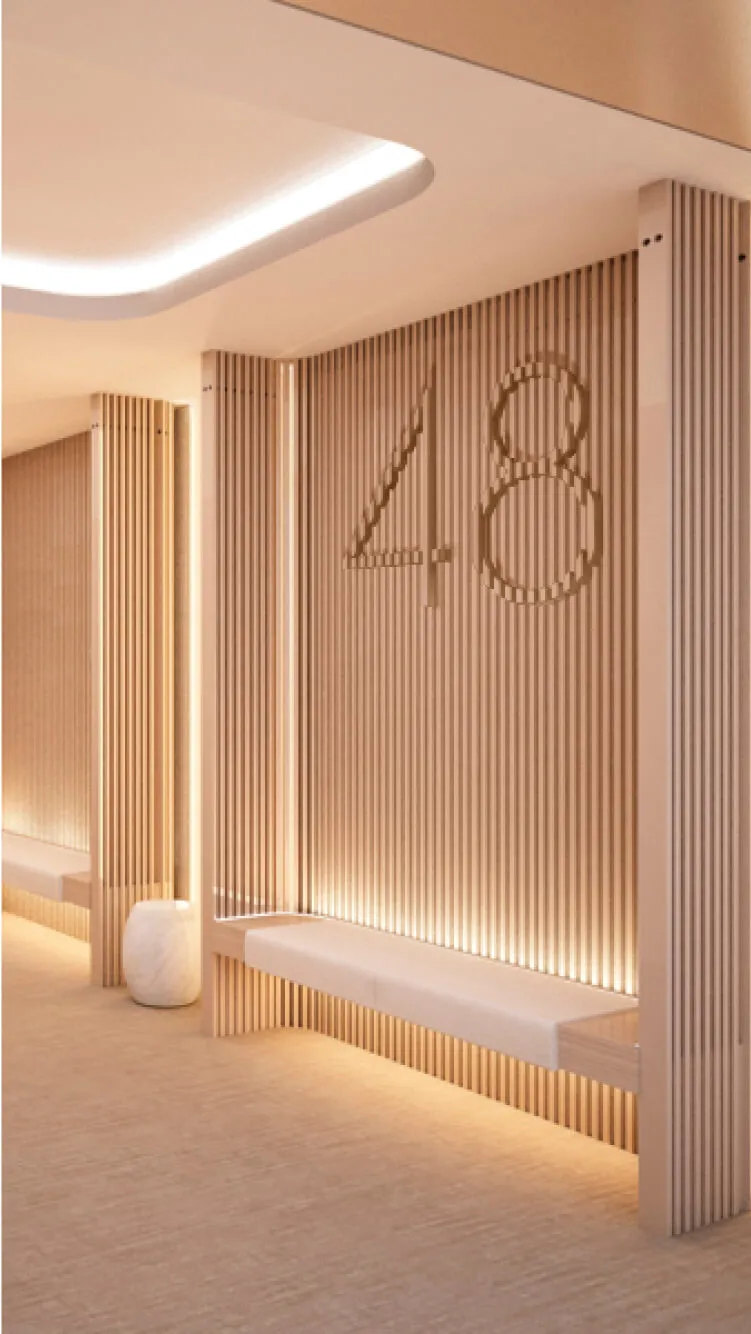
Modern hallway with wood paneling, benches, and illuminated ceiling features. Modern hallway with slatted wood walls, bench seating, and subtle lighting.

Four Seasons Philadelphia

Philadelphia, PA
Services Deliverables
  • Signage
  • Wayfinding
  • Masterplan

A remarkable experience for a bold new tower

Located at the top of Philadelphia’s stunning 60 floor Comcast Technology Center, the Four Seasons hotel offers guests sky-high views of the city and an array of premium amenities. The wayfinding system established by Forge combines the technological focus of Comcast and the sophistication of Four Seasons to create renewing visual forms and allows users to better understand and orient themselves in the layout of the space.

Visitor circulation
Vertical and linear wayfinding system
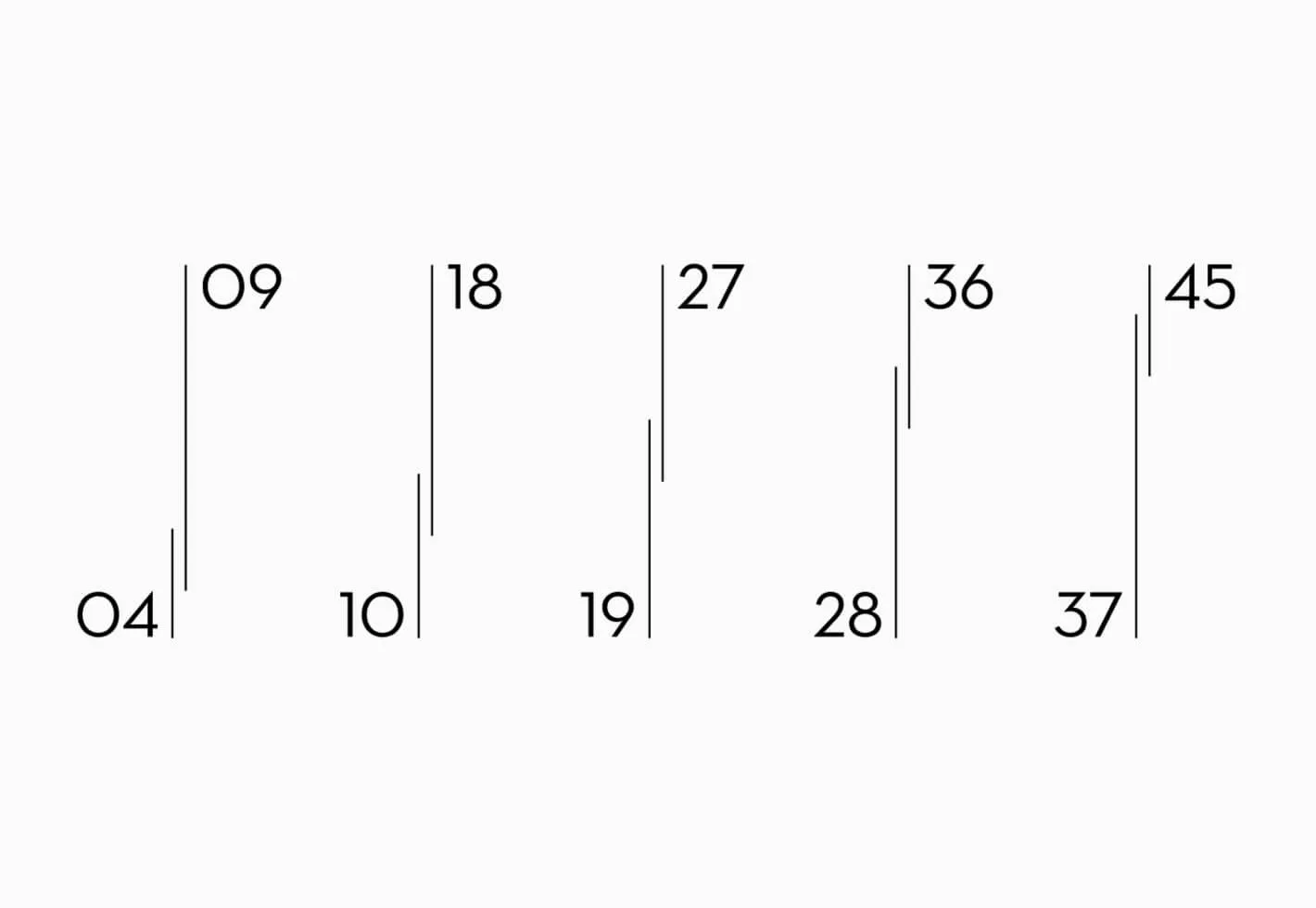
Numbers 04, 09, 10, 18, 19, 27, 28, 36, 37, 45 with vertical lines.
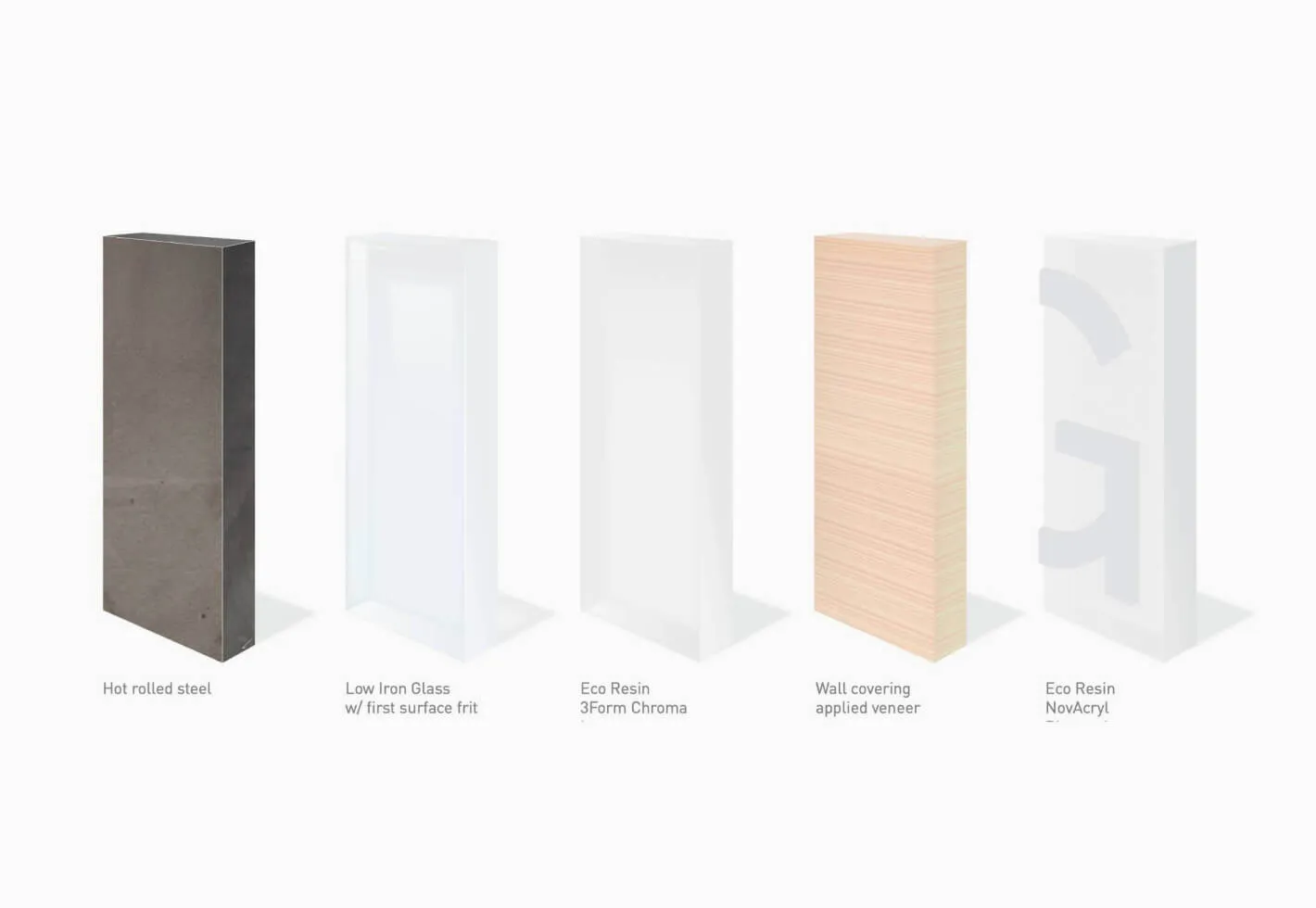
Five material samples: hot rolled steel, low iron glass, eco resin, wood veneer, and eco resin with logo.
Floor ID series and materials

Creating a narrative through poetic programming

The Podium is a vibrant and complex space inside the Comcast Technology Center. Our primary wayfinding challenge was to clearly direct users toward their destinations while encouraging them to explore the building’s full range of amenities. The concept of ‘boldly invisible’ is represented through large-scale but seamlessly-integrated signage, and allows users to ‘aim’ toward these beacons.
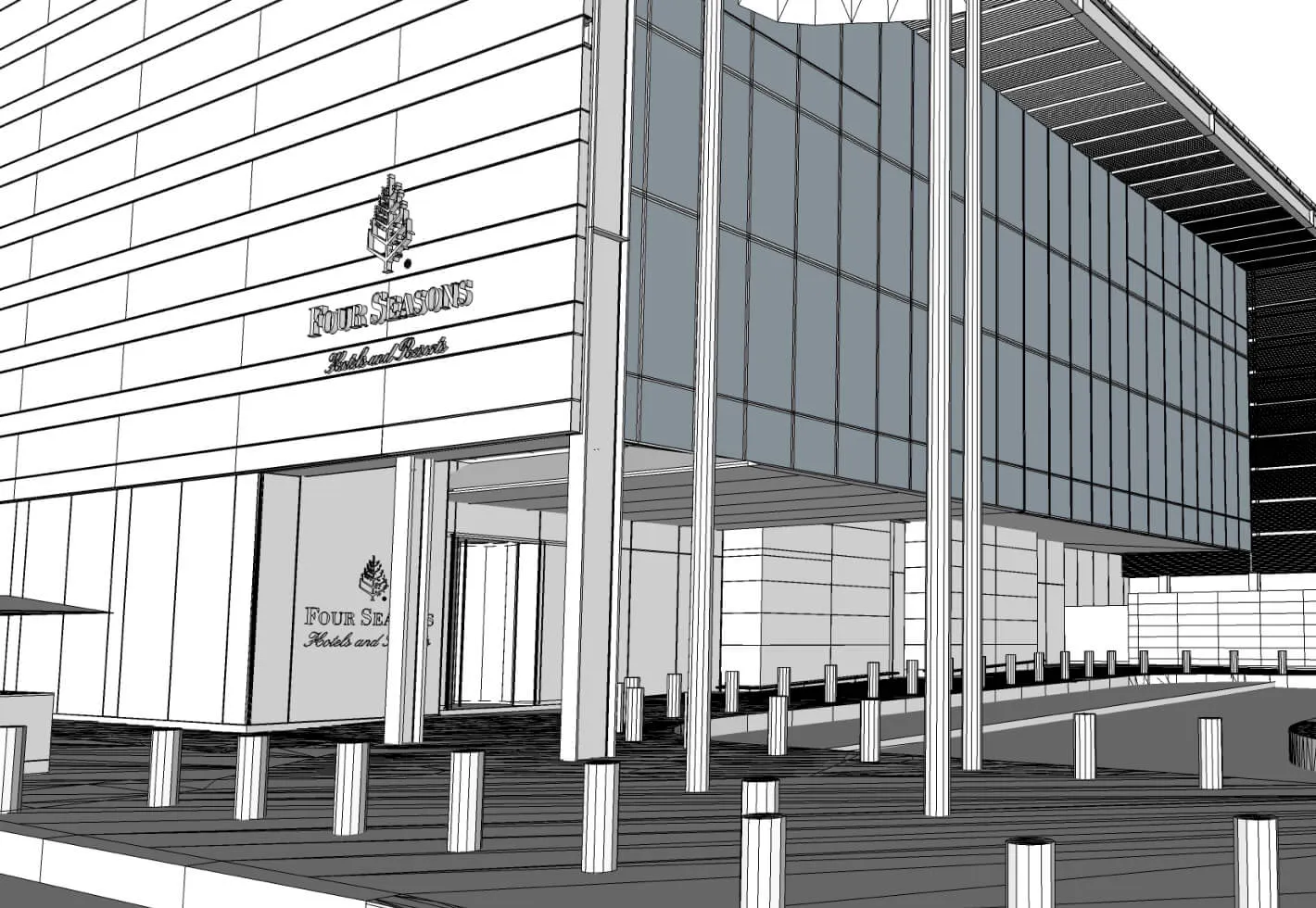
Four Seasons Hotels and Resorts logo on a modern building exterior.
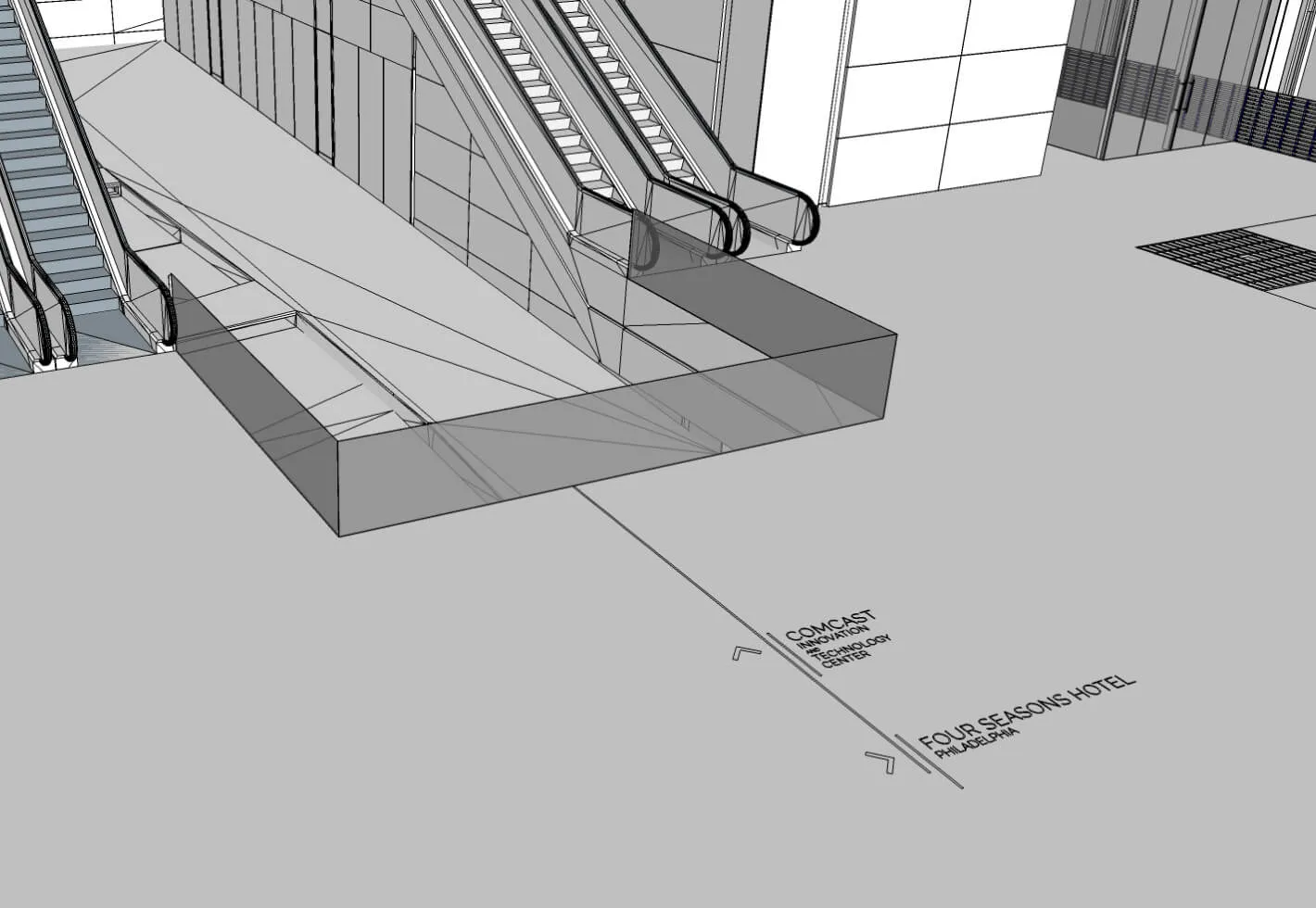
Architectural rendering of escalators and wayfinding signage.
Orientation landmarking
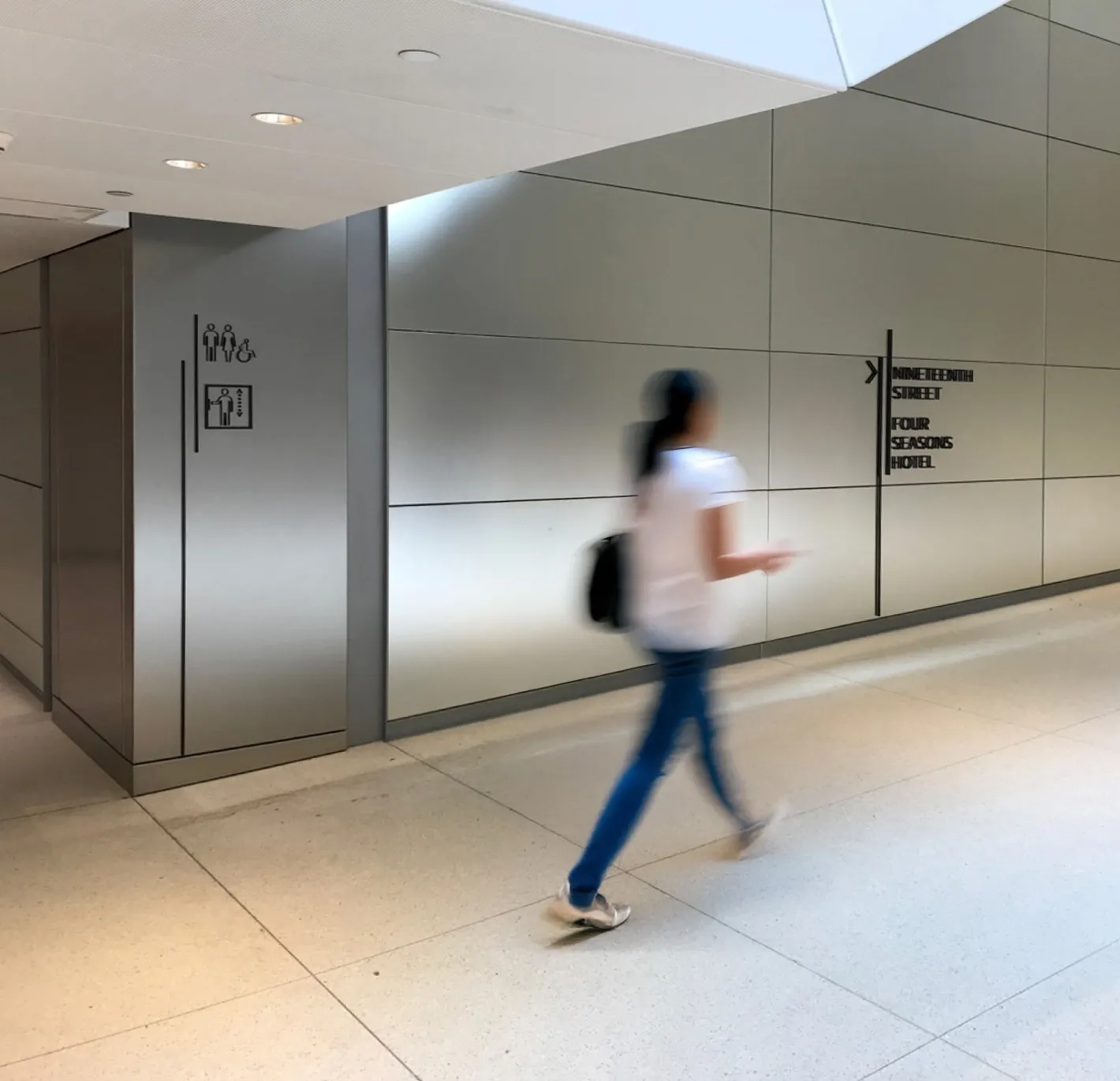
A person walks past a sign pointing to Nineteenth Street and Four Seasons Hotel.
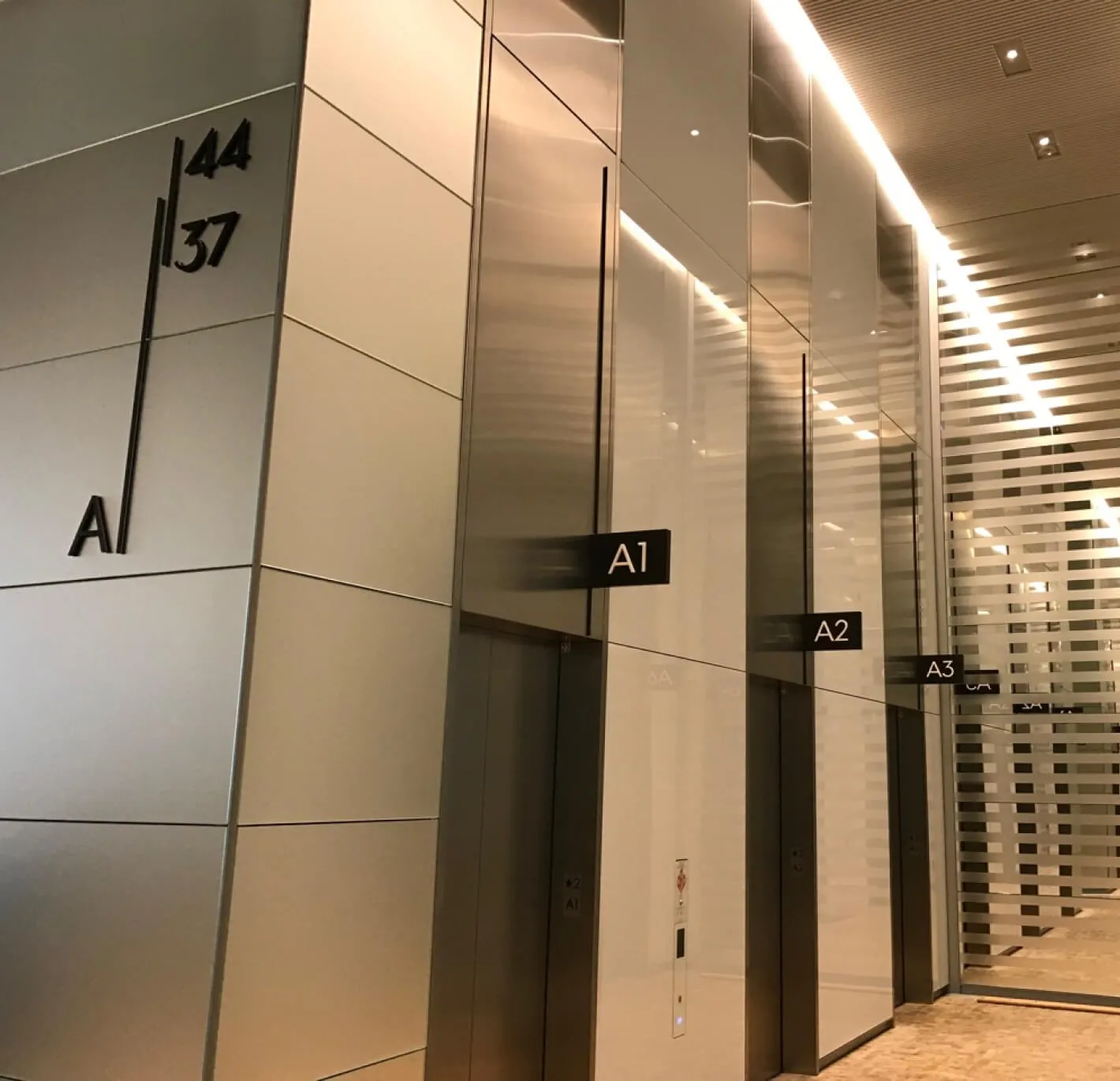
Elevator bank with signs A1, A2, A3 and floor numbers 44 and 37.
Elevator lobby signage
Digital elevator signage

Seamless integration of function and beauty

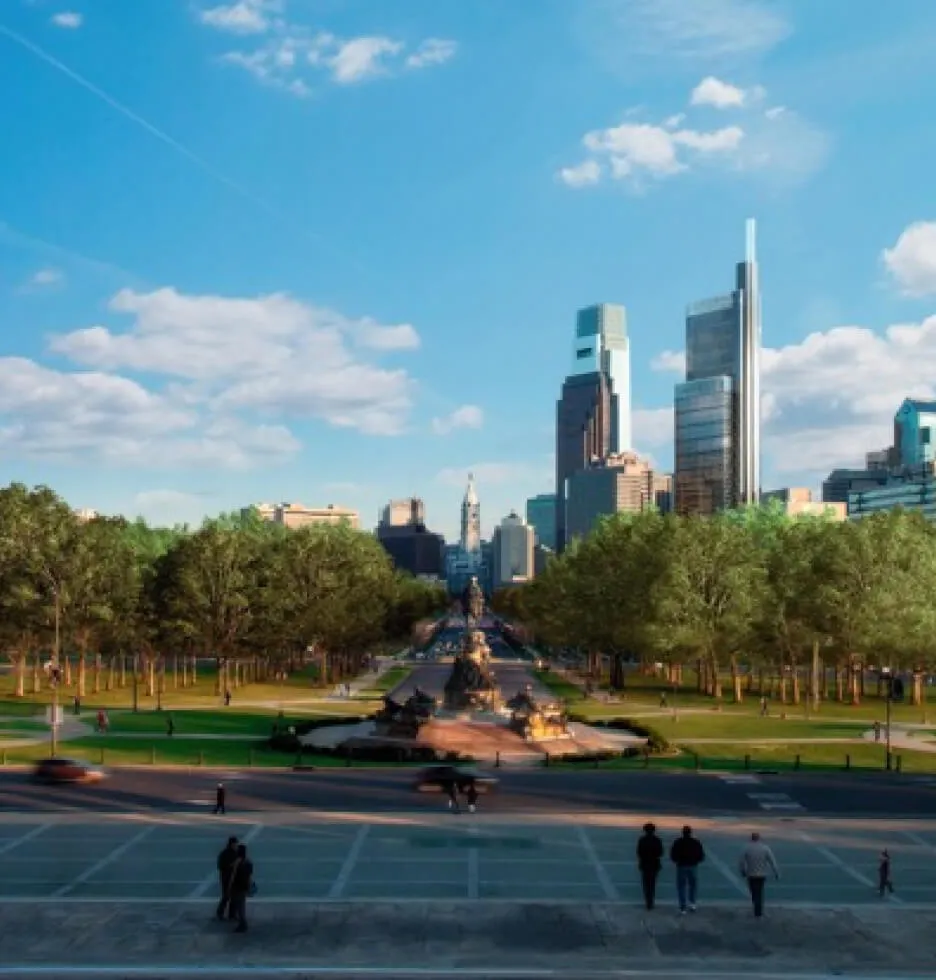
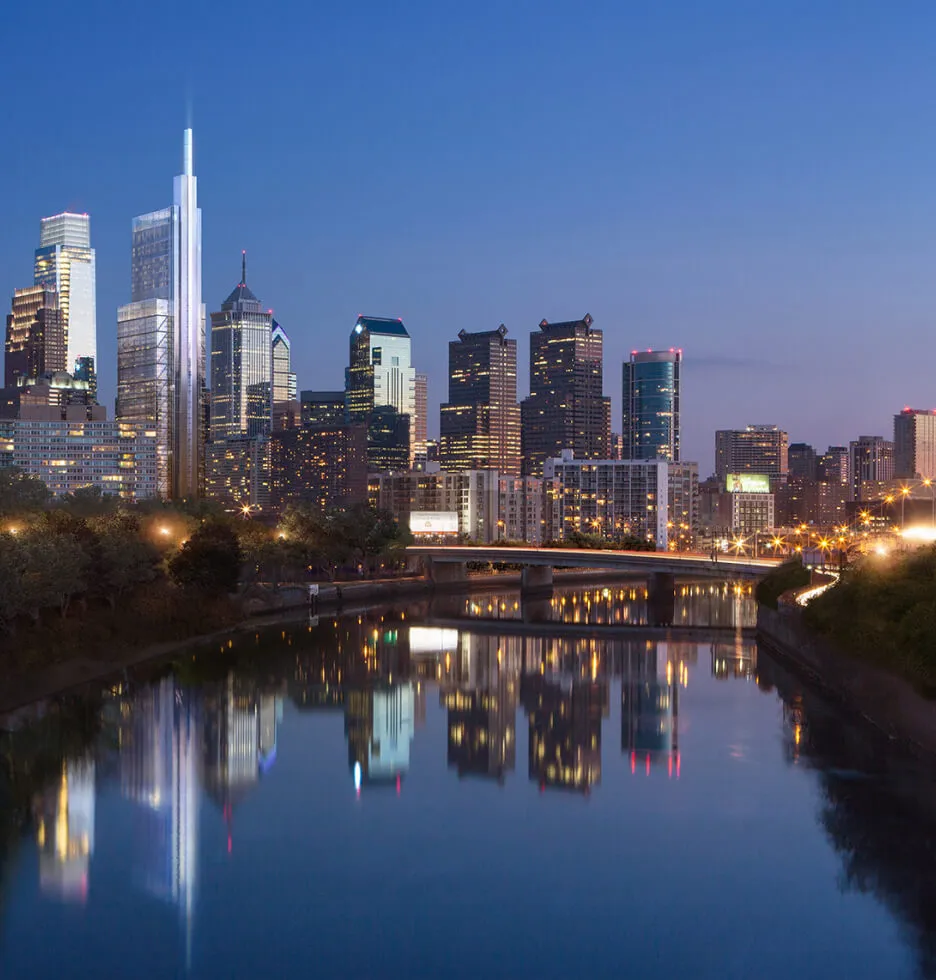
Anticipating the behaviours and needs of the site’s varied users, Forge developed a wayfinding system that complements the memorable architecture and works in harmony with surrounding landmarks. Directional signage is placed consistently to accommodate multiple destinations and directions of travel with minimal visual intrusion.

Philadelphia skyline with trees and a fountain in the foreground.
Philadelphia skyline at dusk with reflections in the river.
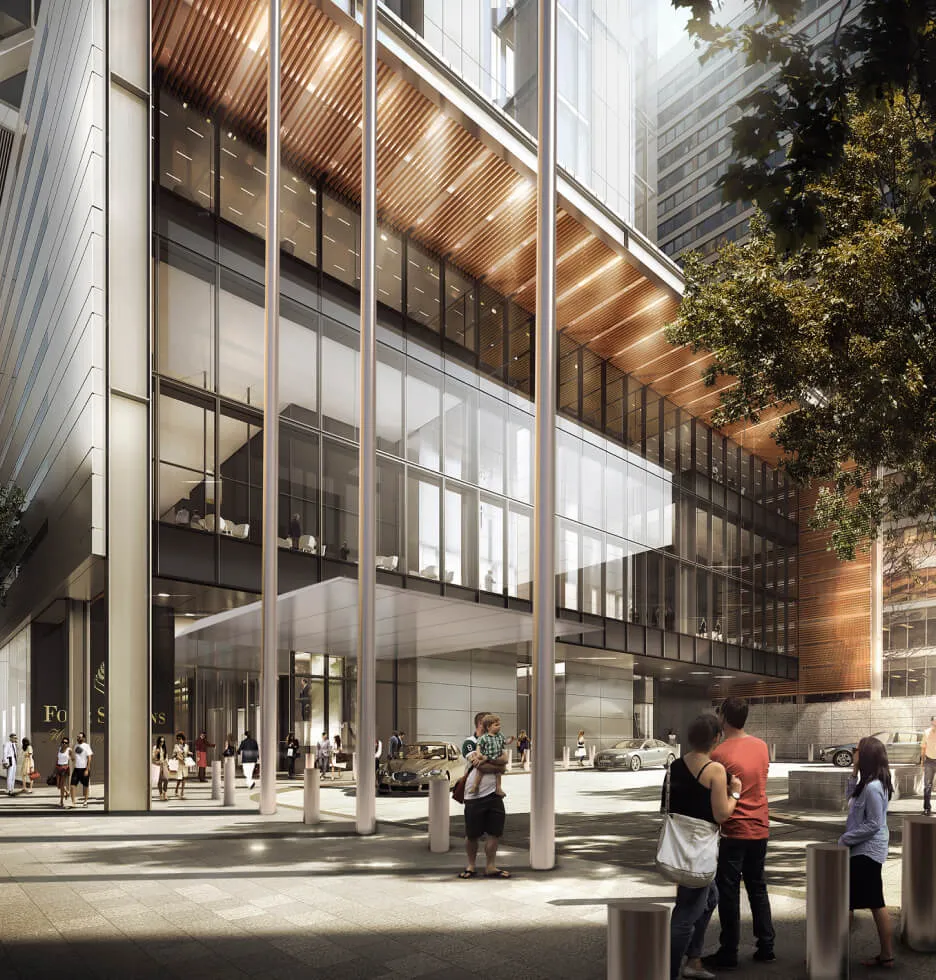
Modern glass building entrance with people and trees.
A seamless integration with the beautiful architectural
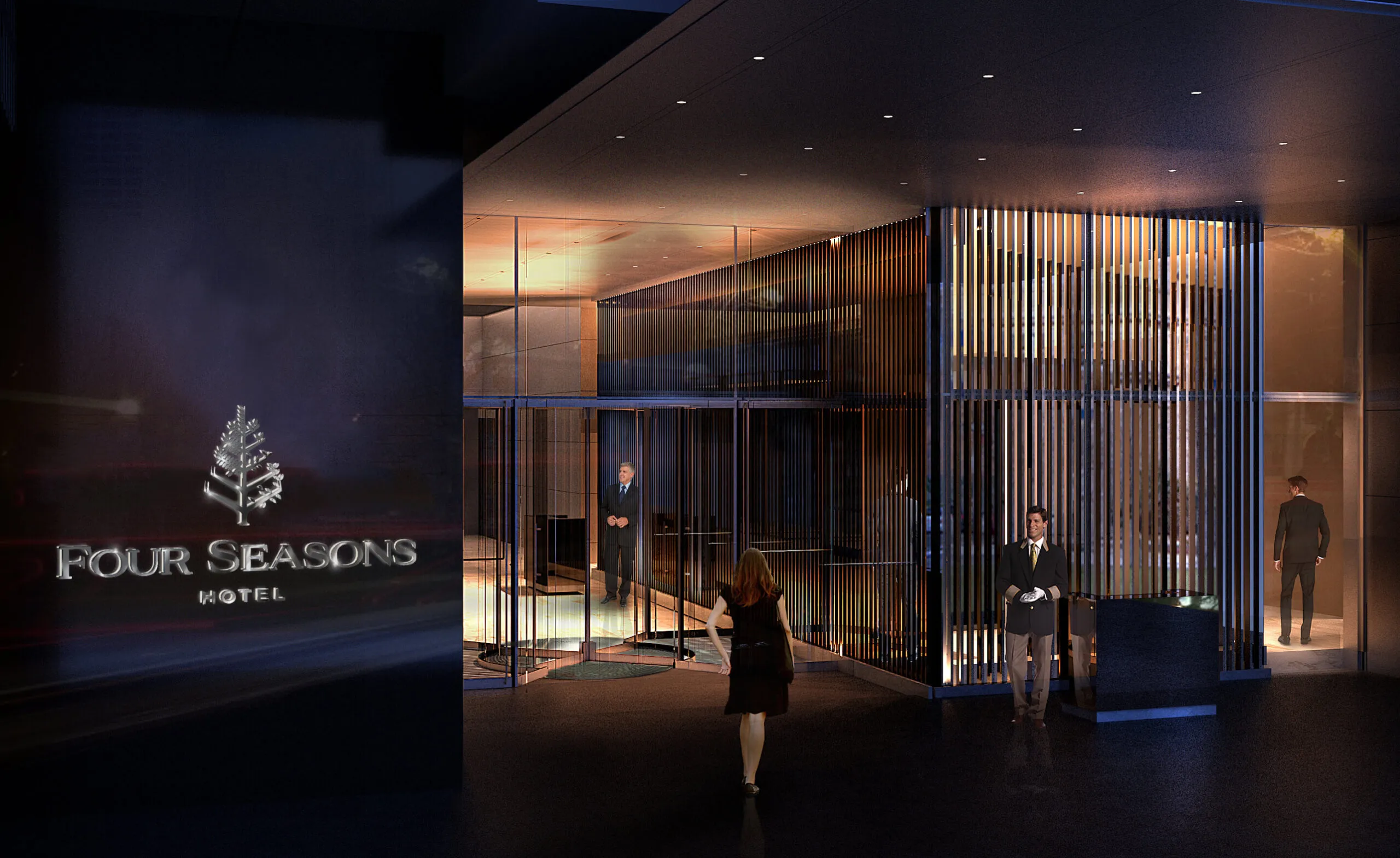
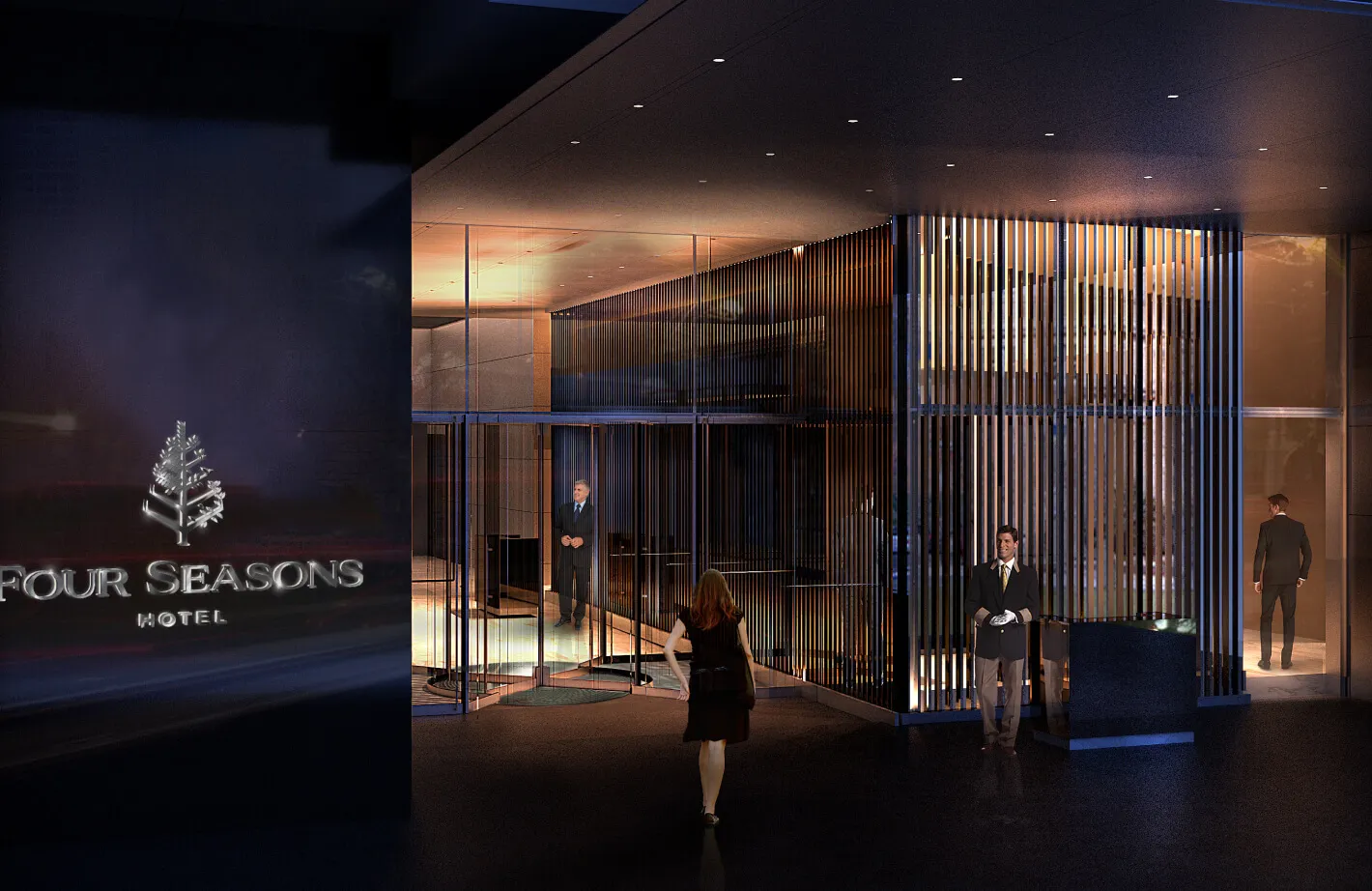
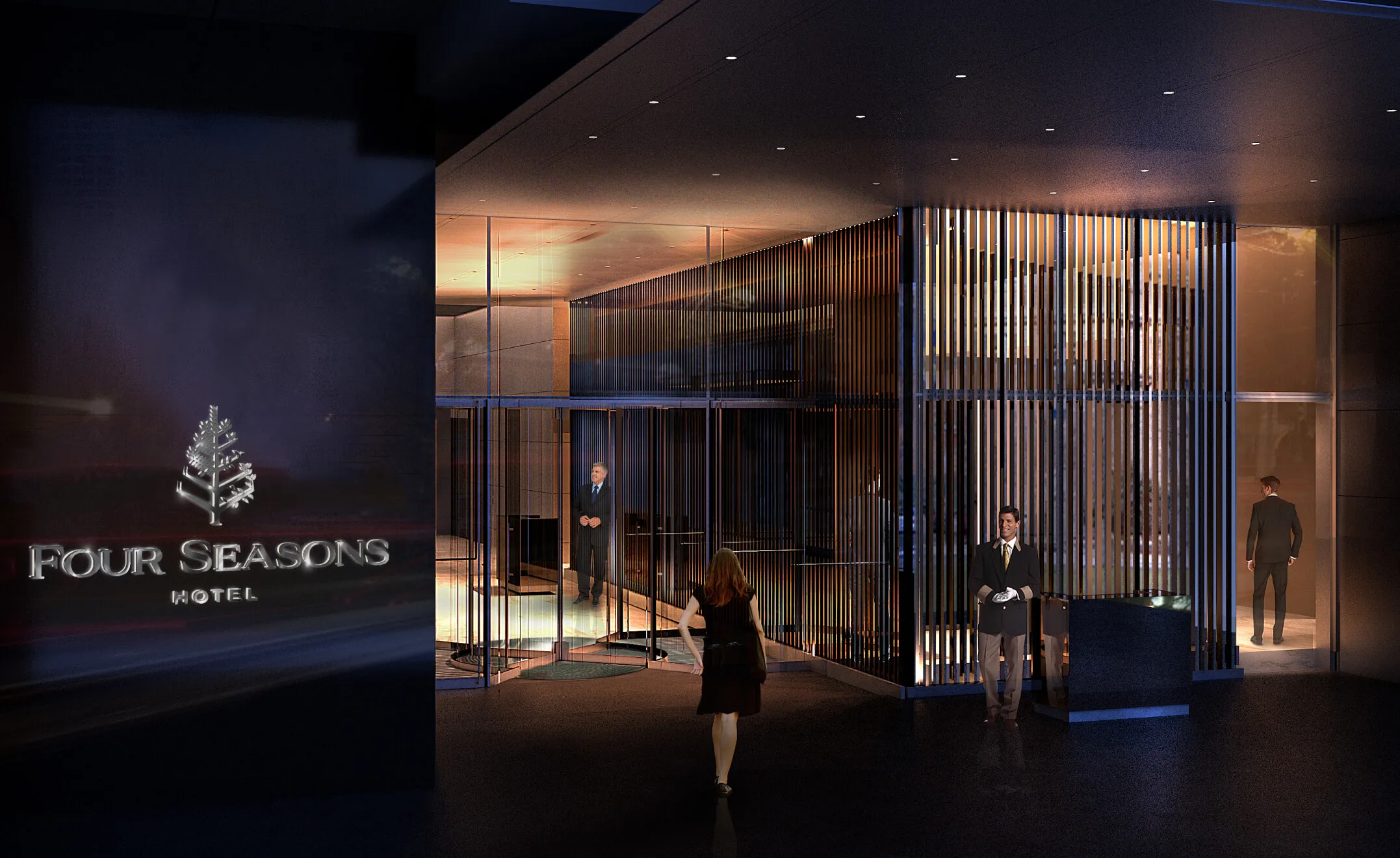
Four Seasons Hotel Philadelphia entrance with staff and guests.
Renderings of entrance ID
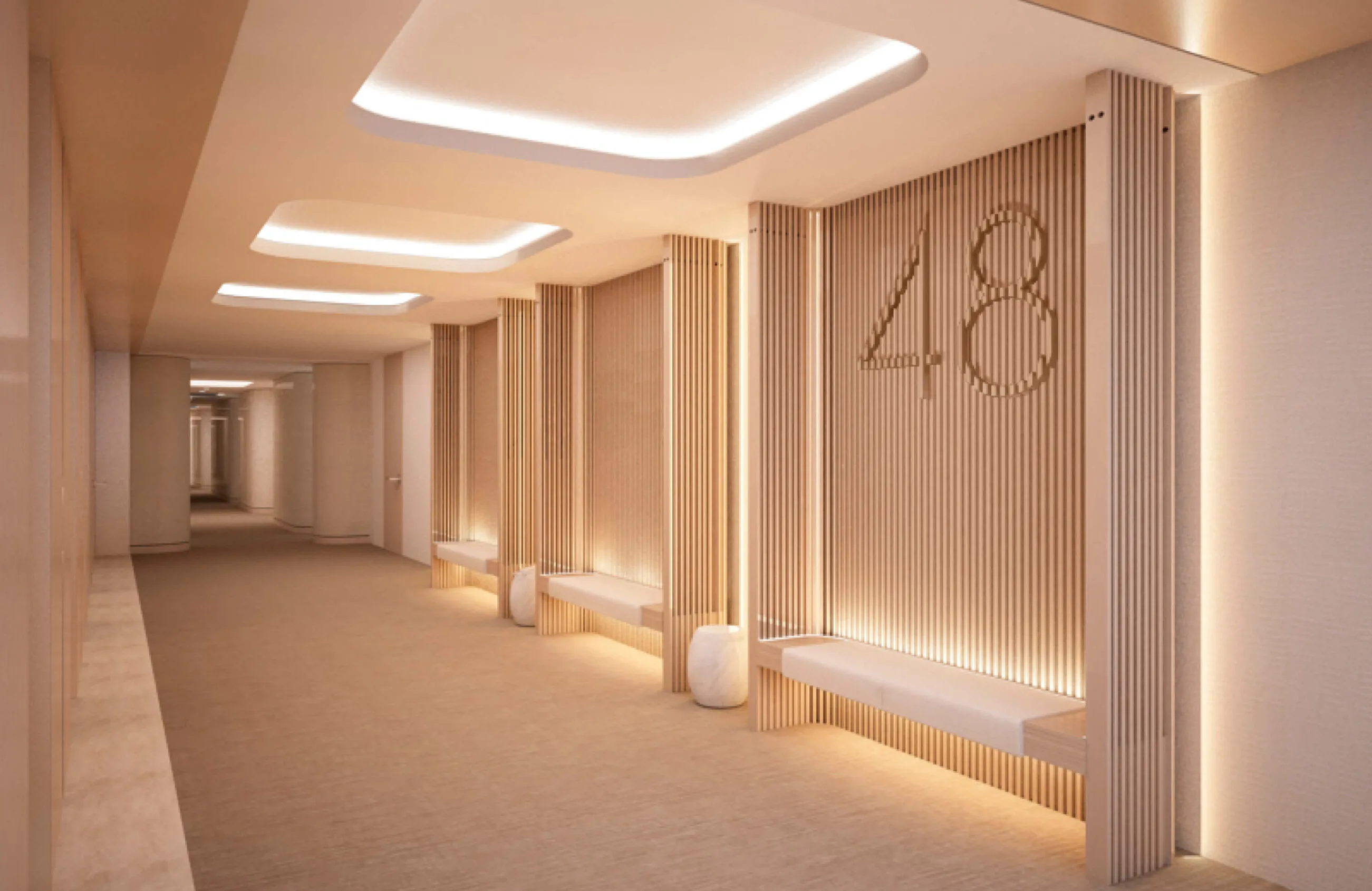
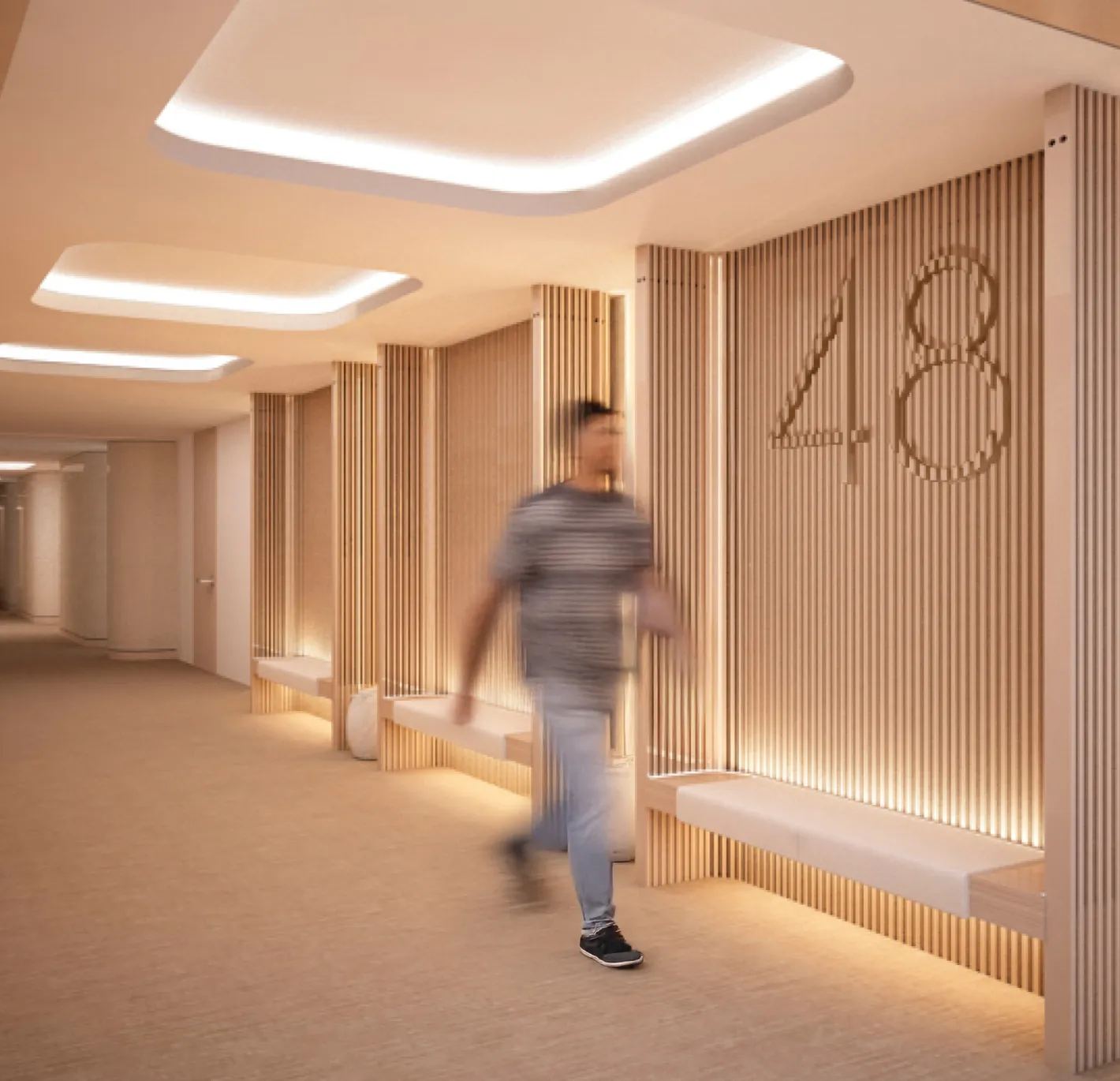
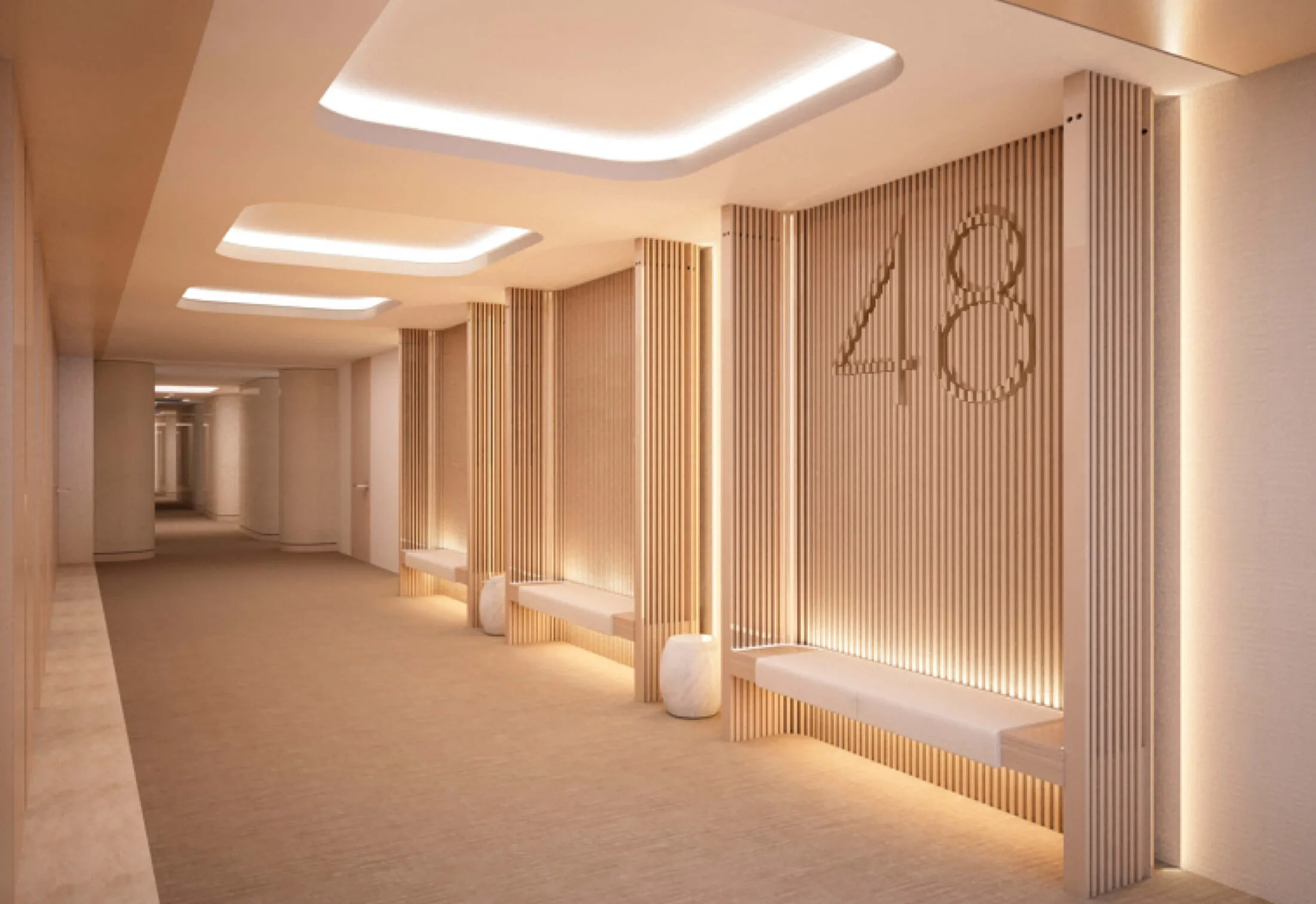
Modern hallway with wood paneling, illuminated ceiling, and a person walking past the number 48.
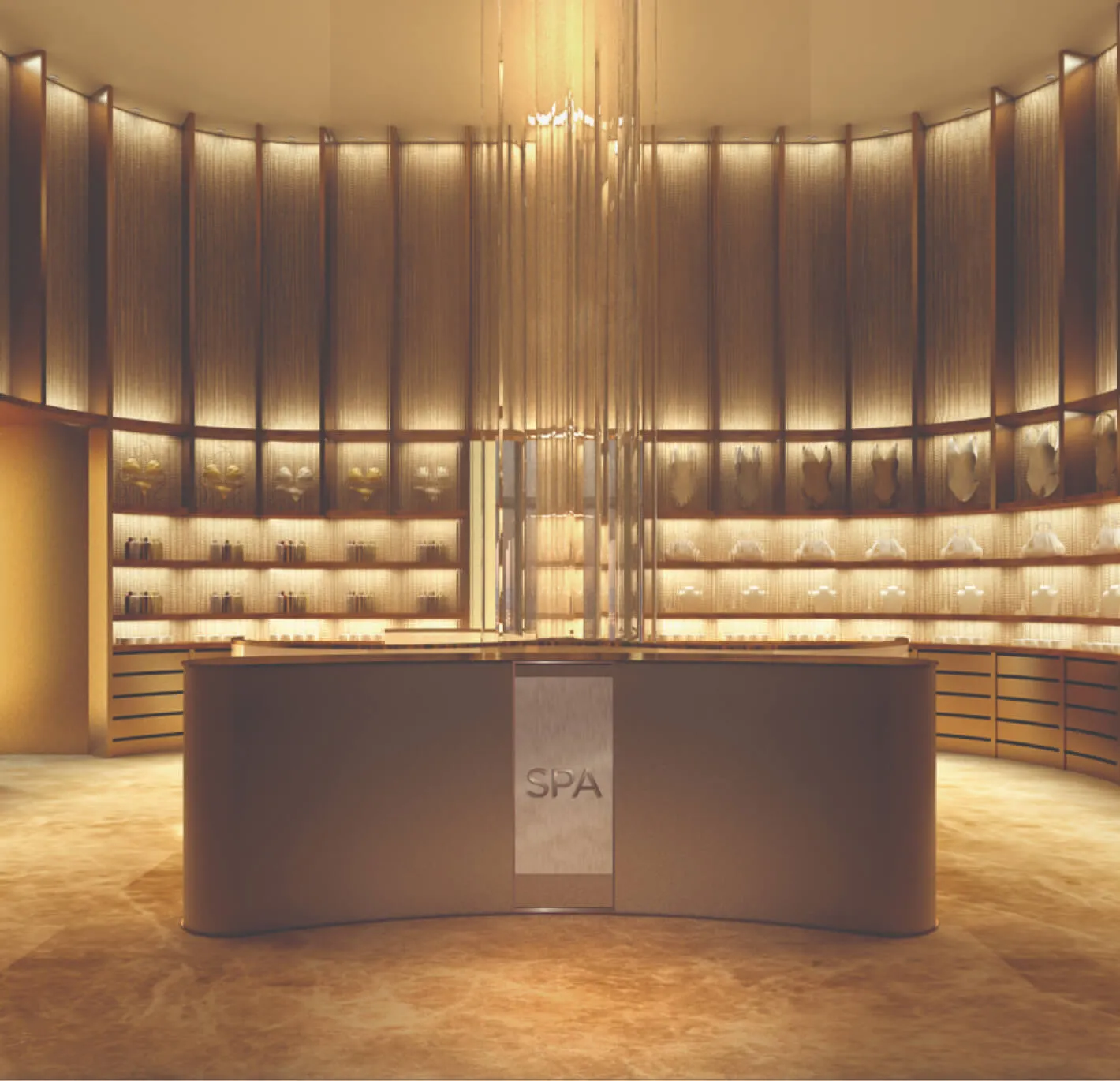
Spa reception desk with curved shelves displaying products and decorative items.
Level ID and elegant finishes
I really enjoy working with Forge Media. A very creative studio with great attention to detail which both complements and enhances the architecture of our projects.
Russel Hales, Partner (Foster + Partners)
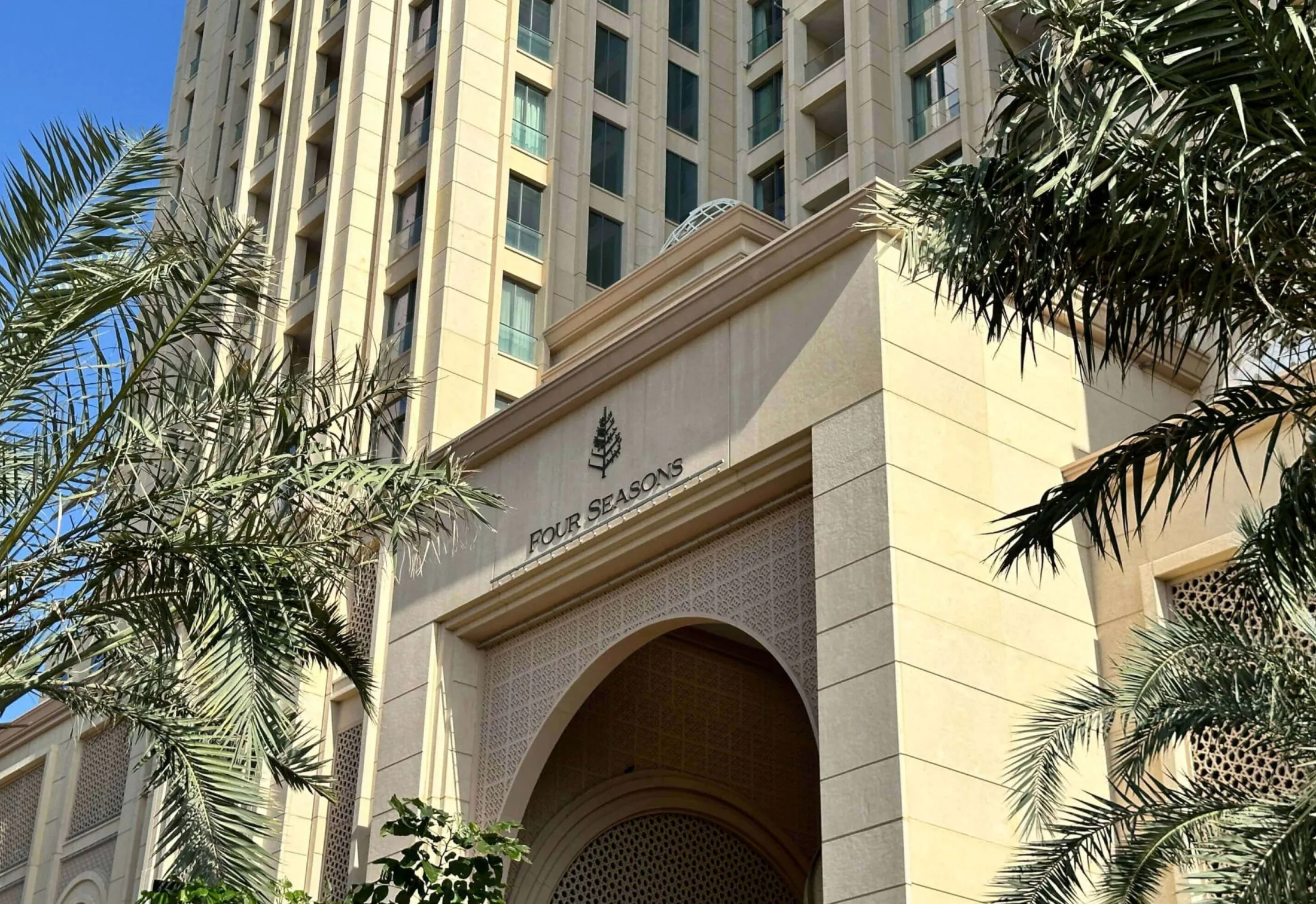
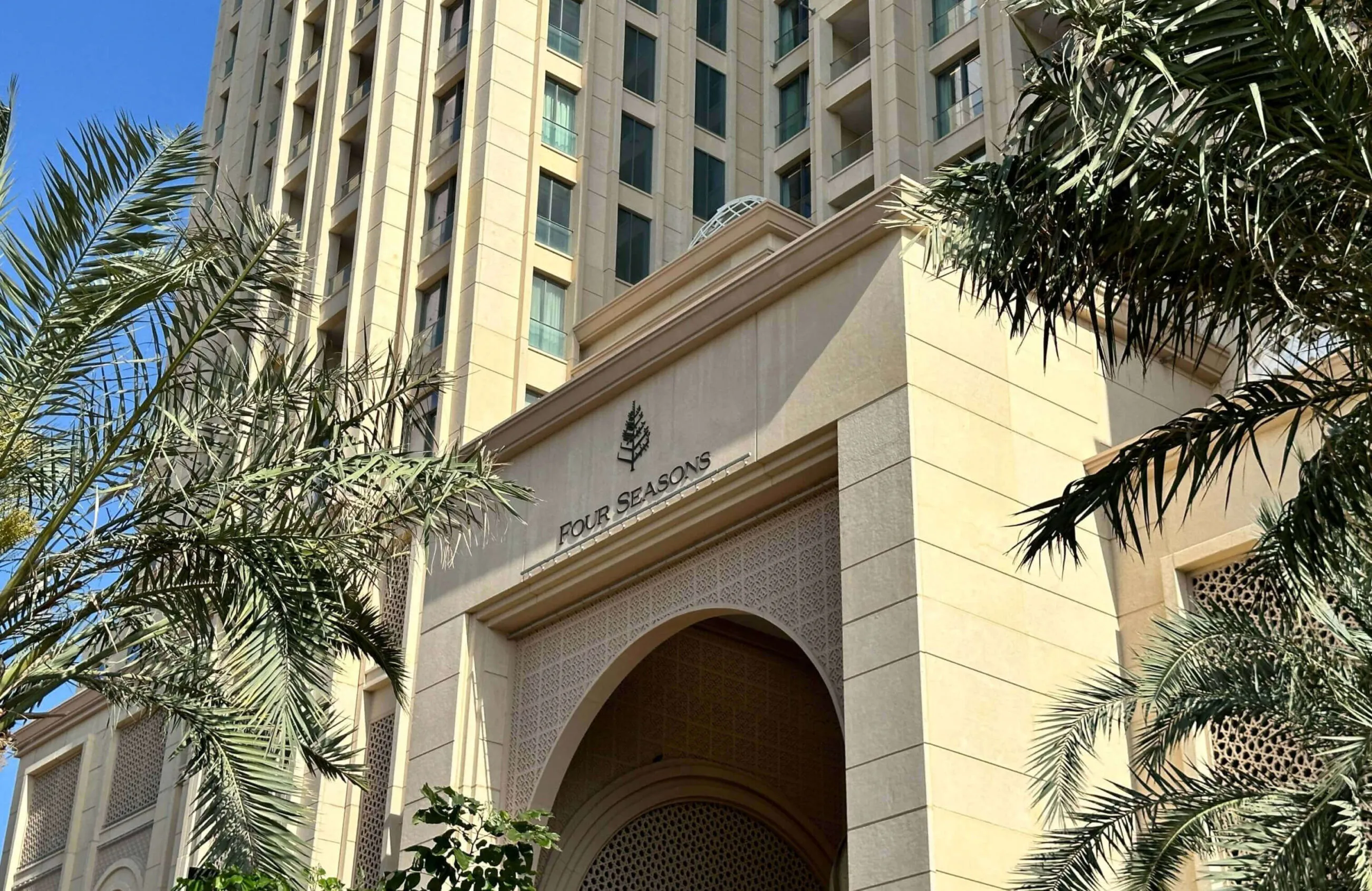
Four Seasons Hotel Doha entrance with palm trees. Four Seasons logo on a building facade

Four Seasons Doha

Doha, Qatar
Services Deliverables
  • Signage
  • Wayfinding
  • Masterplan

An iconic hotel at the Pearl in Doha

A beachfront resort situated along the shores of The Pearl in Doha, Qatar, The Four Seasons Resort and Residences is a an upscale living experience providing an exceptional combination of elegance and relaxation. Forge collaborated with Four Seasons Hotels to create an environment that communicates authenticity and luxury to guests. The design pays careful consideration to the physical surroundings and creates a deeper, more personal experience for visitors.

Surrounding landscape and luxury amenities
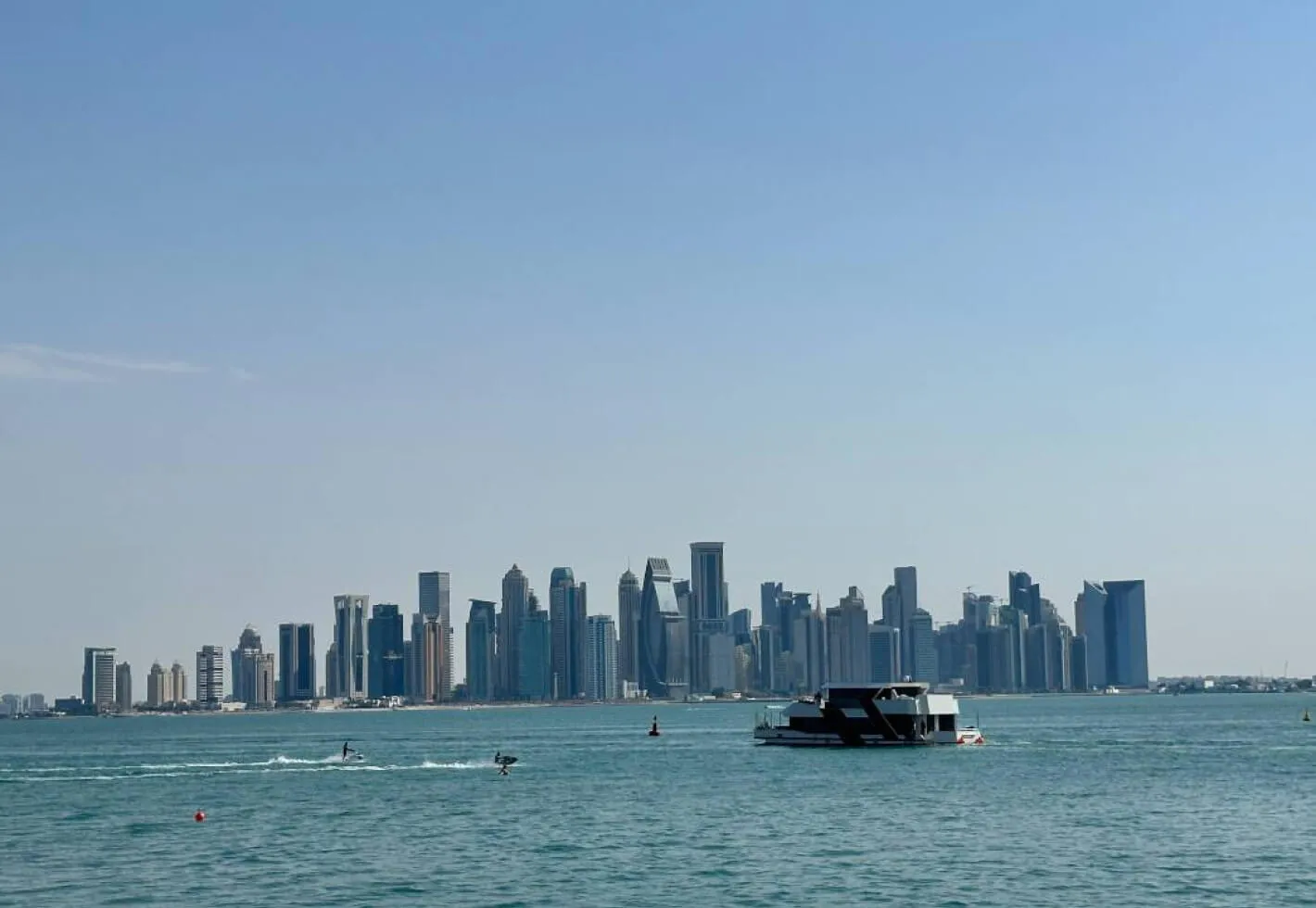
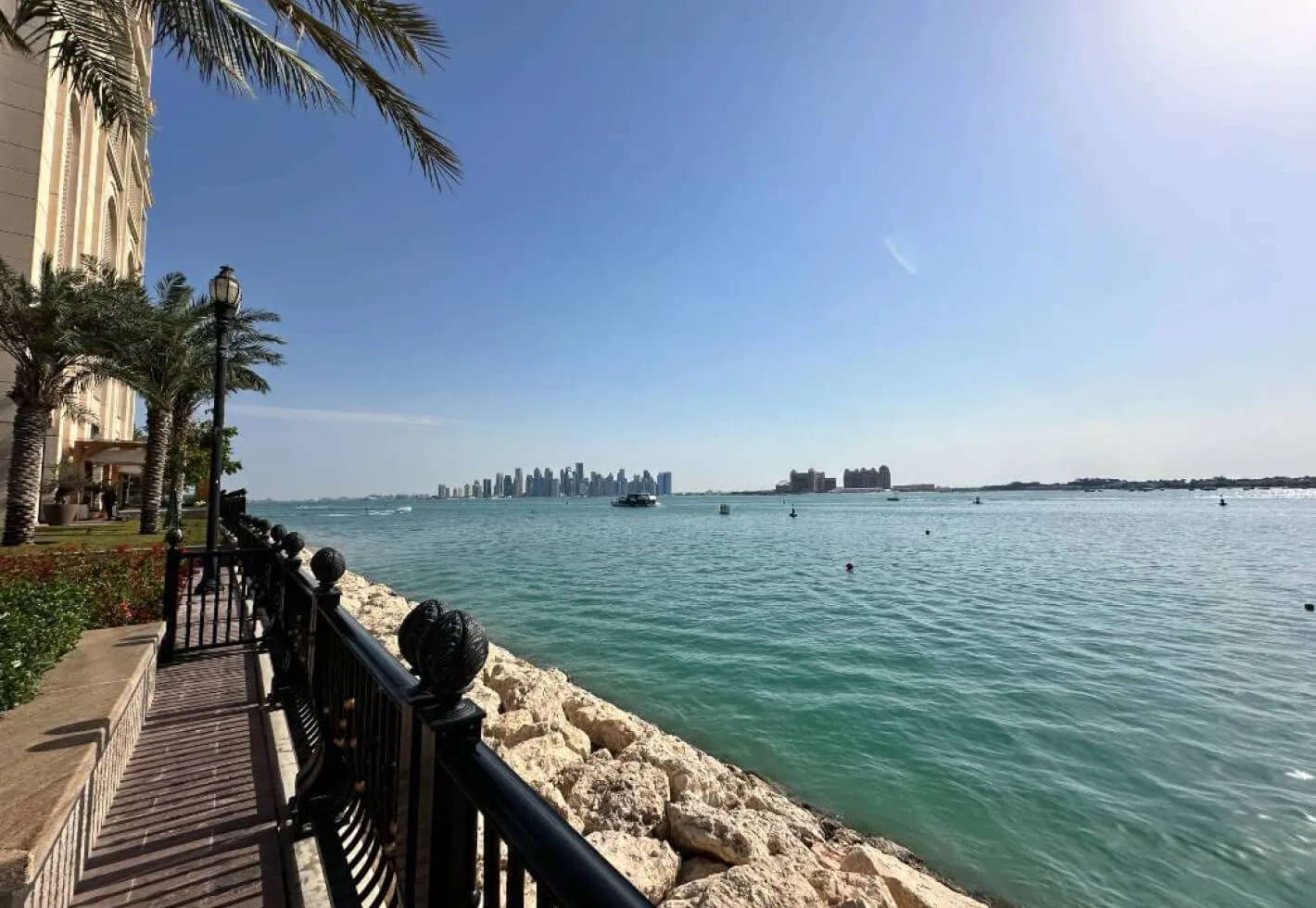
Doha skyline with skyscrapers and a boat on the water.
View of Doha skyline across the water from the Four Seasons hotel.
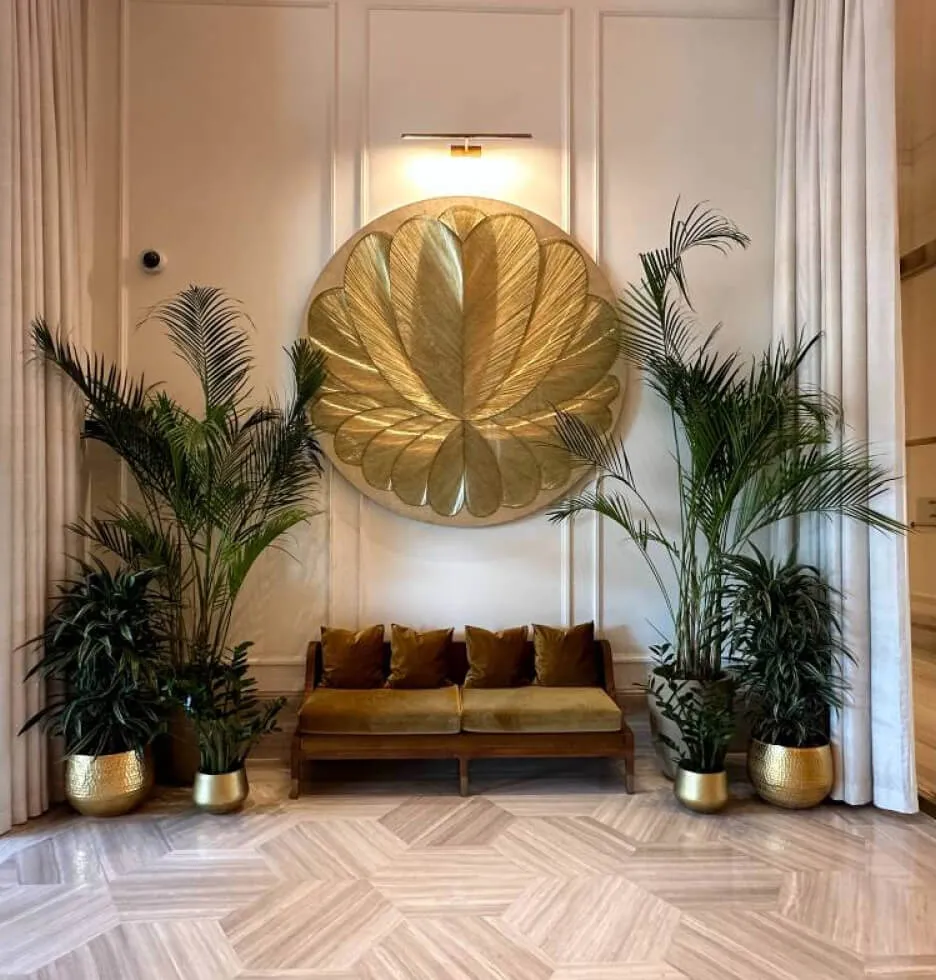
A gold lotus wall art above a velvet sofa with potted plants.
Two neatly folded white towels with a black tree logo stacked on a shelf.
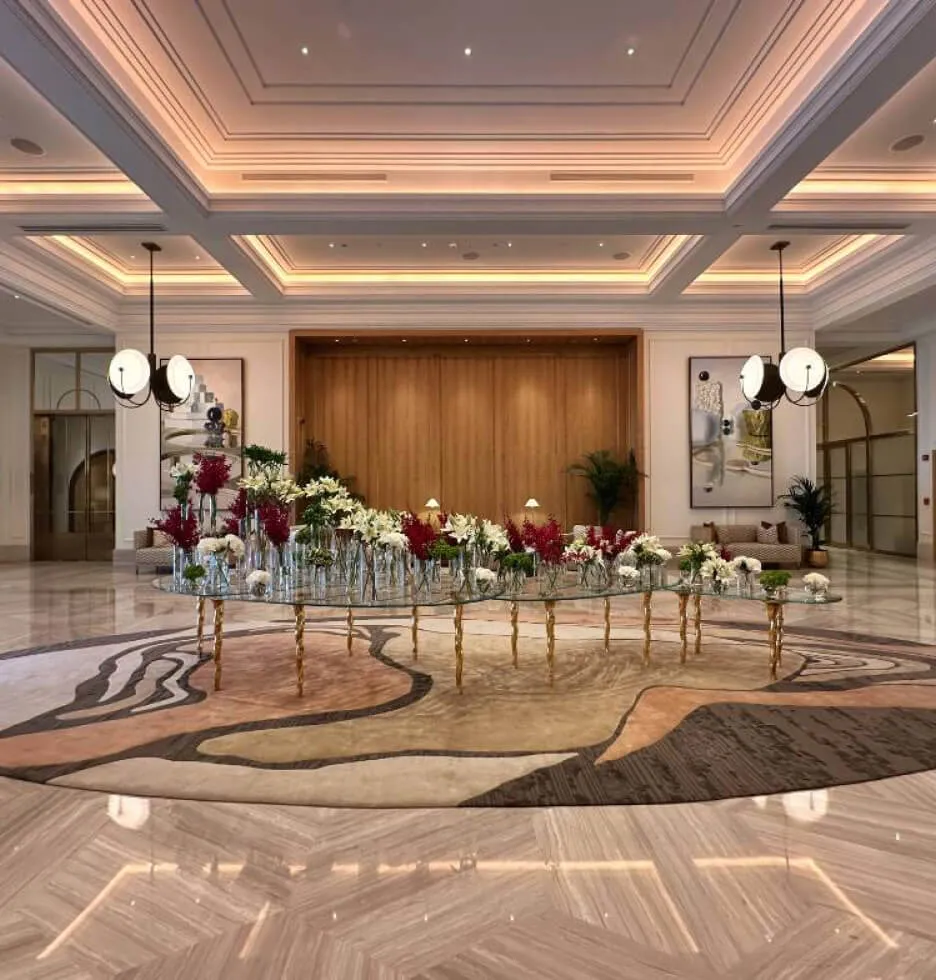
Grand hotel lobby with floral arrangements on a glass table and a patterned rug.

Inspired materials for a memorable experience

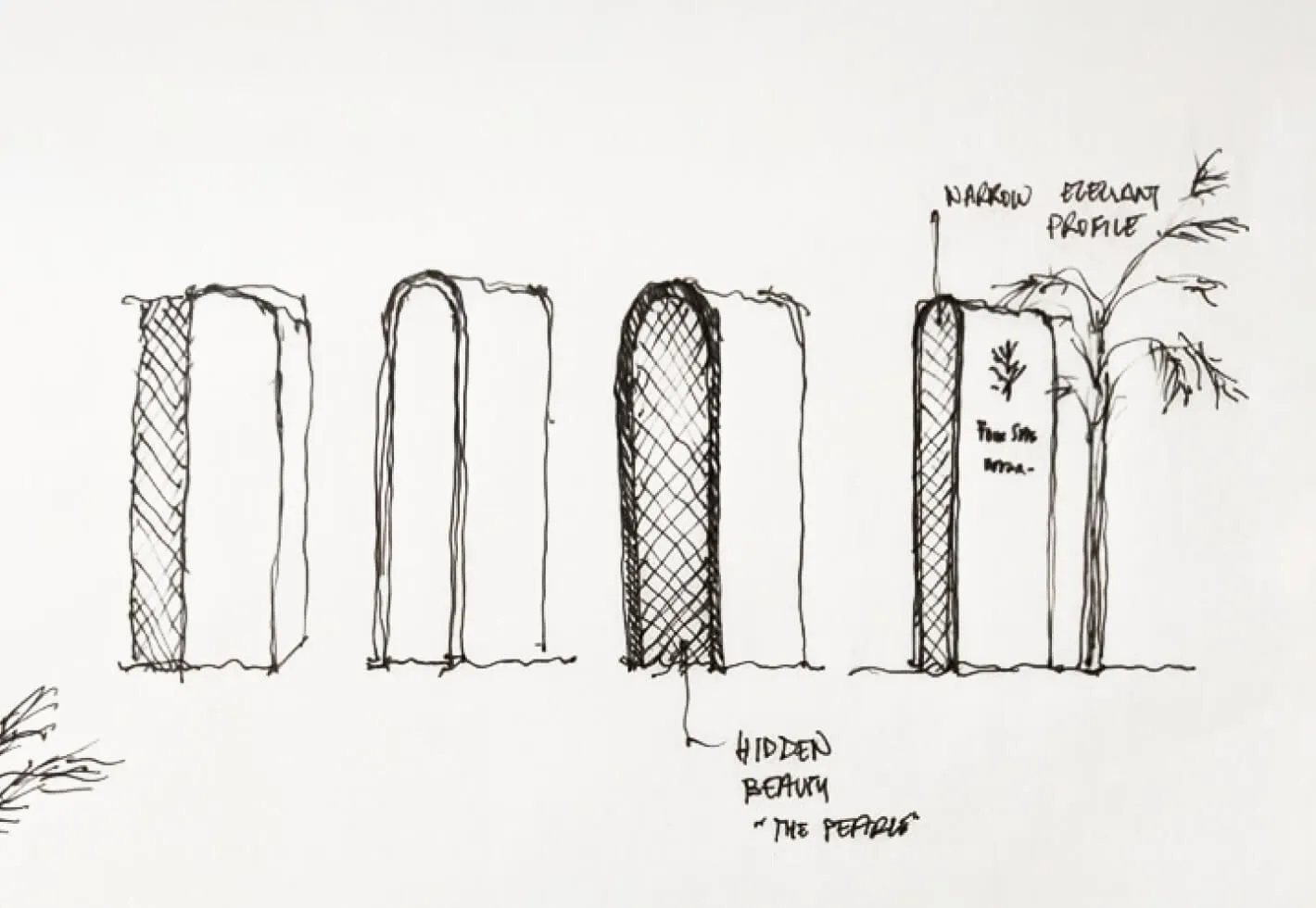
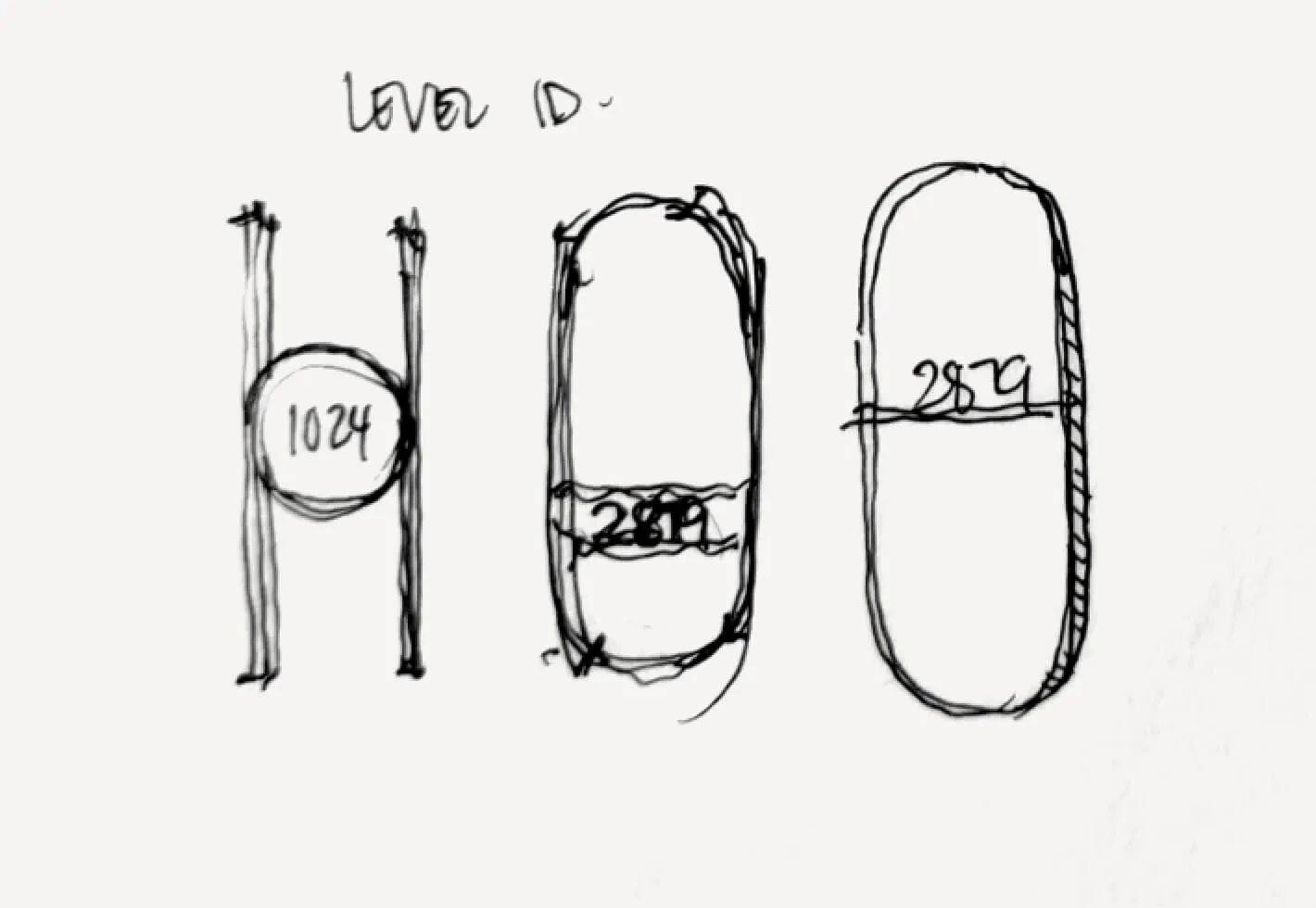
Leveraging Doha’s beachfront setting as a metaphor, the signage material palette draws inspiration from the luster and luminance of pearls, with materials like tempered glass and quartz reflecting the transparency and movement of water. Curvilinear forms and rounded elements were influenced by the nearby ocean’s fluidity, seamlessly blending distinctive forms with functional design.

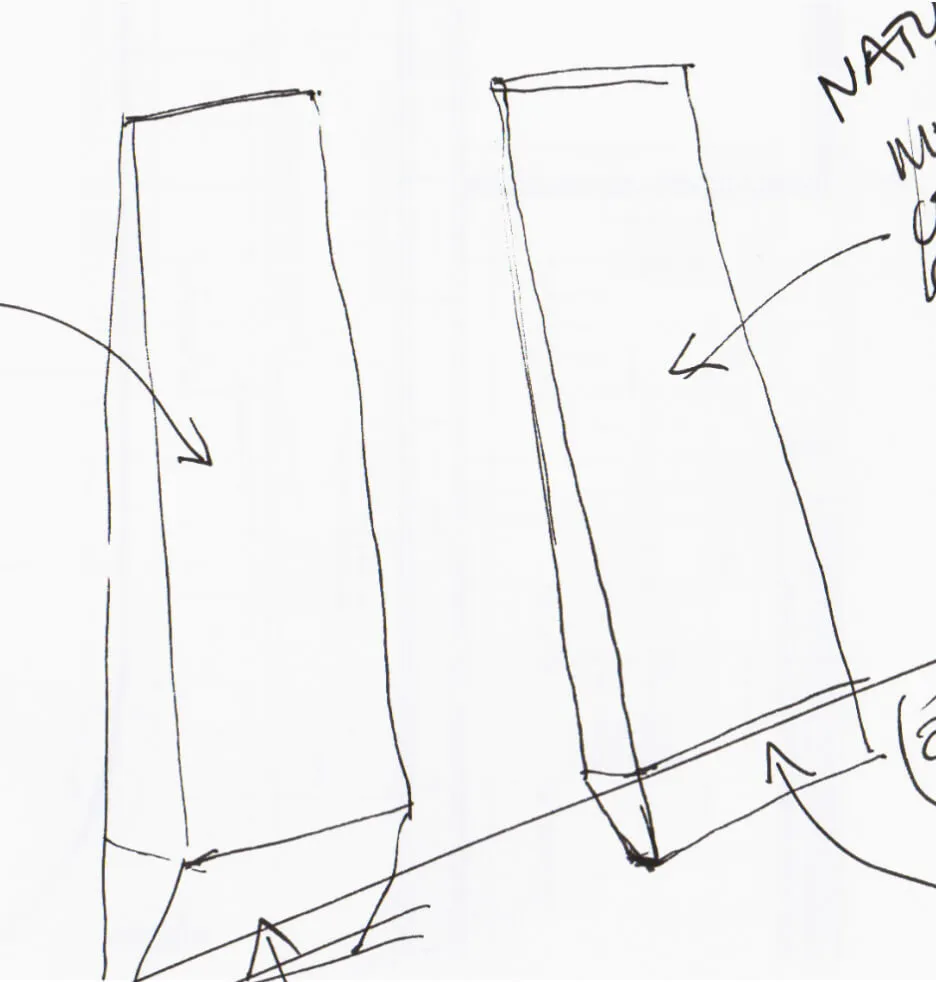
Sketch of four tall, narrow structures with text annotations.
Hand-drawn sketch of three abstract shapes with numbers inside, labelled
Concept sketches
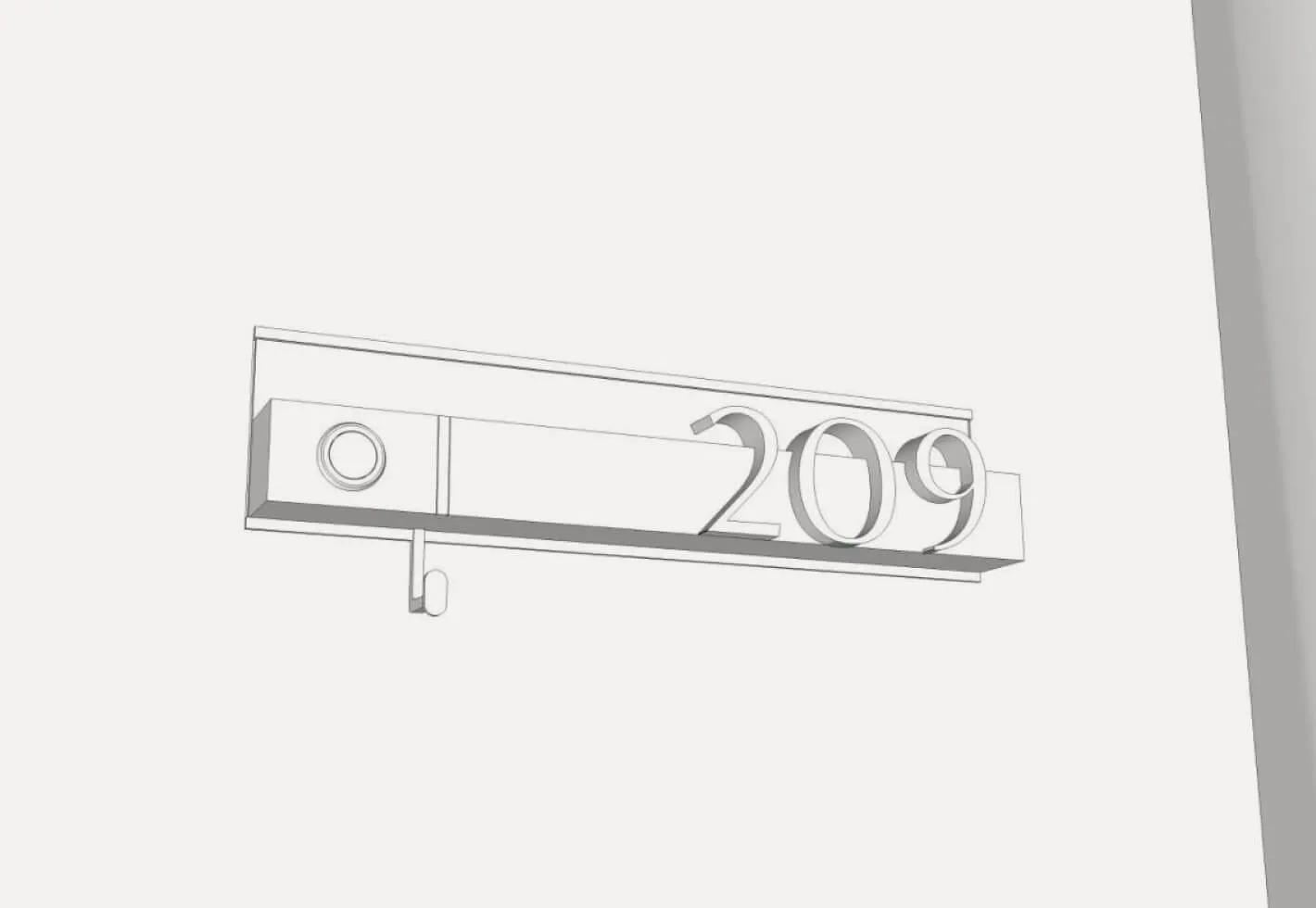
Room number 209 sign with a hook.
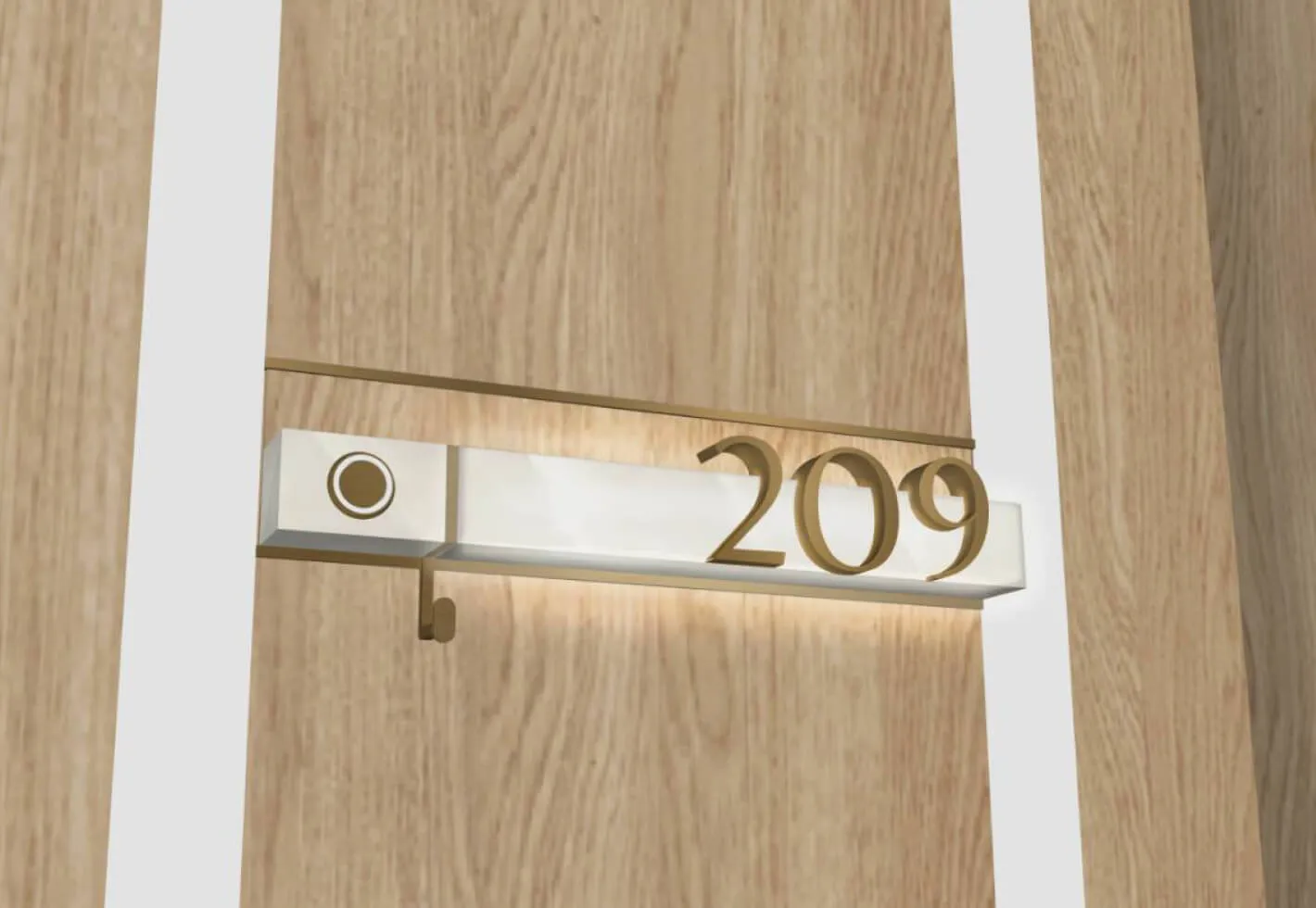
Hotel room number 209 sign with a hook on a wooden door.
Low and high-fidelity renderings of guest room ID
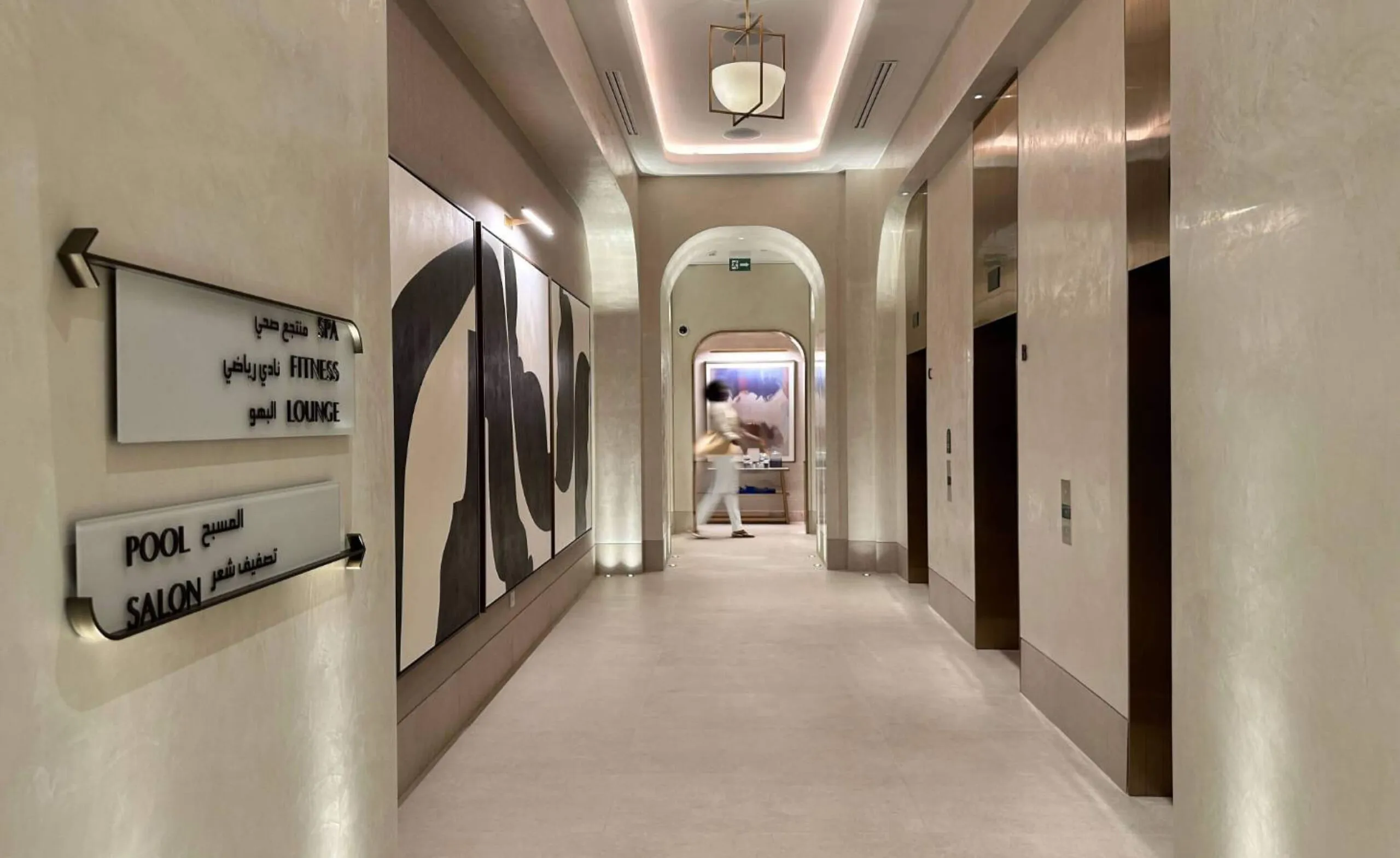
Modern hotel hallway with signs for spa, fitness, lounge, pool, and salon.
Interior signage and wayfinding
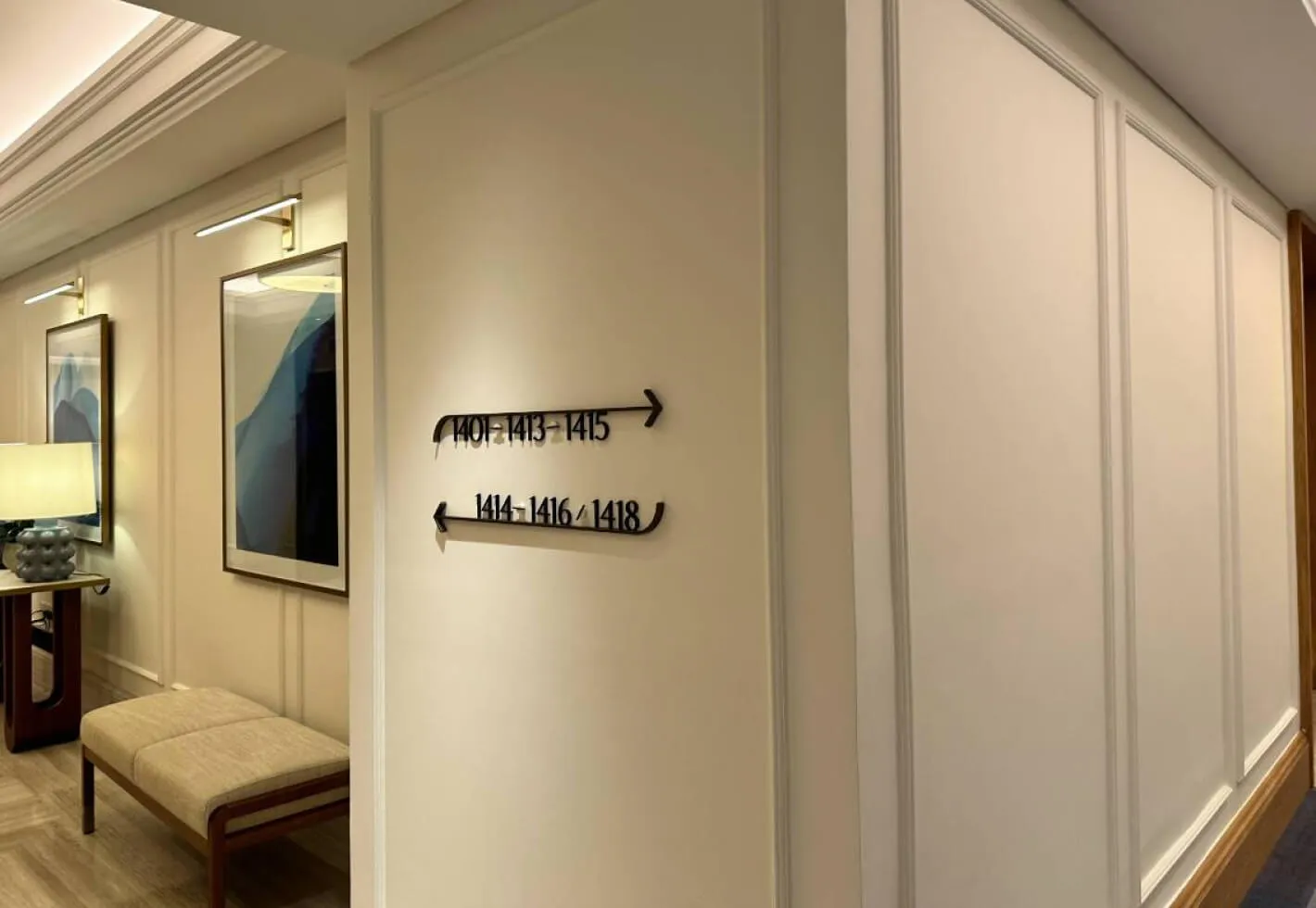
Hallway signs indicating room numbers 1401-1415 and 1414-1418.
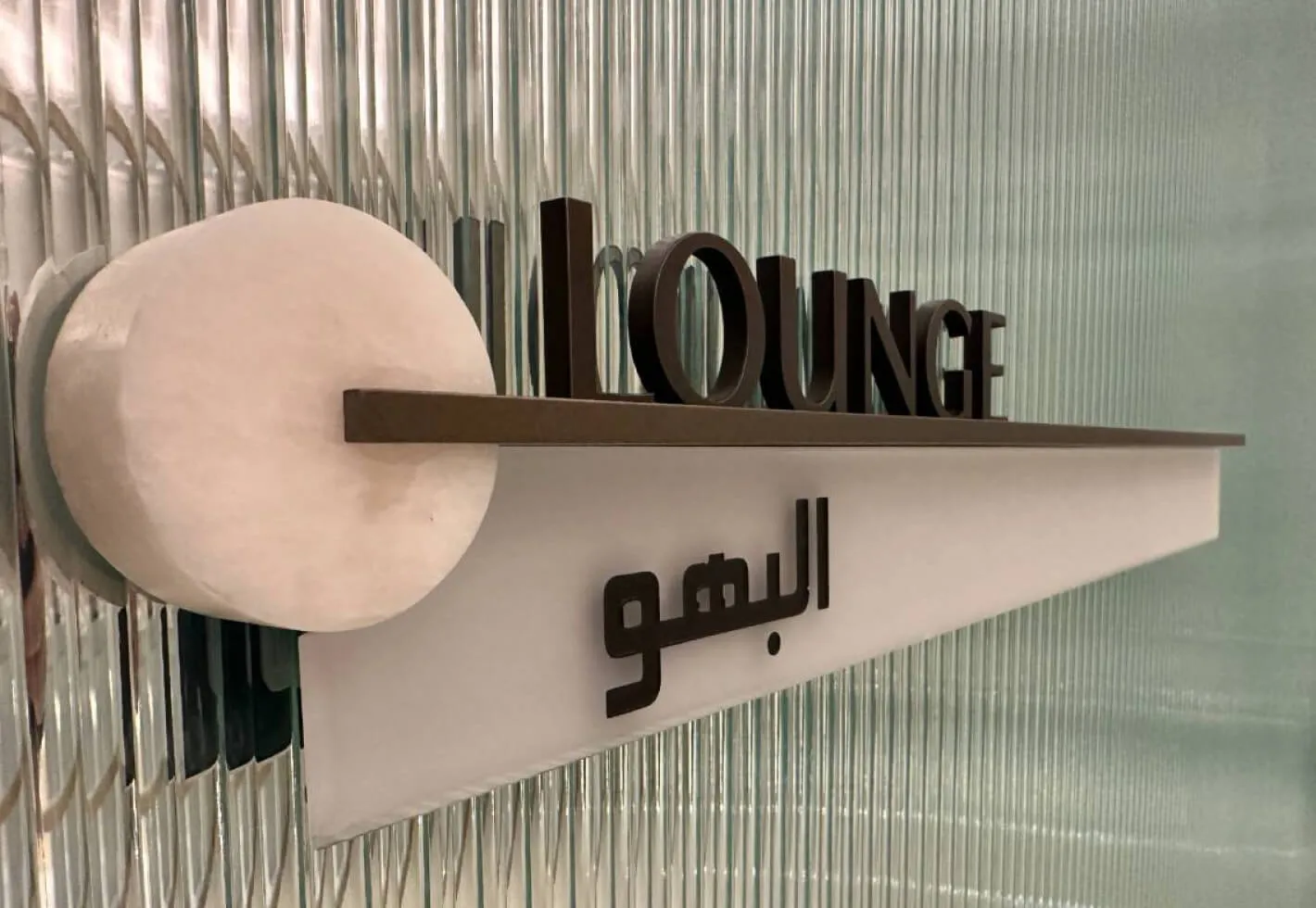
A sign for
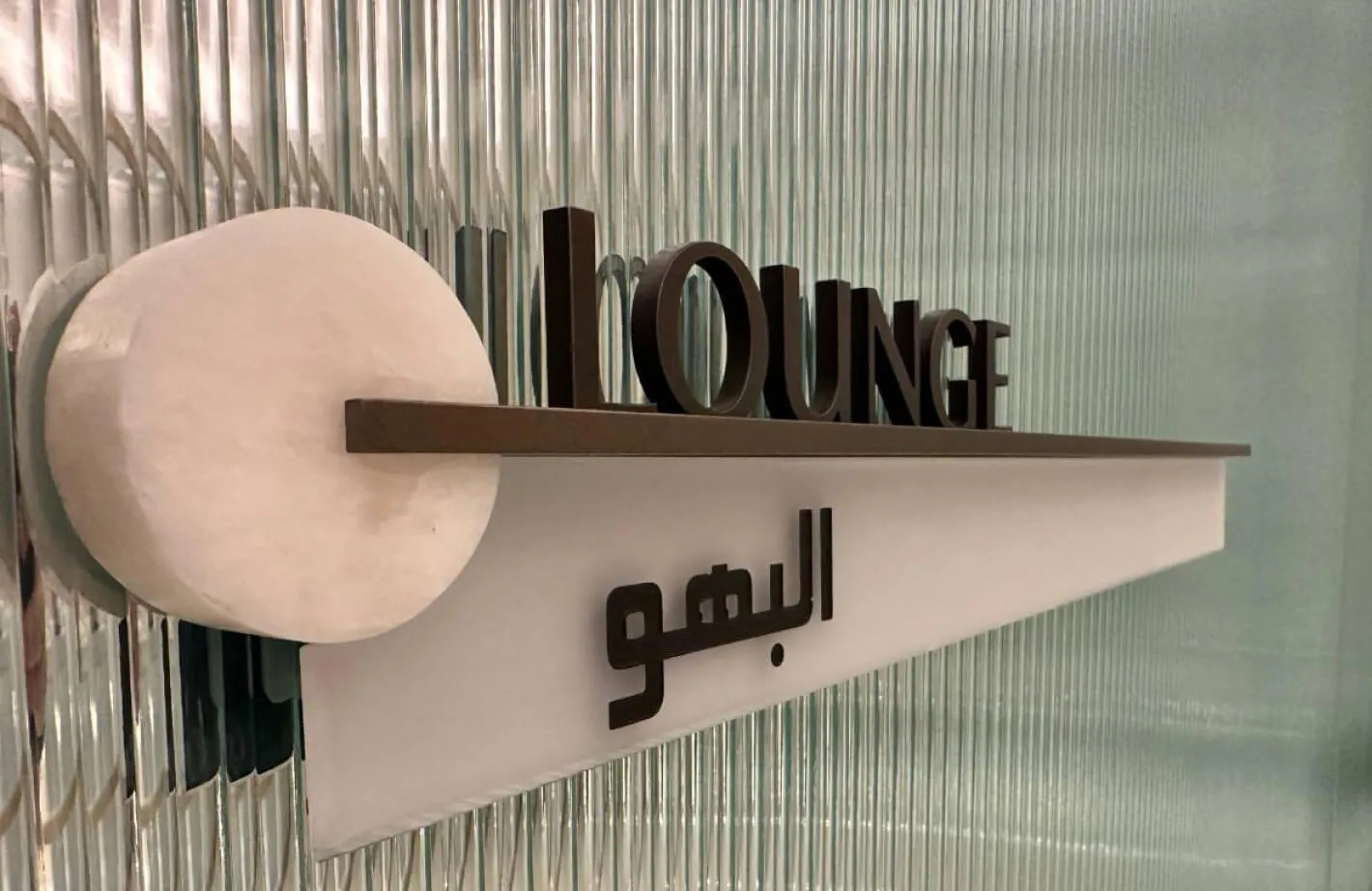
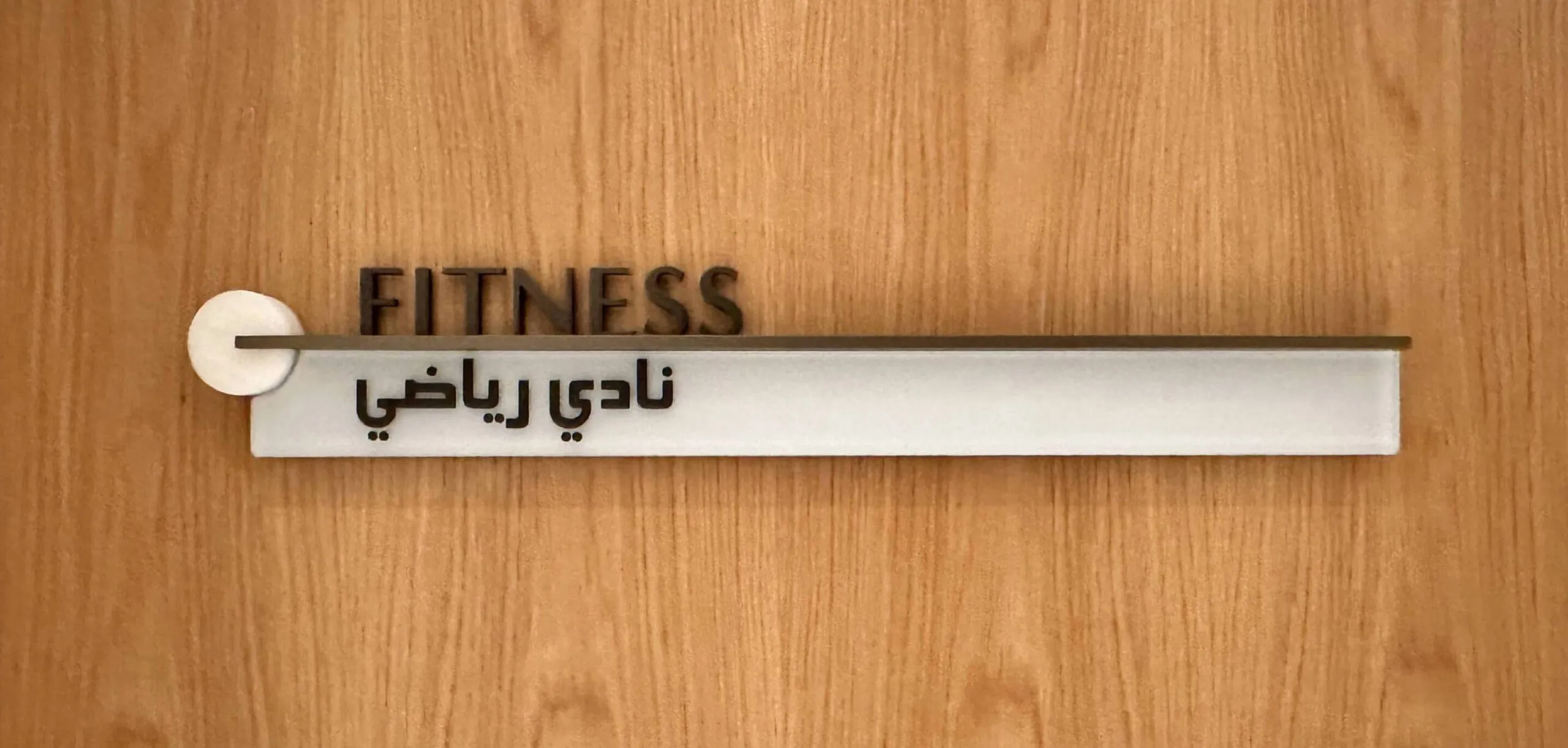
Fitness and Arabic text sign on a wooden wall.
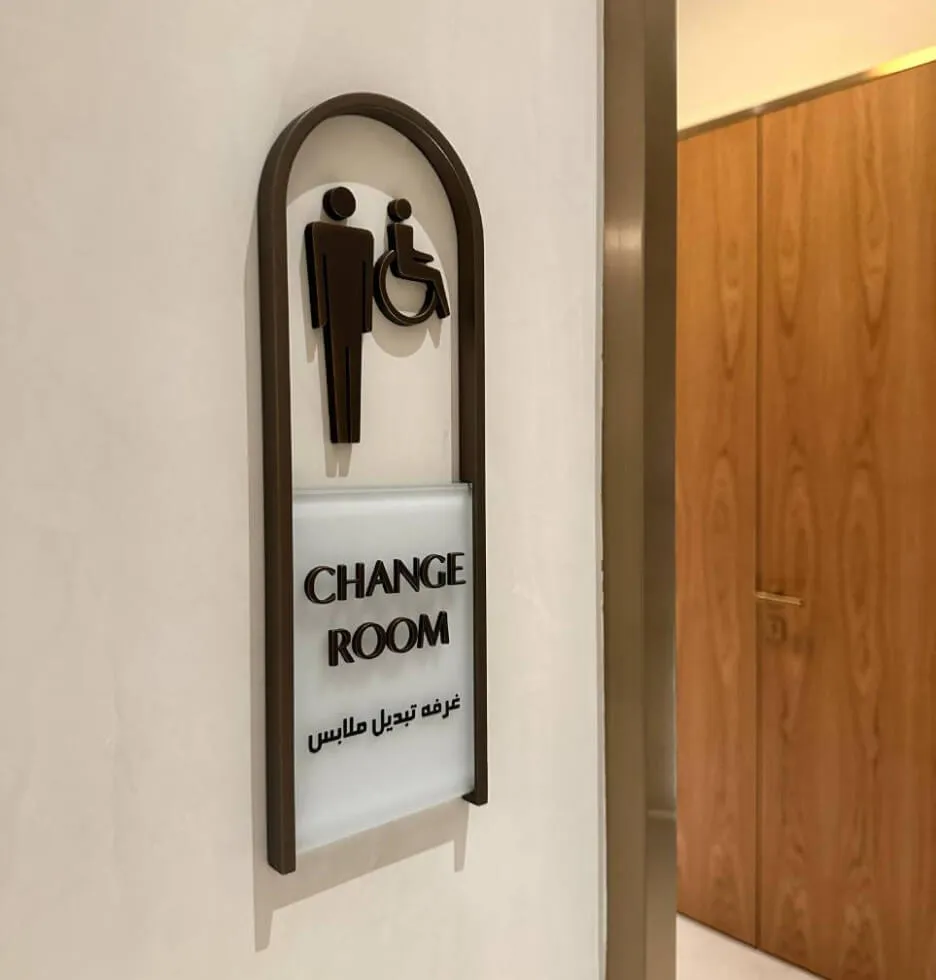
Change room sign with male and wheelchair symbols and Arabic text.
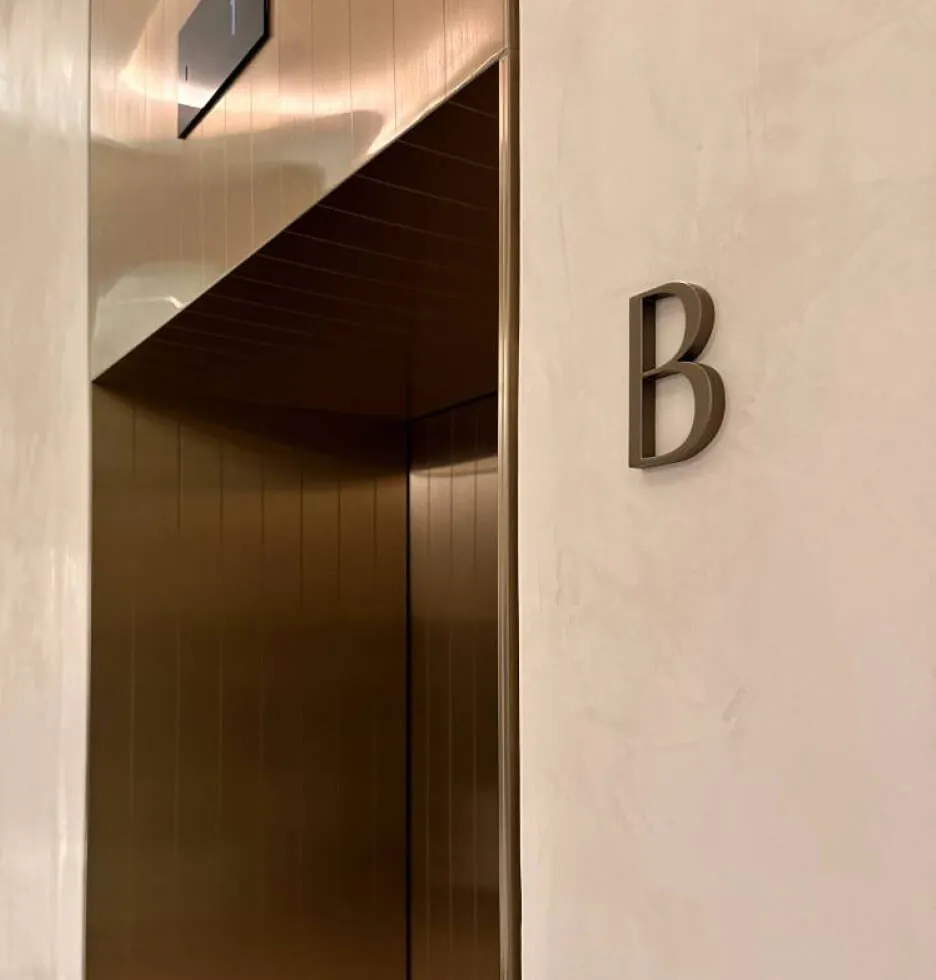
Elevator interior with a brass finish and a letter B sign on the wall.
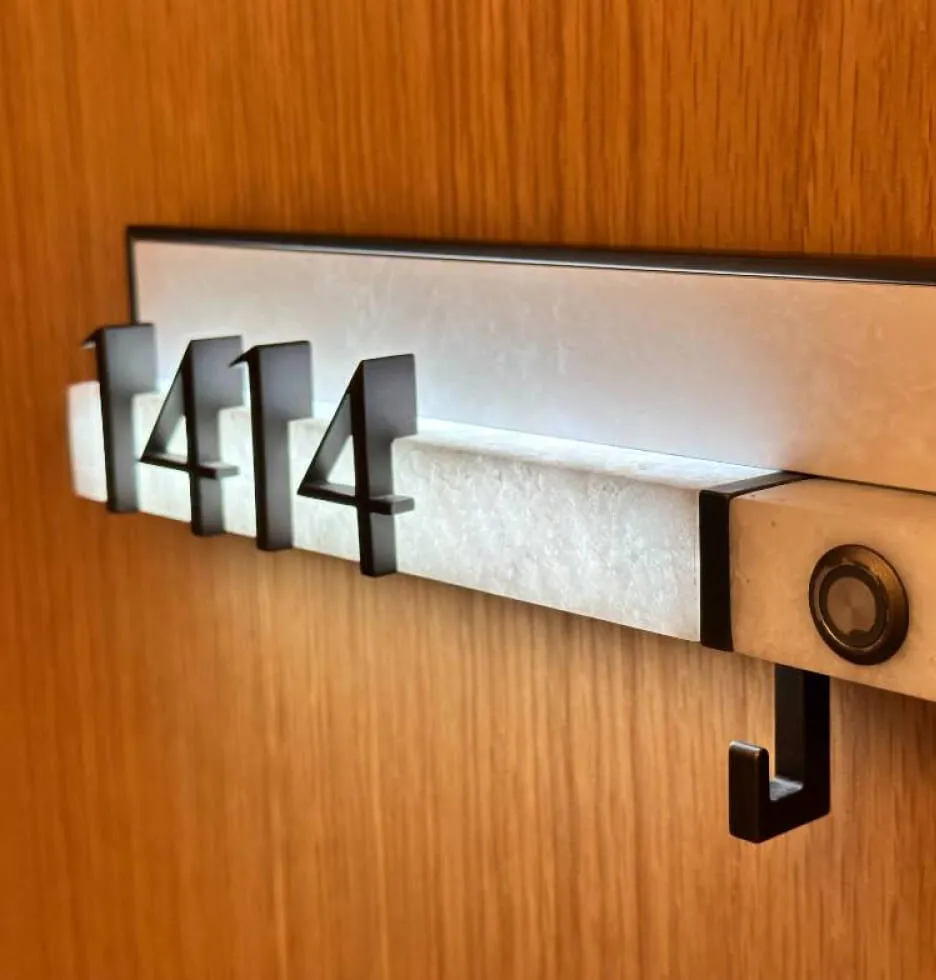
Room number 1414 with a hook and a circular fixture on a wooden door.

An authentic base of understanding

Seamlessly integrating signage elements that not only guide guests through the hotel’s expansive facilities but also complement the hotel’s surrounding beachfront environment, Forge delivered a cohesive and visually compelling signage system that aligns with the hotel’s commitment to overall excellence in guest service.

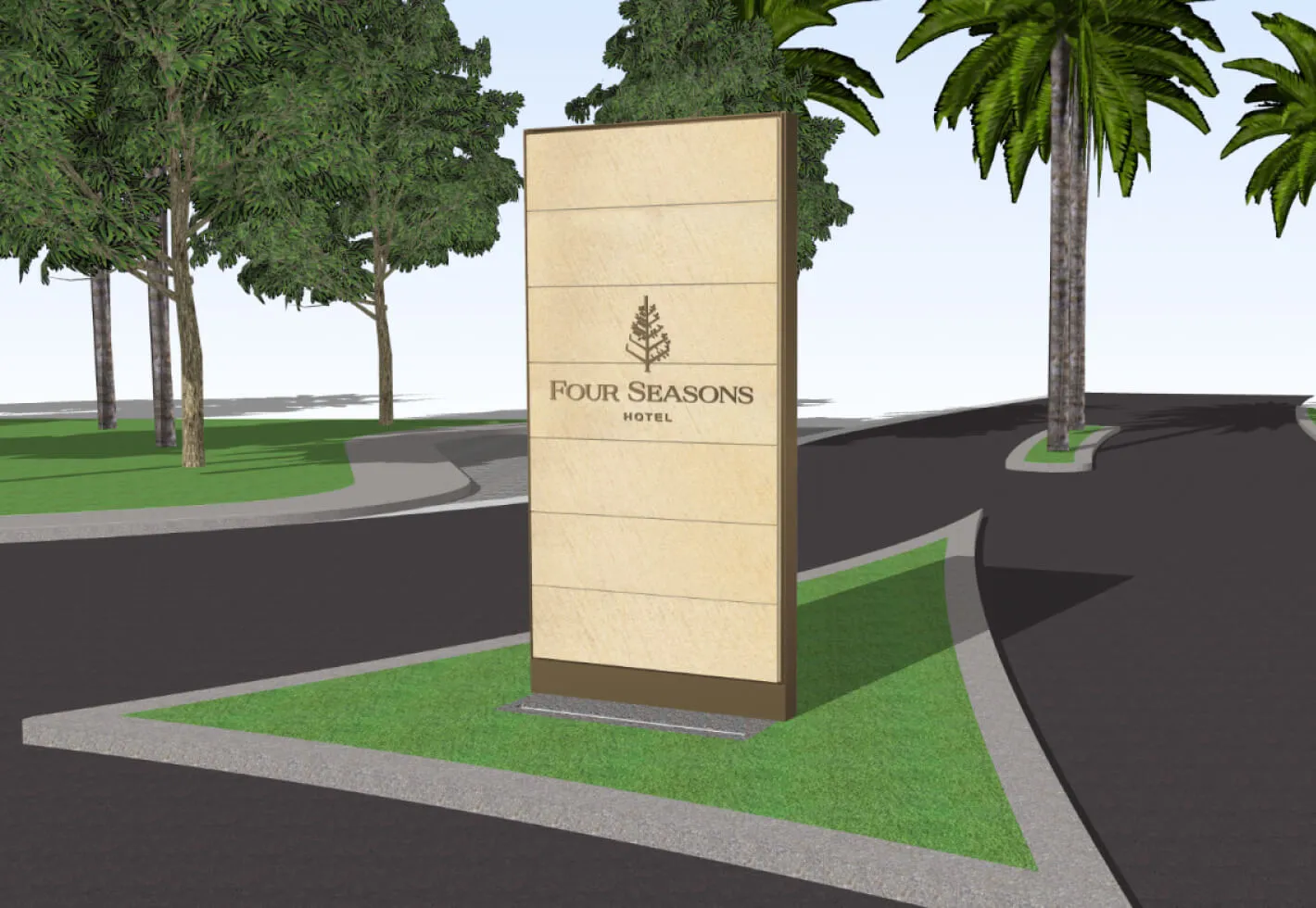
Four Seasons Hotel sign with palm trees and landscaping.
Four Seasons Hotel sign with palm trees and sunset background.
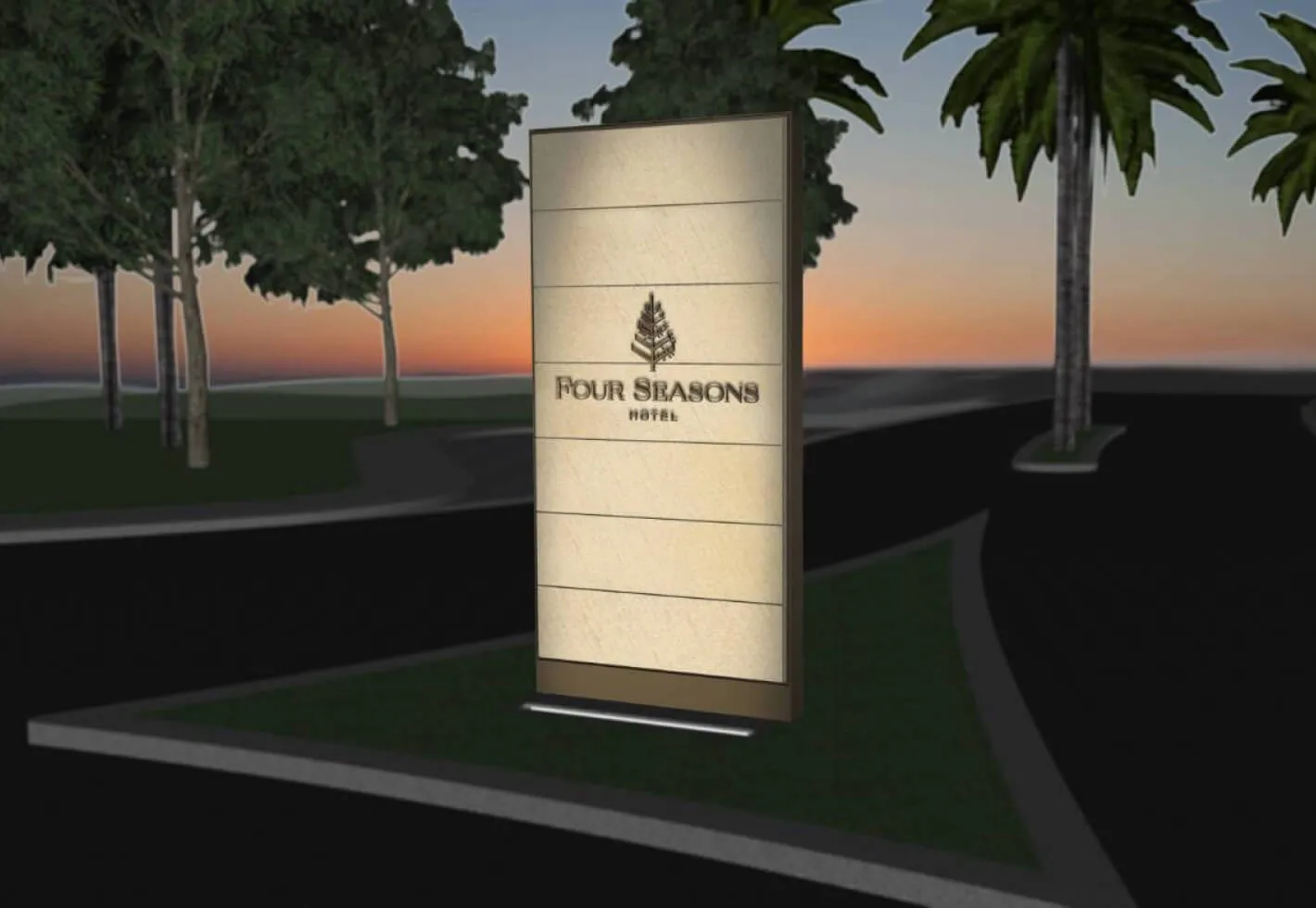
Renderings of site pylon ID at day and night
Four Seasons logo above an arched entrance with intricate latticework.
Four Seasons logo
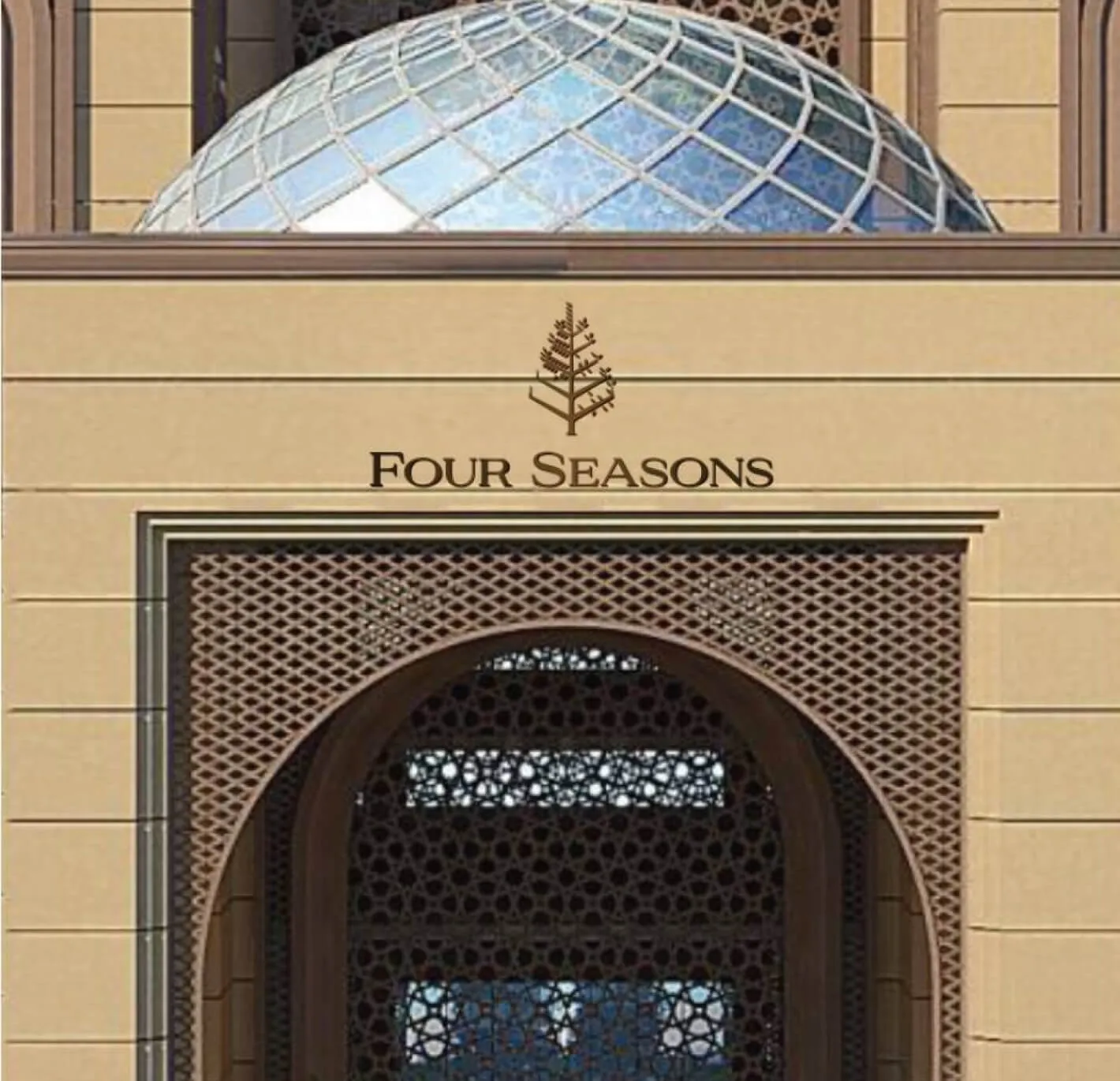
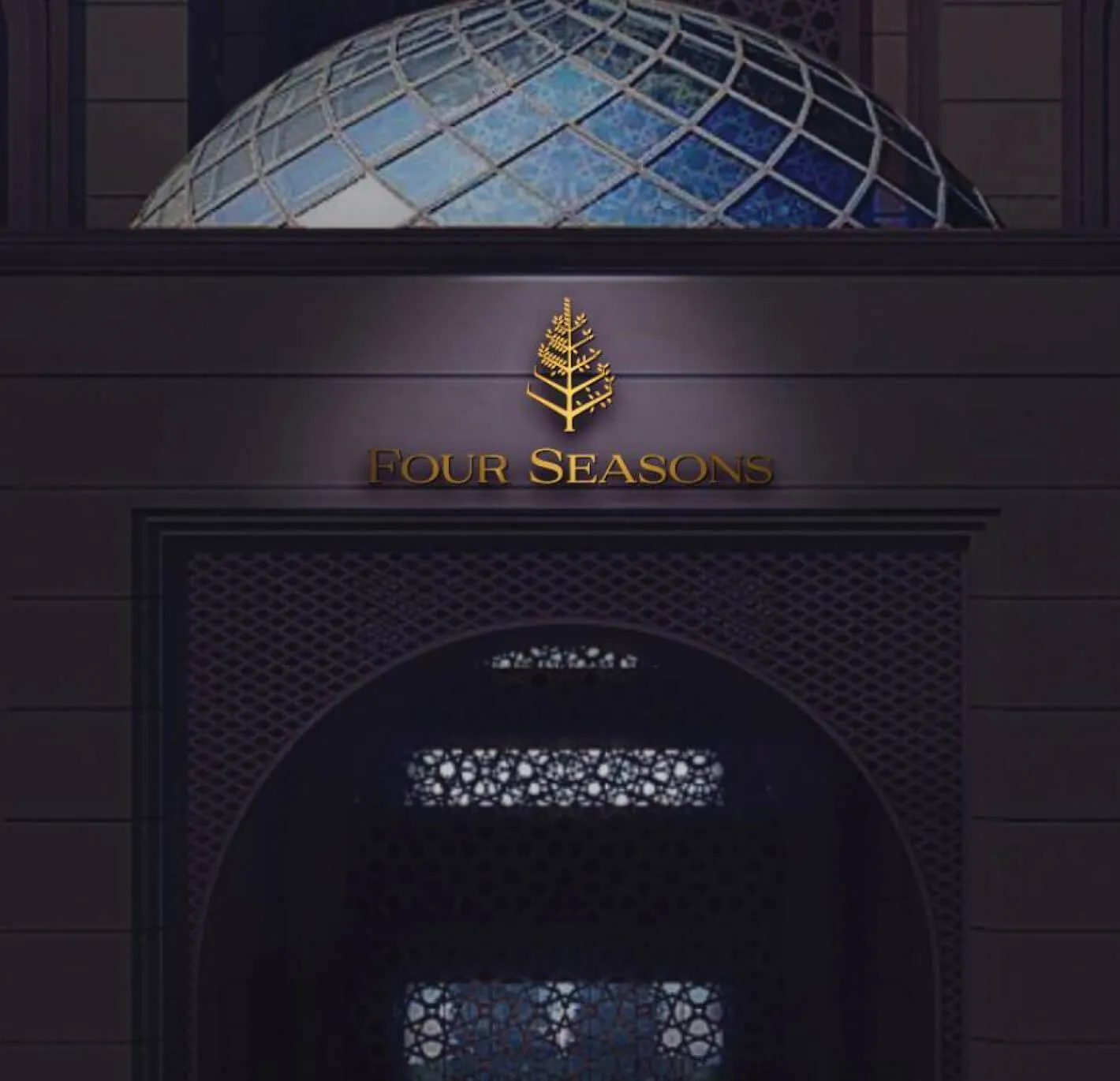
Renderings of building ID at day and night
Four Seasons Hotel and Residences entrance with revolving doors and silhouette of a person.
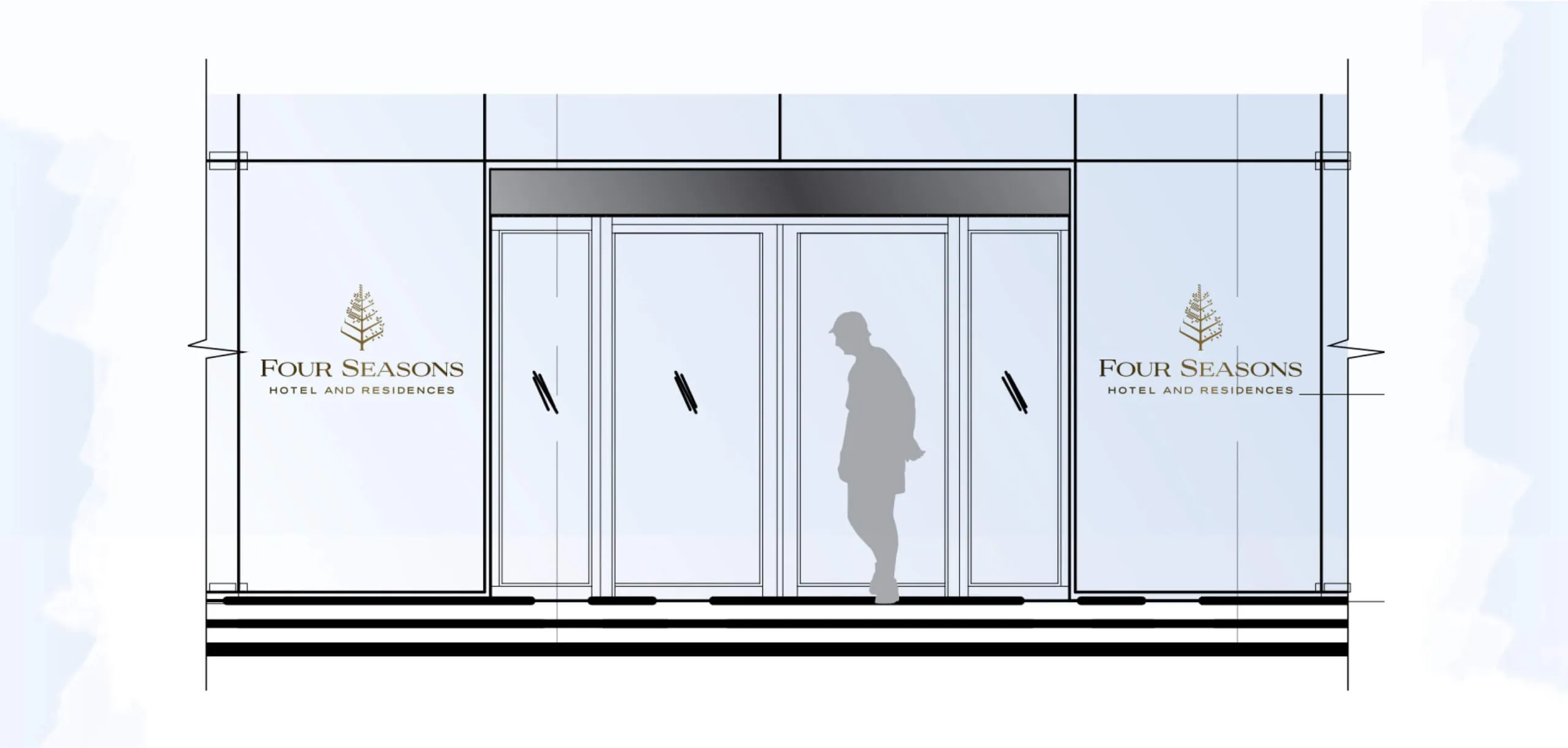
Elevation of primary entrance ID
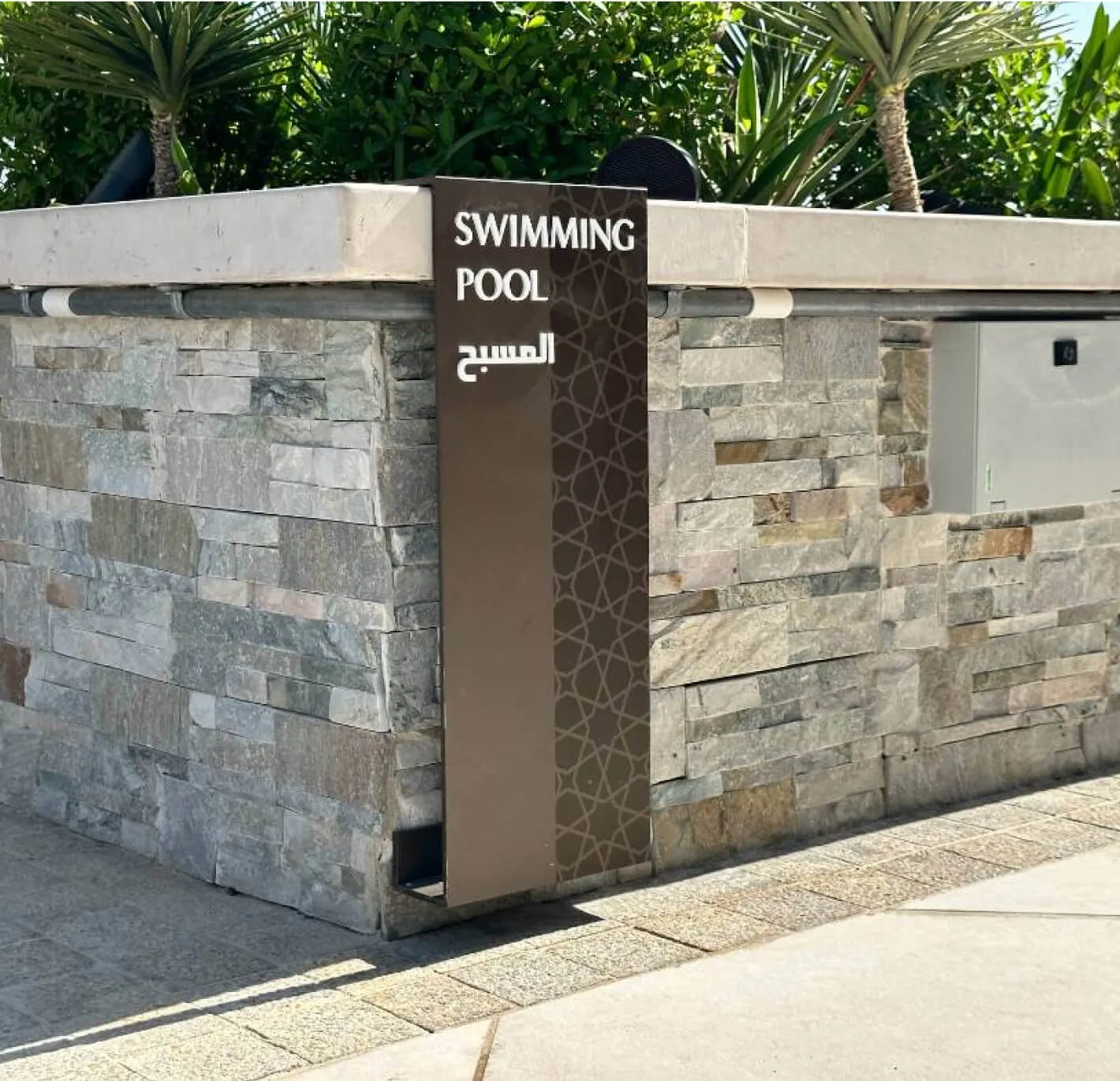
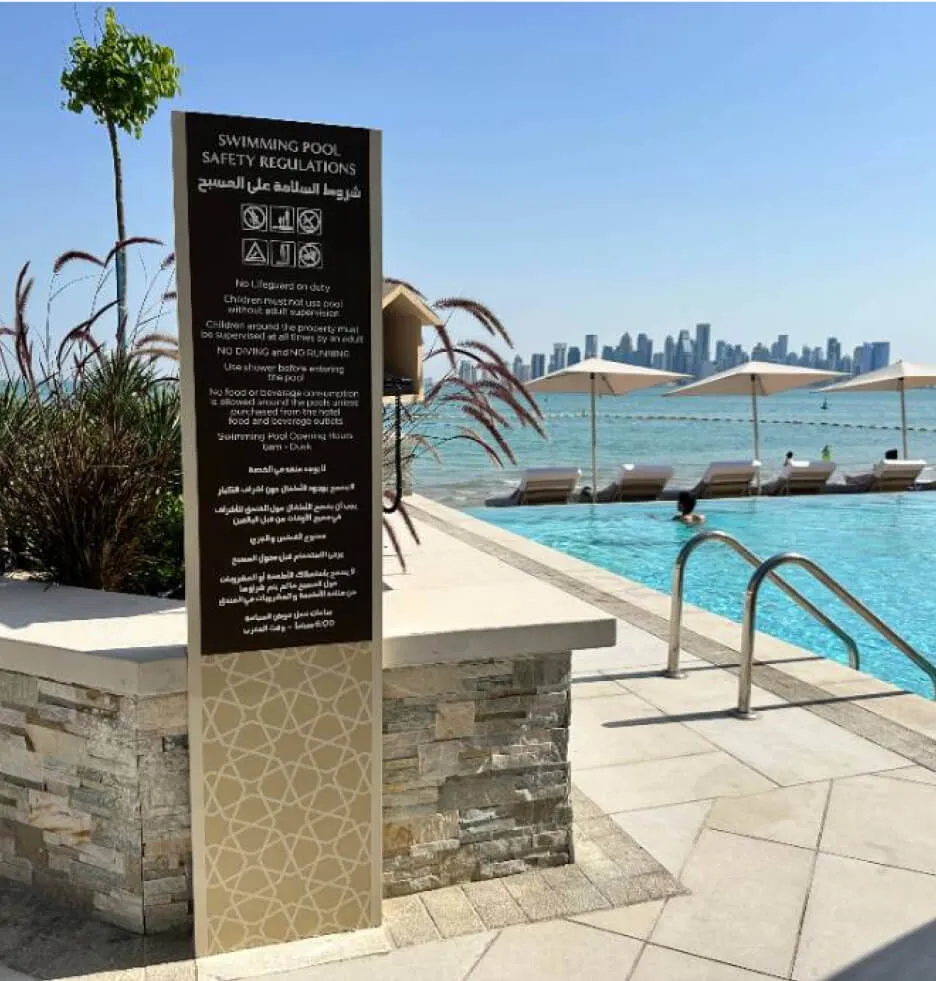
Sign for swimming pool in English and Arabic, with a stone wall background.
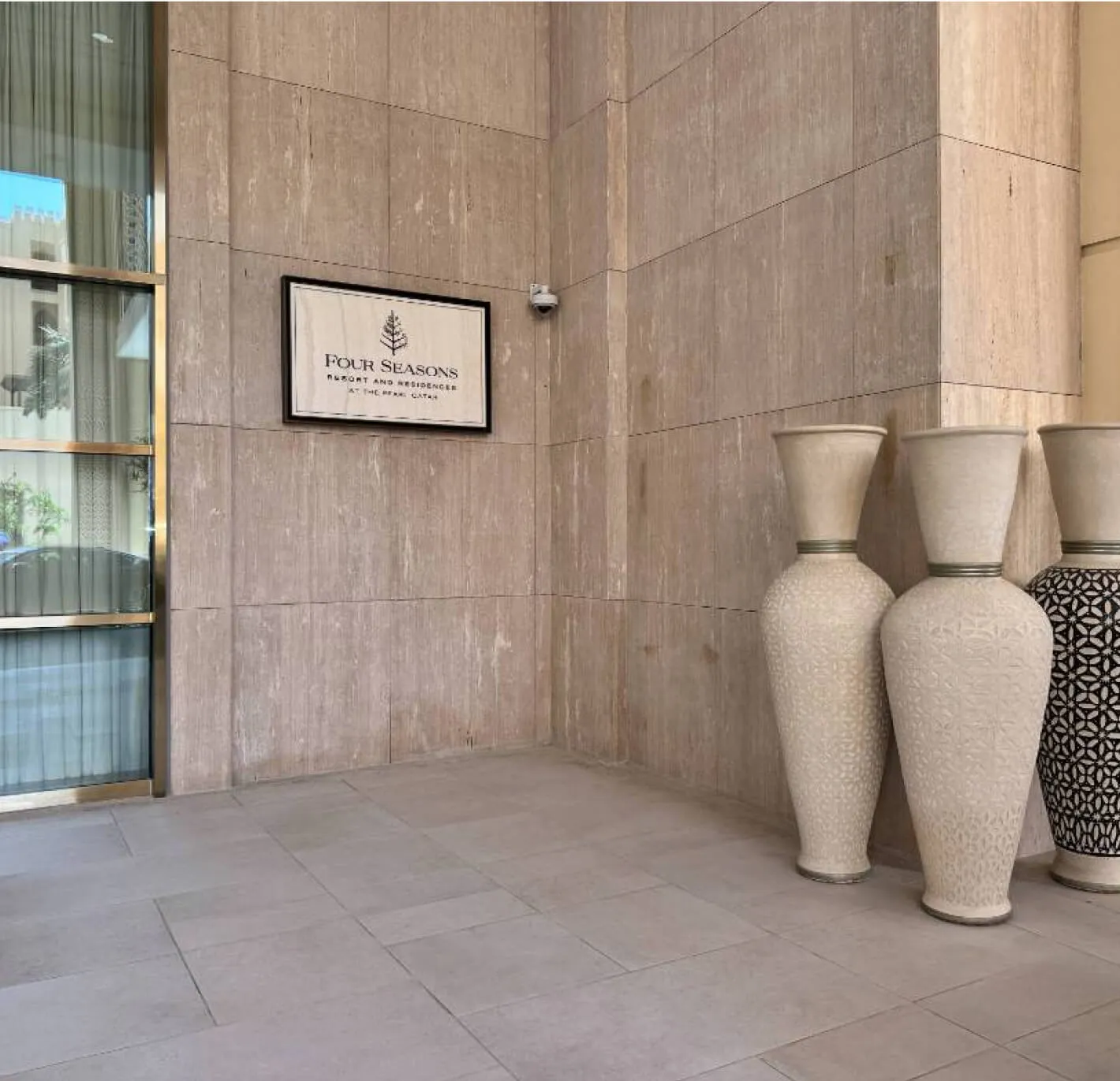
Four Seasons Resort and Residences at The Pearl Qatar sign with decorative vases.
Exterior signage and wayfinding
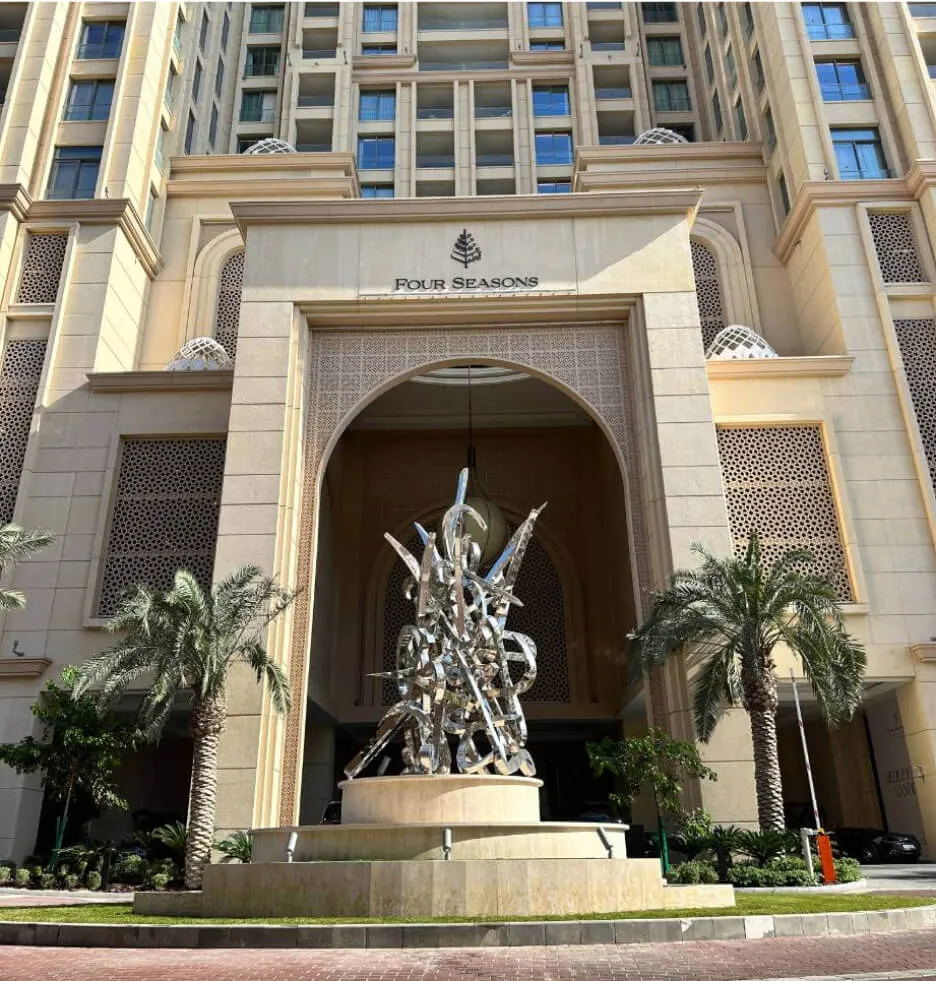
Four Seasons Hotel Doha entrance with sculpture and palm trees
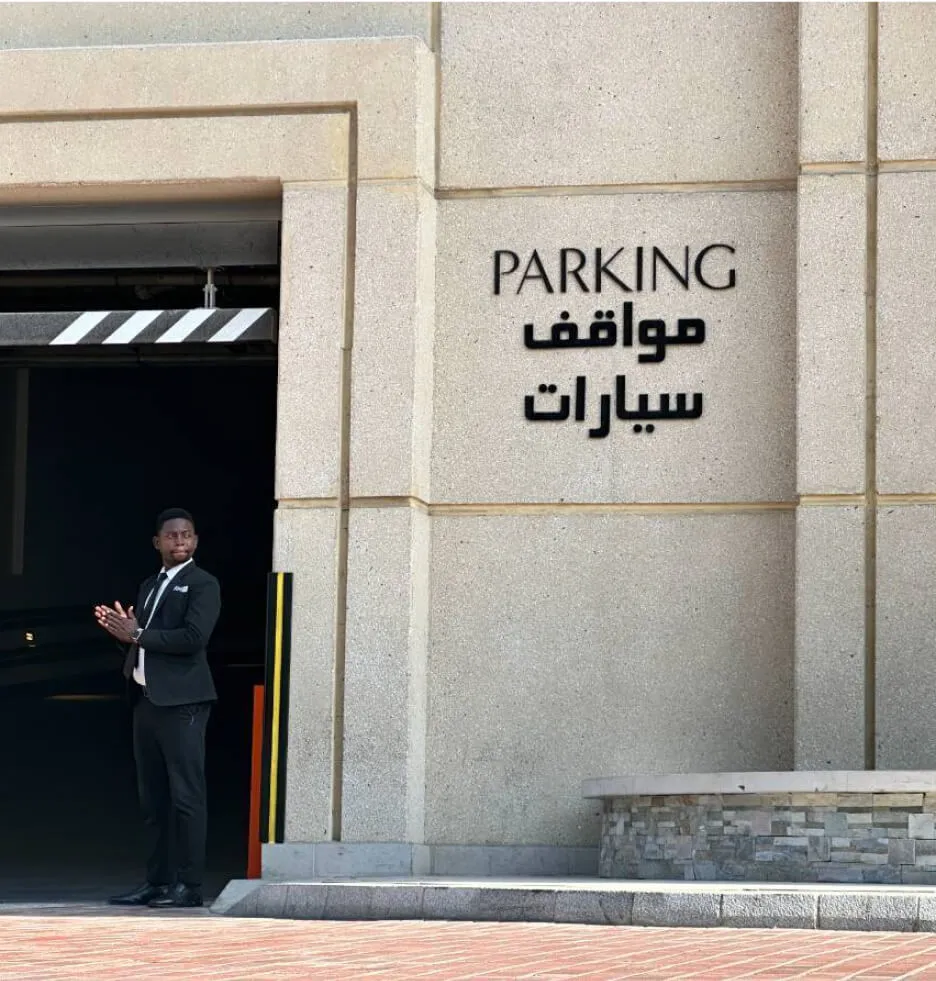
Security guard at the entrance to a parking garage with
Swimming pool safety regulations sign by an infinity pool with lounge chairs and umbrellas.
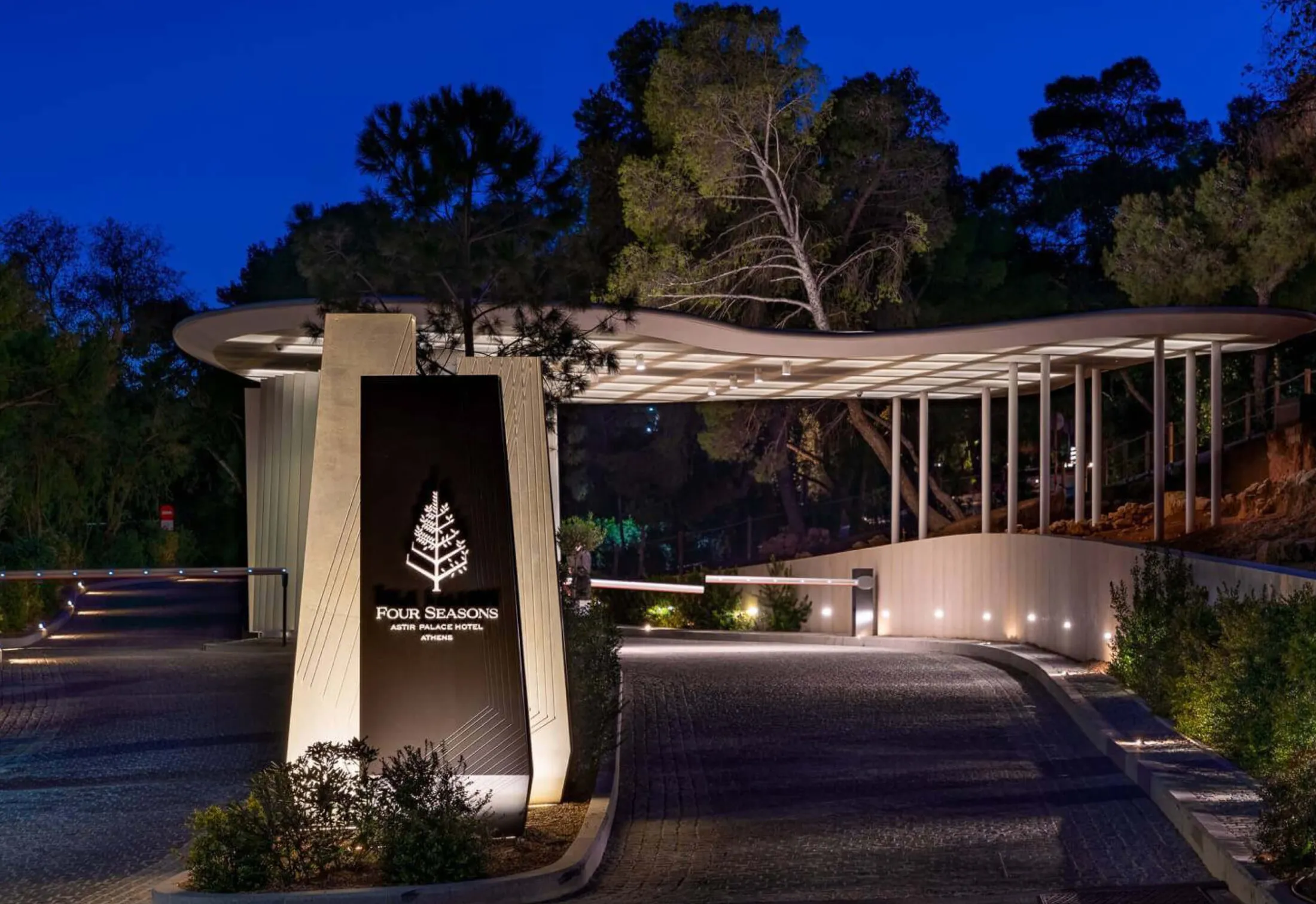
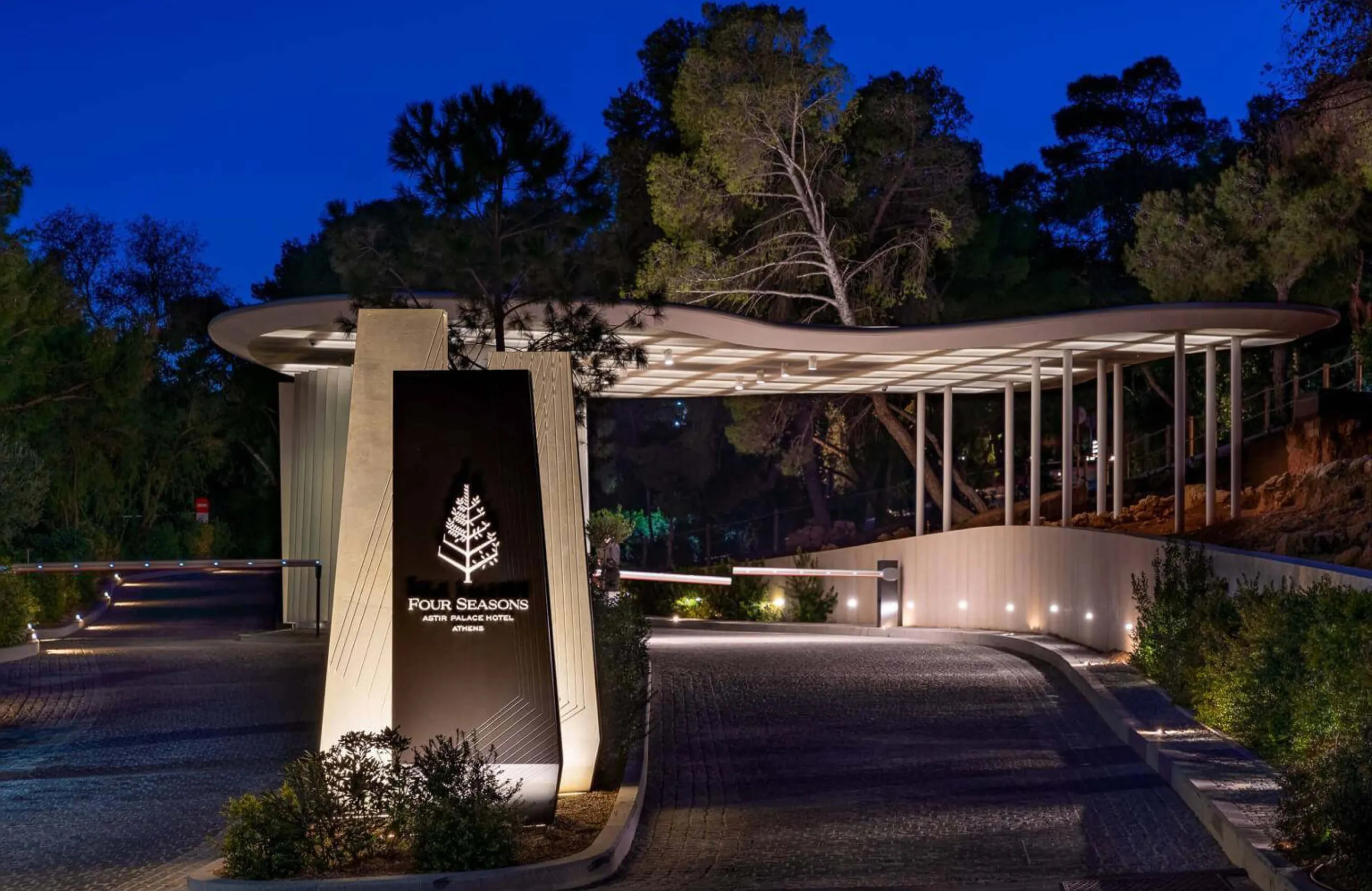
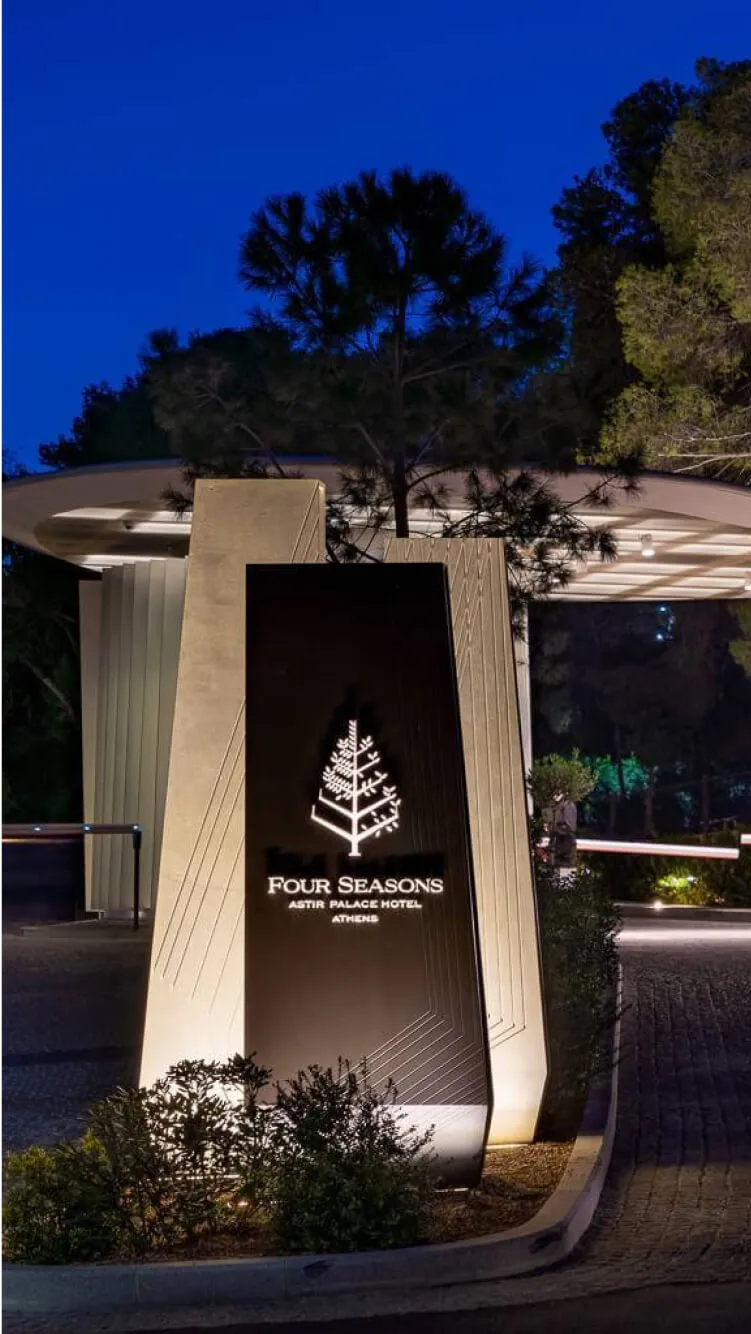
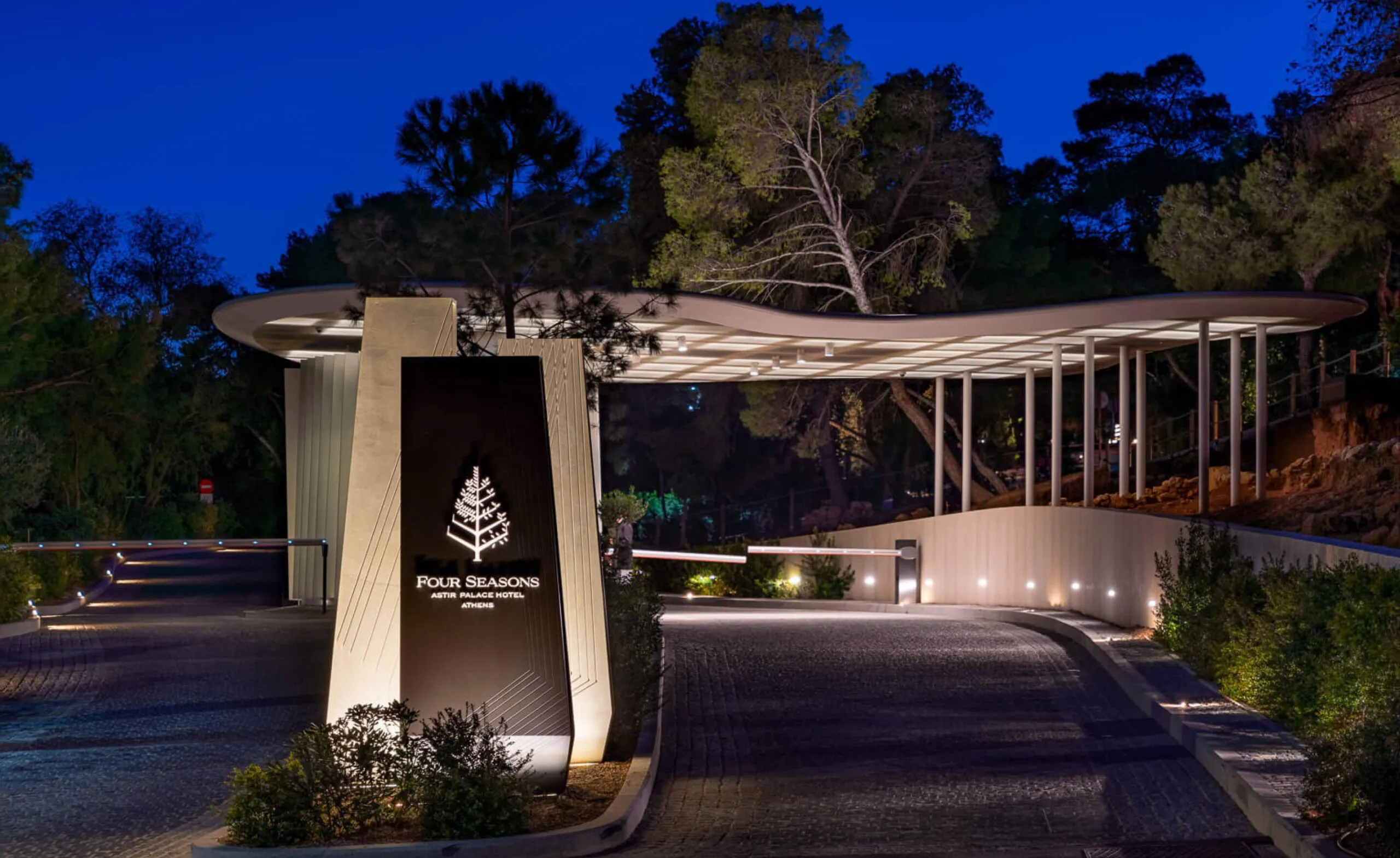
Four Seasons Astir Palace Hotel Athens entrance at night. Four Seasons Astir Palace Hotel Athens logo

Four Season Athens

Athens, Greece
Services Deliverables
  • Signage
  • Wayfinding
  • Masterplan

A crafted experience evoking familiar surroundings

Four Seasons Astir Palace is located on the Athens Riviera where guests can enjoy a high-end beach resort escape in close proximity to the historic heart of Athens. Beginning with a careful analysis and definition of the target audience, Four Seasons looked to Forge to develop a signage and wayfinding program that would act as a seamless extension of Four Seasons’ white glove service.

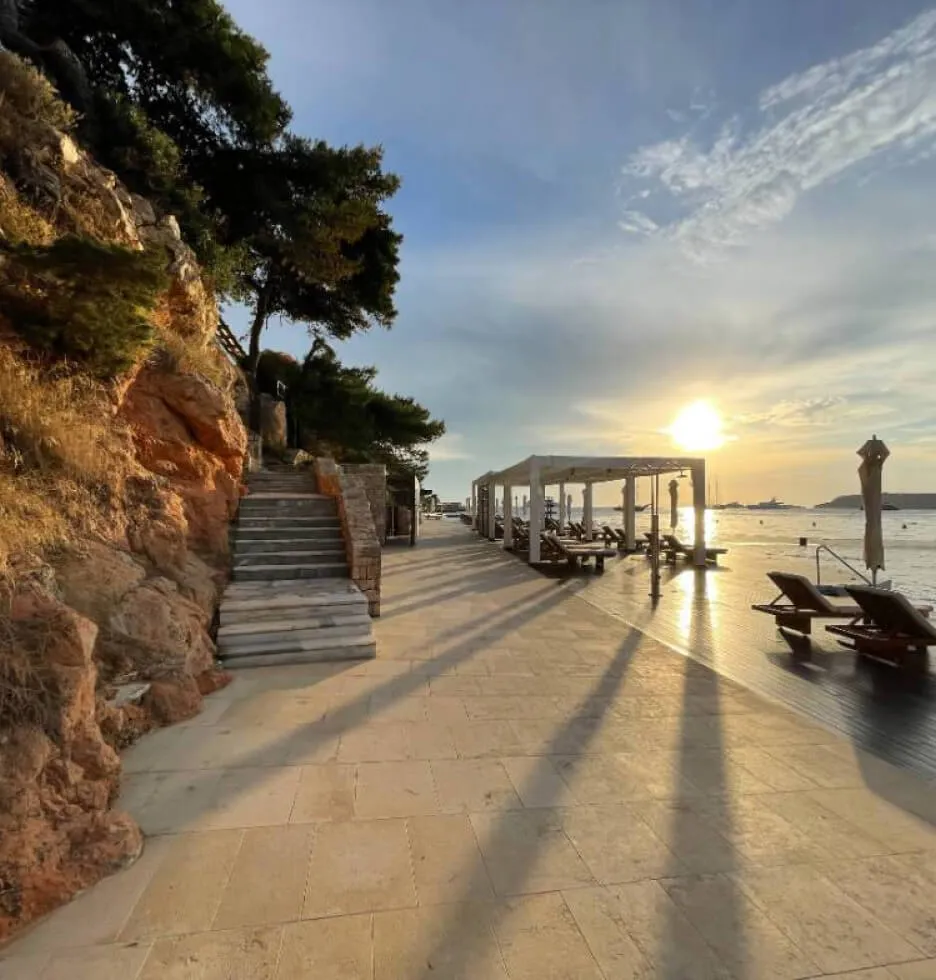
Sunny beach path with lounge chairs and a rocky cliffside.
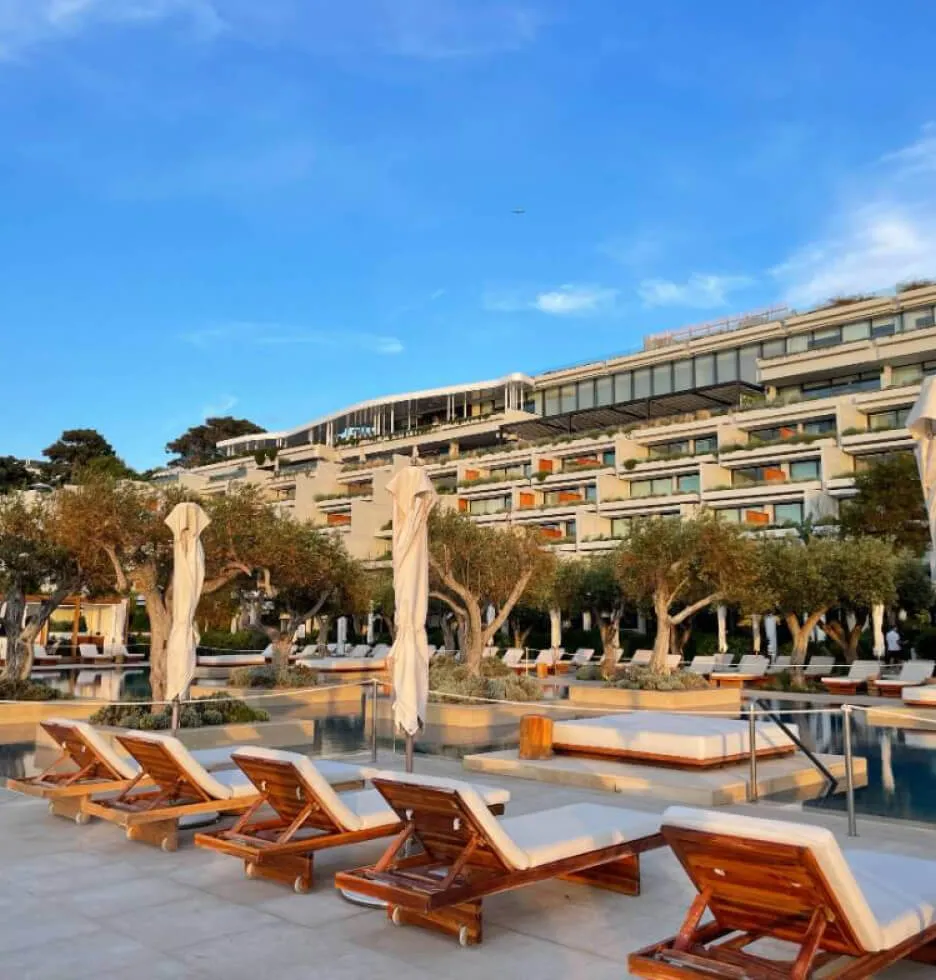
Luxury resort with lounge chairs and pool overlooking the sea.
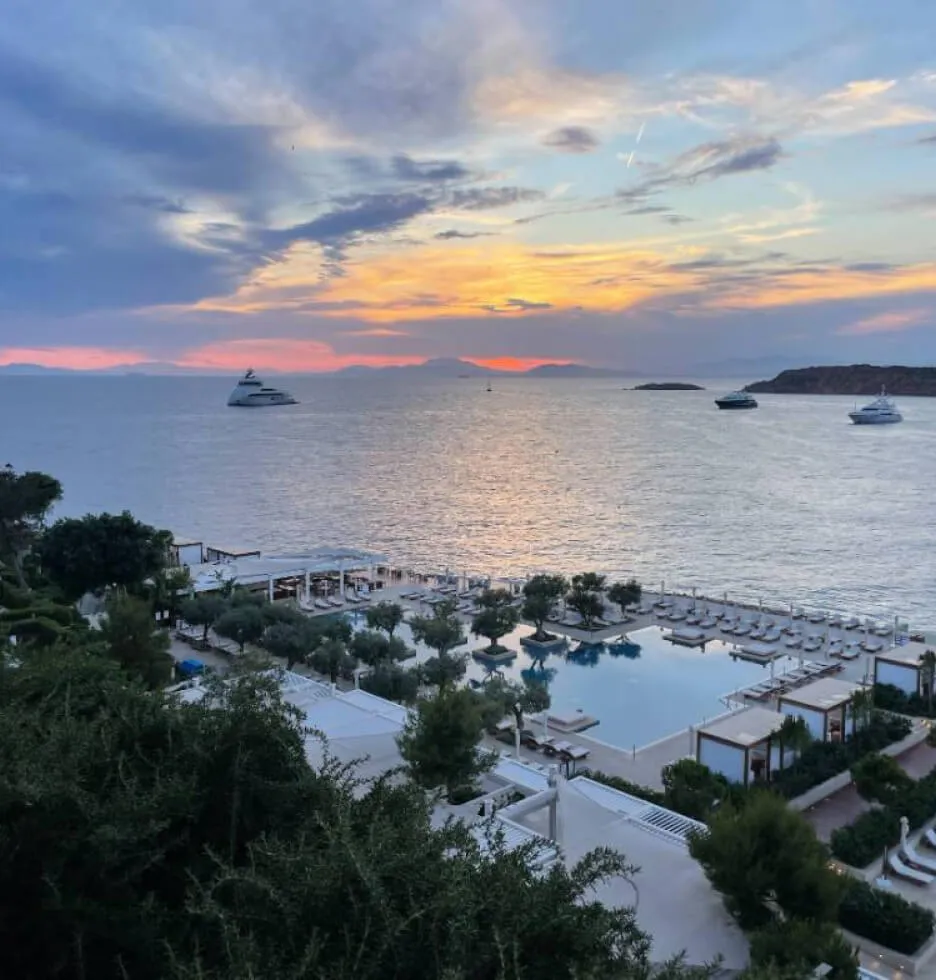
Luxury resort pool and yachts at sunset in Athens, Greece.
Surrounding landscape and luxury amenities

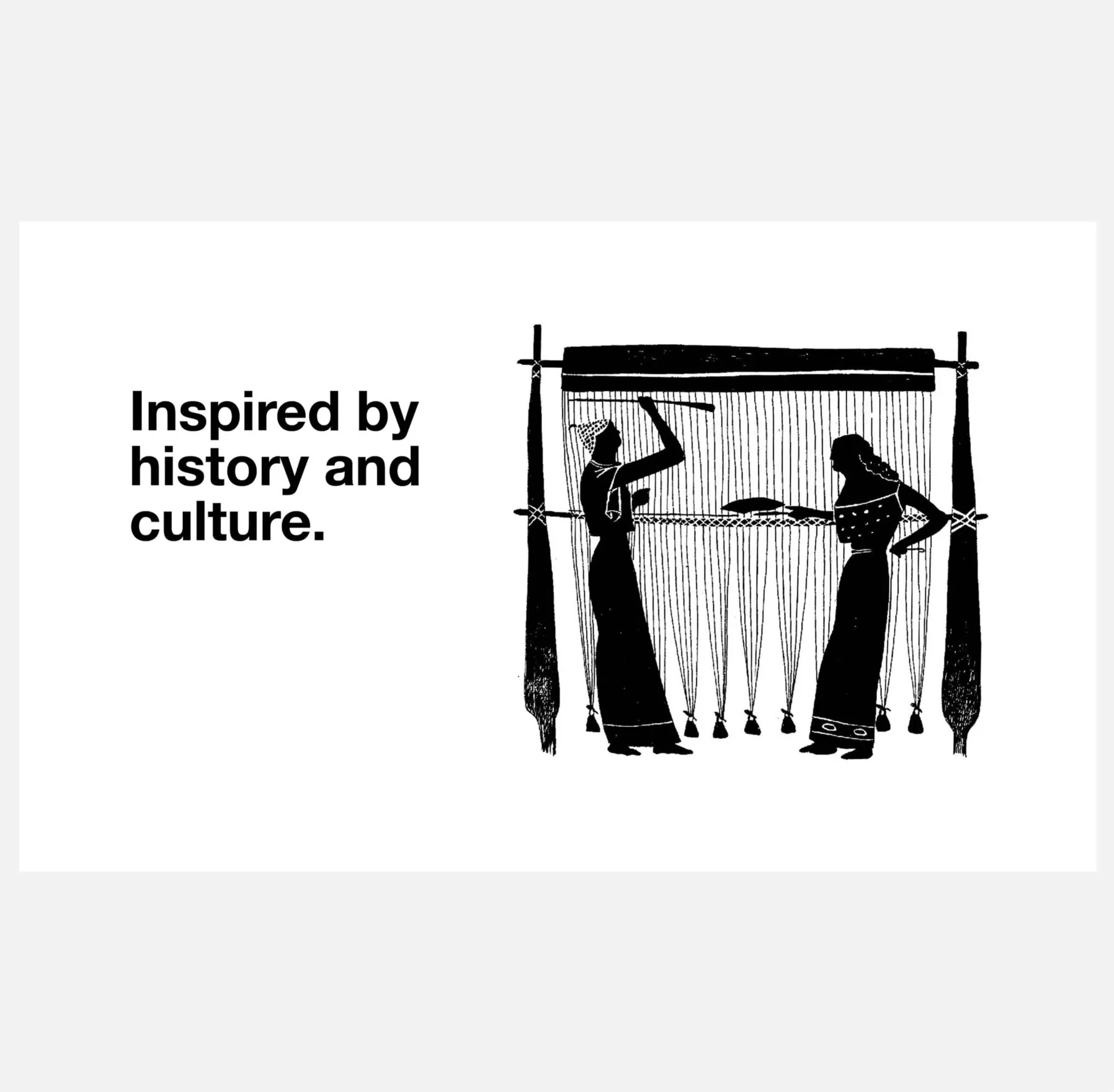
Inspired by history and culture

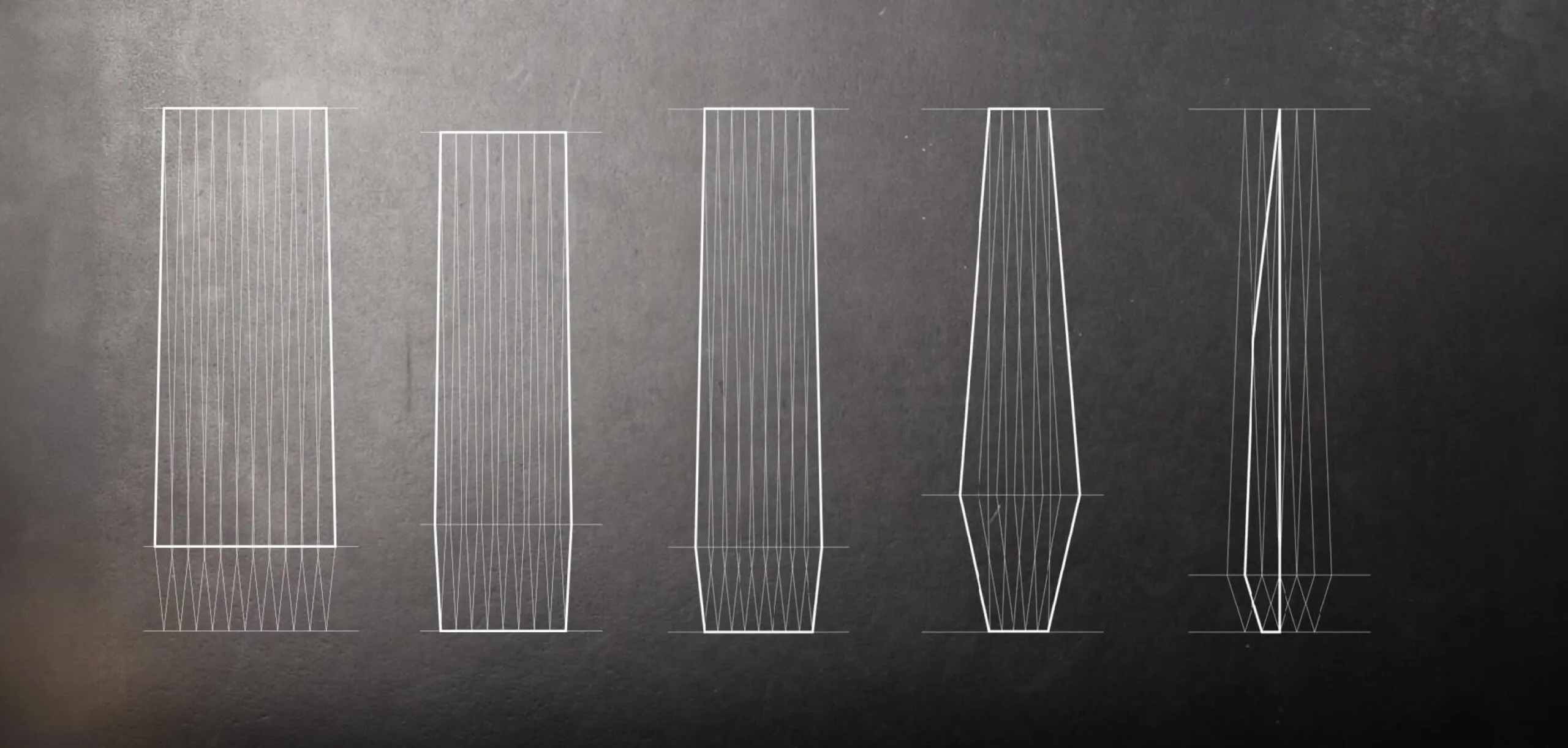
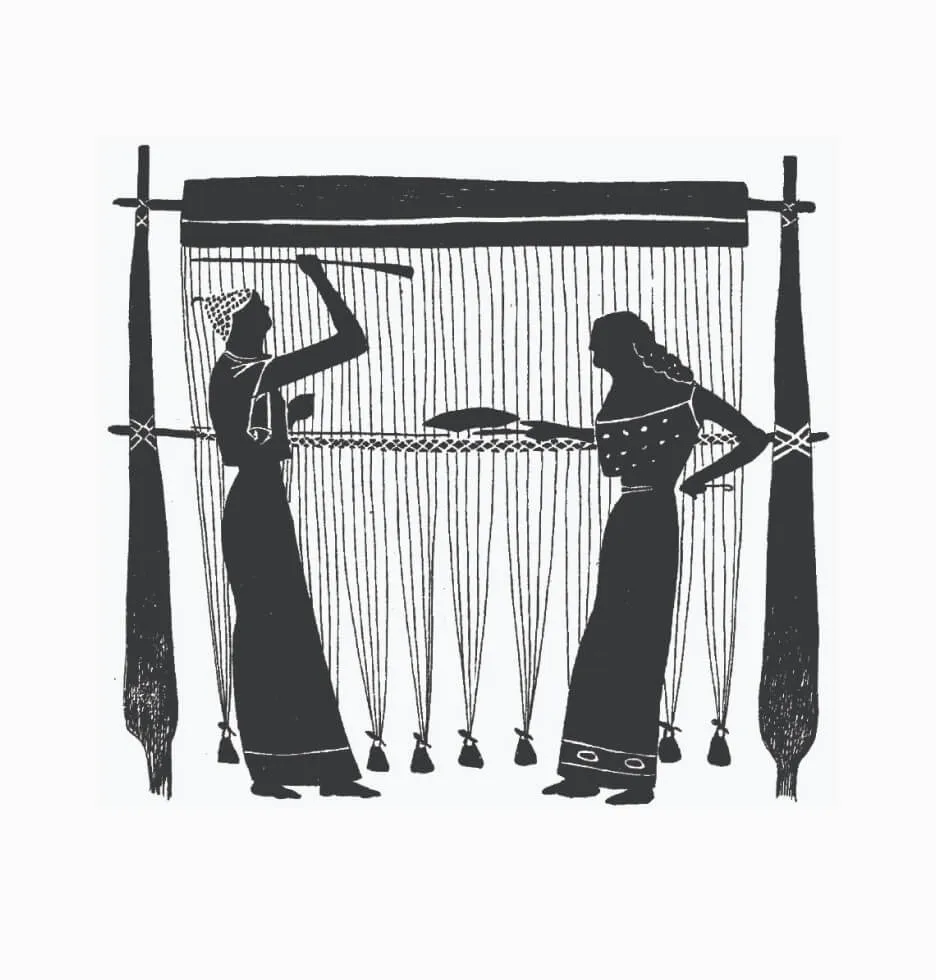
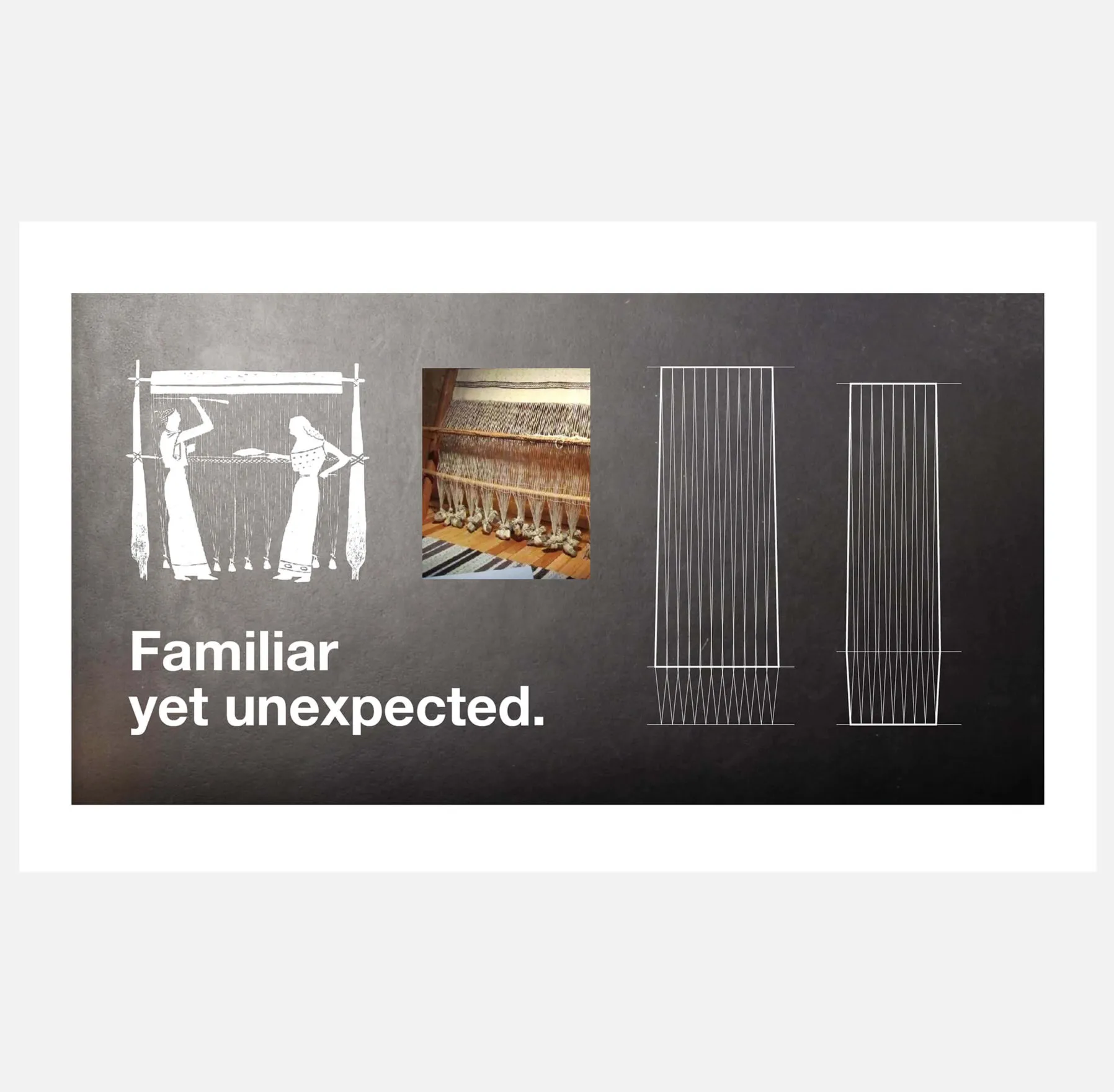
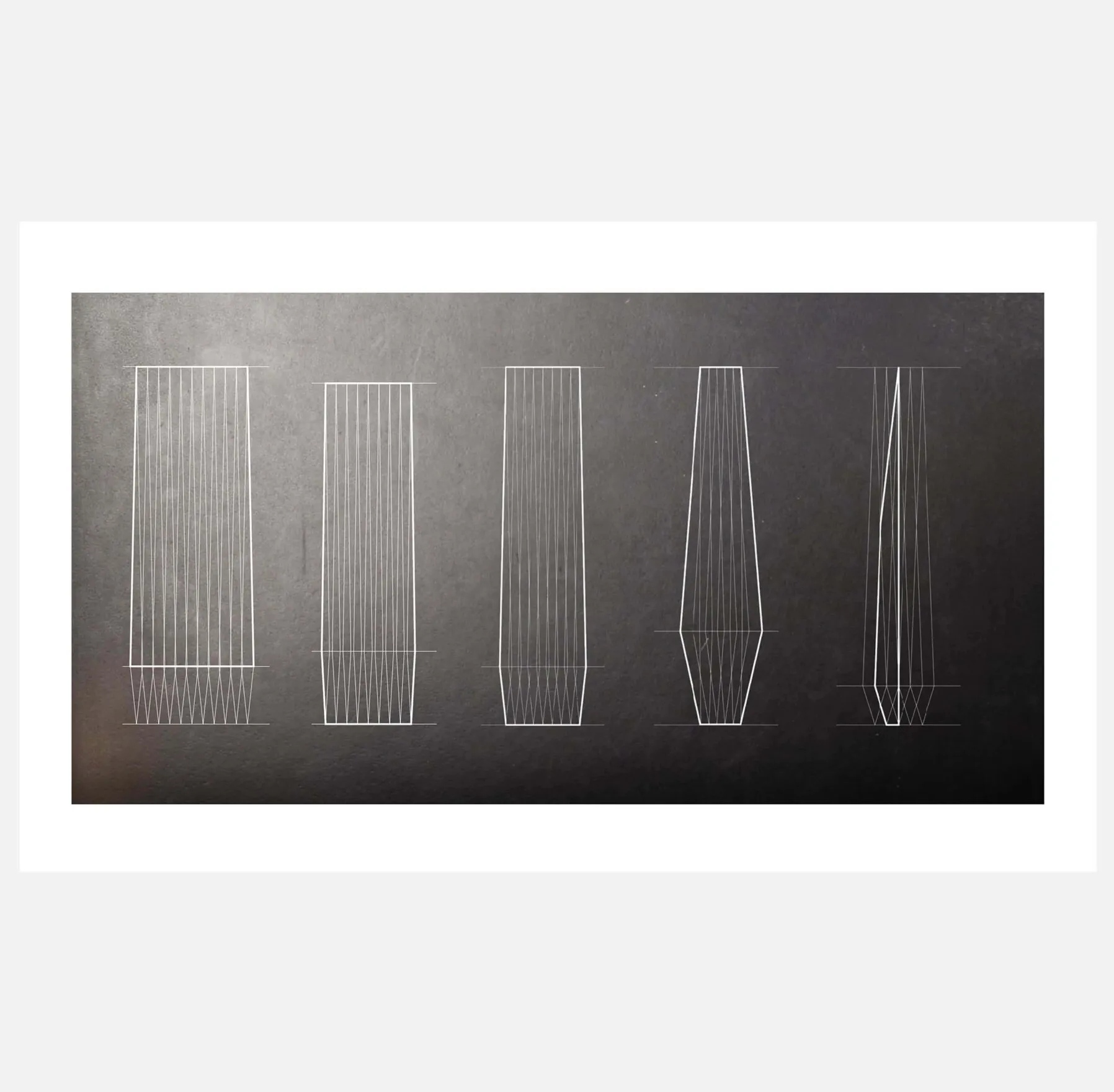
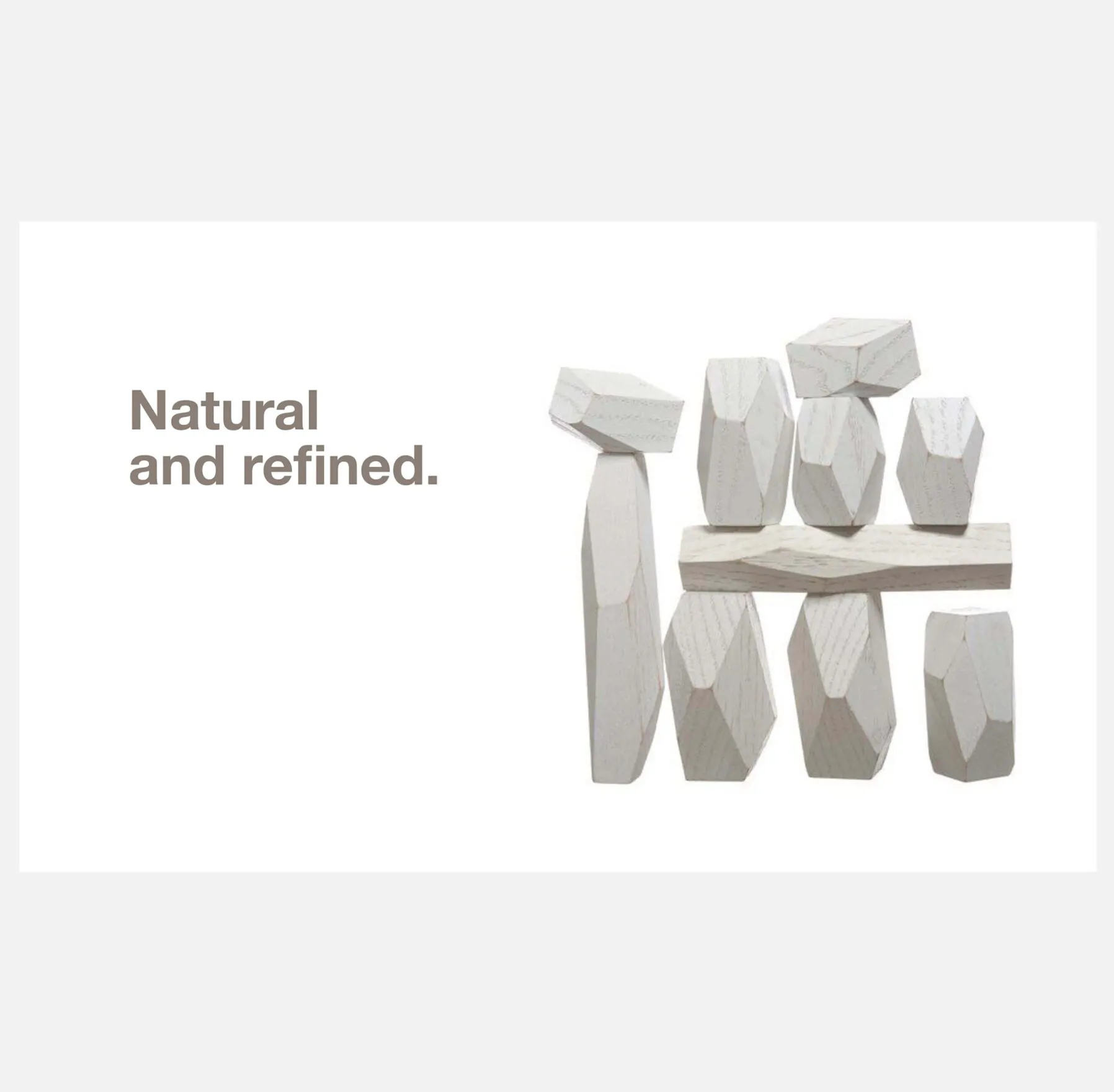
Through exploration of anthropology, history, and mythology, the concept of the loom and its harp-like vertical striations was established due to its significance to the production of textiles and Greek culture. Its unique shape inspired the structural elements of the signage design and became foundational in our approach for the signage master plan.

Diagram showing five different geometric shapes with parallel lines inside.
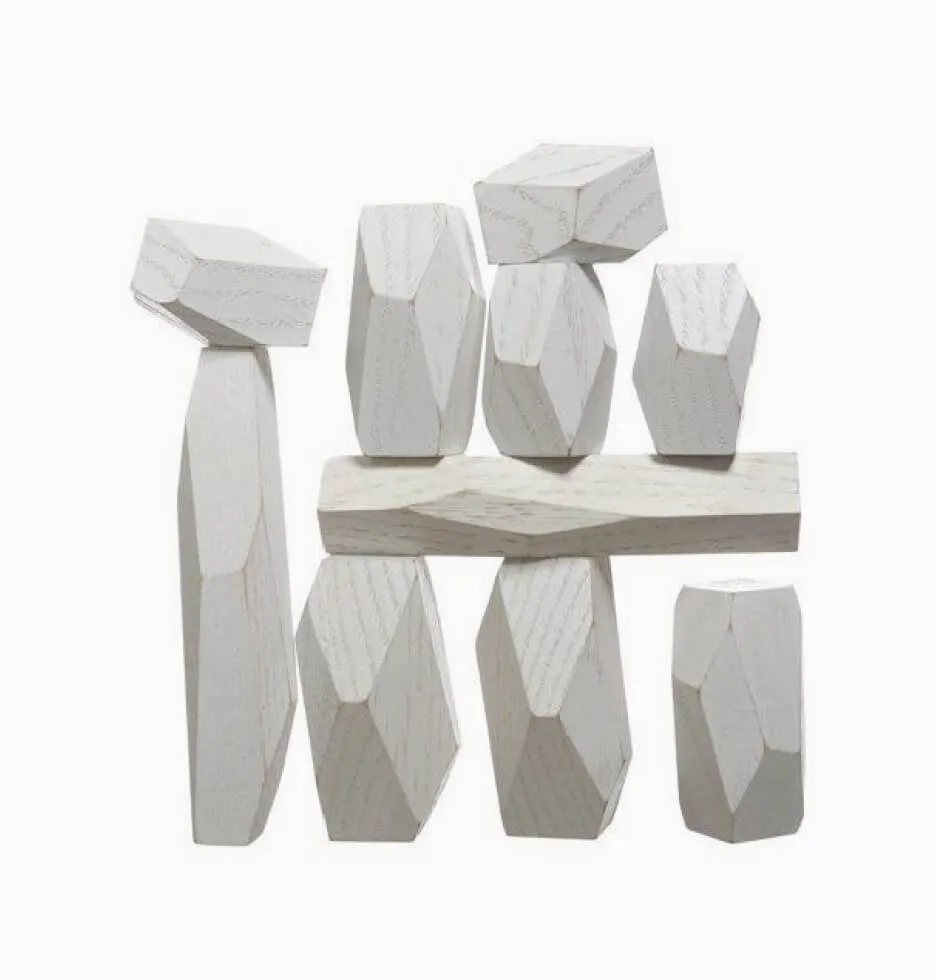
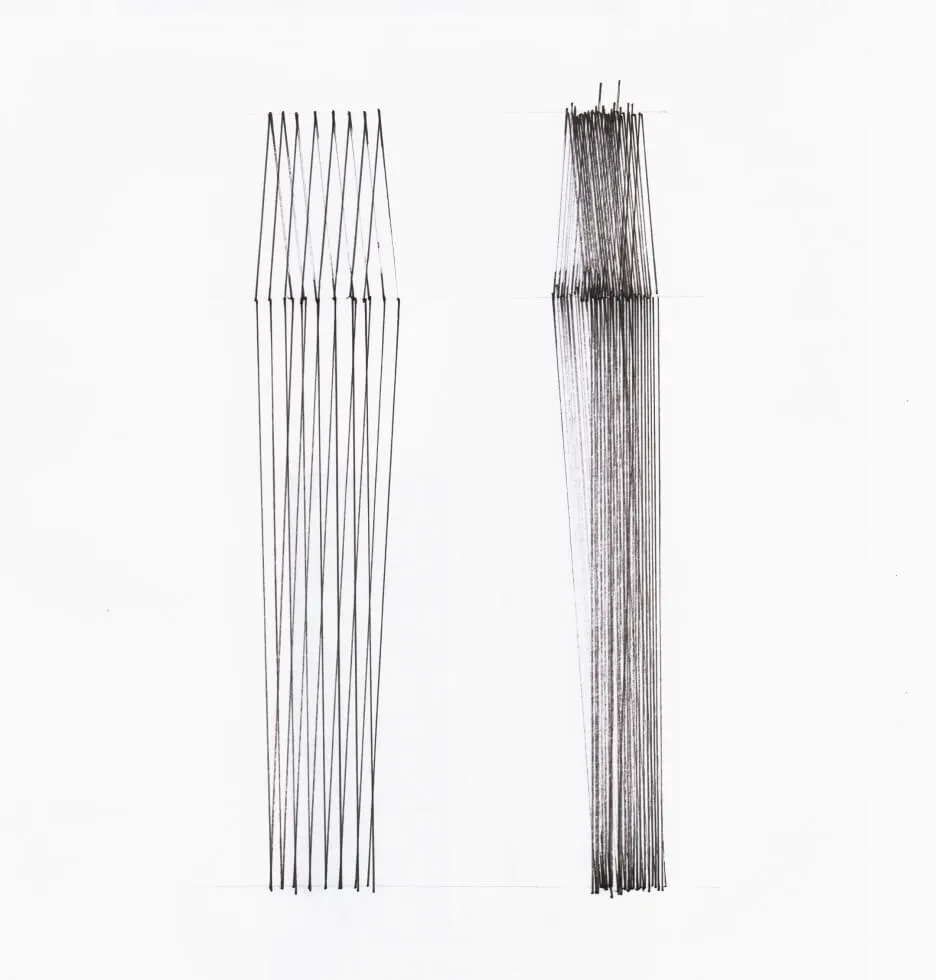
The loom served as the foundational signage concept
Two women weaving on a loom.
White wooden geometric blocks stacked in a whimsical arrangement.
Abstract drawing of two vertical columns of thin black lines on a white background.
Hellenic anthropology provided a through-line and mythology
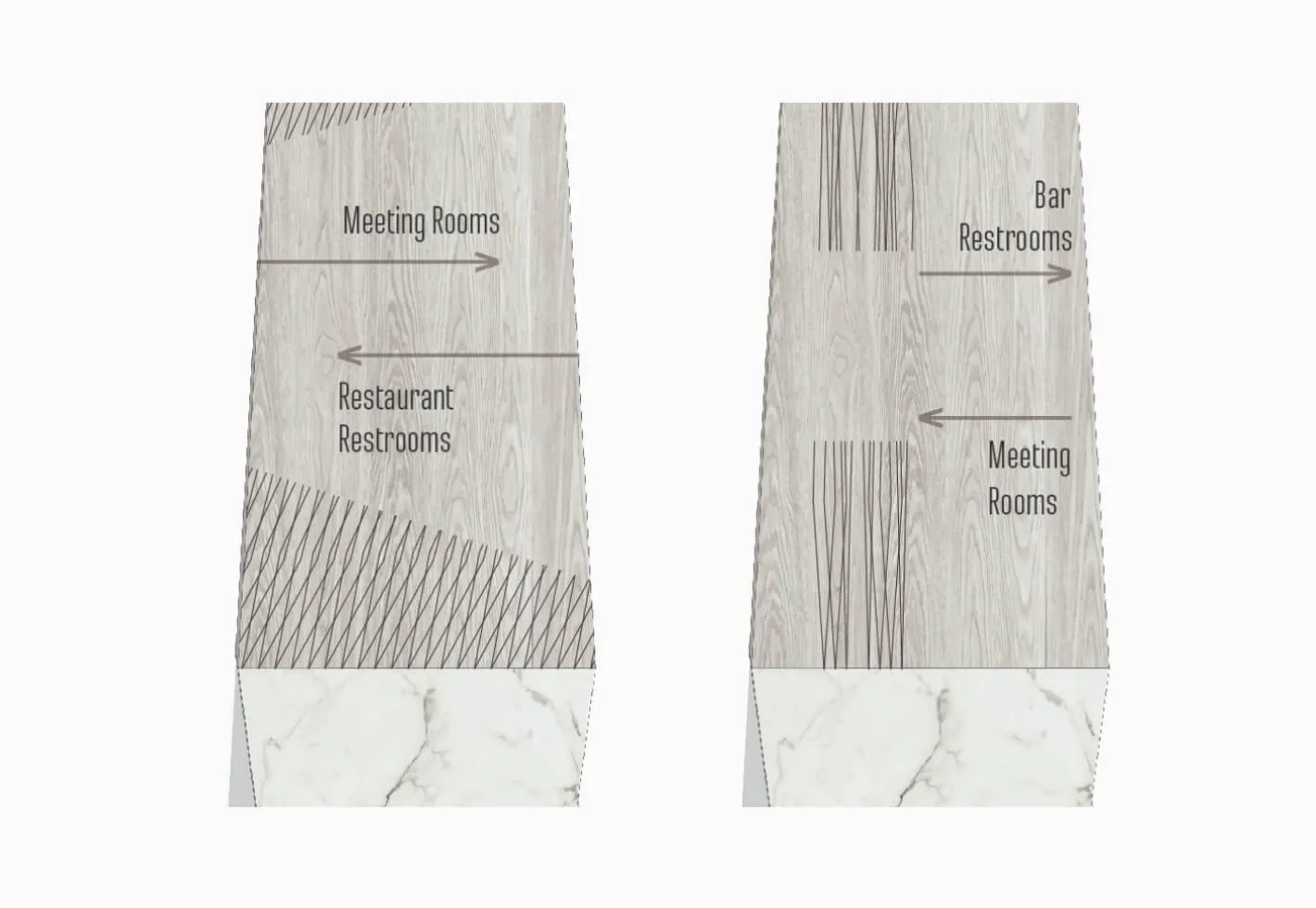
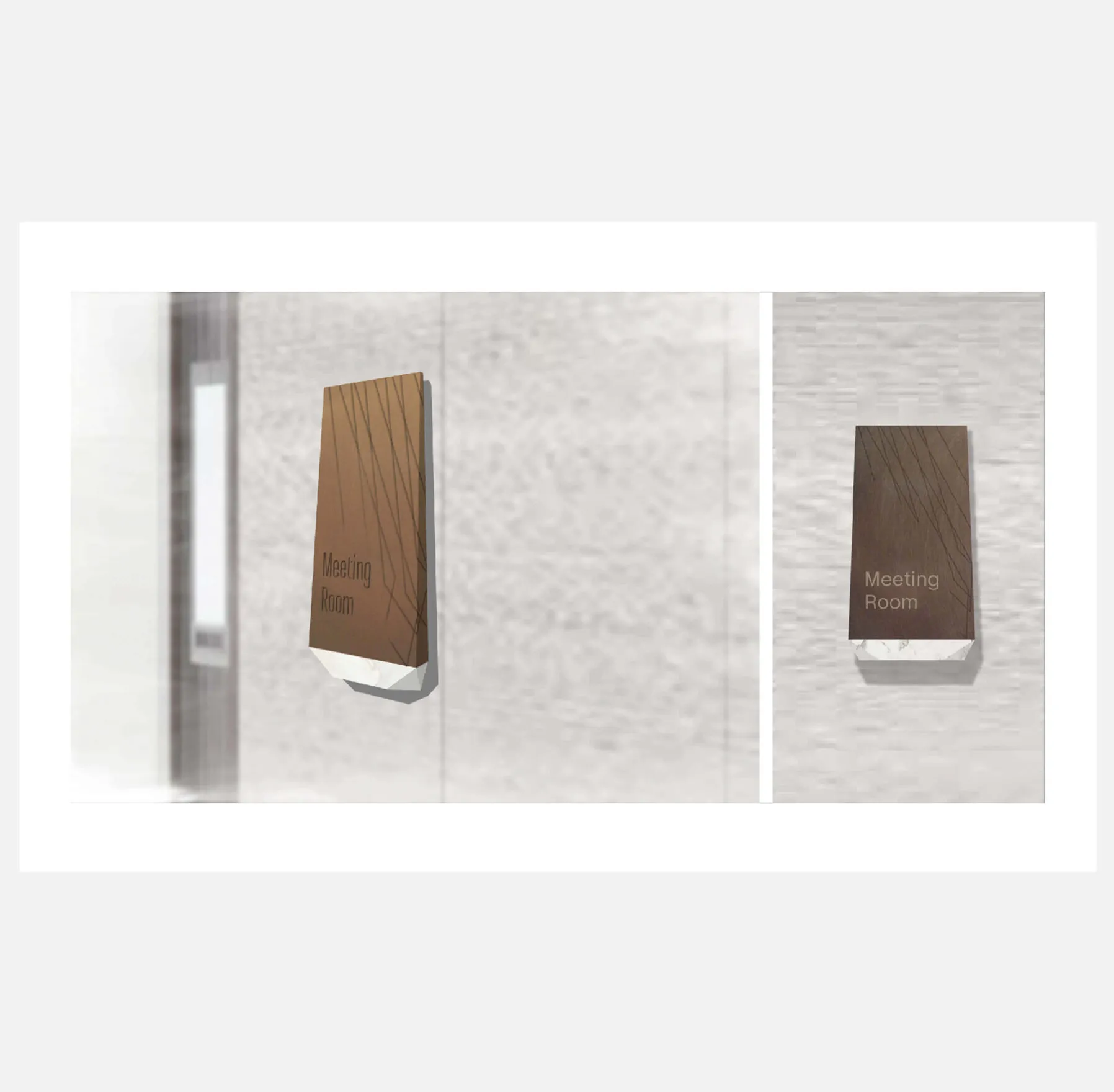
Two directional signs with wood grain texture indicating Meeting Rooms, Restaurant Restrooms, and Bar Restrooms.
Four Seasons Hotel Athens signage with directional signs and a reception desk.
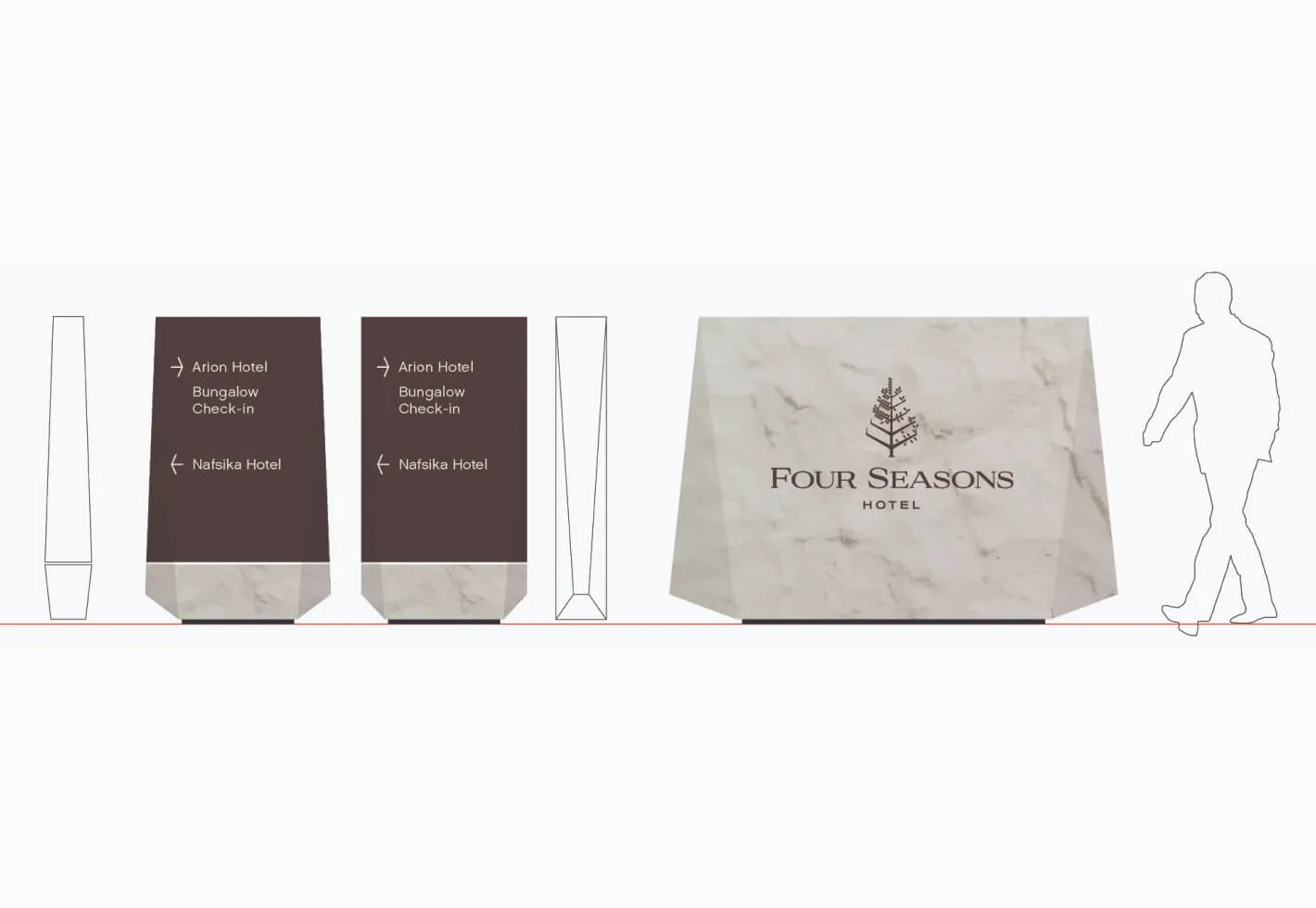
Renderings and elevations for exterior signage applcations

A crafted experience that evokes familiar surroundings

Refined materials and forms create a curated and calm place of solace in both the interior and exterior space. Amenities are identified with distinctive and sophisticated signage, reinforcing the loom concept and providing a tailored experience for each area of the resort.

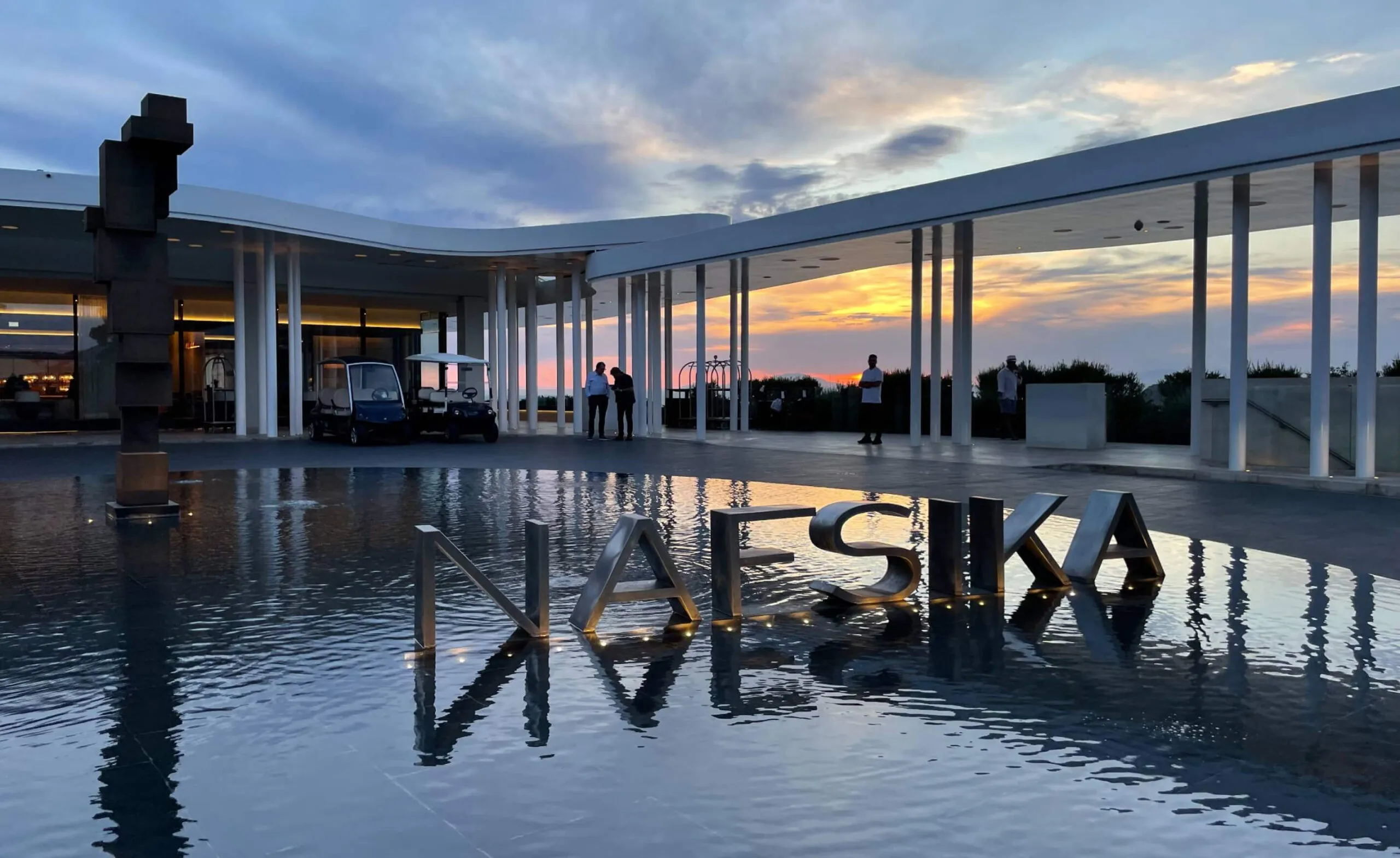
Large metal letters spelling
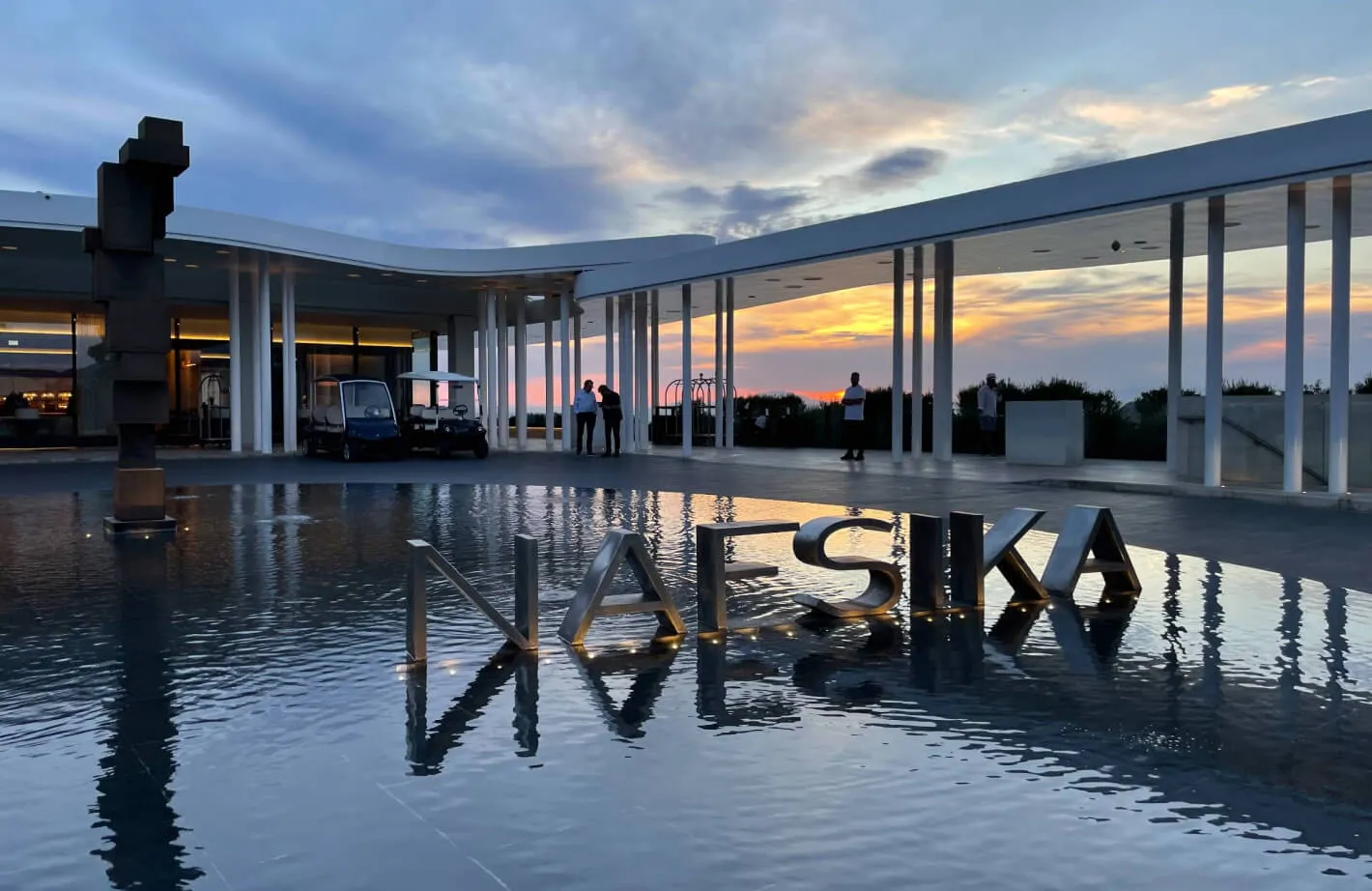
Nafsika entrance ID
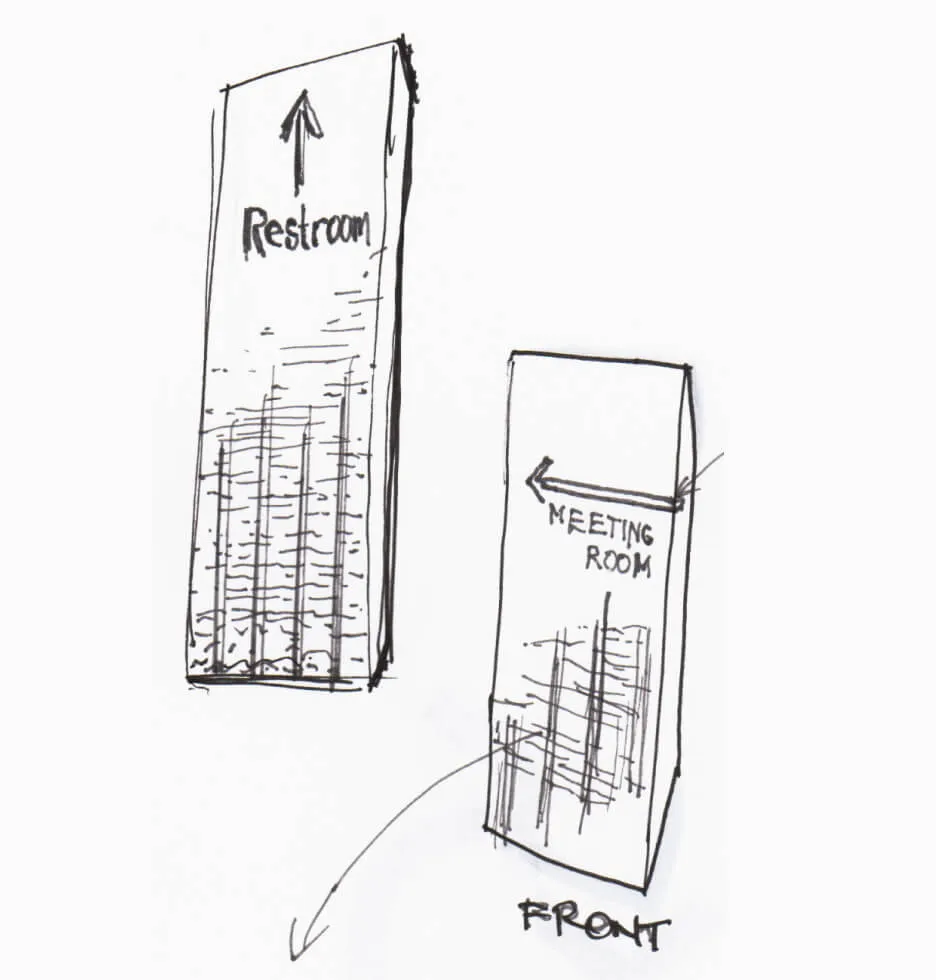
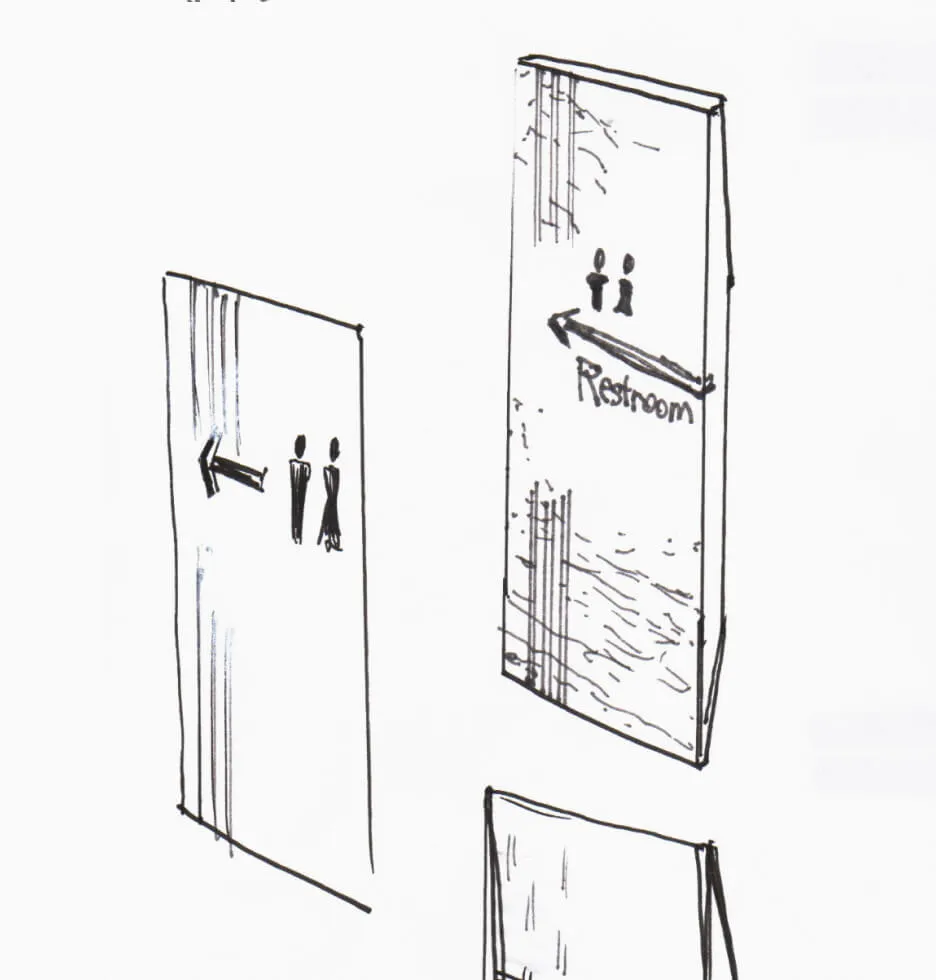
Sketch of two signs, one pointing to
Sketch of two tall, narrow objects with arrows pointing to them.
Sketches of restroom wayfinding signs
Concept sketches
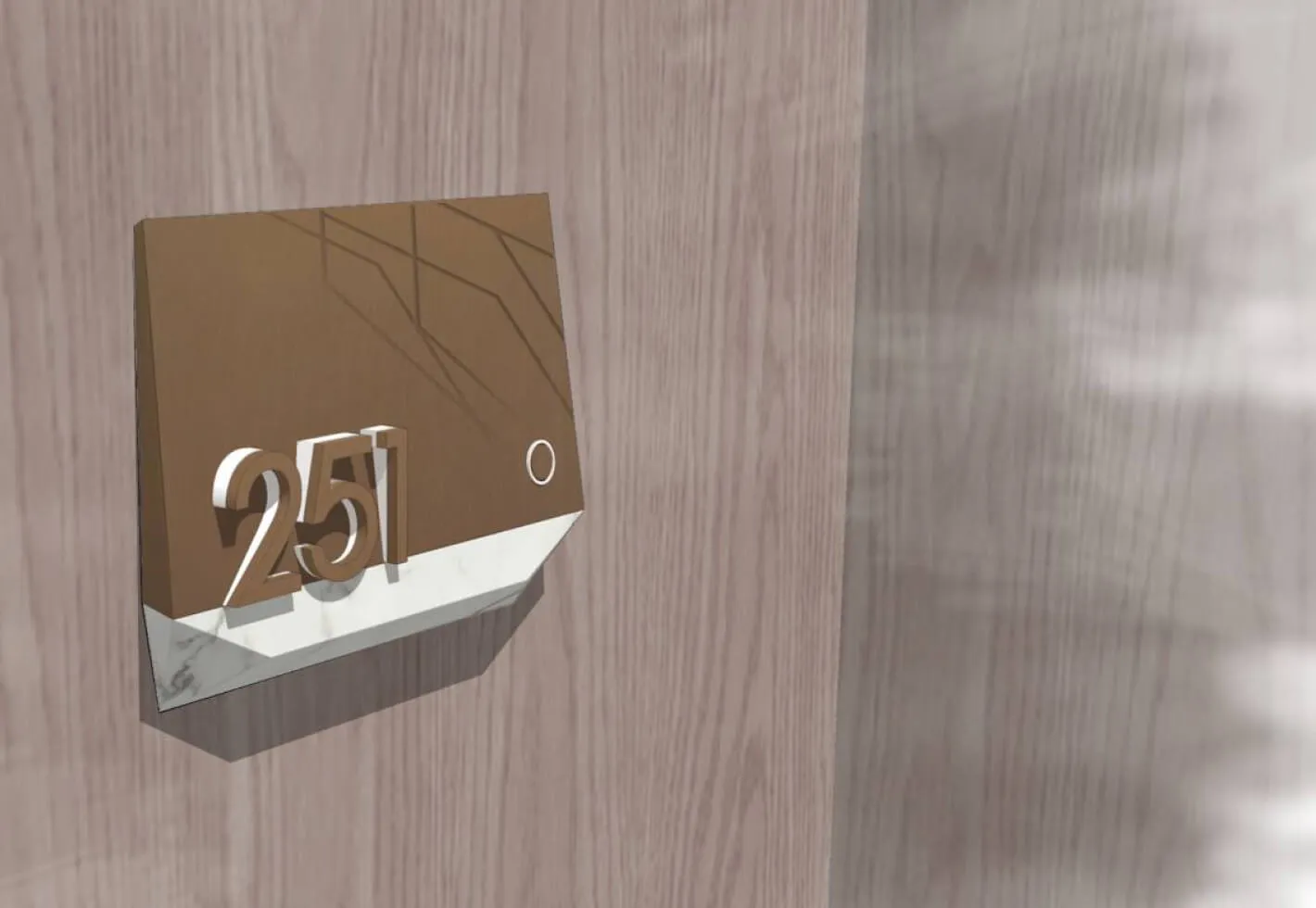
Hotel room number 251 sign on a wooden door.
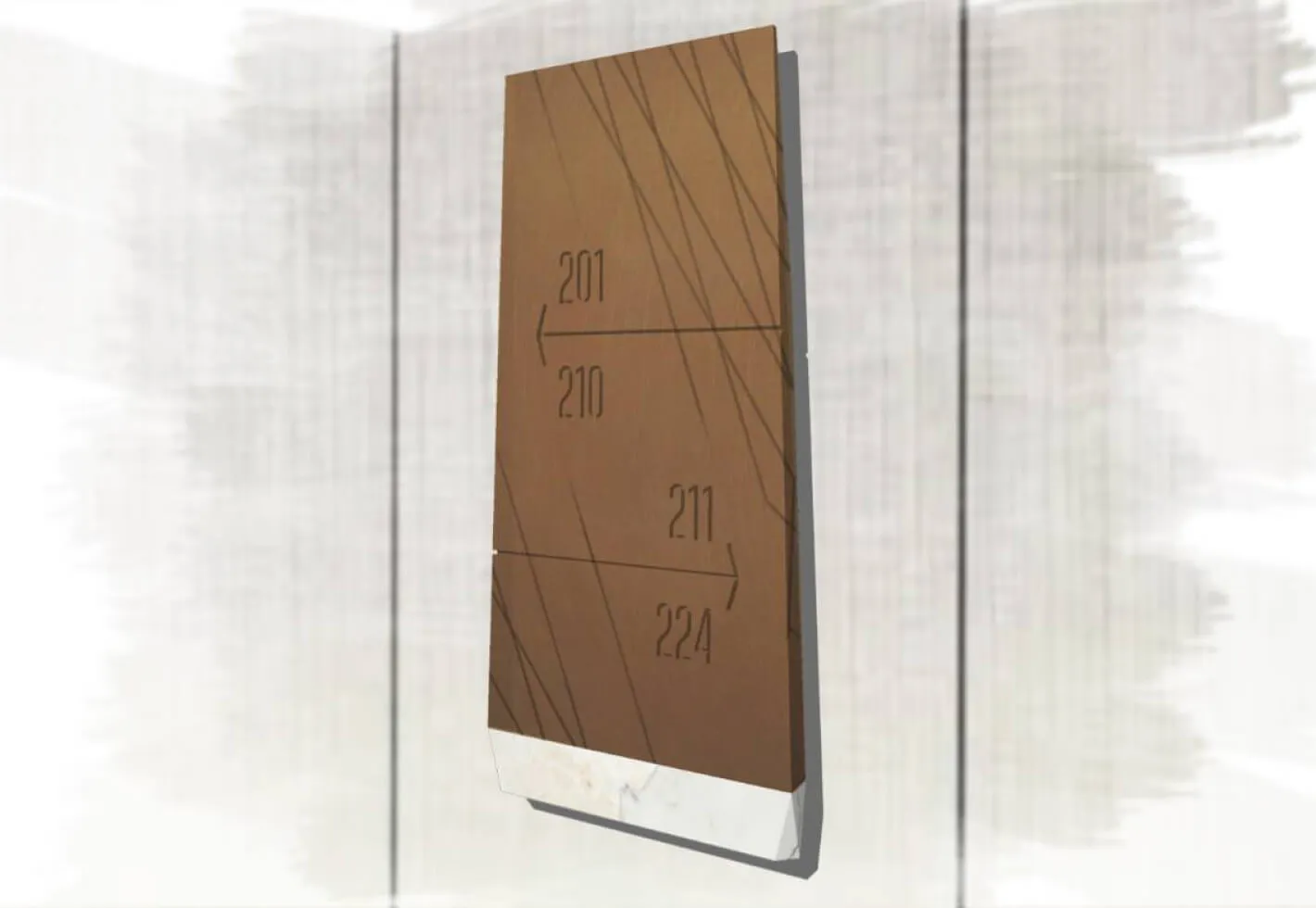
Wooden sign with room numbers 201, 210, 211, and 224.
Renderings of guest room ID
Interior view of a modern restaurant with a bar, seating, and large windows.
Modern hotel lobby with plush seating and reflective surfaces.
Exquisite interior finishes for an elevated guest experience
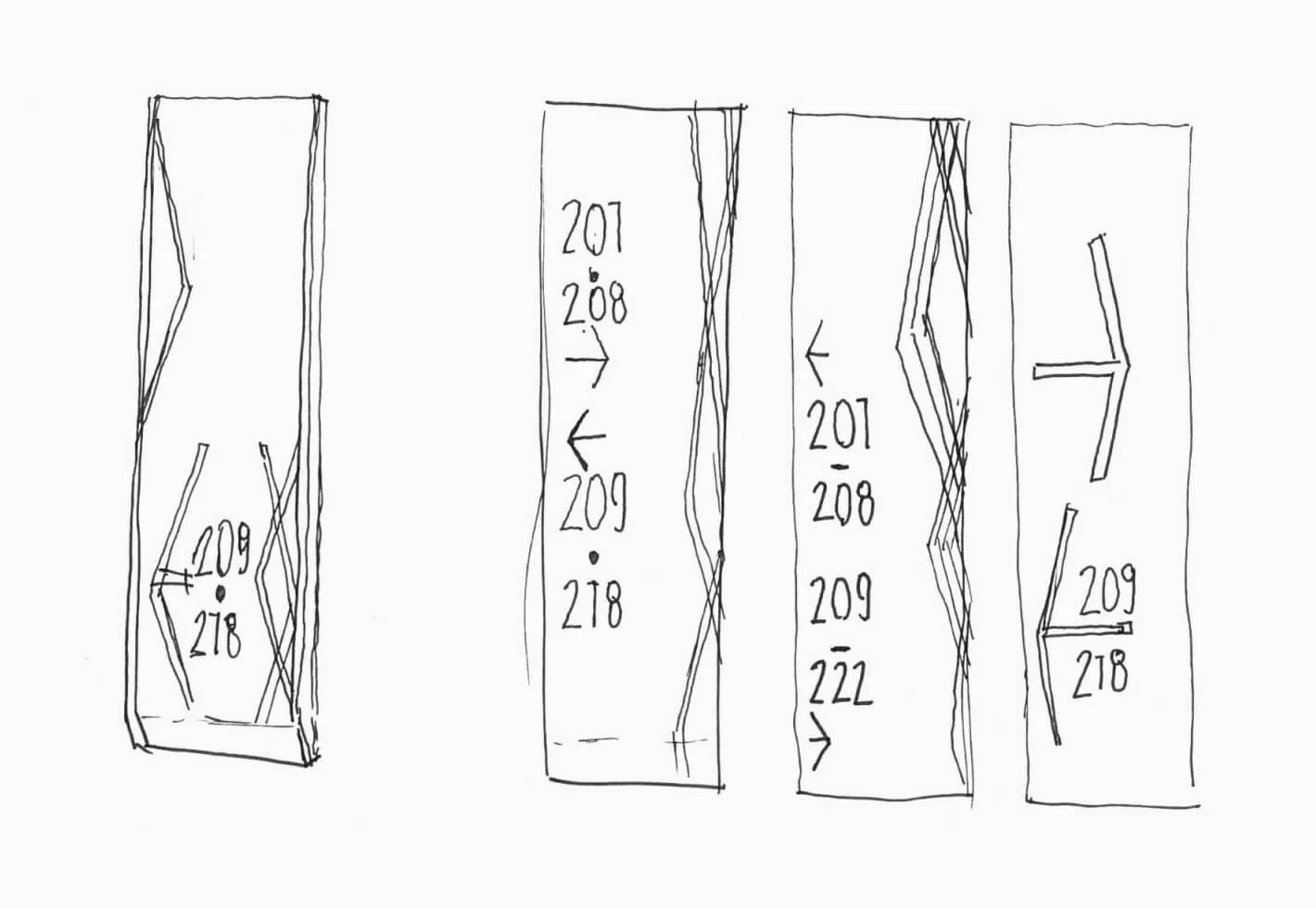
Sketch of four vertical signs with numbers and arrows indicating room numbers.
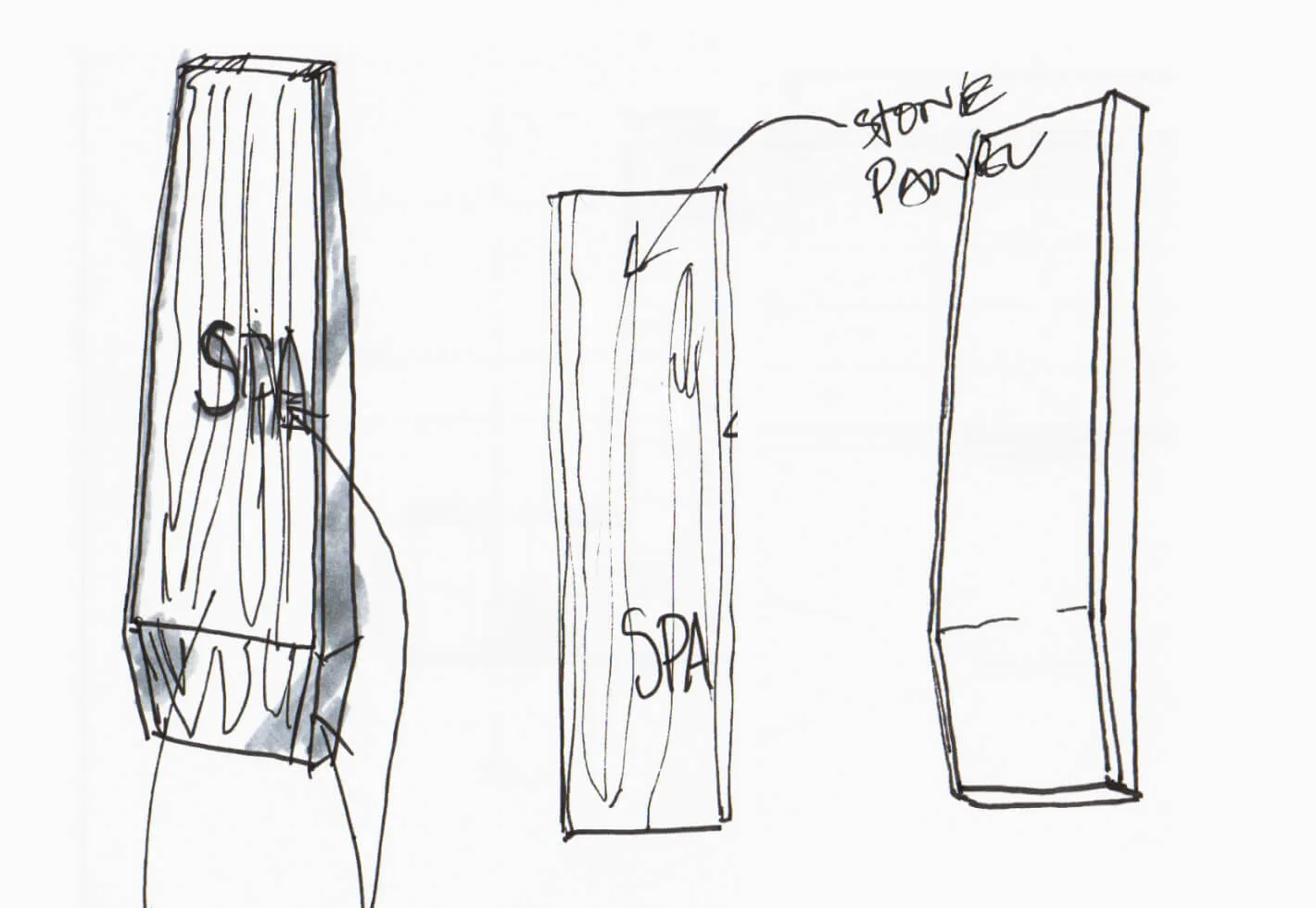
Sketch of three vertical panels, two with
Concept sketches
A tall, thin award with
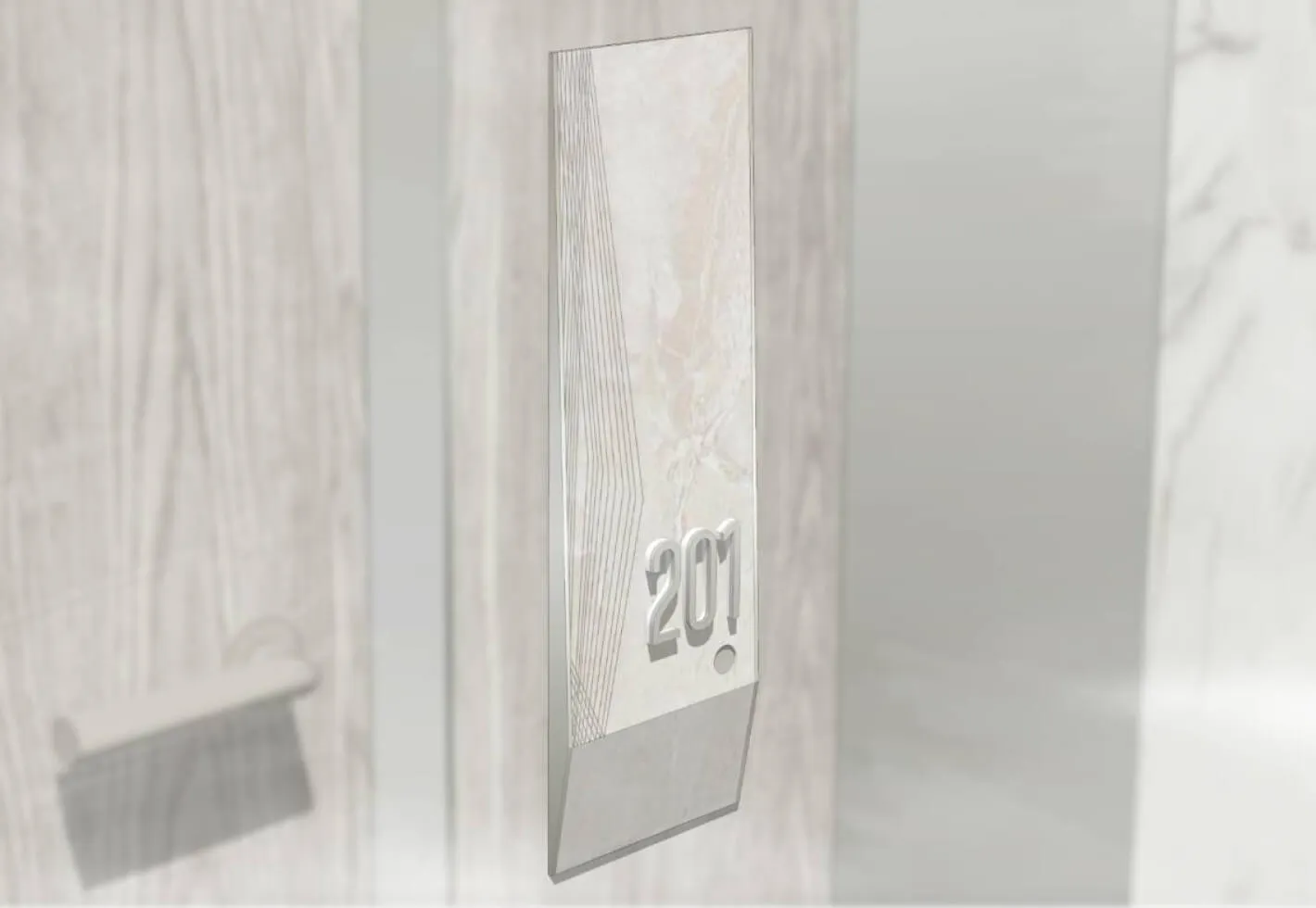
Room number 201 sign on a marble wall.
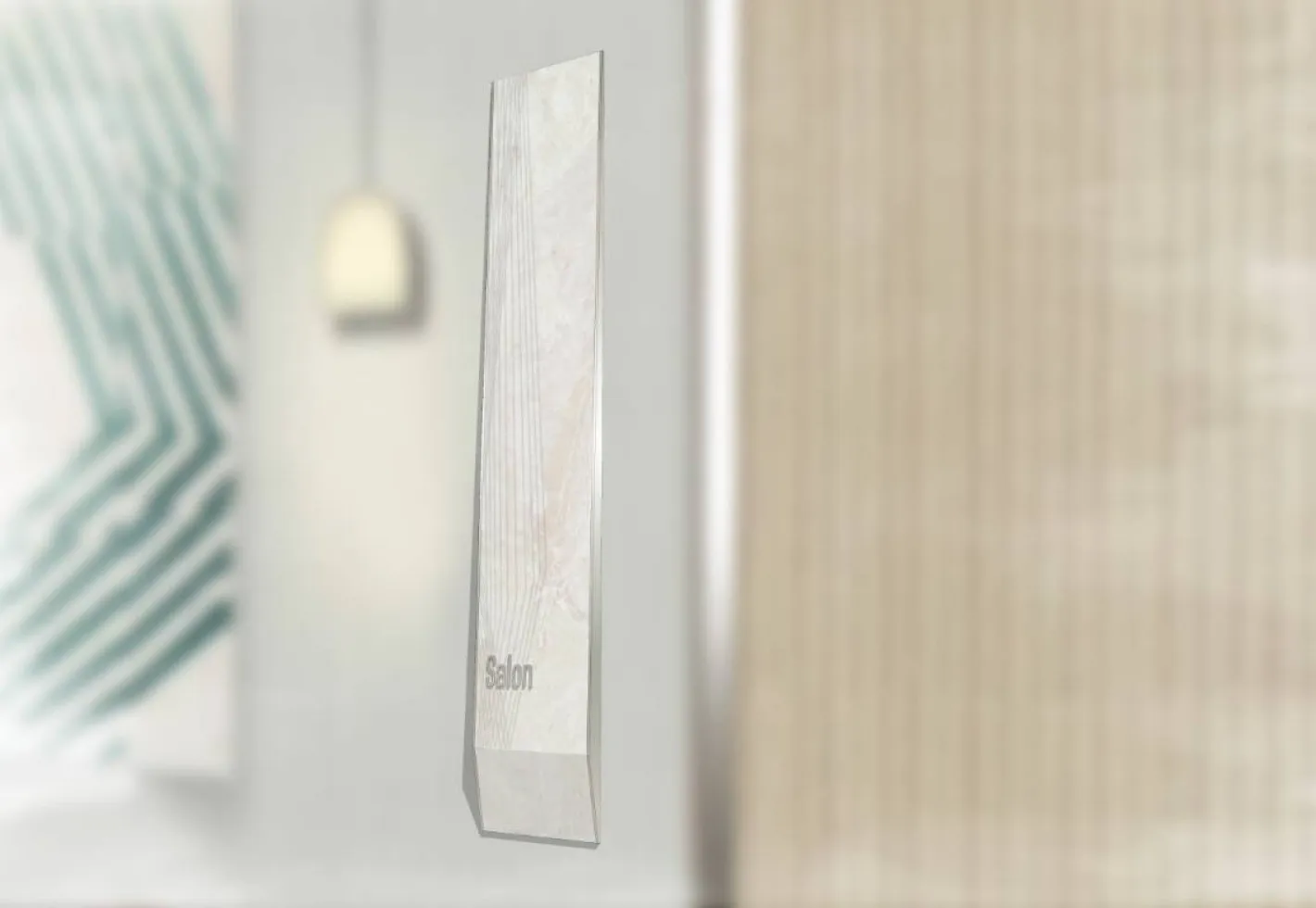
Digital renders of salon signage

Wayfinding designed from the guests’ perspective

Master planning begins by organizing information to understand and define both planned and spontaneous movements. This process ensures that wayfinding and circulation are logically connected, linking major destinations across the campus.

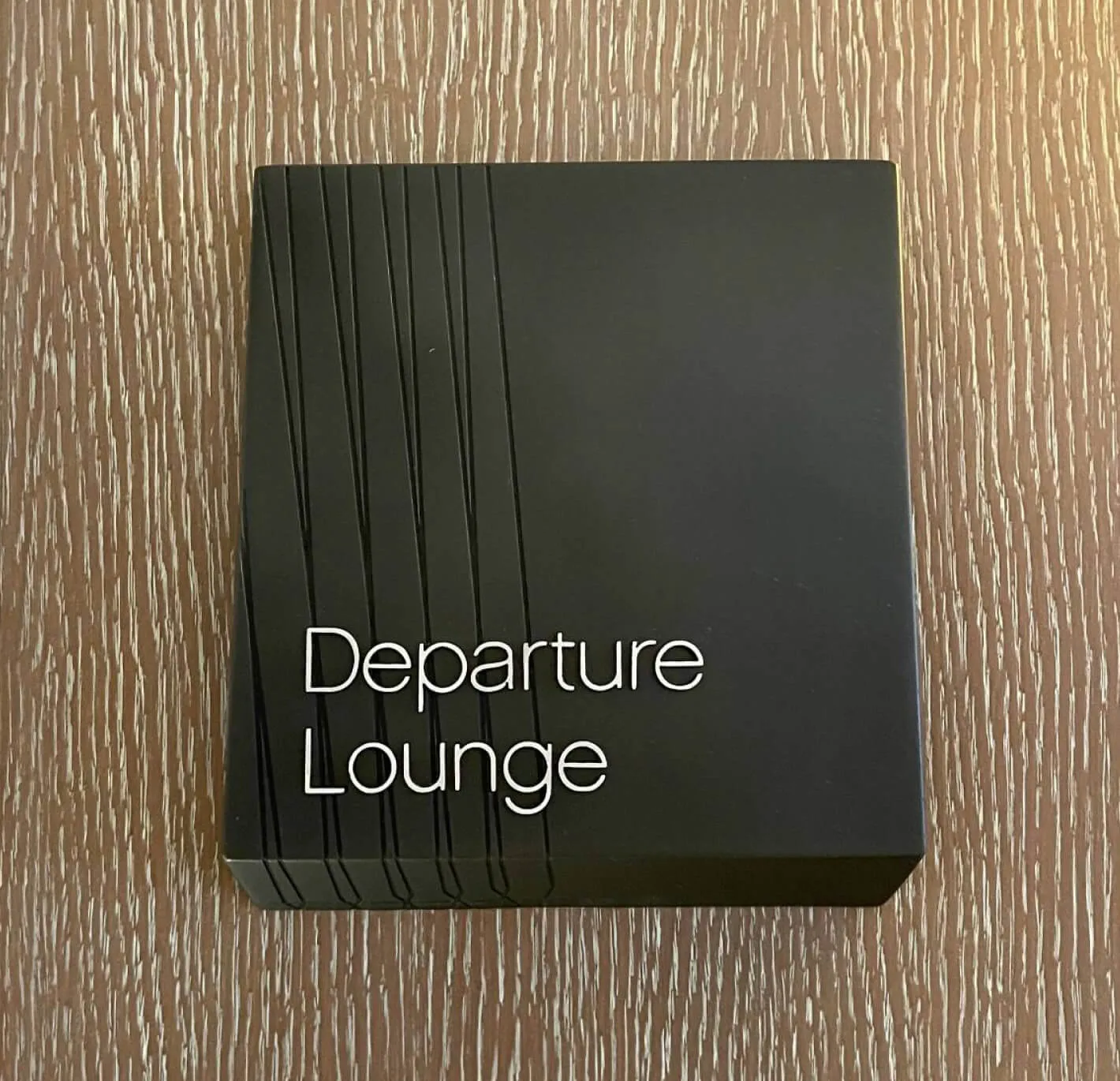
Black sign with
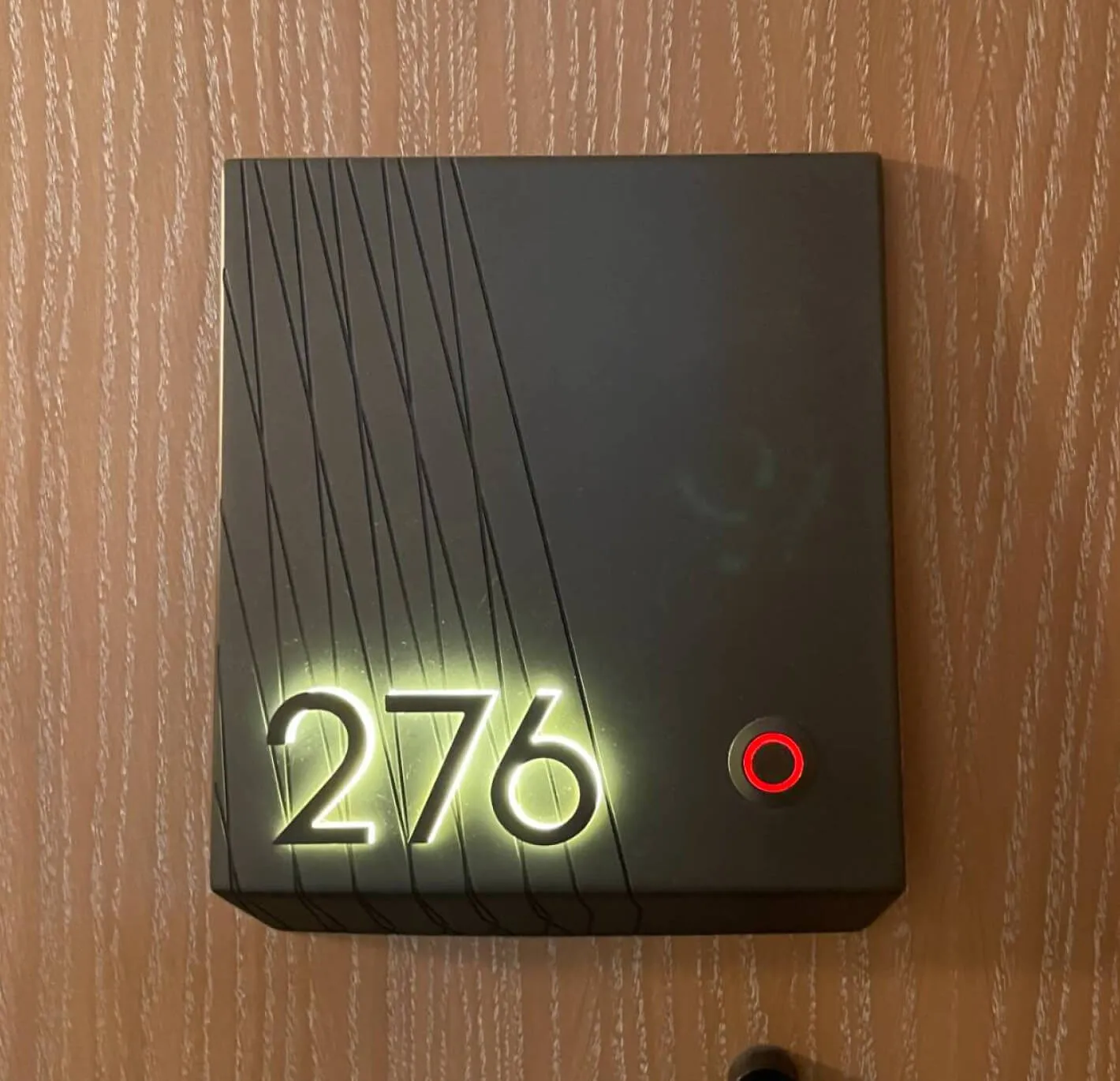
Hotel room number 276 with a red illuminated button.
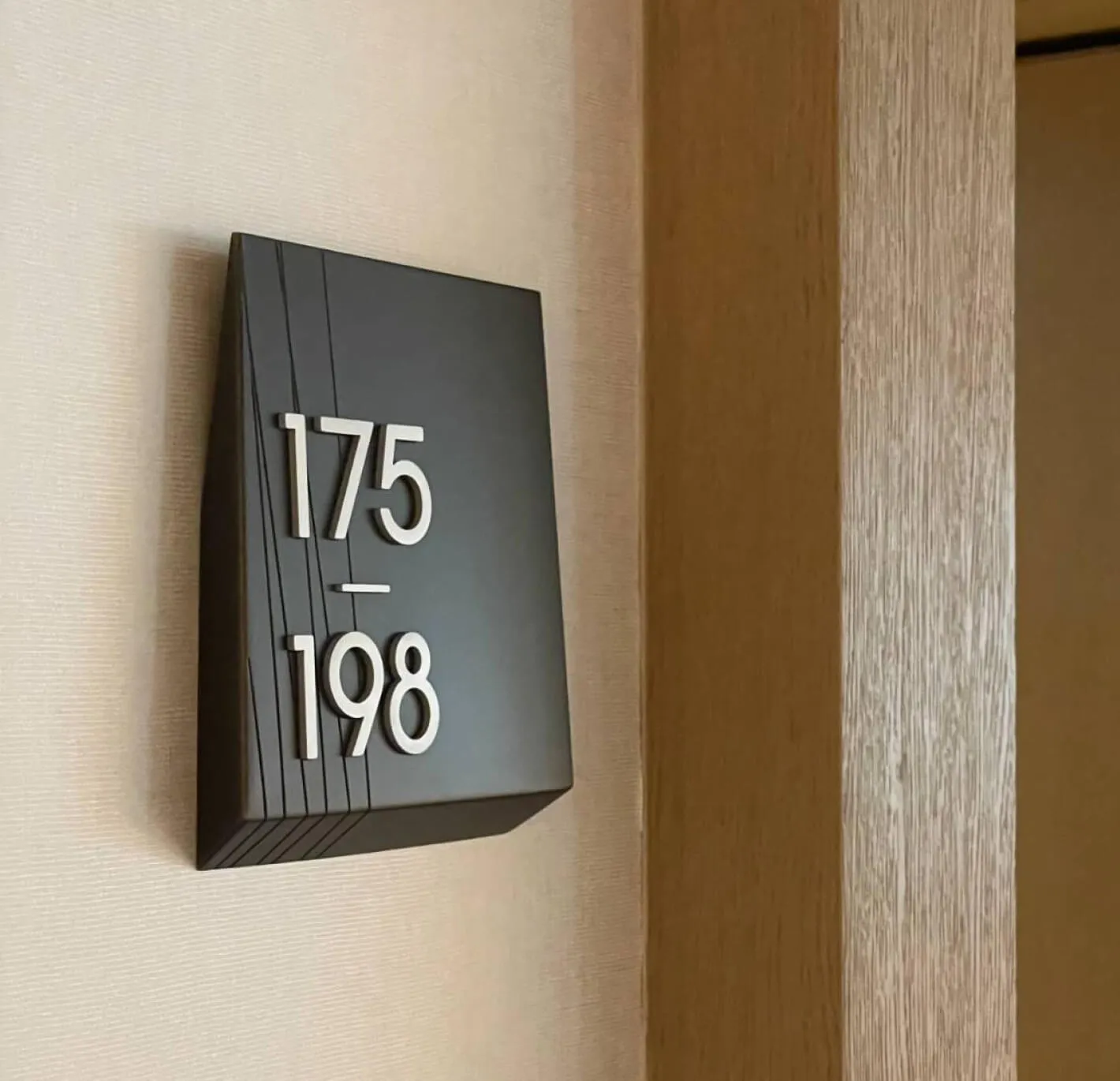
Hotel room numbers 175 and 198 on a dark sign.
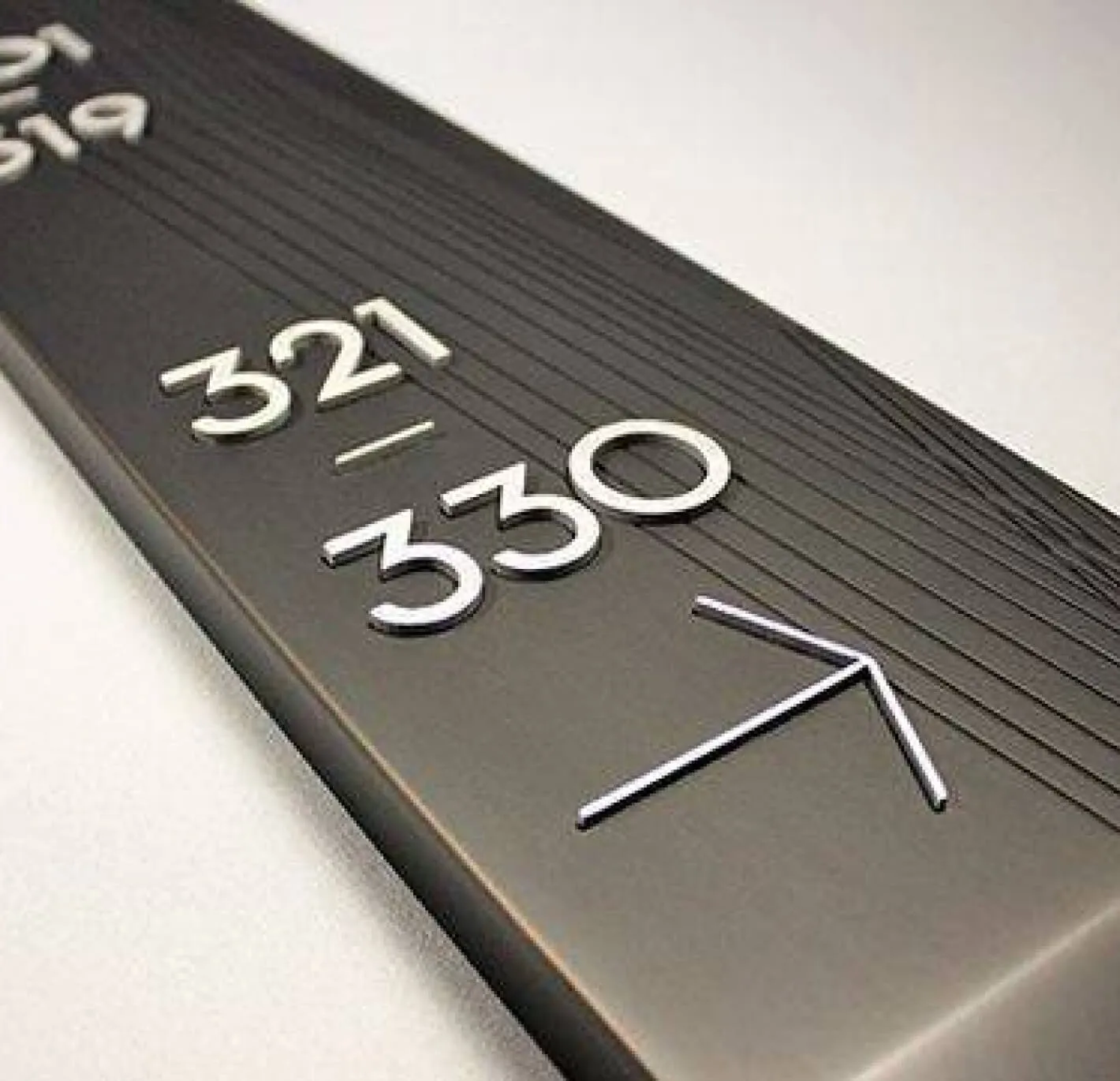
Elevator indicator showing floors 321 and 330 with an arrow pointing up.
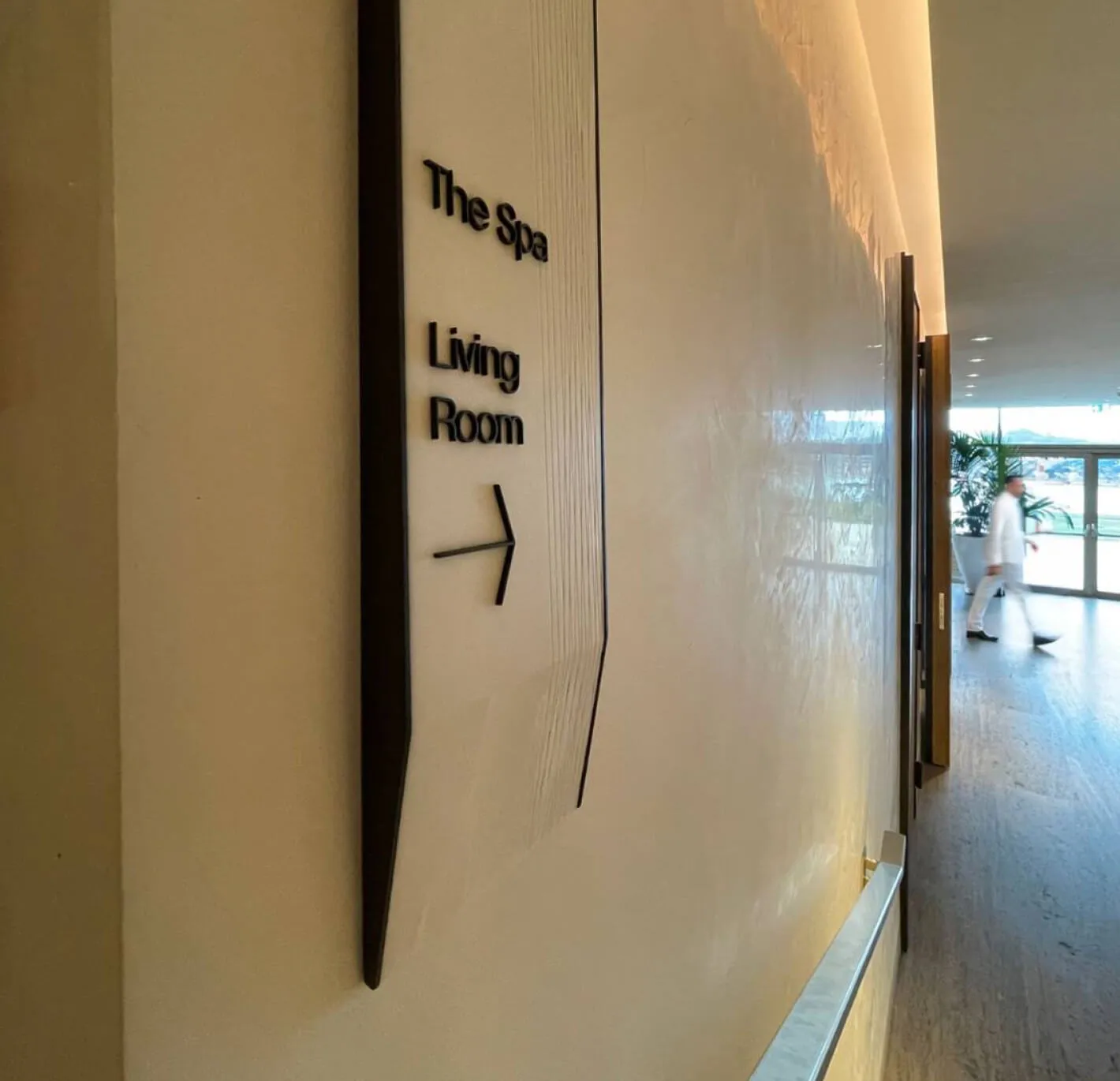
Signage for
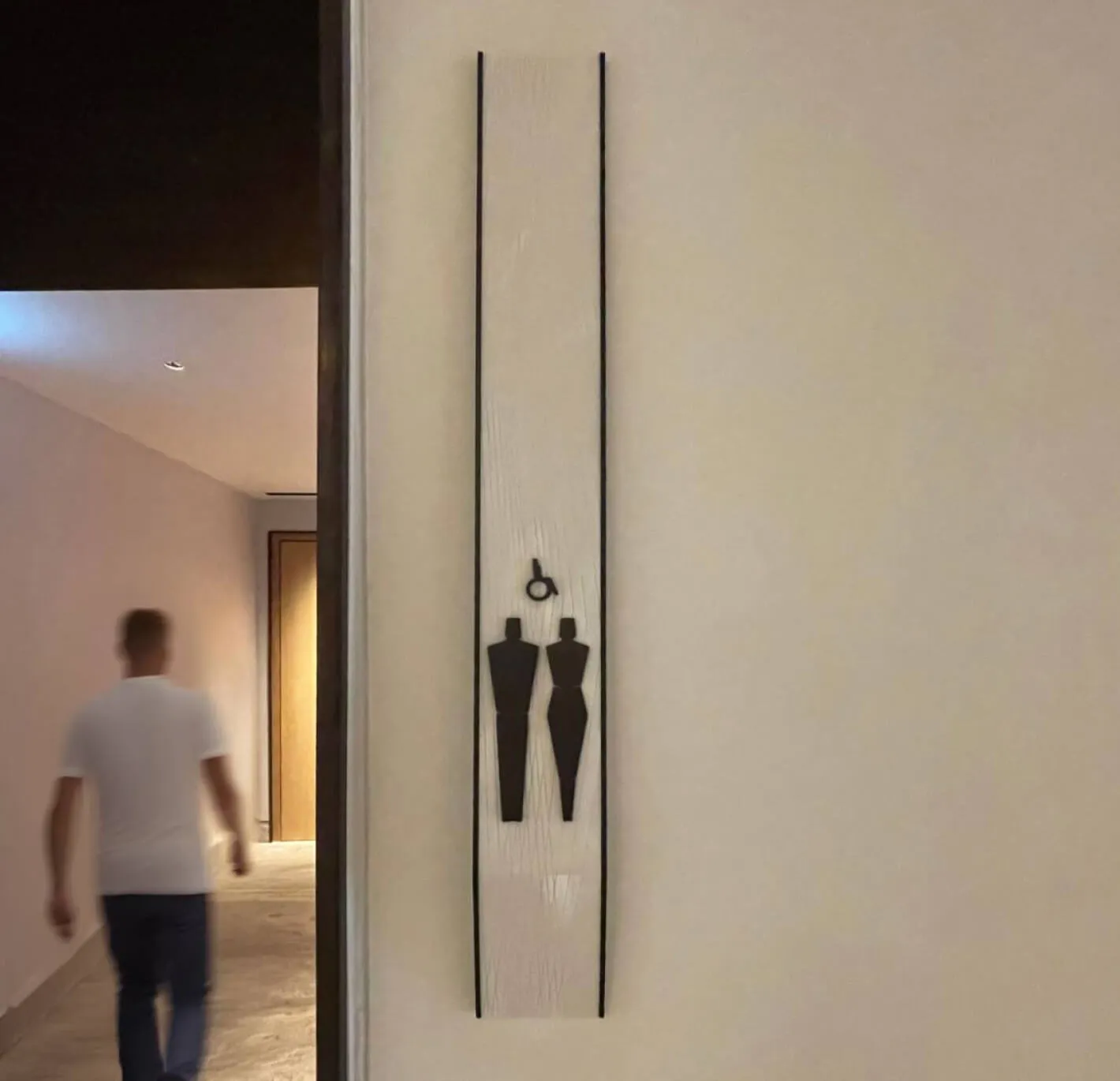
Restroom sign with male, female, and accessible symbols.
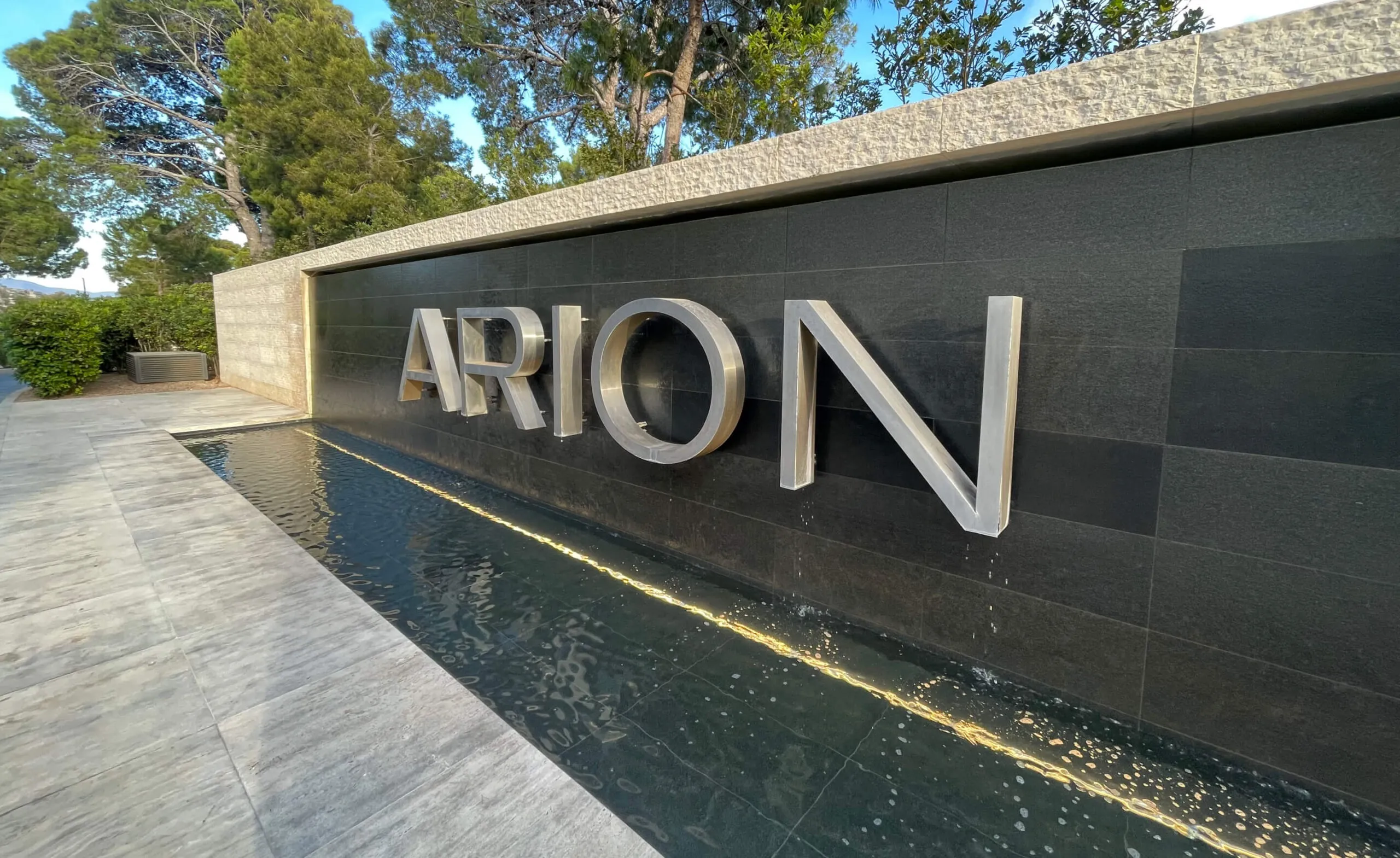
The word ARION in large metal letters on a black tiled wall with a water feature.
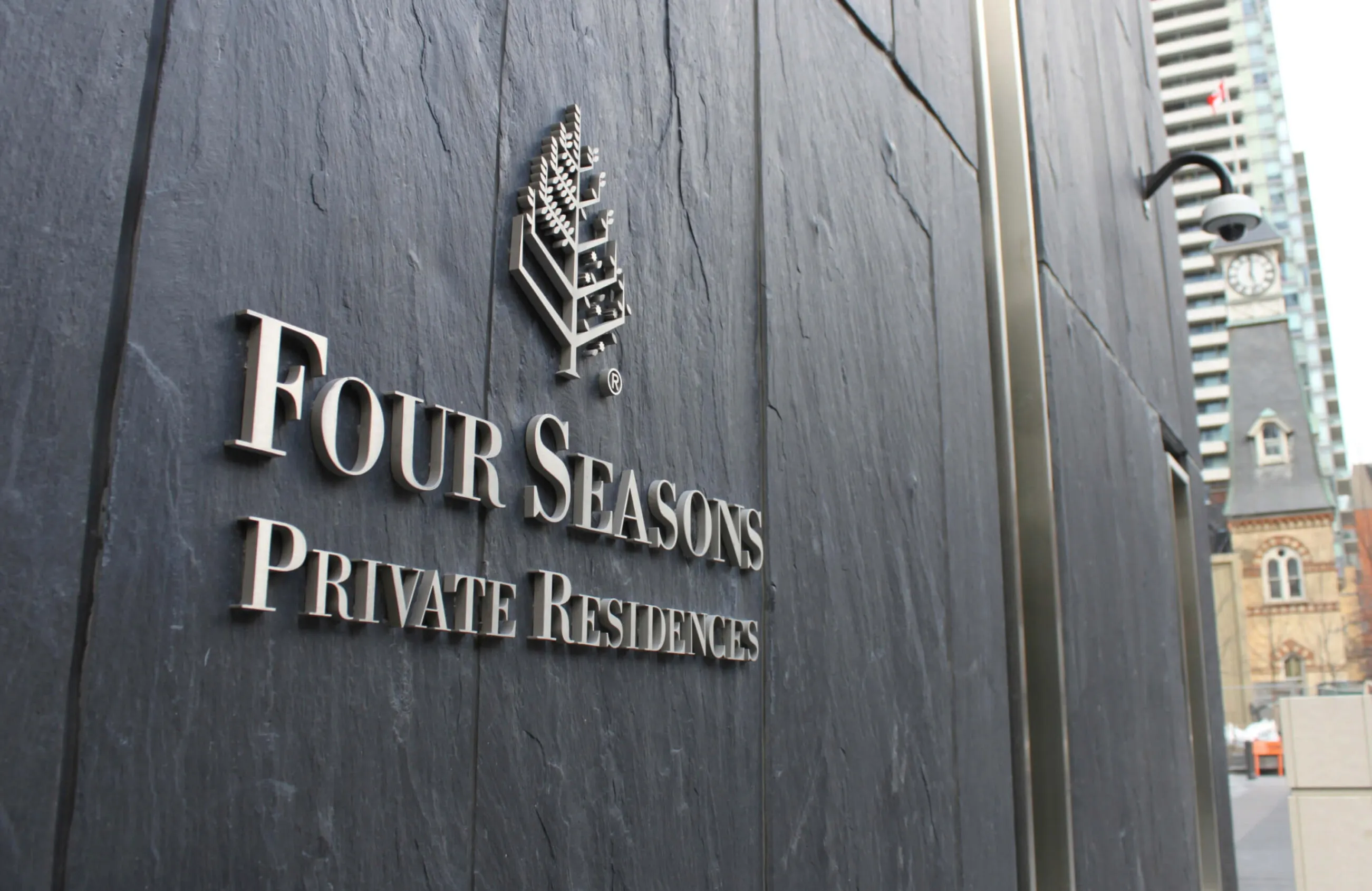
Four Seasons Private Residences sign on a slate building facade. Four Seasons Private Residences logo on a slate wall

Four Seasons

Services Deliverables
  • Signage
  • Wayfinding
  • Masterplan
  • Placemaking

Sophisticated placemaking for a white-glove experience

Four Seasons operates white-glove service hotels, resorts, and residences across the globe. Seeking to align the high standards of quality and finish expected, Forge is an ongoing partner; providing world-class wayfinding and placemaking solutions. With eight projects and counting, Forge continues to provide outstanding value to this international hospitality company.

Four Seasons Astir Palace Hotel Athens entrance at night.

Inspired design for unmatched hospitality

Our design approach takes cues from the forms and finishes present in the spaces, employing a sophisticated palette of materials to convey a sense of refined luxury. Sign messages are applied throughout the rooms and spaces to create a seamless look that allows the messaging to grow naturally out of the environment.

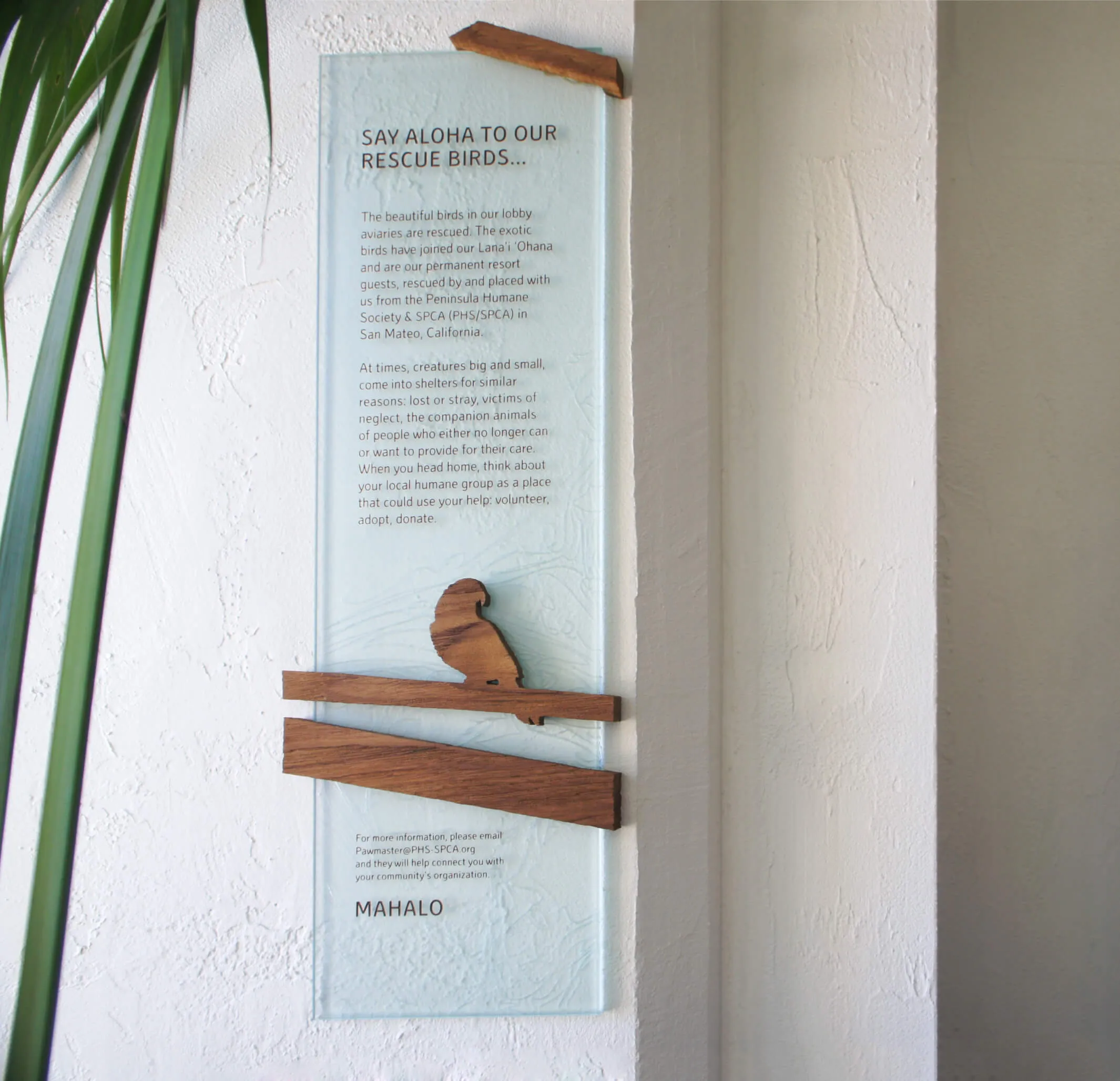
Sign about rescue birds at a resort, with a wooden bird on a perch.
The word
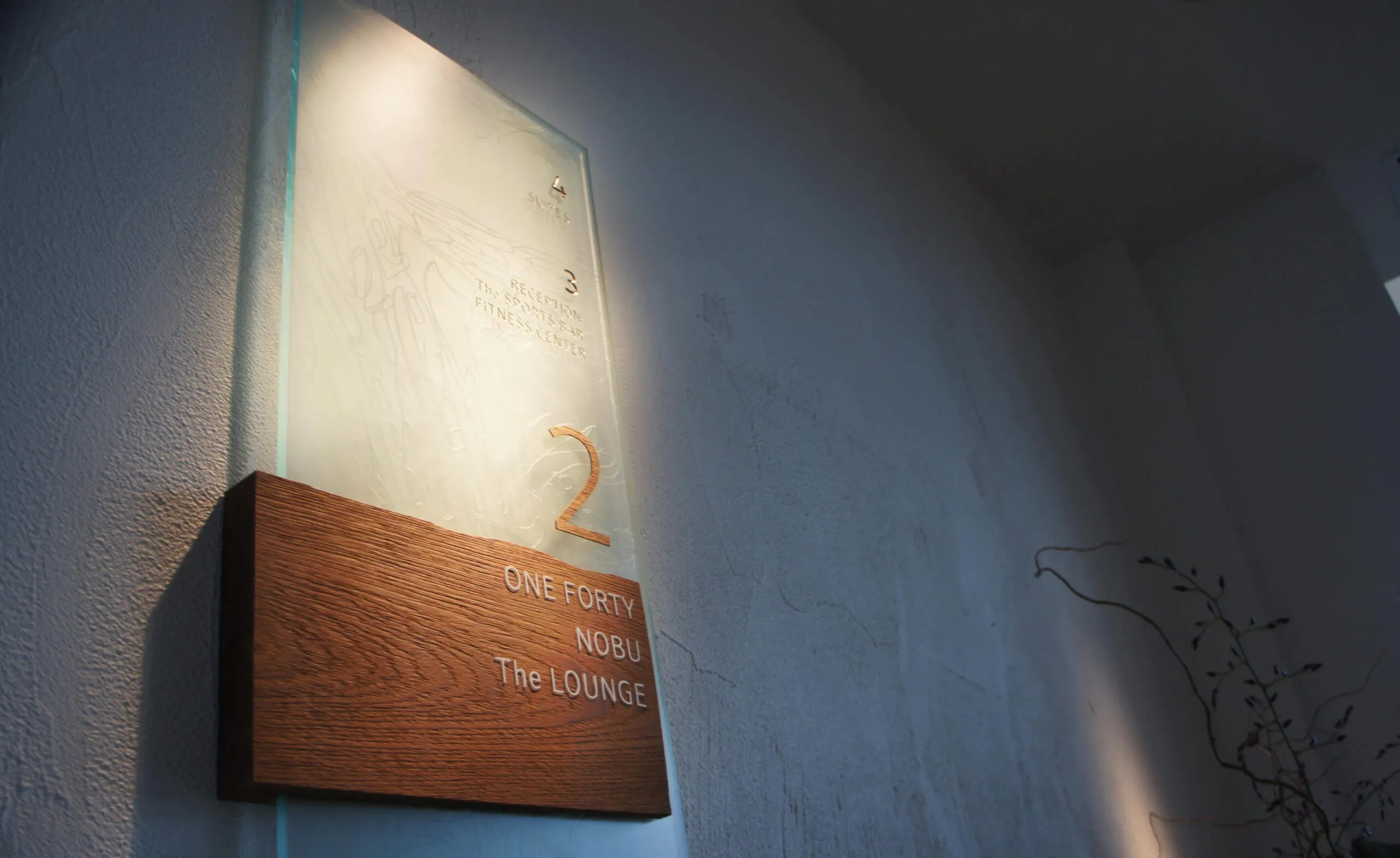
Elevator sign for floor 2, One Forty, Nobu, and The Lounge.
Signage details in Four Seasons, Lanai, Hawaii

Award-winning signage and wayfinding solutions

Signage is a subtle yet visible extension of the guest experience, creating a network of visual landmarks and reference points to effectively orient visitors in the many Four Seasons hotel environments we’ve designed without overpowering the spaces. We’ve created signage solutions for many Four Seasons locations, including Doha in Qatar, Khobar in Saudi Arabia, Astir in Greece, Lanai in Hawaii, Boston, Philadelphia, New Orleans and Toronto.

Four Seasons Hotel entrance with doorman and revolving doors.
Four Seasons at Comcast Technology Centre in Philadelphia, Pennsylvania
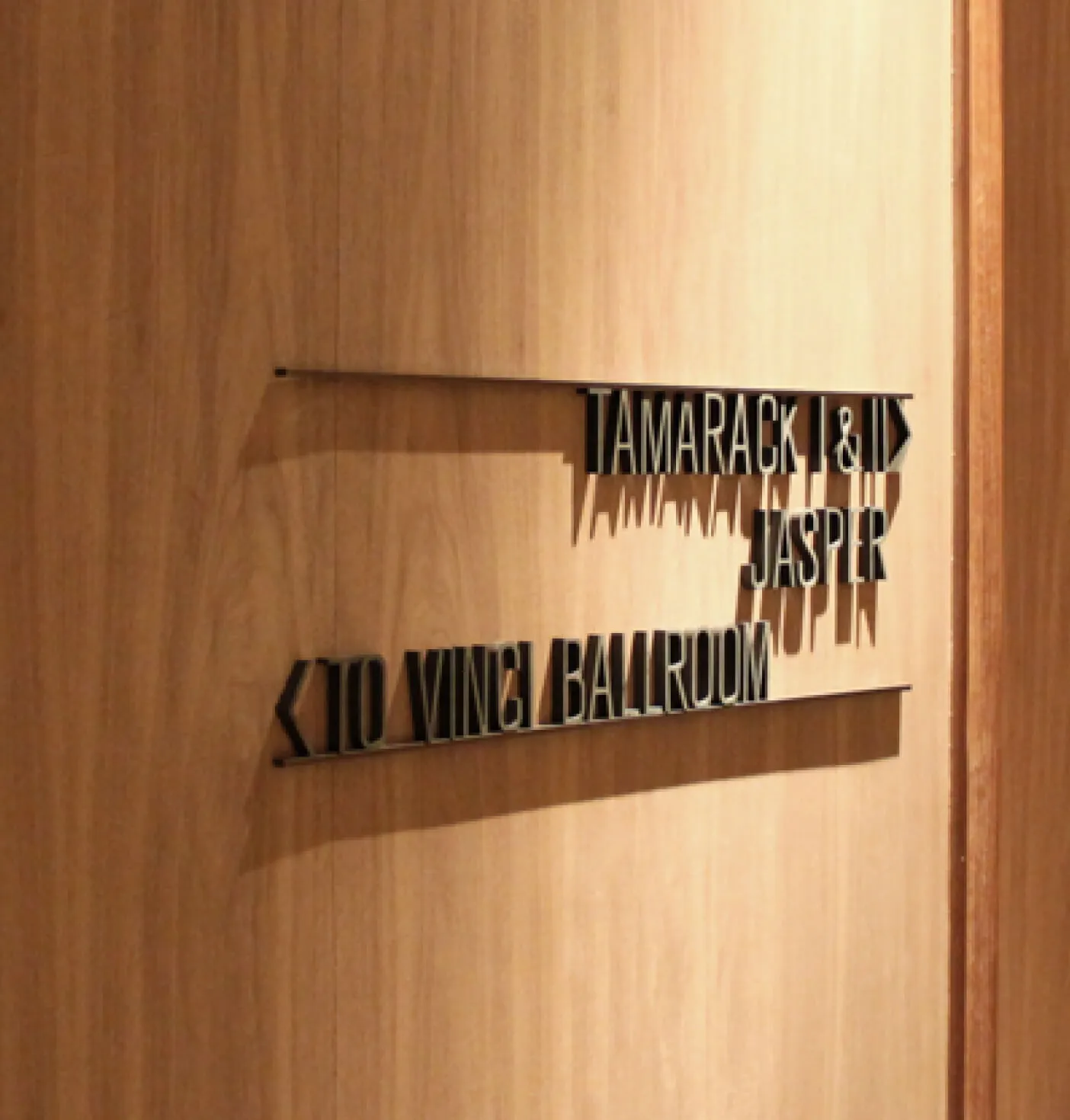
Signage for Tamarack I & II, Jasper, and To Vinci Ballroom on a wooden wall.
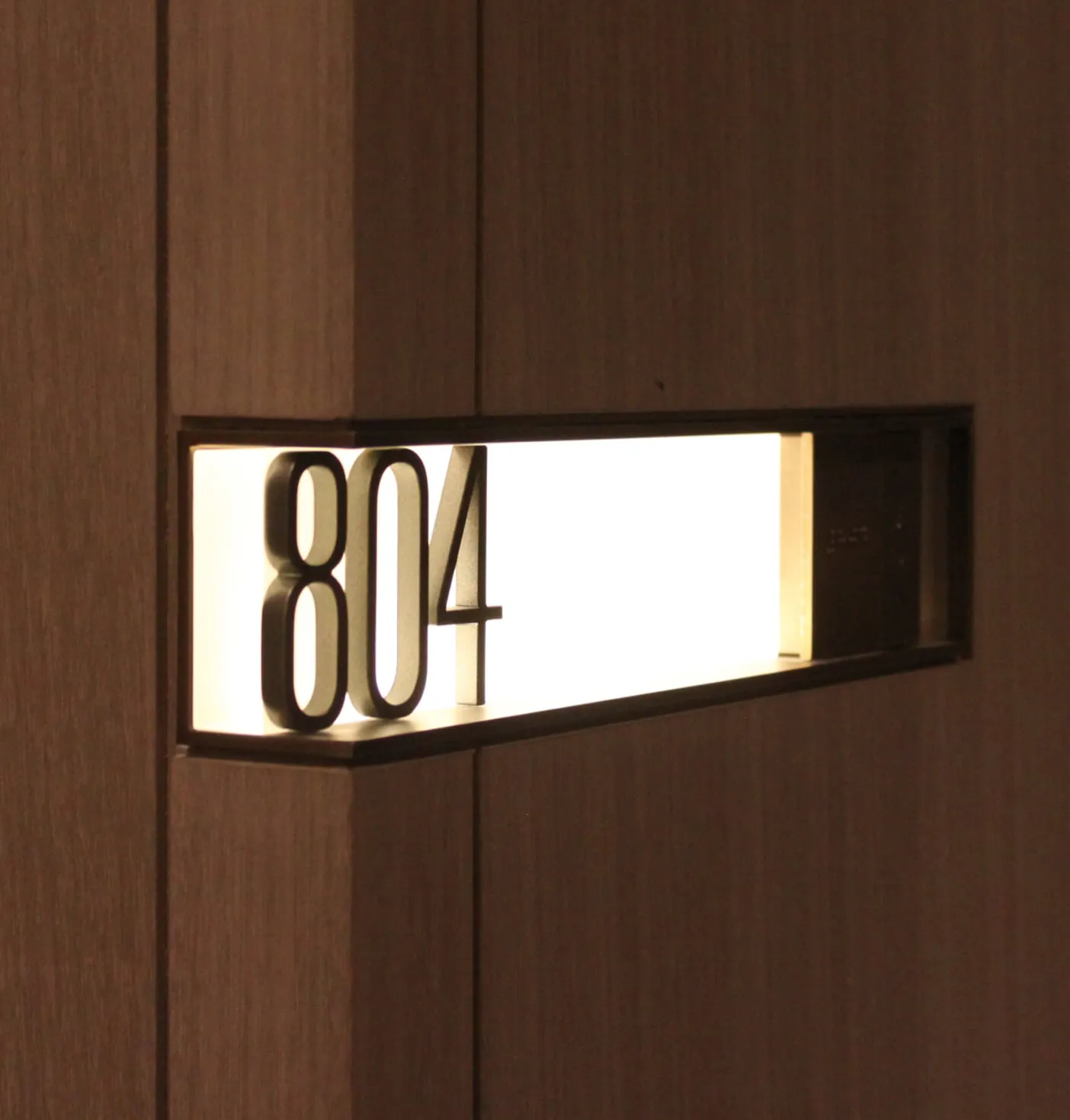
Illuminated room number 804 on a wooden door.
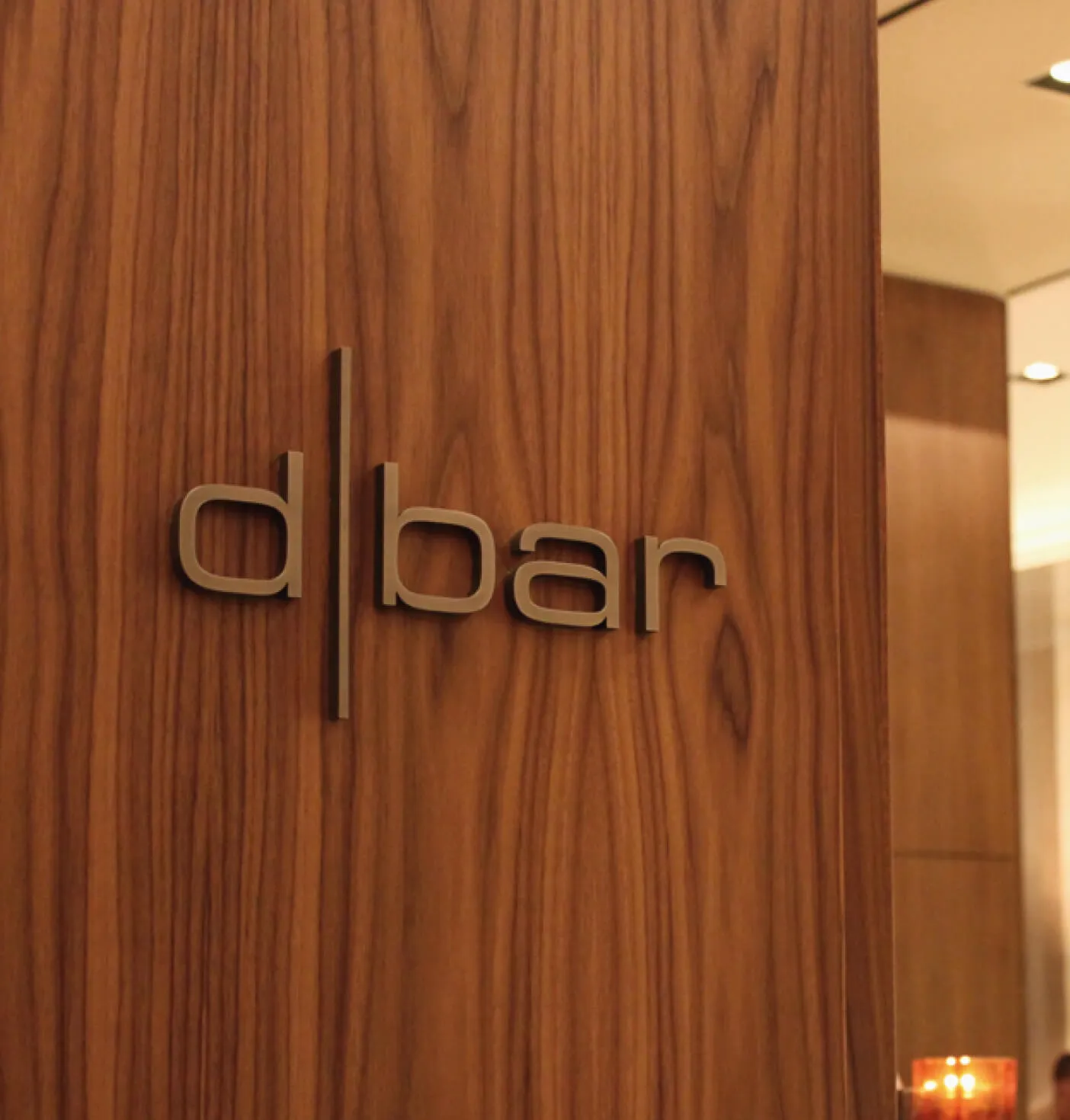
d bar logo on a wooden wall
Interior details inside Four Seasons, Toronto, Ontario
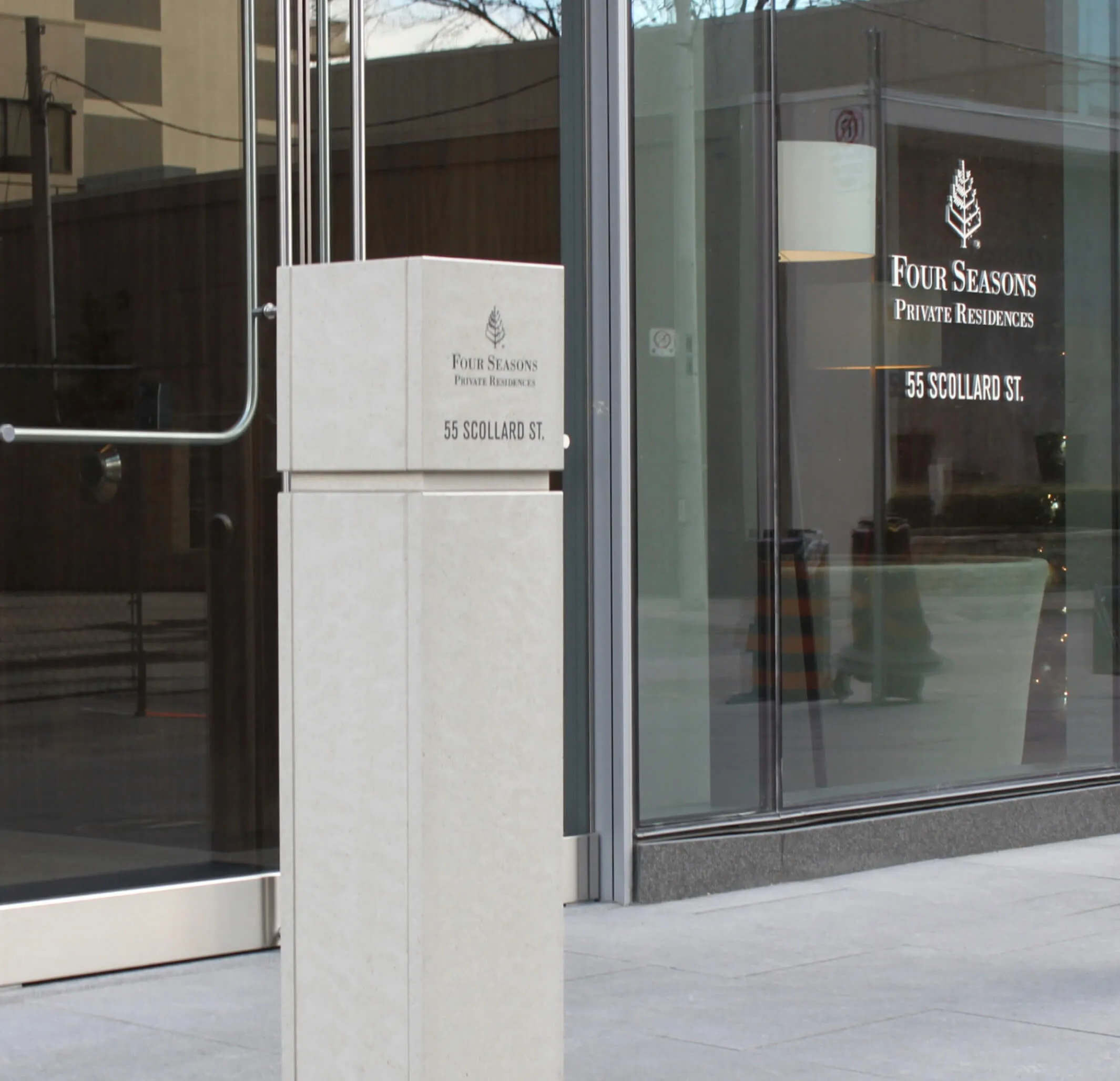
Four Seasons Private Residences at 55 Scovilld St.
Four Seasons Private Residences logo on a slate wall
Exterior details at Four Seasons, Toronto
  • 8 Four Seasons hotels in our portfolio
  • 4 countries, spanning two continents
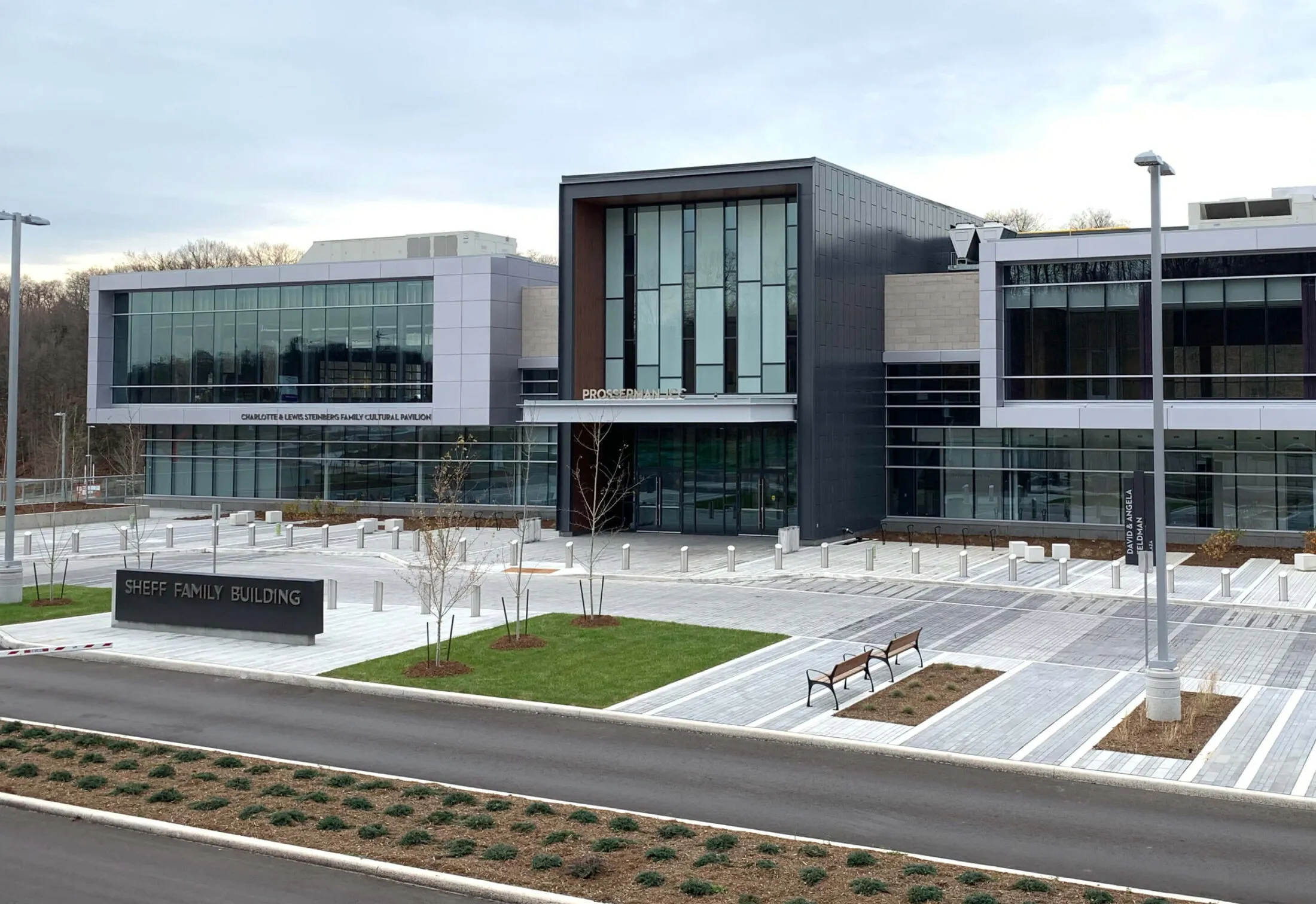
Image of UJA Federation building. Modern building entrance with

UJA Federation

Toronto, ON
Services Deliverables
  • Signage
  • Wayfinding
  • Masterplan
  • Donor Recognition
  • Placemaking

Strengthening the connections within a community

Nestled in the natural beauty of the West Don Parklands, the UJA Federation’s Sherman campus is a unique multiplex hub that provides an essential cultural link for Toronto’s Jewish community and features state-of-the-art sports, youth, educational and family programming. The phase II development mission is to expand the facility offerings and enrich the connection for all members of the UJA family.

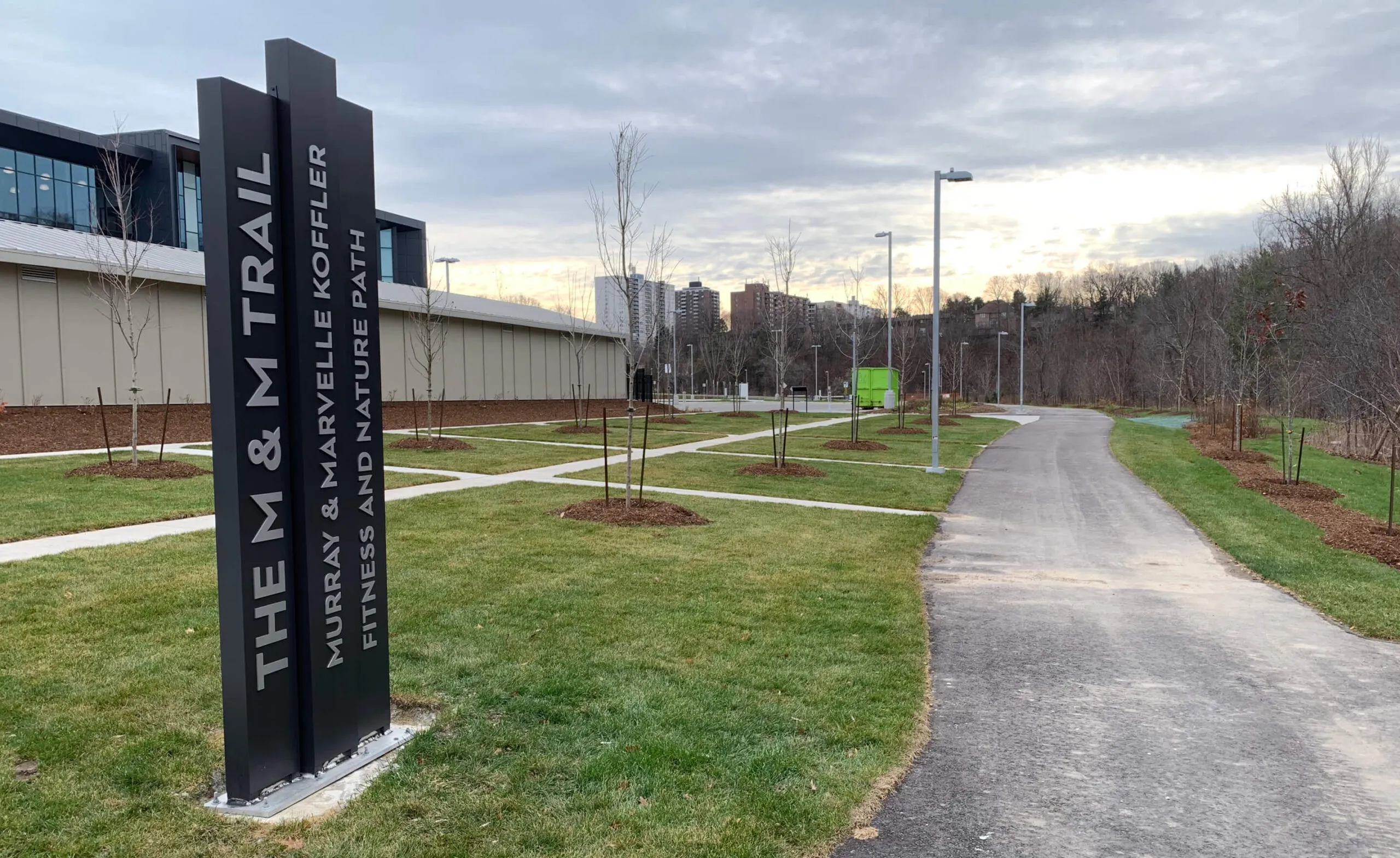
Wayfinding signage along a trail.
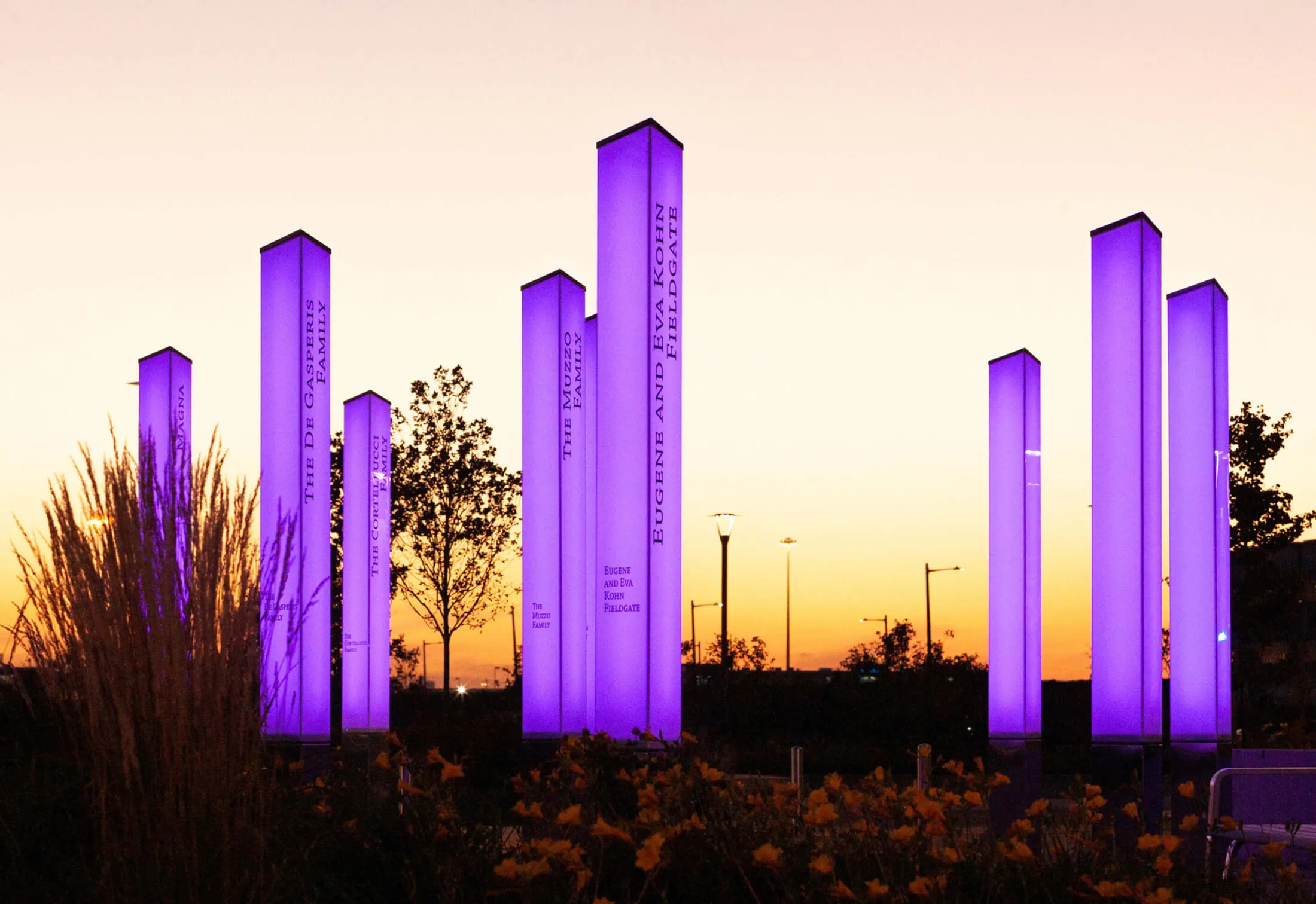
Monuments of recognition

A vibrant and thriving community hub

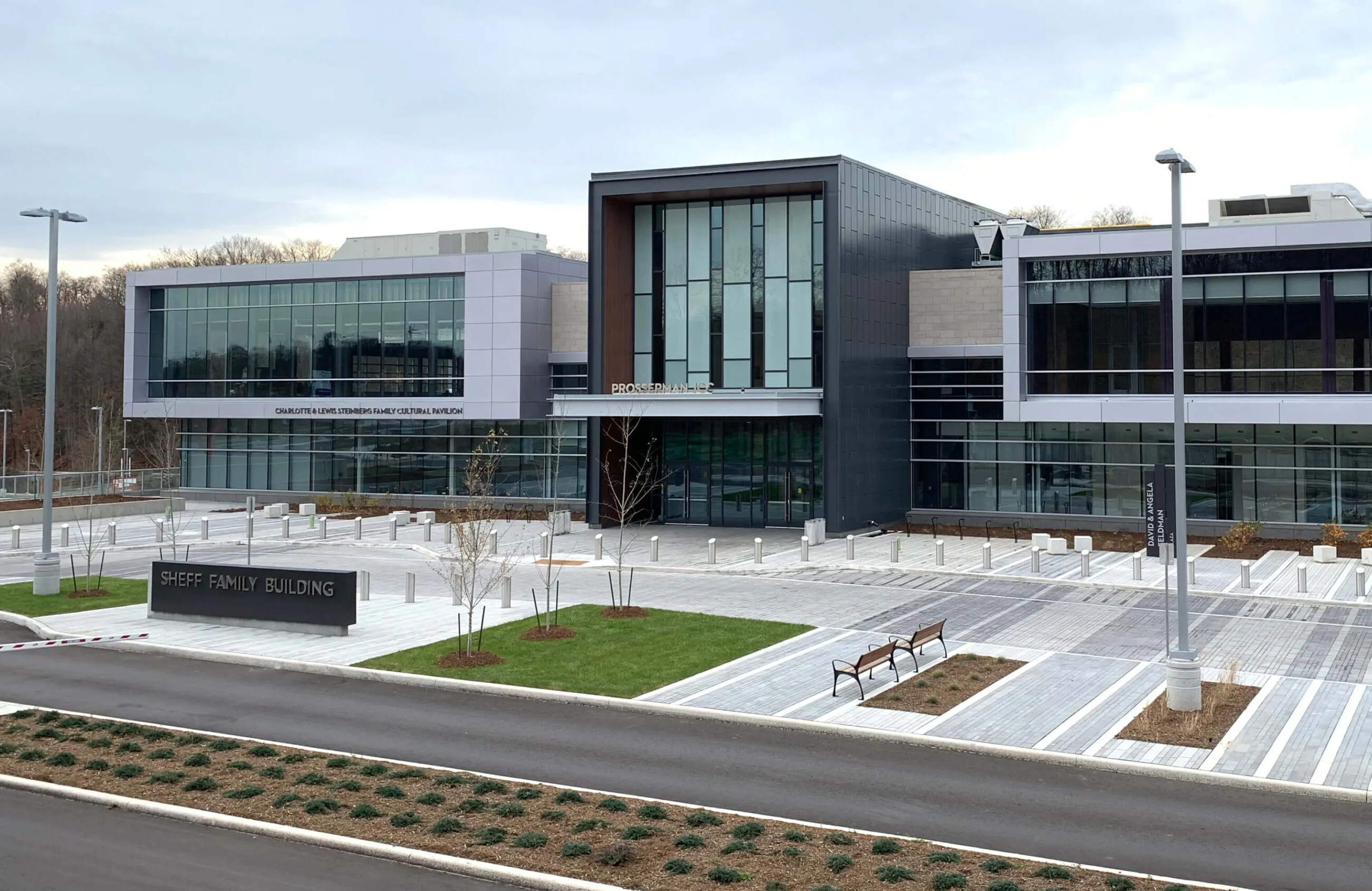
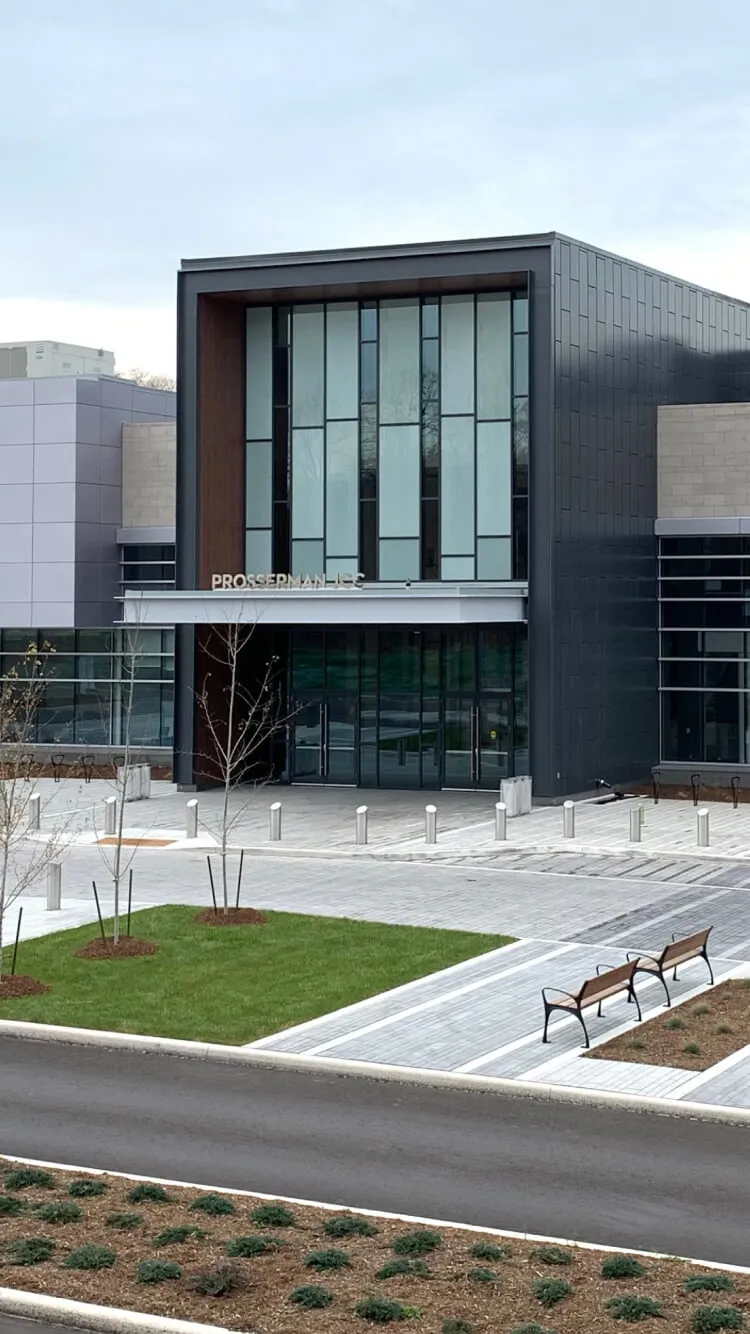
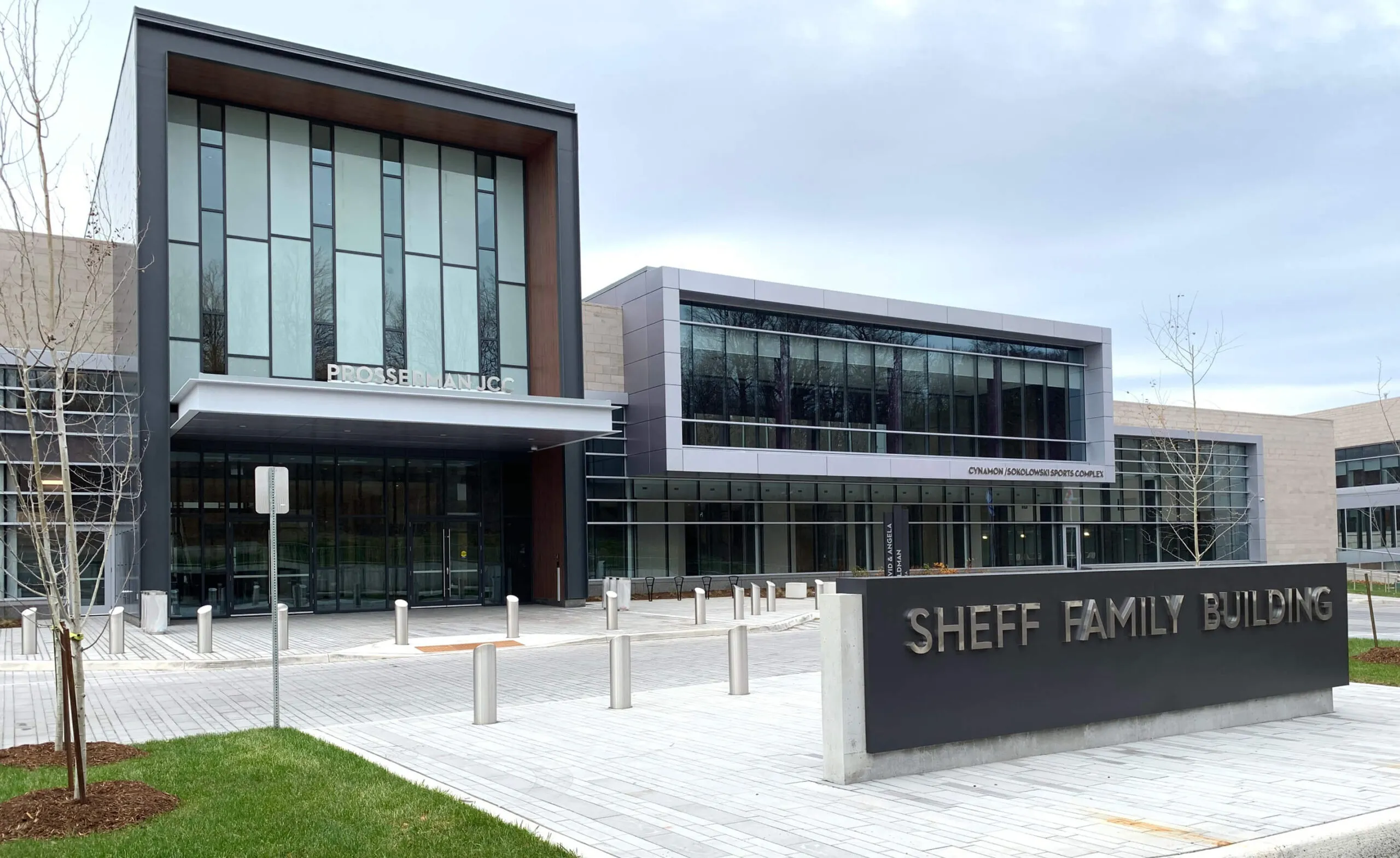
UJA Federation approached Forge Media + Design to plan, design, and implement a wayfinding system for the newly planned Sheff Family Building. Our design challenge was to create a harmonious experience amongst neighbouring buildings while integrating new signage and donor recognition for the campus, building exterior and interior.

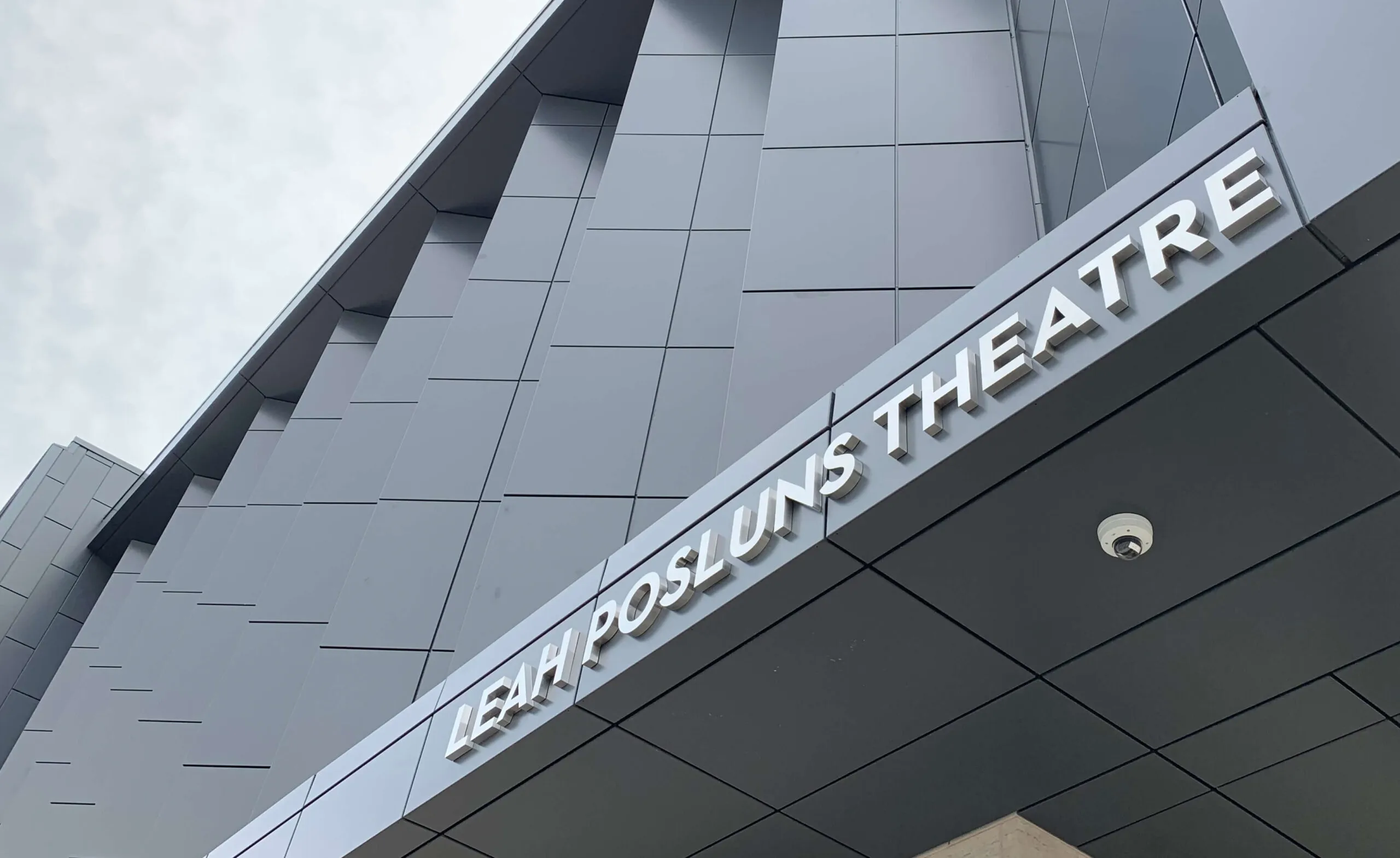
Close-up of building signage lettering.
The building as fabric of the community
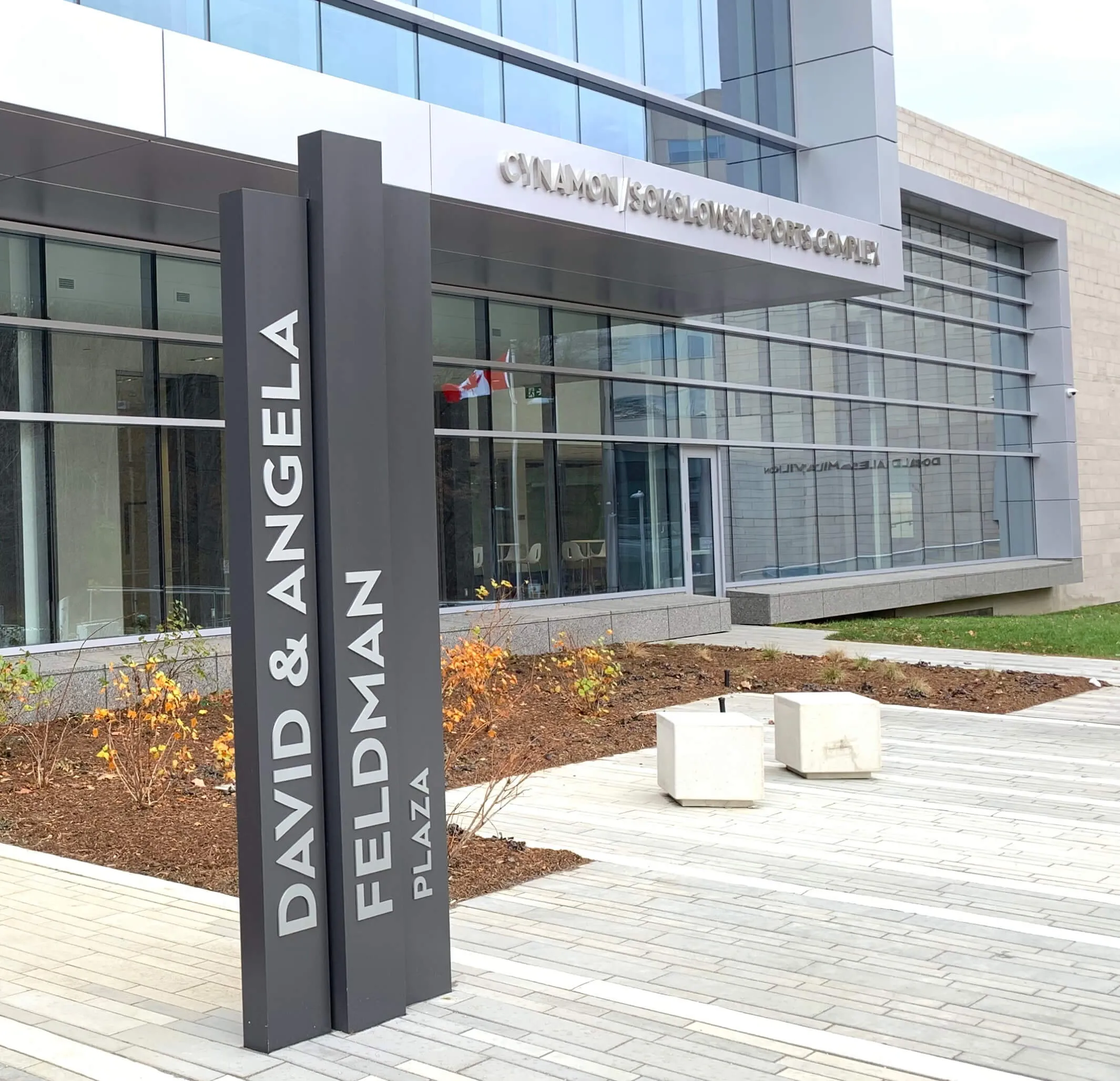
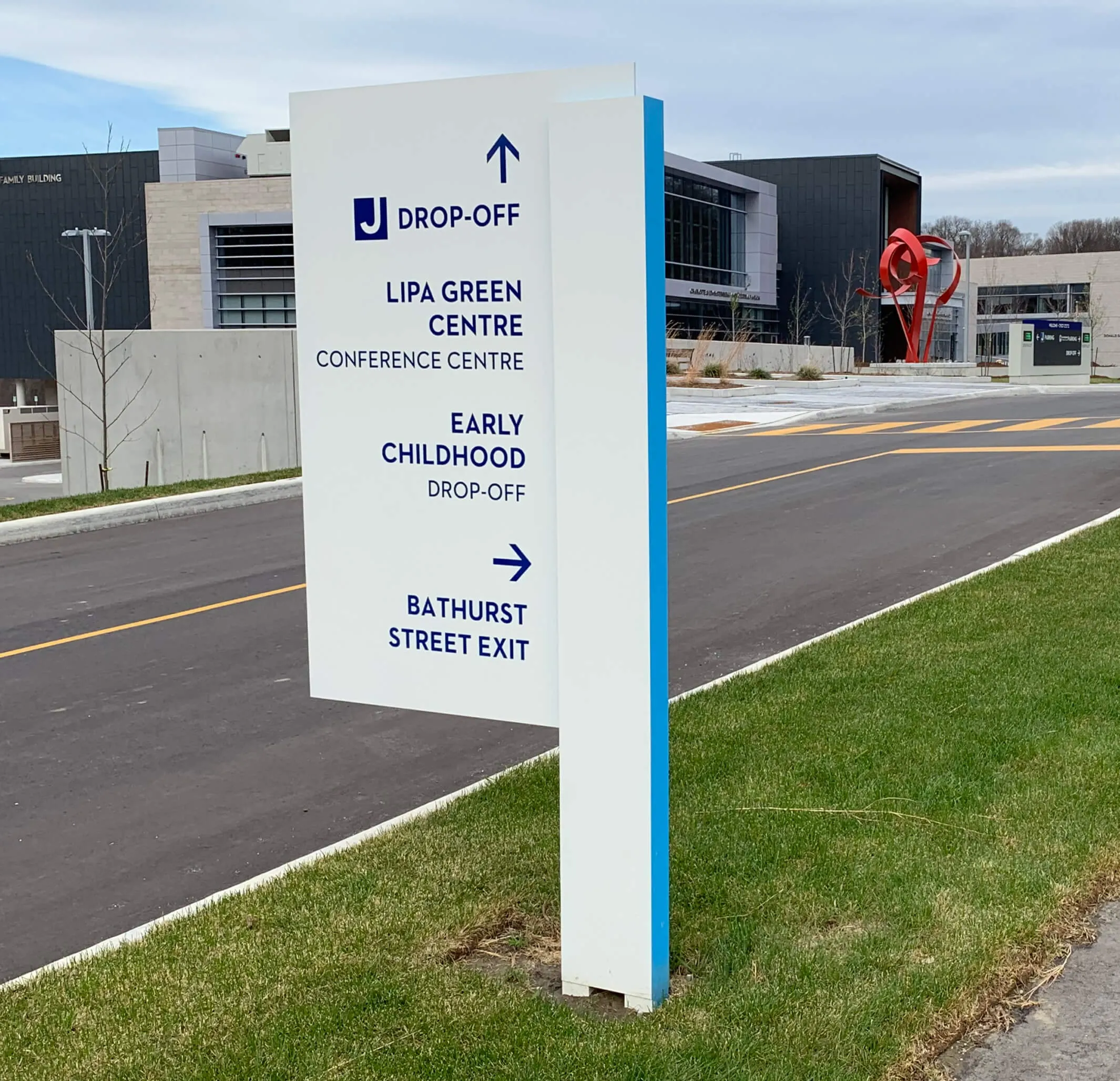
Wayfinding signage pillars outside the building.
Wayfinding signage outside the building complex.
Unified brand through typeface consistency
UJA Federation building.
Integrated wayfinding creates a sense of place

Understanding the diverse legacy

Cultural sensitivity and accessibility were critical factors to the development of the project. Working within specific budget constraints, Forge engaged with key stakeholders to understand the diverse typology of guests and visitors. The result is not only an intuitive system that liberates the act of mobility and access but also one that provides moments of connection, pride of place and a shared vision for the future.

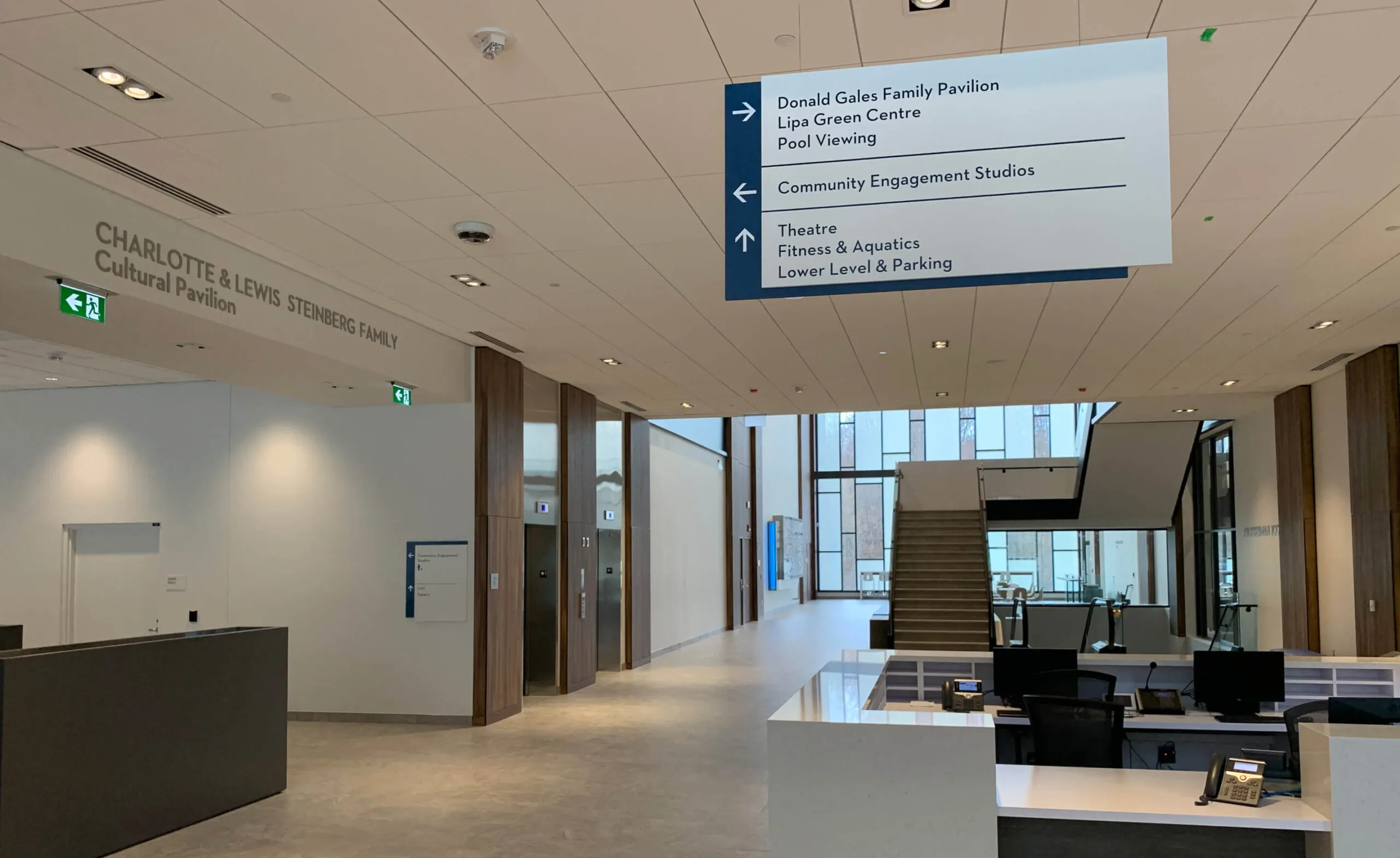
Interior of UJA building, with a focus on wayfinding signage.
Familiar forms help with orientation
Close-up of office signage.
Close-up of building amenity signage.
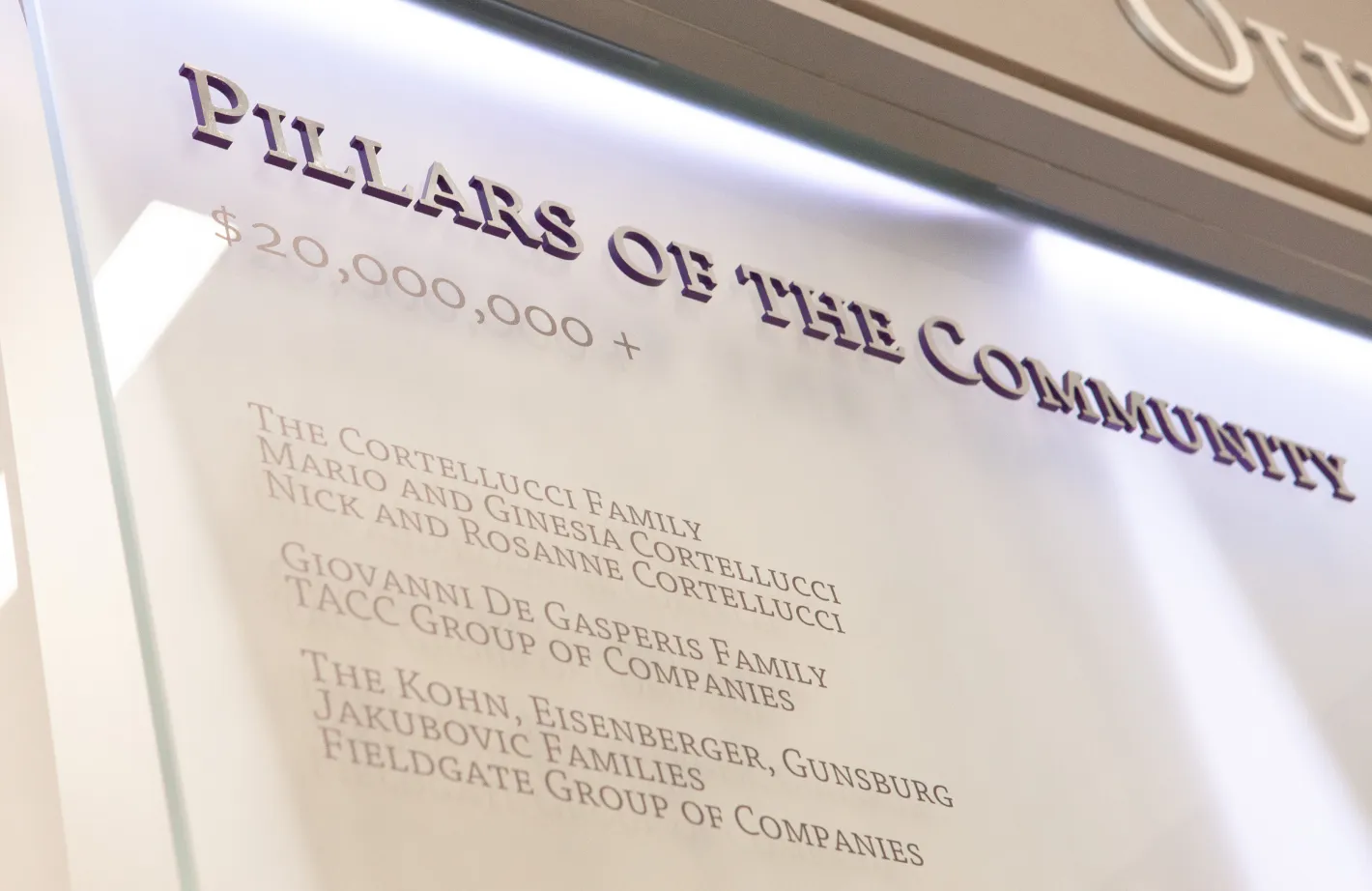
Changeable donor panels
  • 106K sq. ft. campus
Backside of interactive donor recognition panels.

Stella’s Place

Toronto, ON
Services Deliverables
  • Signage
  • Wayfinding
  • Donor Recognition
  • Video Production
  • Motion Graphics
  • Kiosk
  • Placemaking
  • Masterplan

Young people are 20% of the population, but 100% of the future
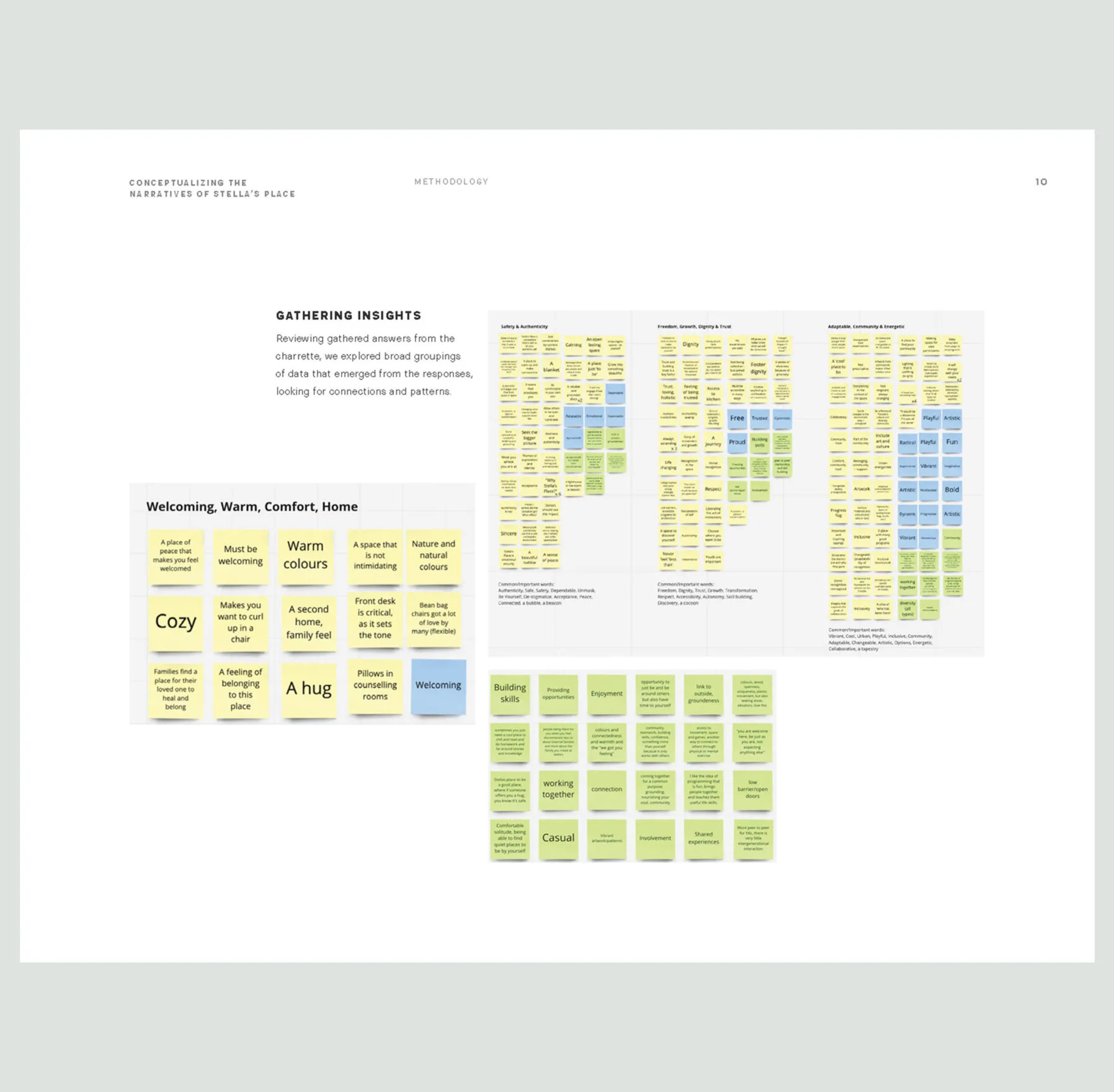
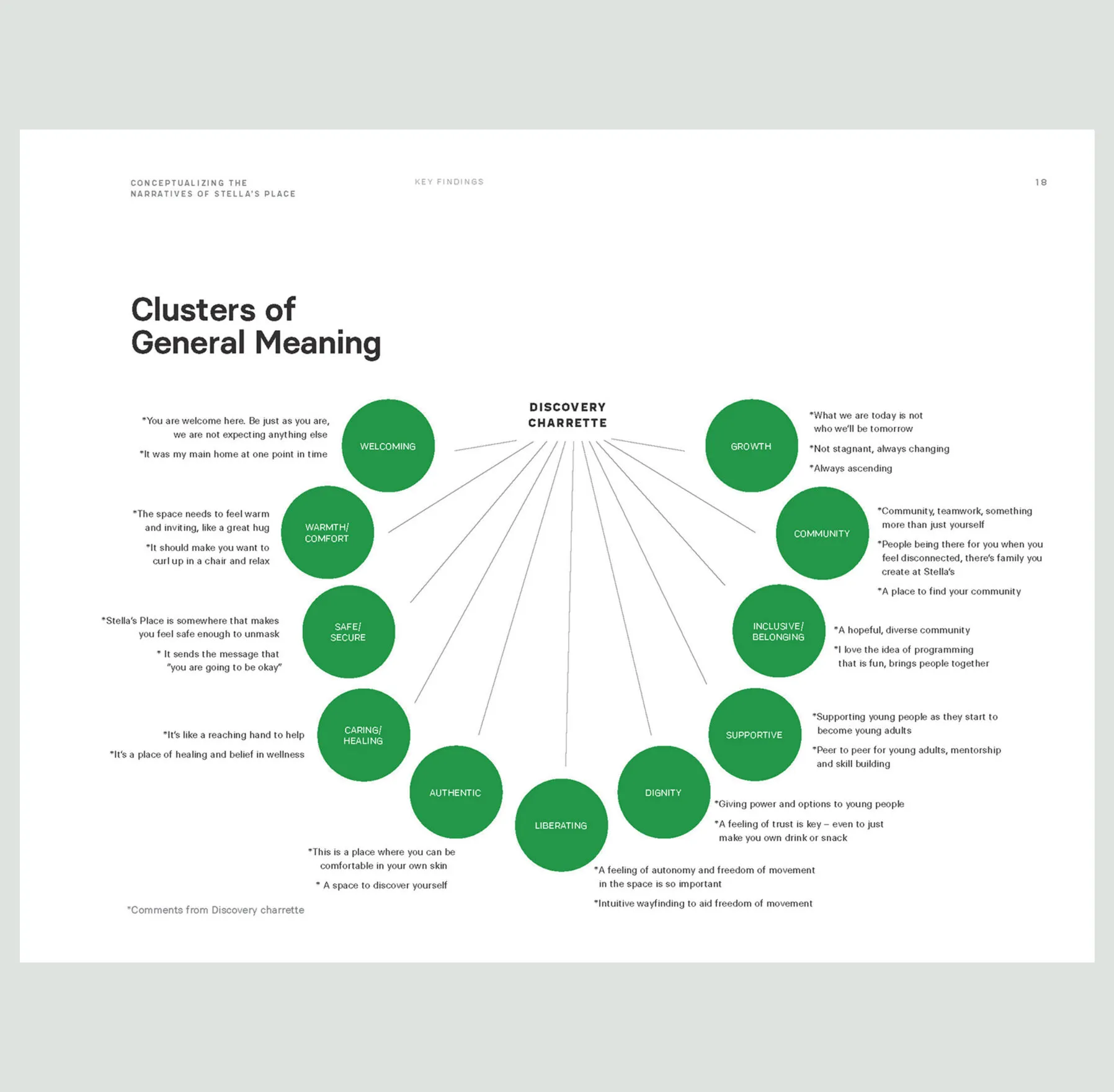
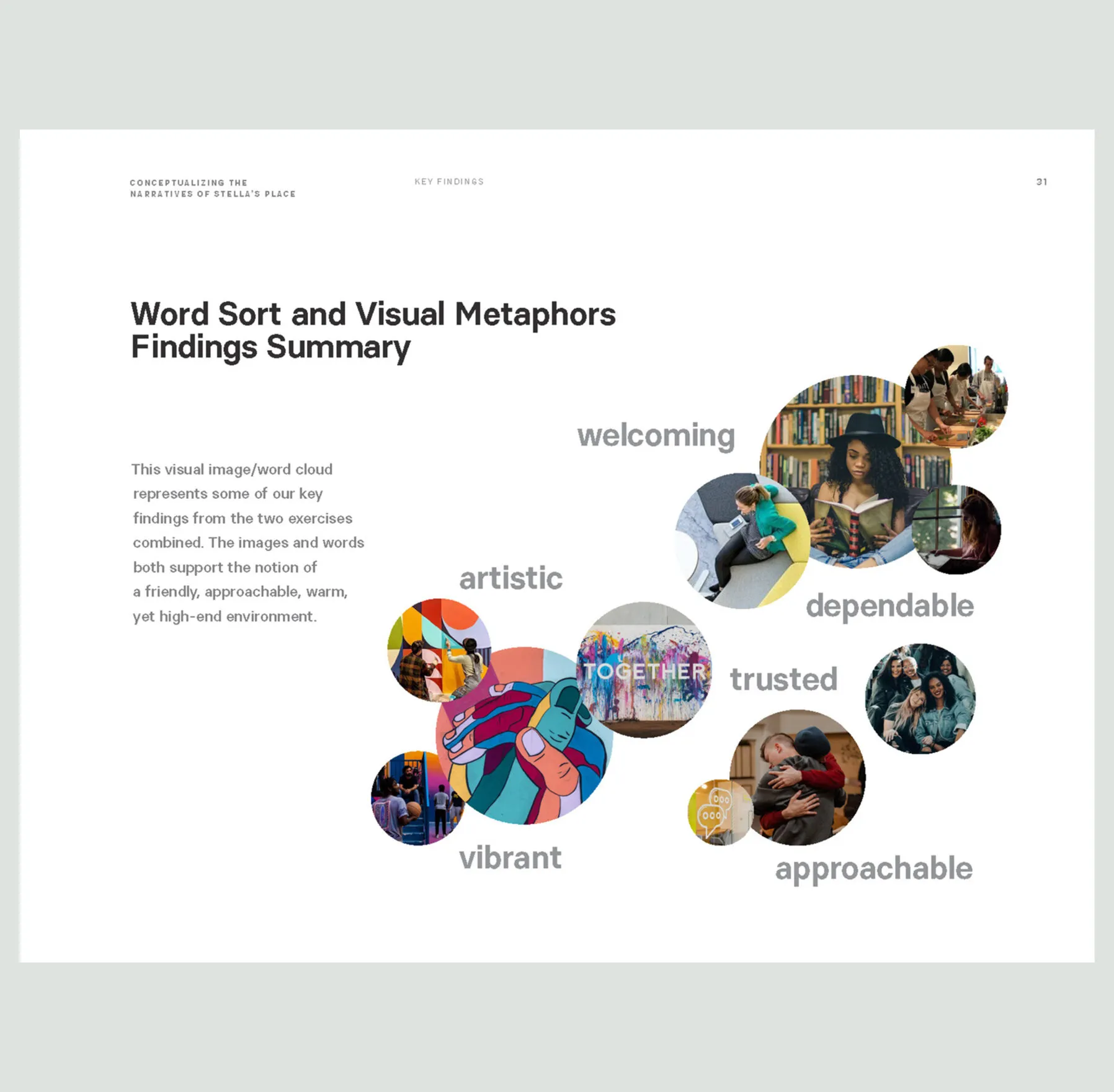
Forge had the pleasure of working with Stella’s Place – a not-for-profit organization in Toronto, ON, that helps young adults empower themselves to manage their mental health and wellness. During our inclusive co-design session, a rich diversity of stories from the stakeholders and youth participants revealed the tapestry of the community they are weaving together. This direction became a foundational theme for the project.

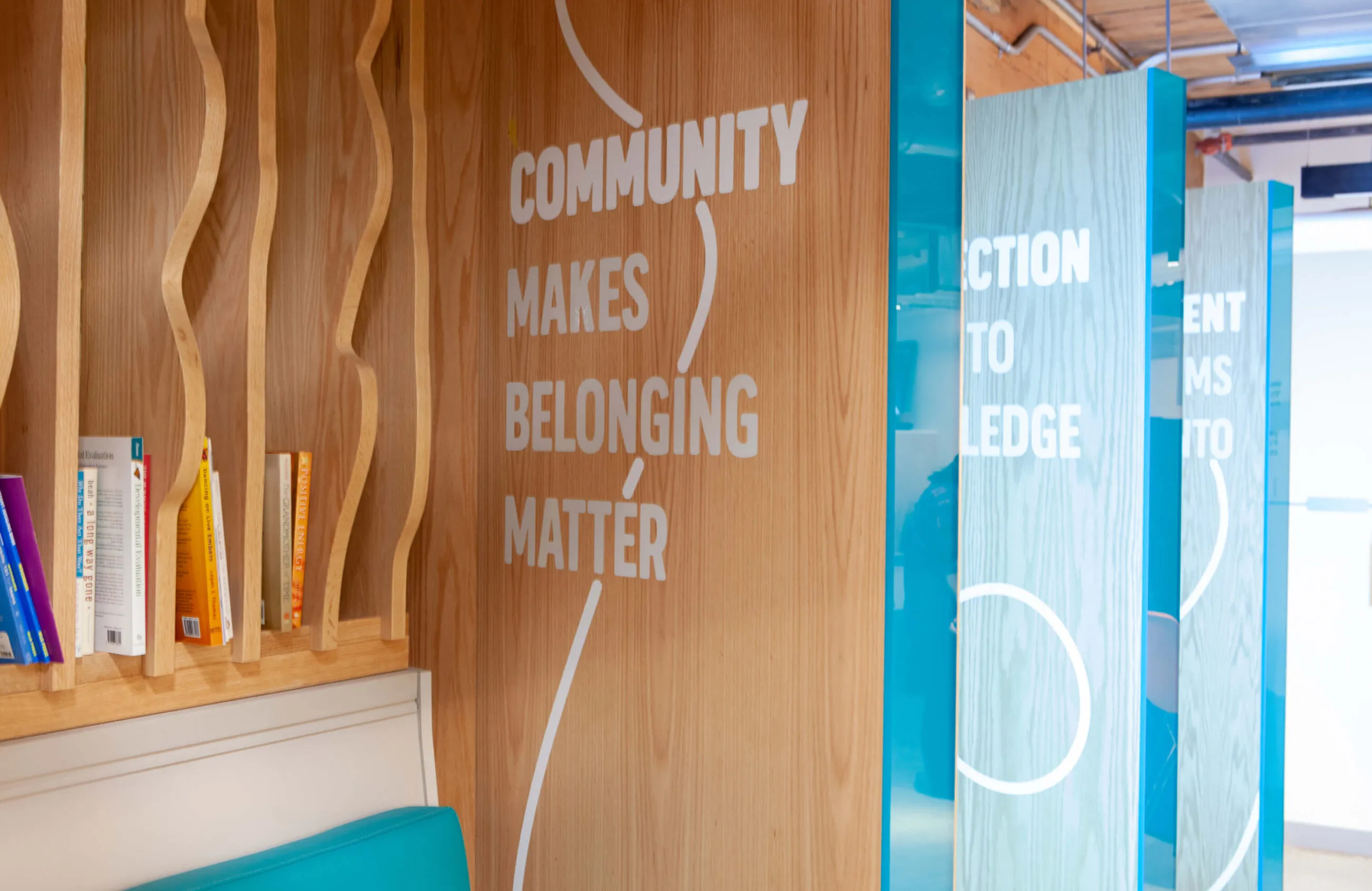
Inspirational interior signage.
A place for sharing art

A through-line connection throughout the space

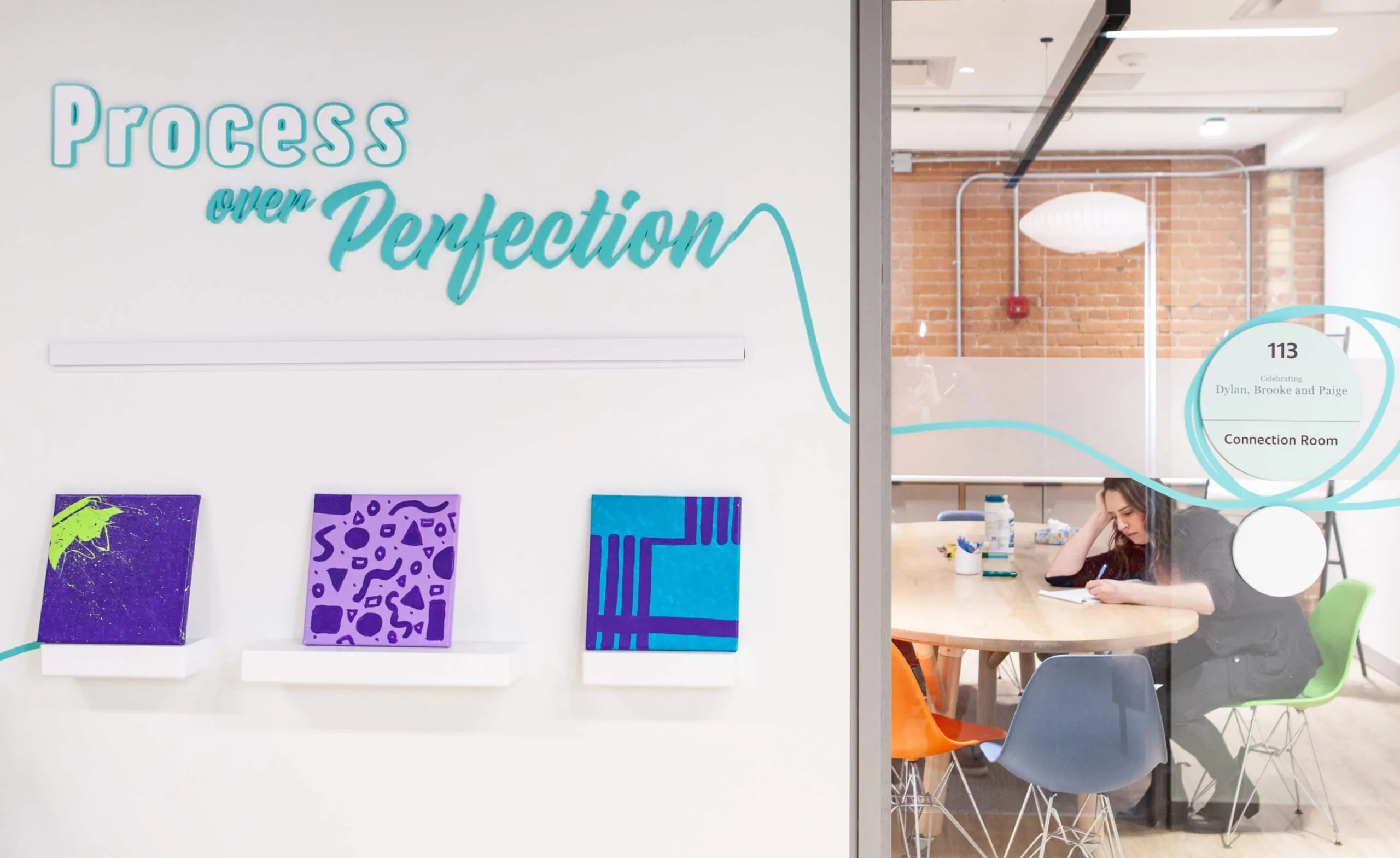
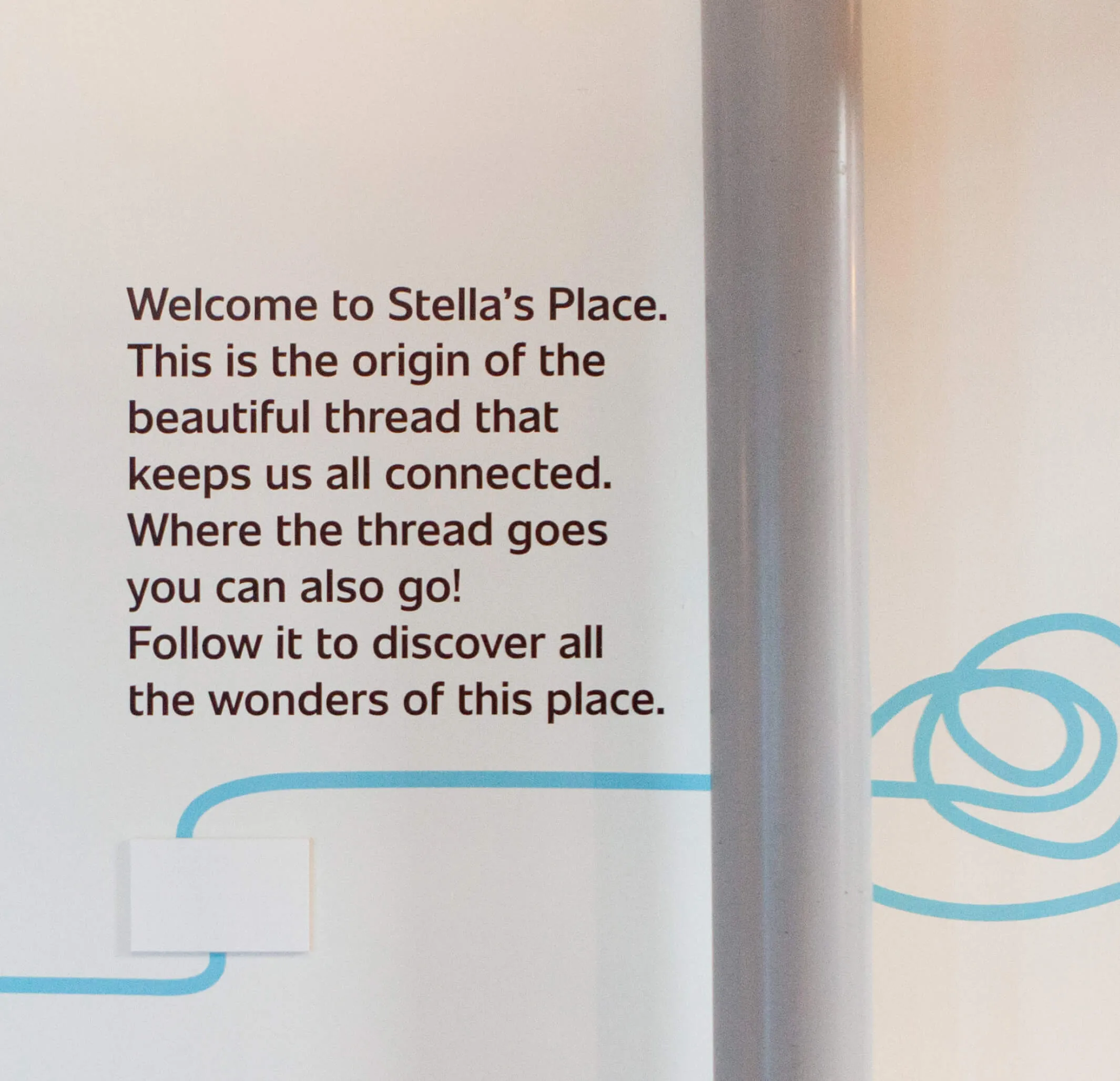
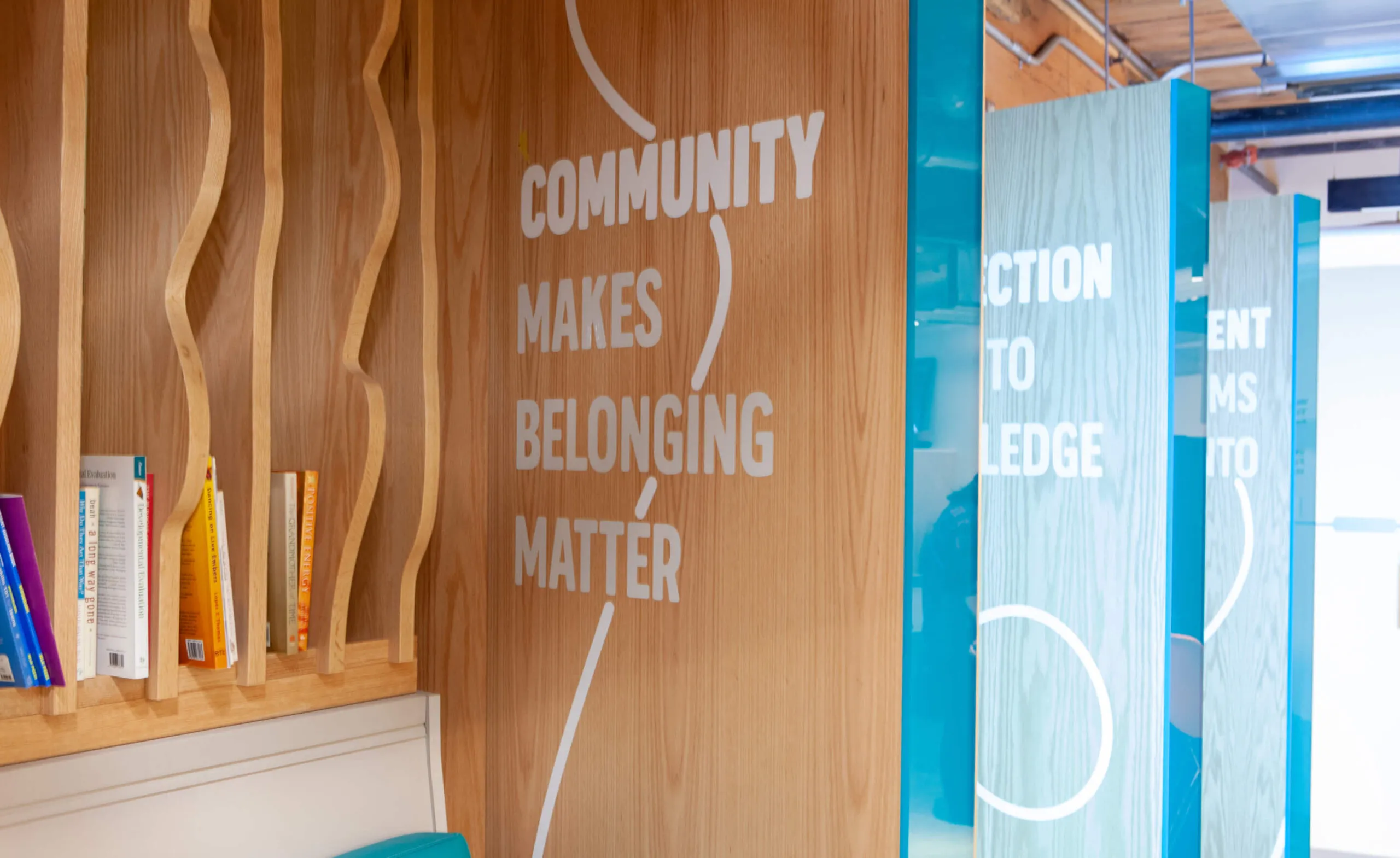
The interconnected concept of community is in all of the project elements, including a colourful thread graphic that weaves throughout the space, intuitively delineating areas that youth participants are welcome to utilize. Every detail of the signage keeps the safety of the participants in mind and features a high level of changeability to allow for future donor recognition of spaces.
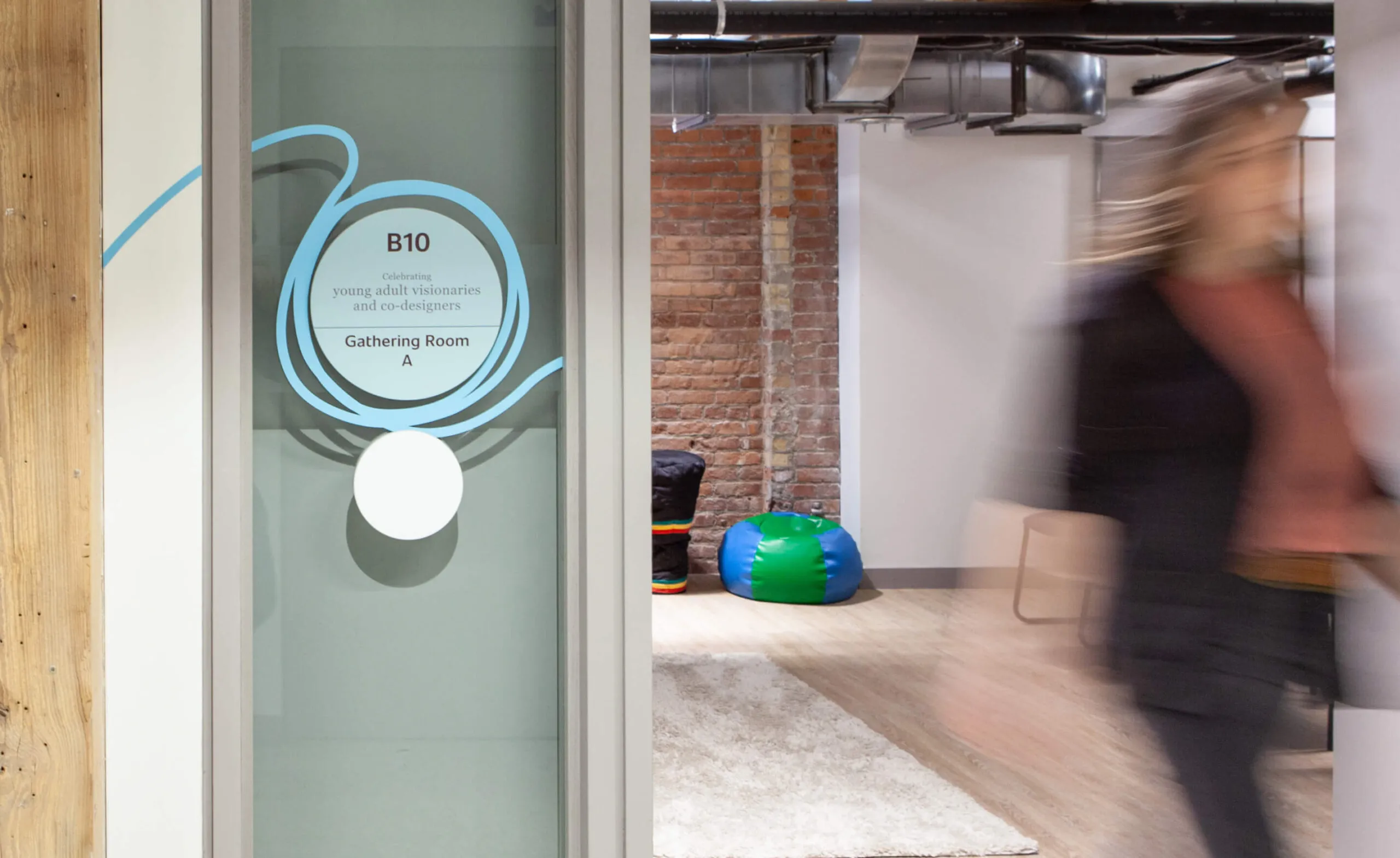
Room signage and donor recognition, with a person walking by.
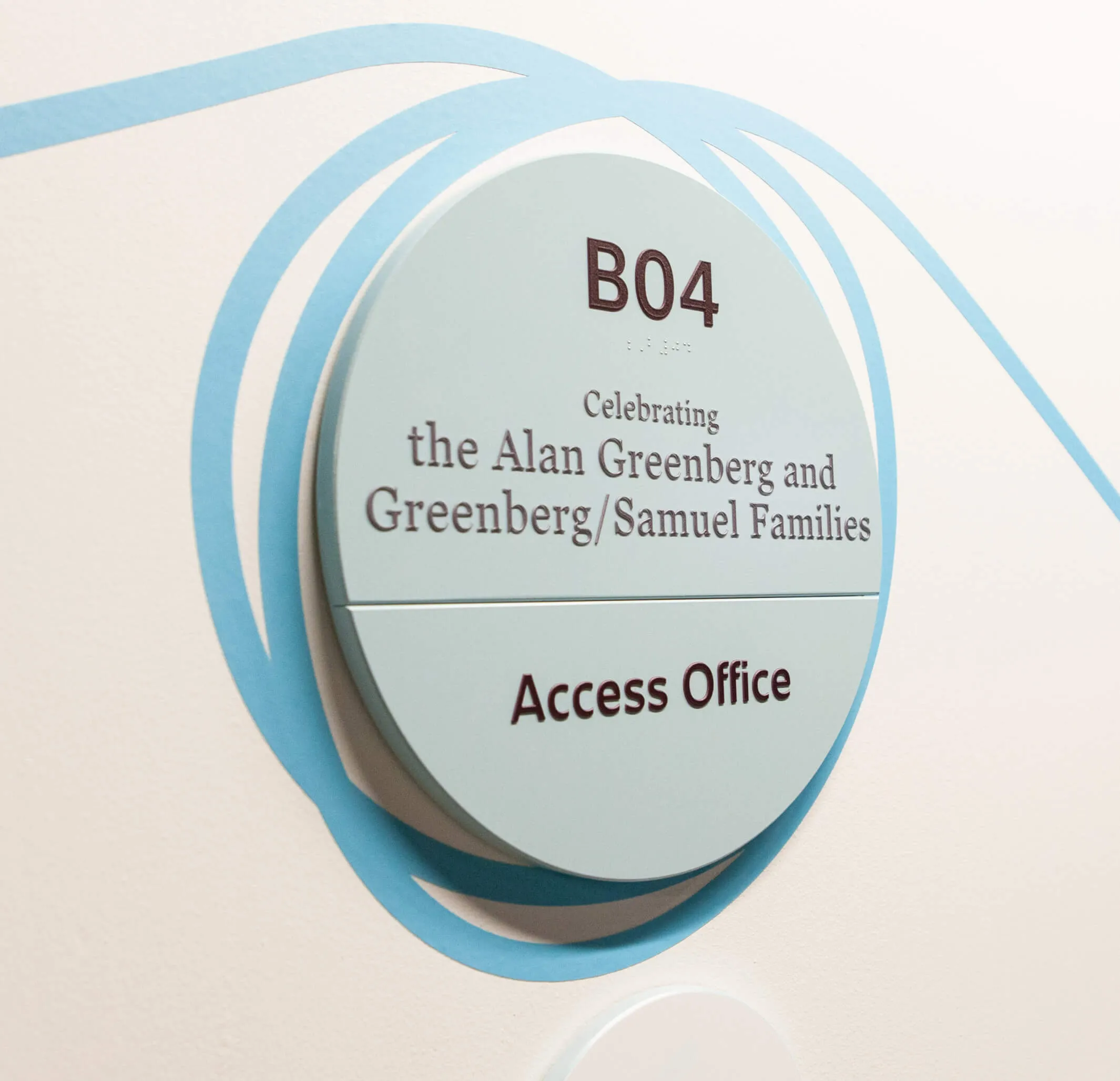
Integrated room sign and donor recognition
Close-up of messaging on an interior wall.
Close-up of donor recognition and room signage.
A connecting thread

Designing an accessible experience

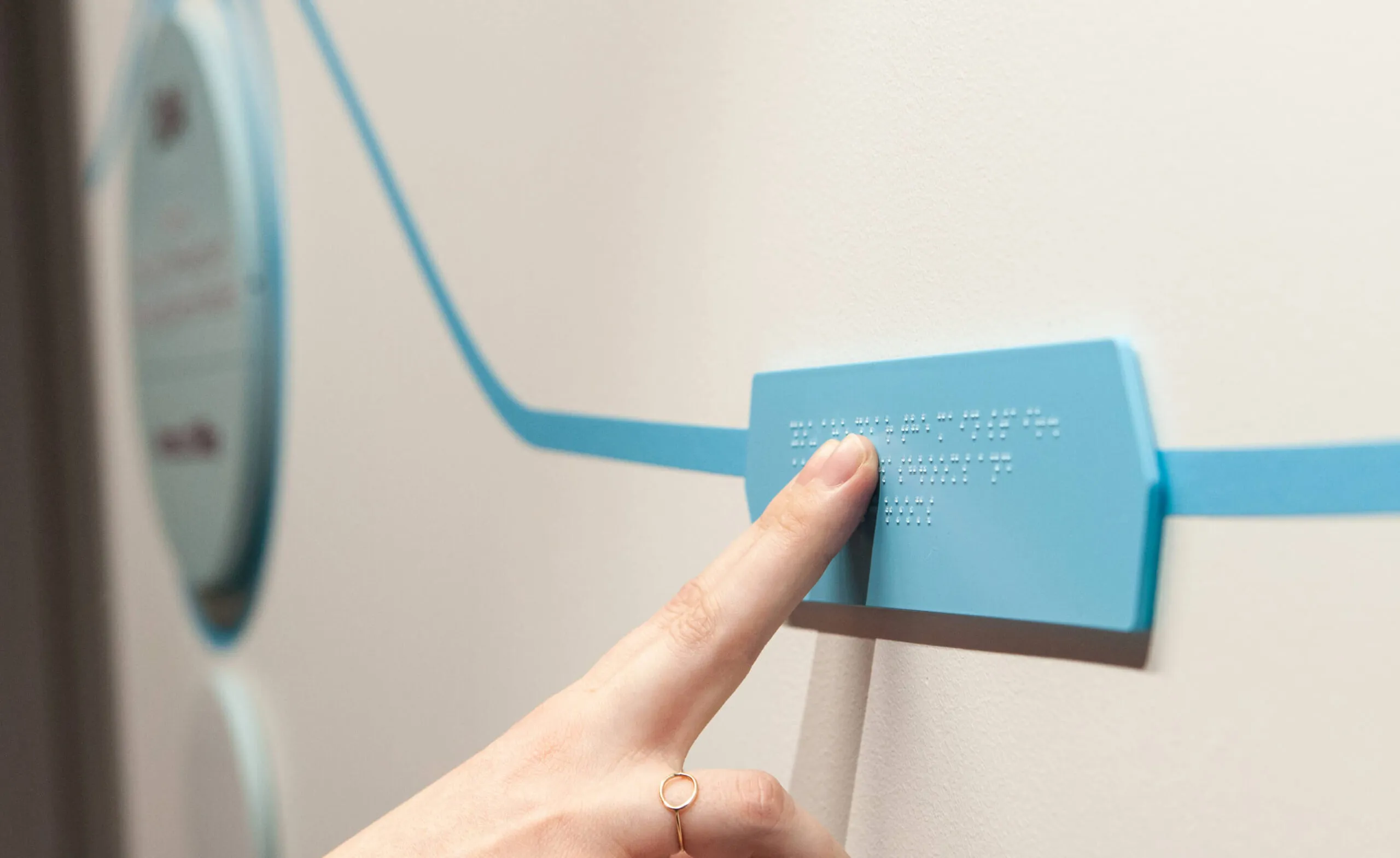
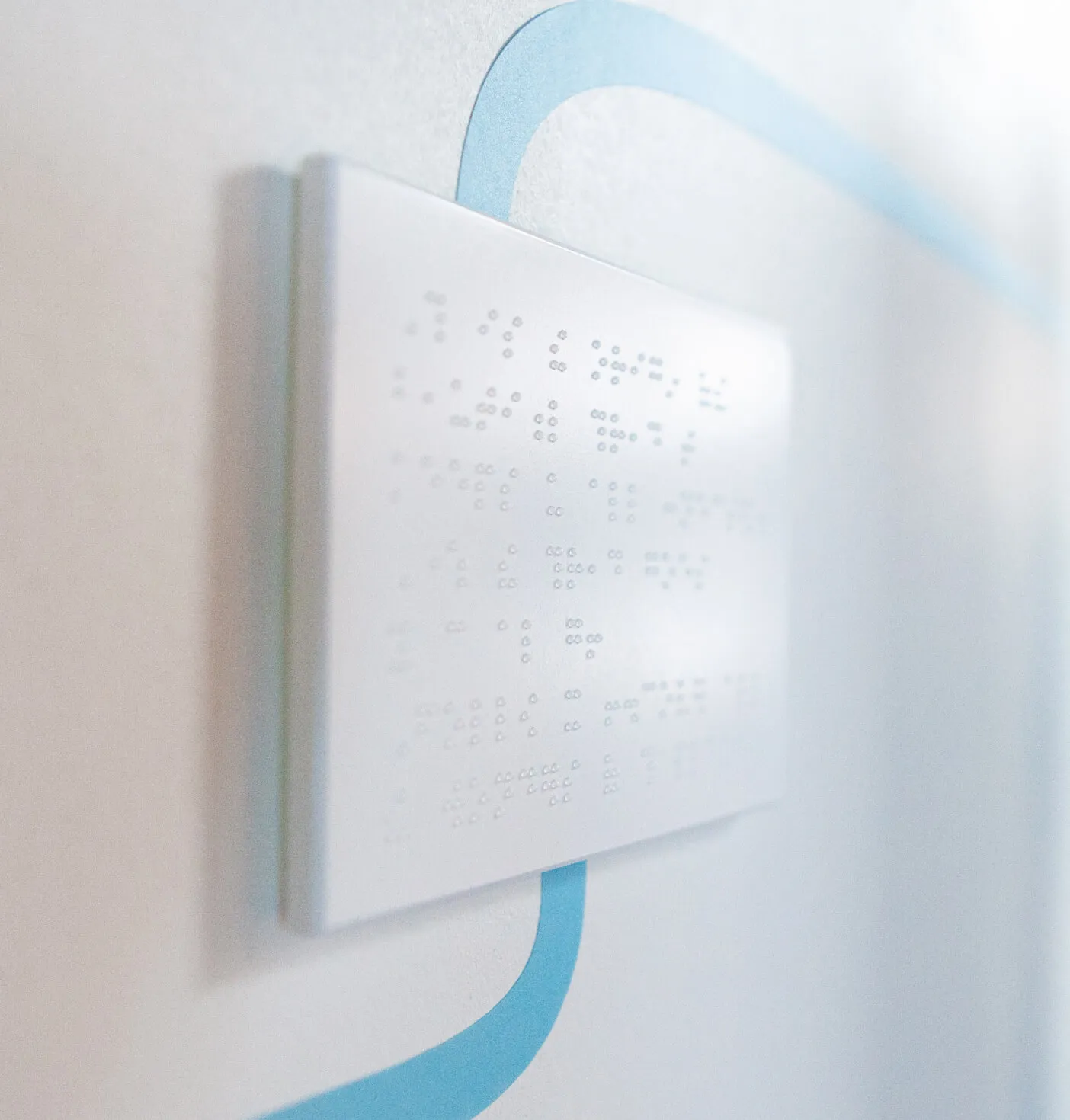
Also integrated into The thread is a tactile surface that distinguishes it from the wall. Braille directional pannels are strategically located at key decision points to help those with vision disability to orient themselves.

A person's hand touching a braille sign.
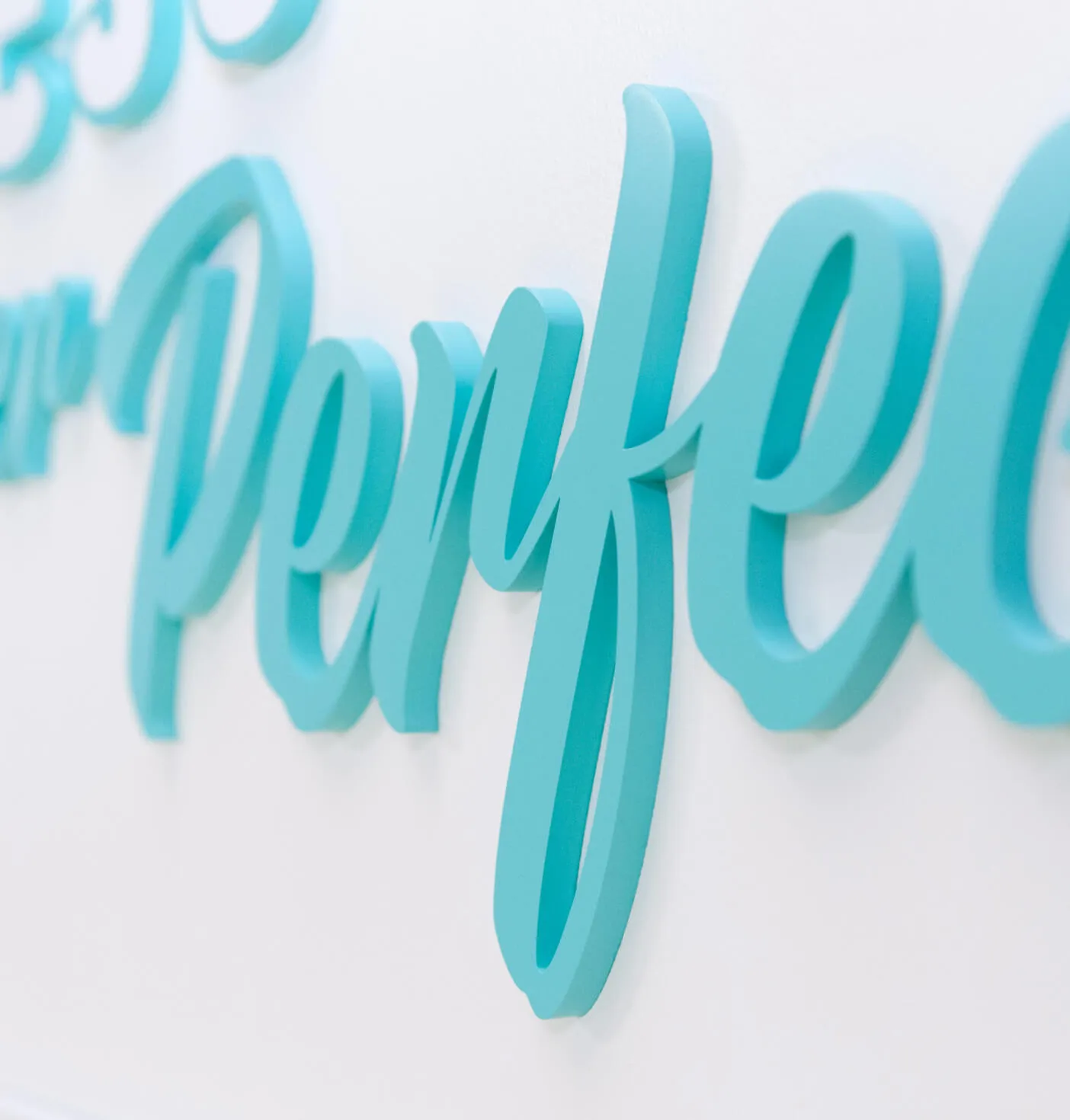
Close-up of raised signage letters.
Close-up of braille signage.
Close-up of raised signage letters.
Calming design cues

Thoughtfully showcasing personal stories through design

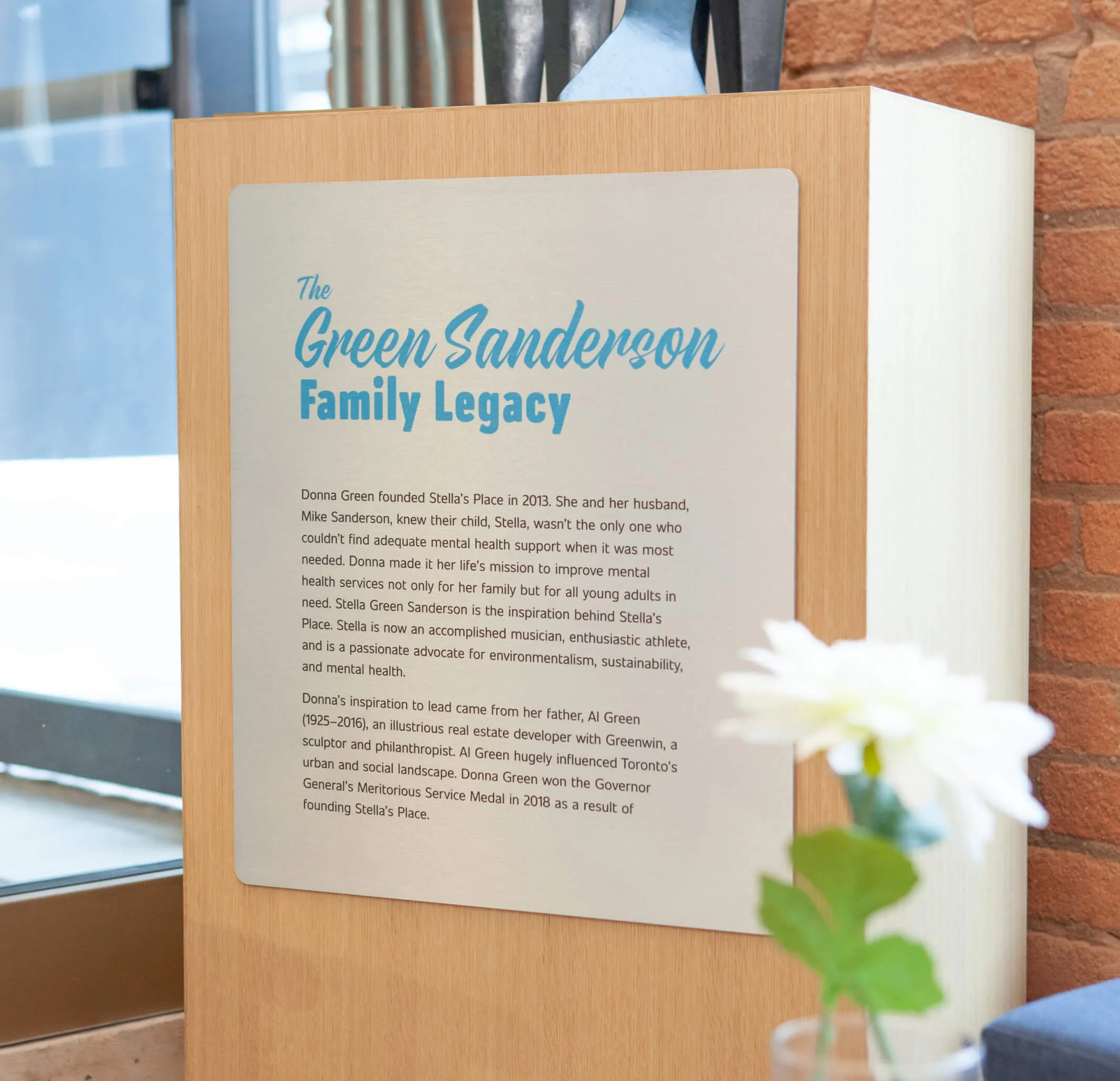
Forge worked closely with Stella’s Place to ensure everyone’s story was carefully told. Choosing where and how those moments were displayed was a collaborative effort between client, interior designers and Forge’s environments team.
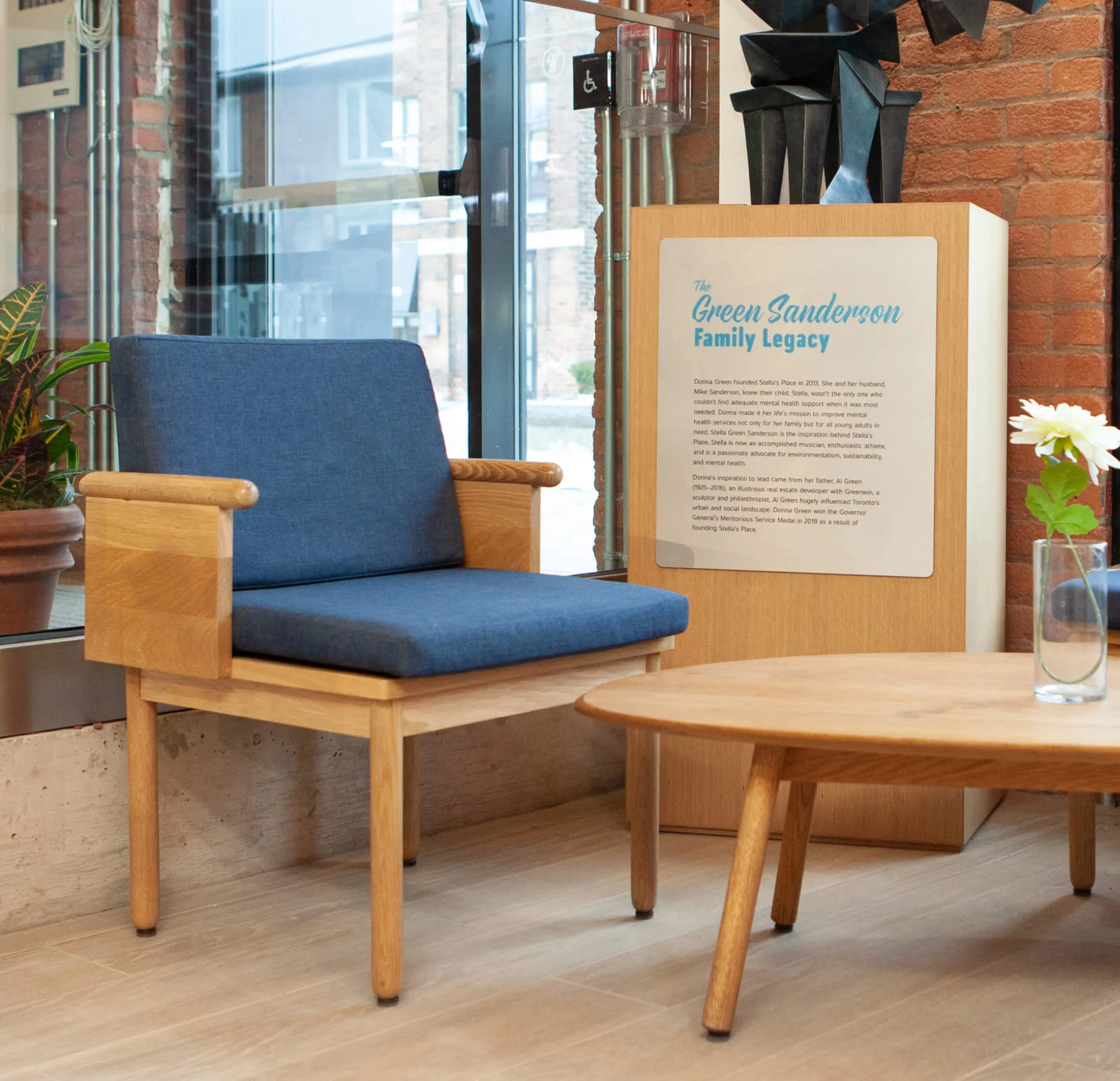
A chair and donor legacy sign.
Close-up of interior donor legacy sign.
Founder recognition plaque

Creating a place of their own

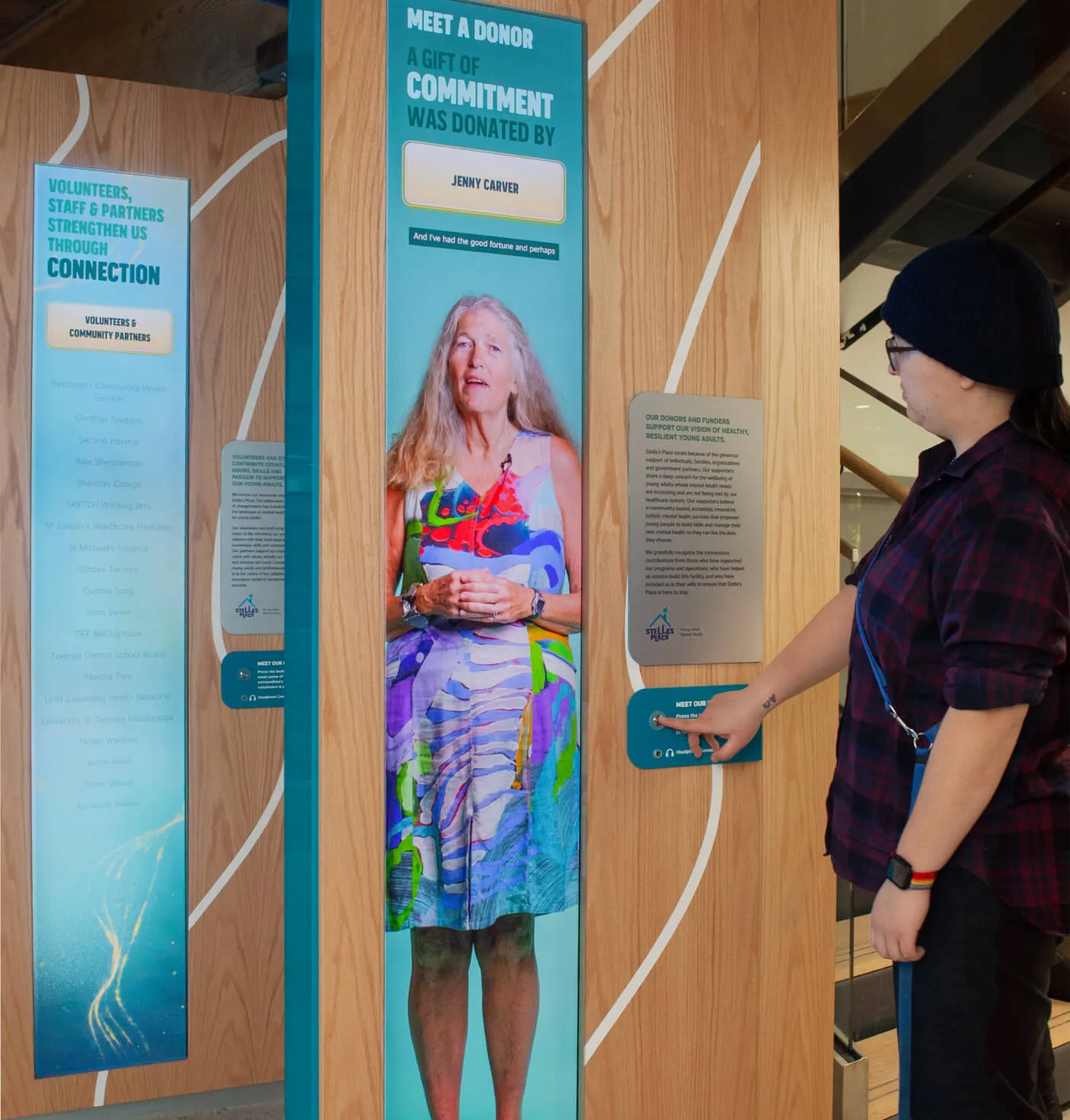
The digital donor wall was placed at the heart of the new building, highlighting the importance of the people that provide funding, service, and participation. At the push of a button, video testimonials of donors, participants, peers and staff capture the essence of ‘Why Stella’s Place matters’ and illustrates the strong sense of belonging shared by all who walk through its doors.

Backside of interactive donor recognition panels.
A person interacting with the donor touch screen.
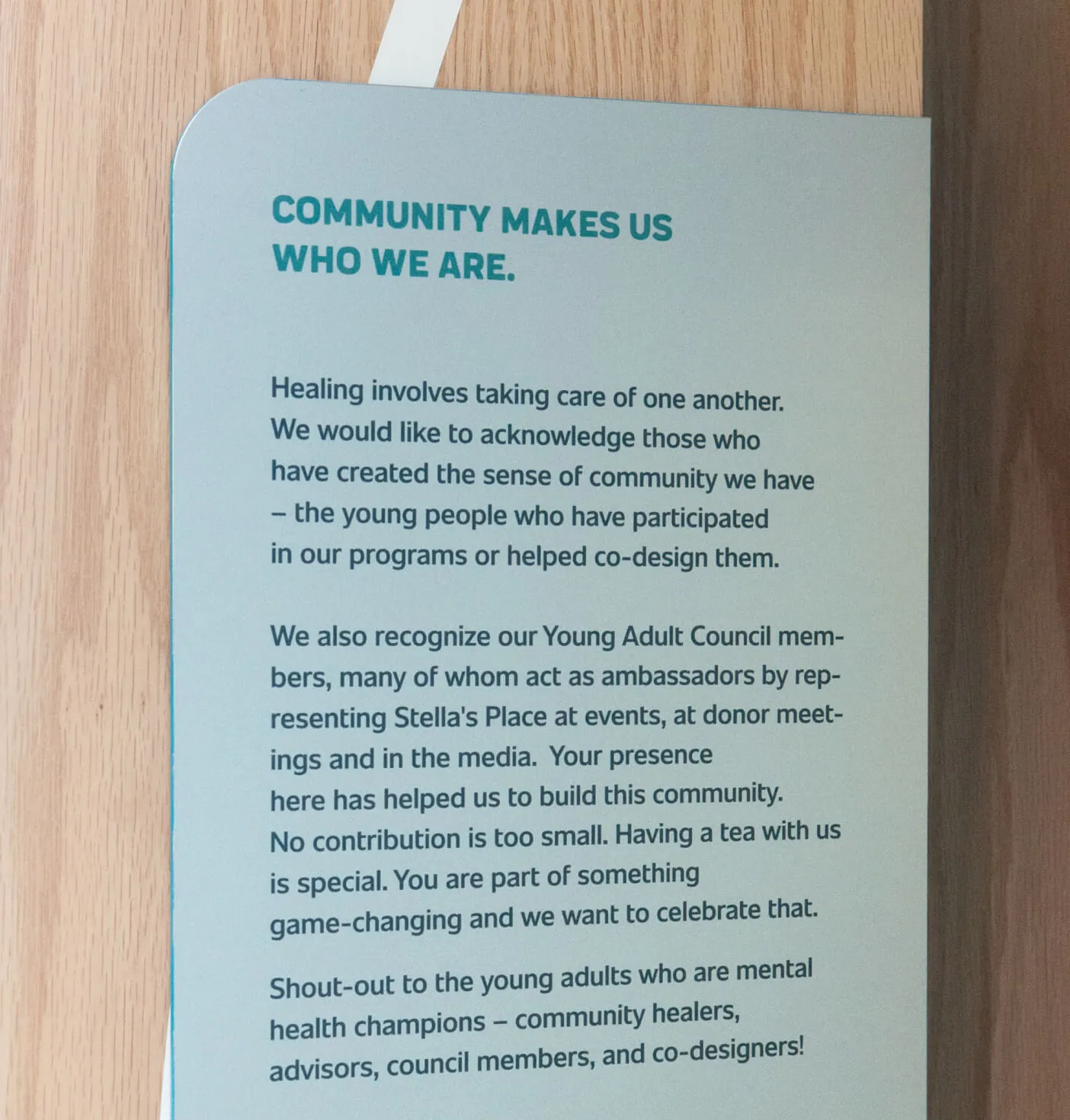
A close-up of a sign describing the community at Stella's Place.
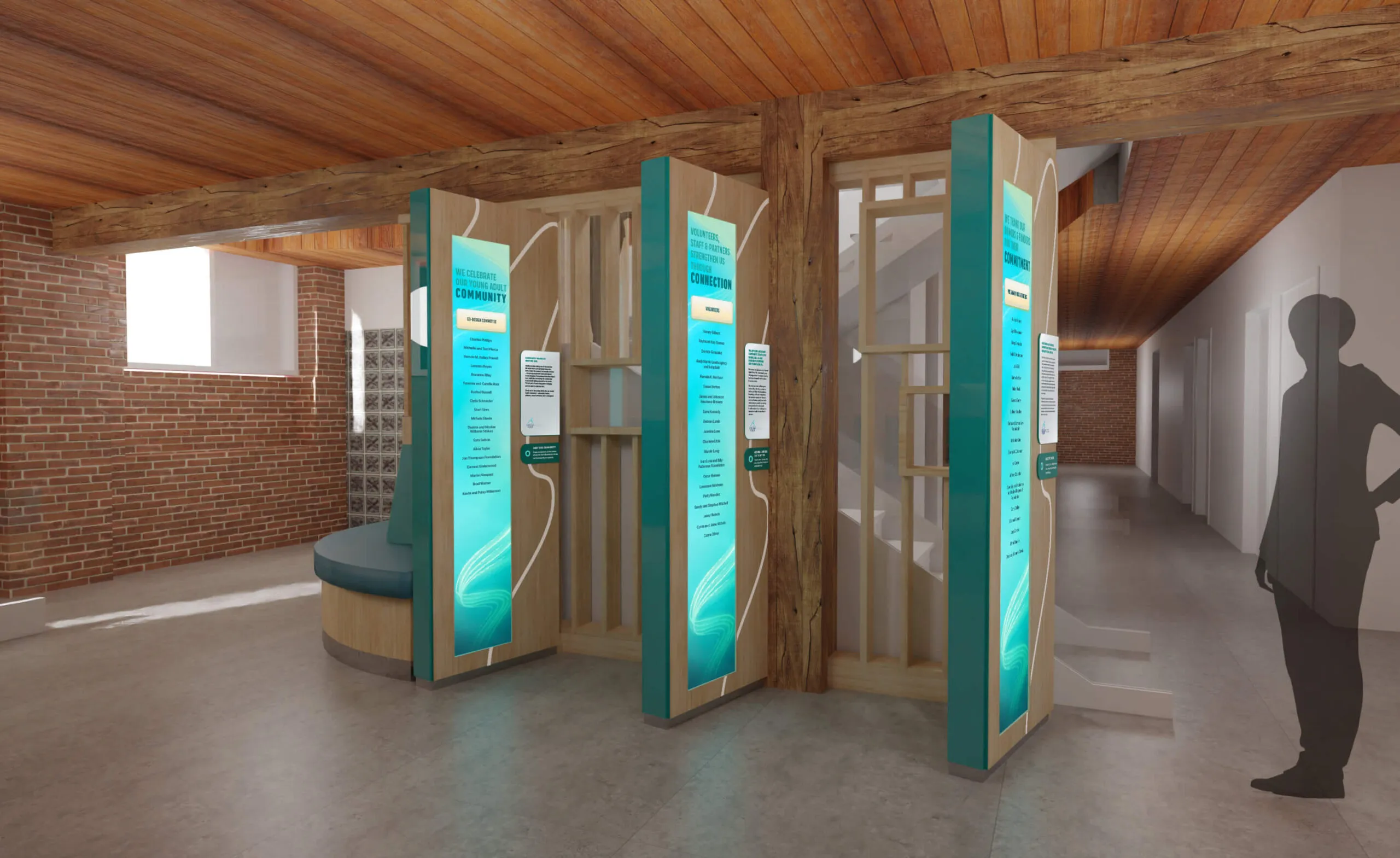
A rendering of the donor wall concept.
  • 12K sq. ft. community space
  • 300+ 1-on-1 counselling sessions in 2022
  • 80% group session retention rate in 2022
Featured
"Forge Media + Design were a pleasure to work with. This project exceeded my expectations of what is possible with donor recognition and placemaking and I’m so proud of the result. I am especially grateful for the process they used to co-design this project with our program participants, staff and Board members. They really listened to our input and our voice is apparent throughout the space. Forge was responsive, engaged and professional for the whole of the process."
Catherine Dyer, Director of Development
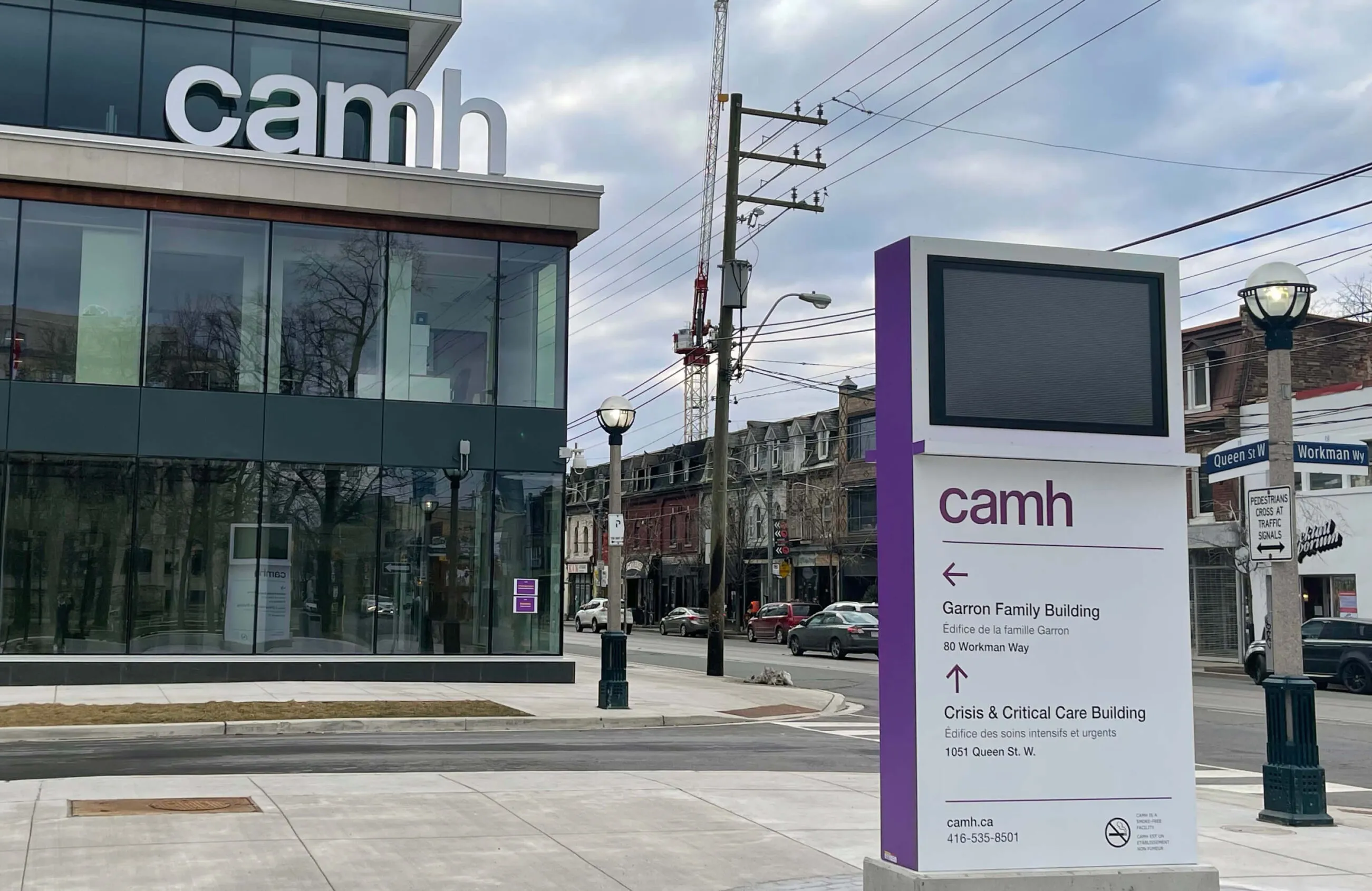
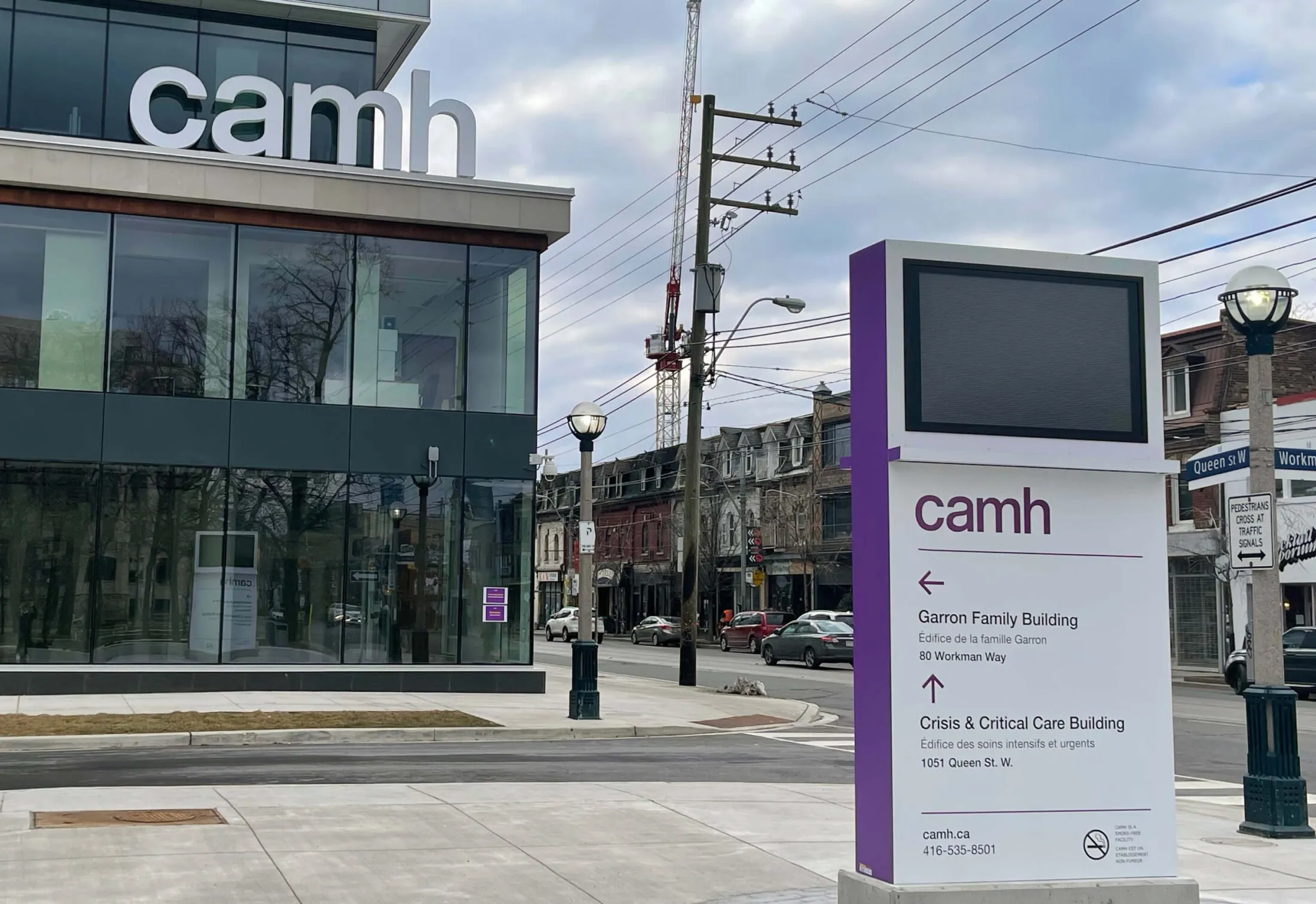
CAMH building with directional signage for Garron Family Building and Crisis & Critical Care Building. CAMH building directory sign with directions to Garron Family Building and Crisis & Critical Care Building.

CAMH

Toronto, ON
Services Deliverables
  • Signage
  • Wayfinding
  • Placemaking
  • Masterplan
  • Donor Recognition
  • Illustration

Moving people through a holistic wayfinding approach

The Centre for Addiction and Mental Health (CAMH) is Canada’s largest mental health teaching hospital. CAMH drives innovative research, provides expert training to healthcare professionals, and advocates for social change. Working alongside Stantec and Acumen Visual Group, we developed a holistic wayfinding approach at CAMH’s Queen Street site to fully integrate two new CAMH campus buildings – Building B1 (McCain Complex Care & Recovery Building) and Building D1 (Crisis & Critical Care Building).

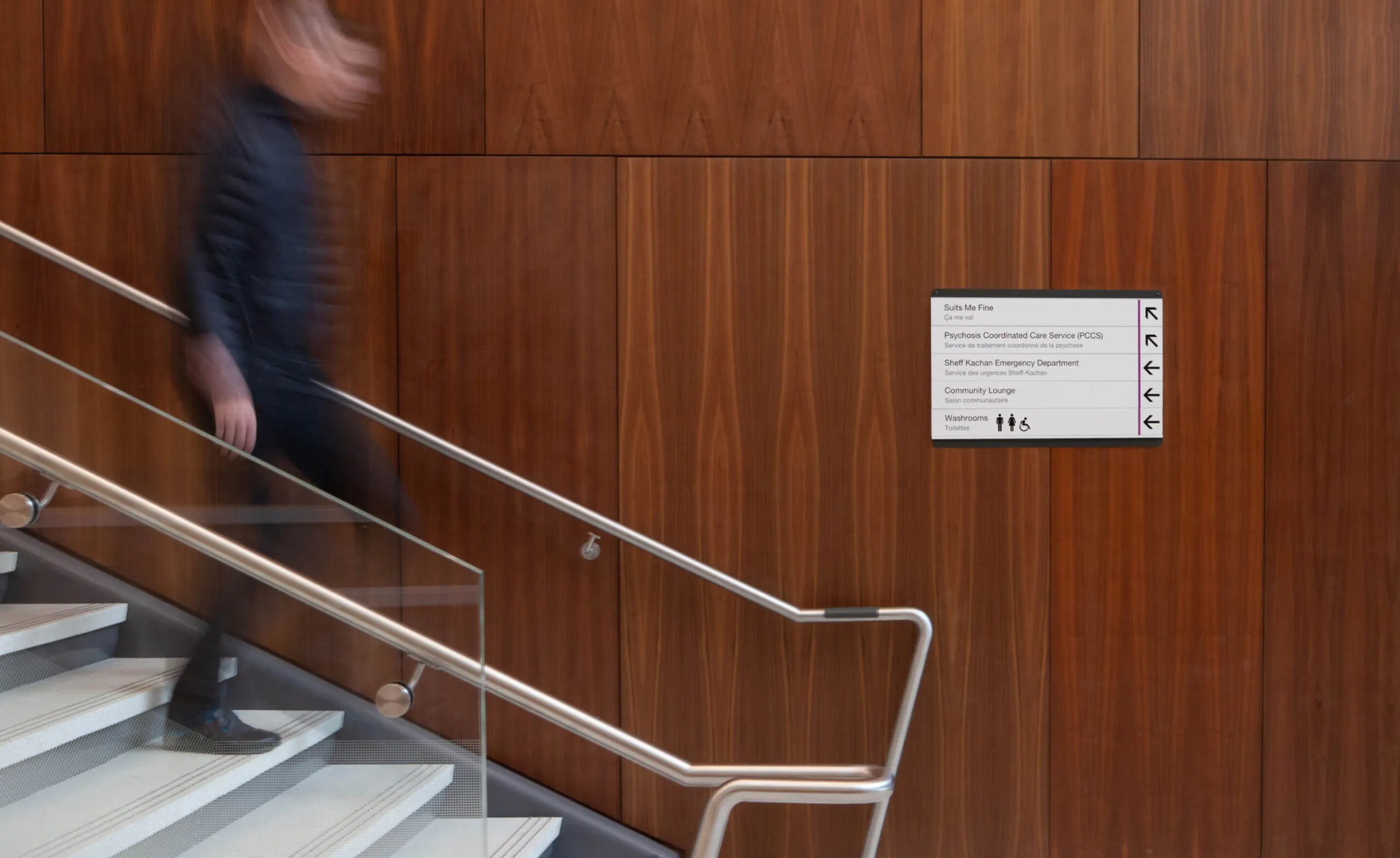
Person walking down stairs next to a directory sign at CAMH.
Clear and simple direction

Creating a welcoming sense of belonging

The wayfinding program uses critical campus points to help patients, workers and visitors reach their intended destinations safely and with clarity throughout the day. Signage recognizing the generous donors and their contributions is celebrated proudly in the newly built Crisis & Critical Care and McCain Complex Care & Recovery buildings.⁠

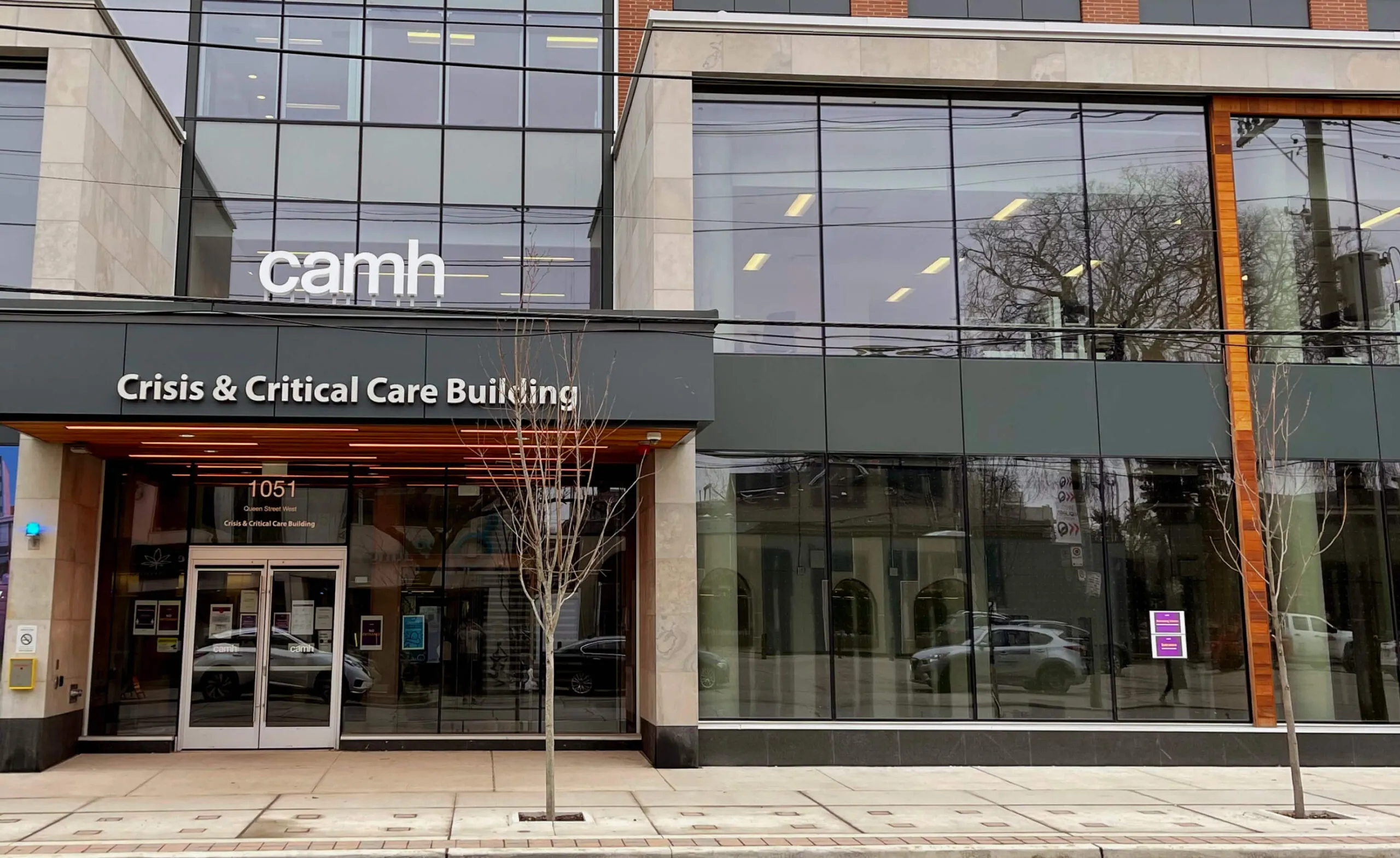
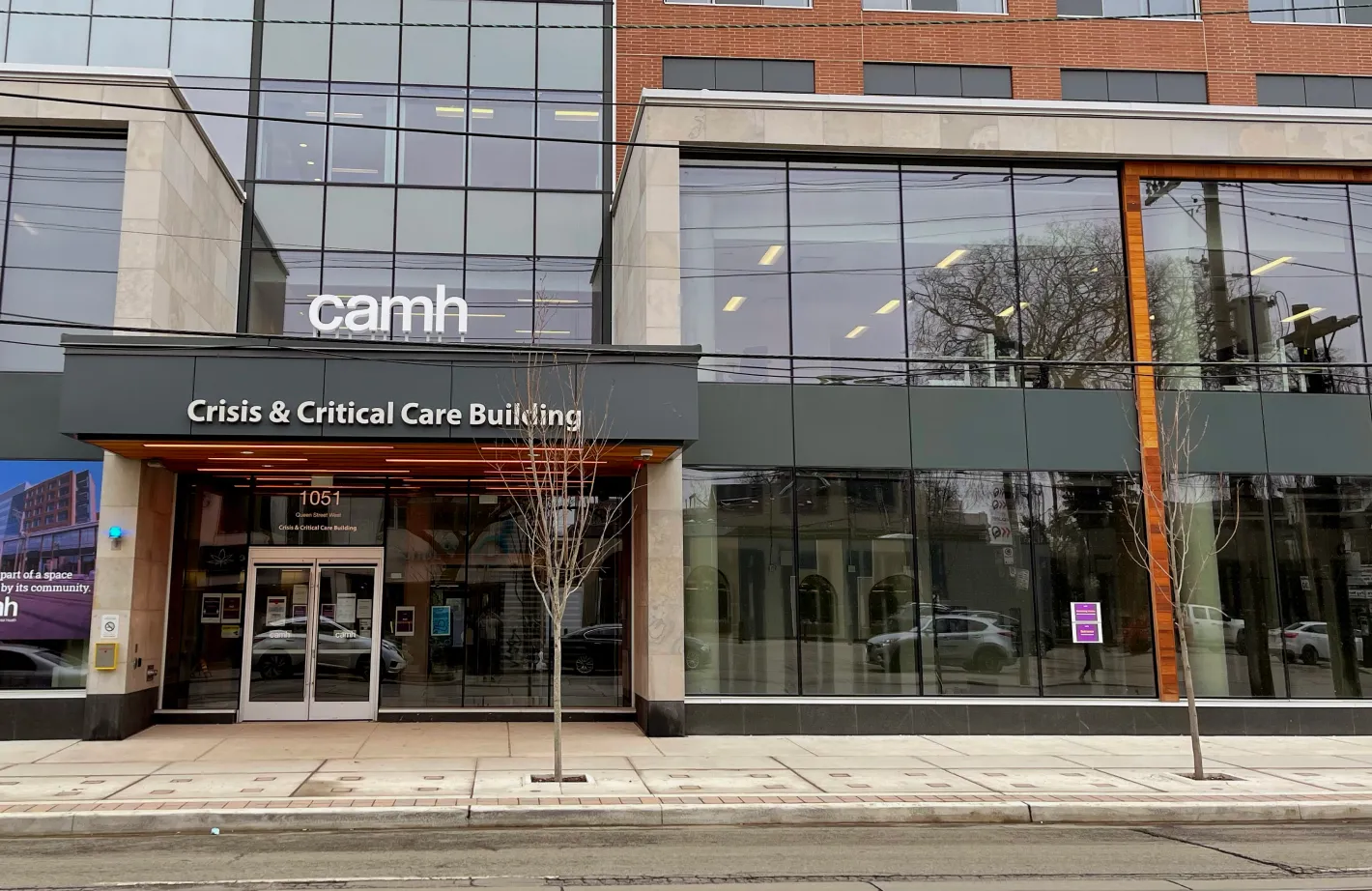
CAMH Crisis & Critical Care Building entrance with glass facade and signage.
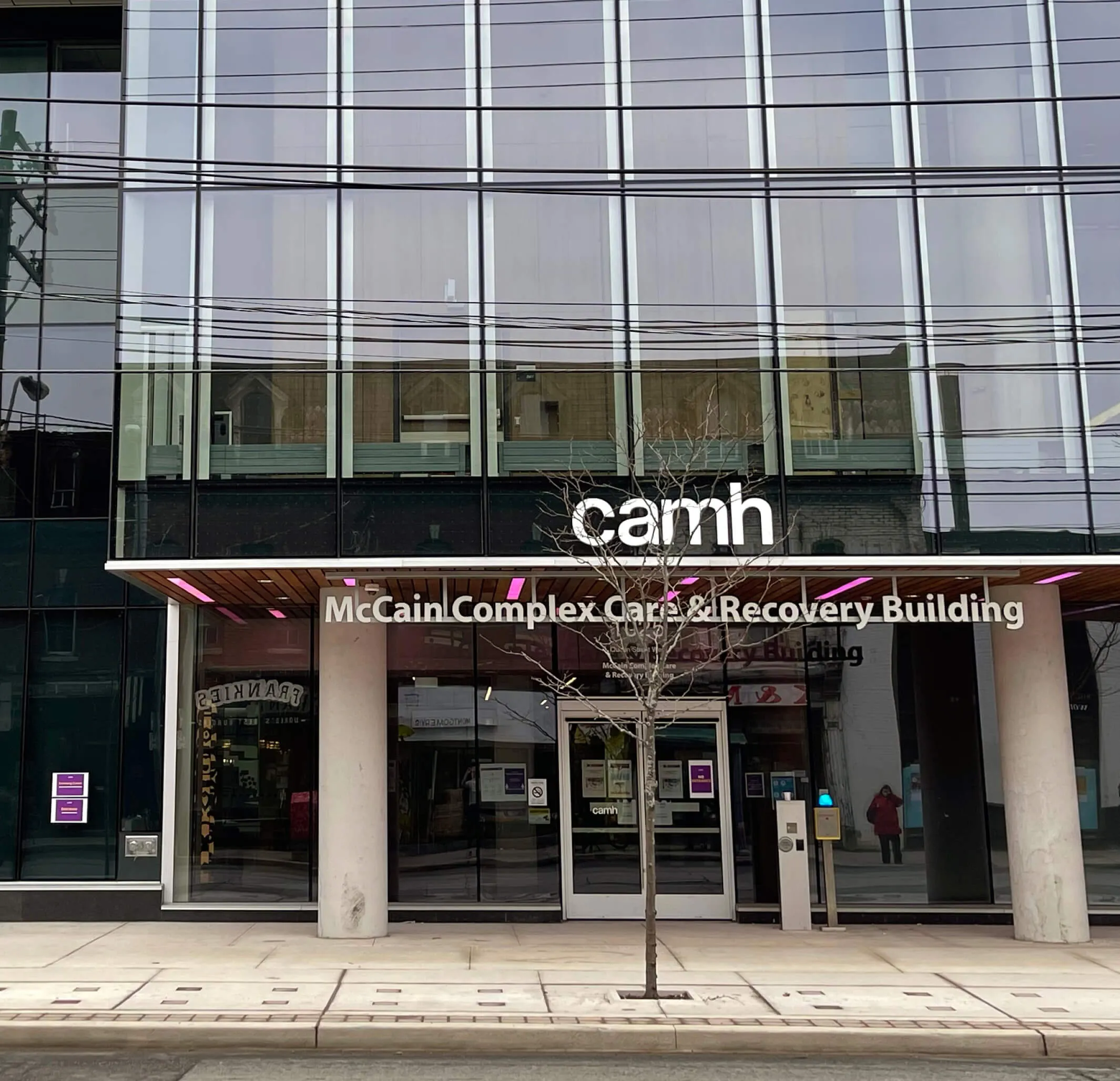
A new beginning for community care
CAMH McCain Complex Care & Recovery Building entrance with a bare tree in front.
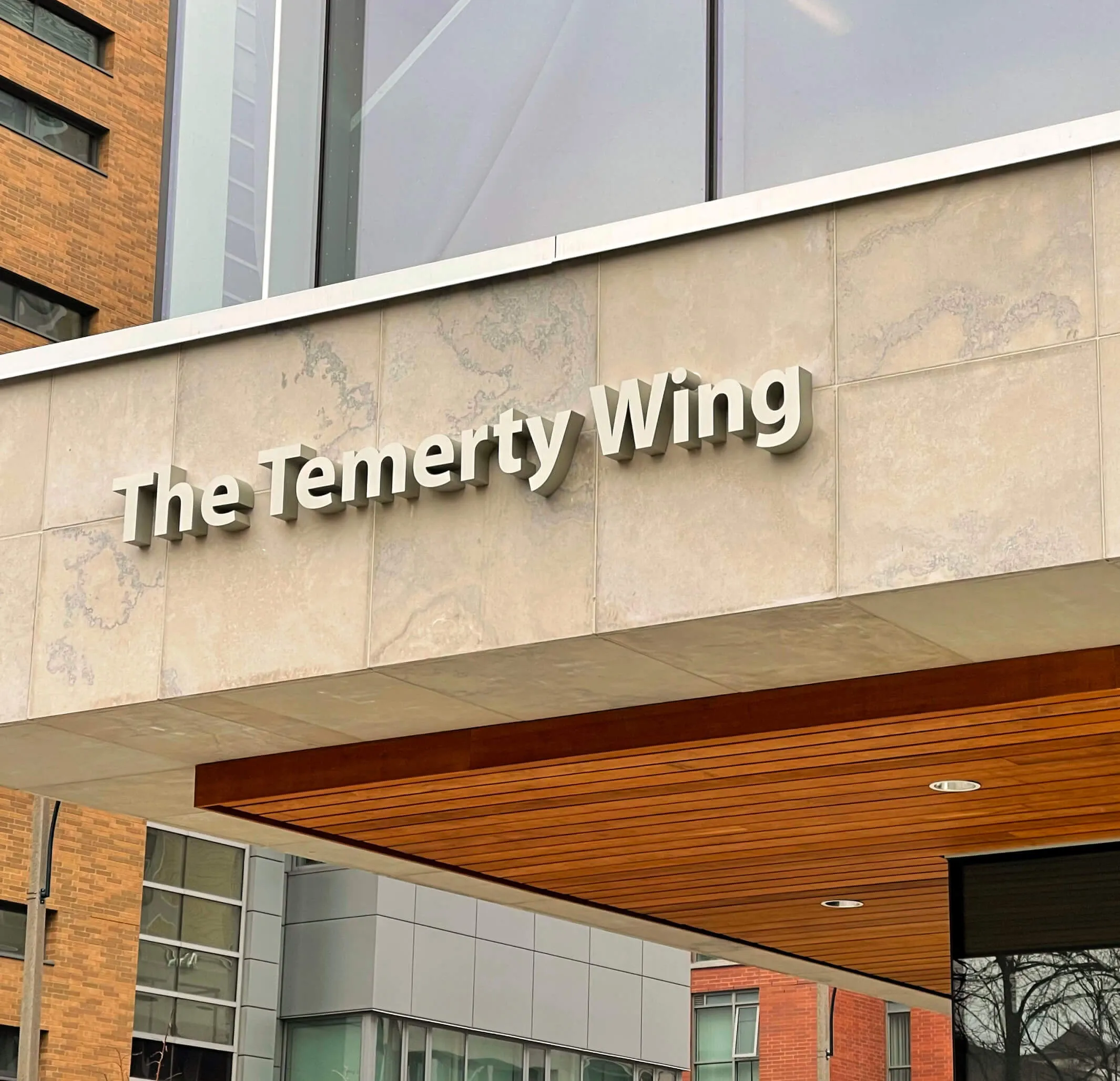
The Temerty Wing building sign.
Contribution as identity
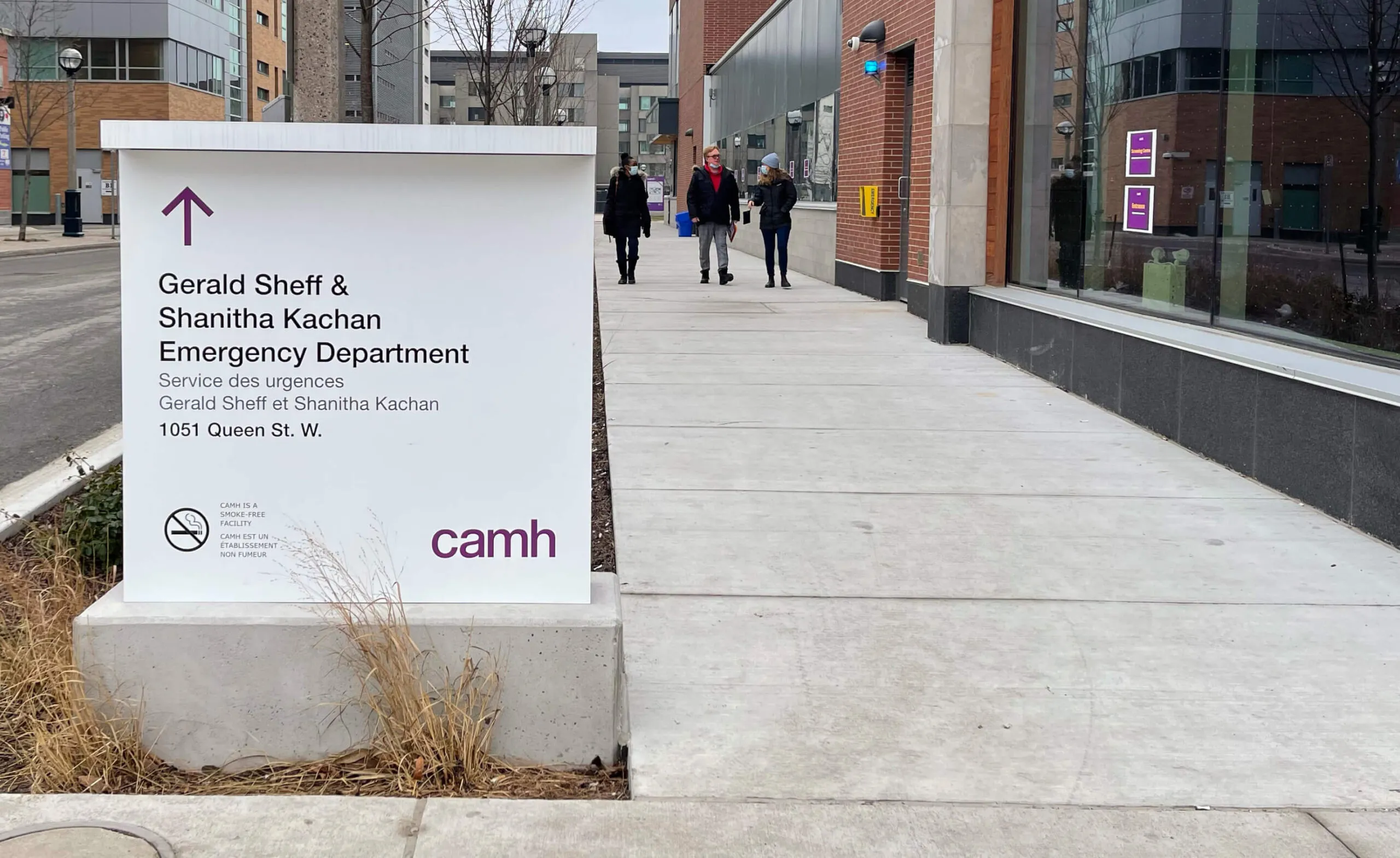
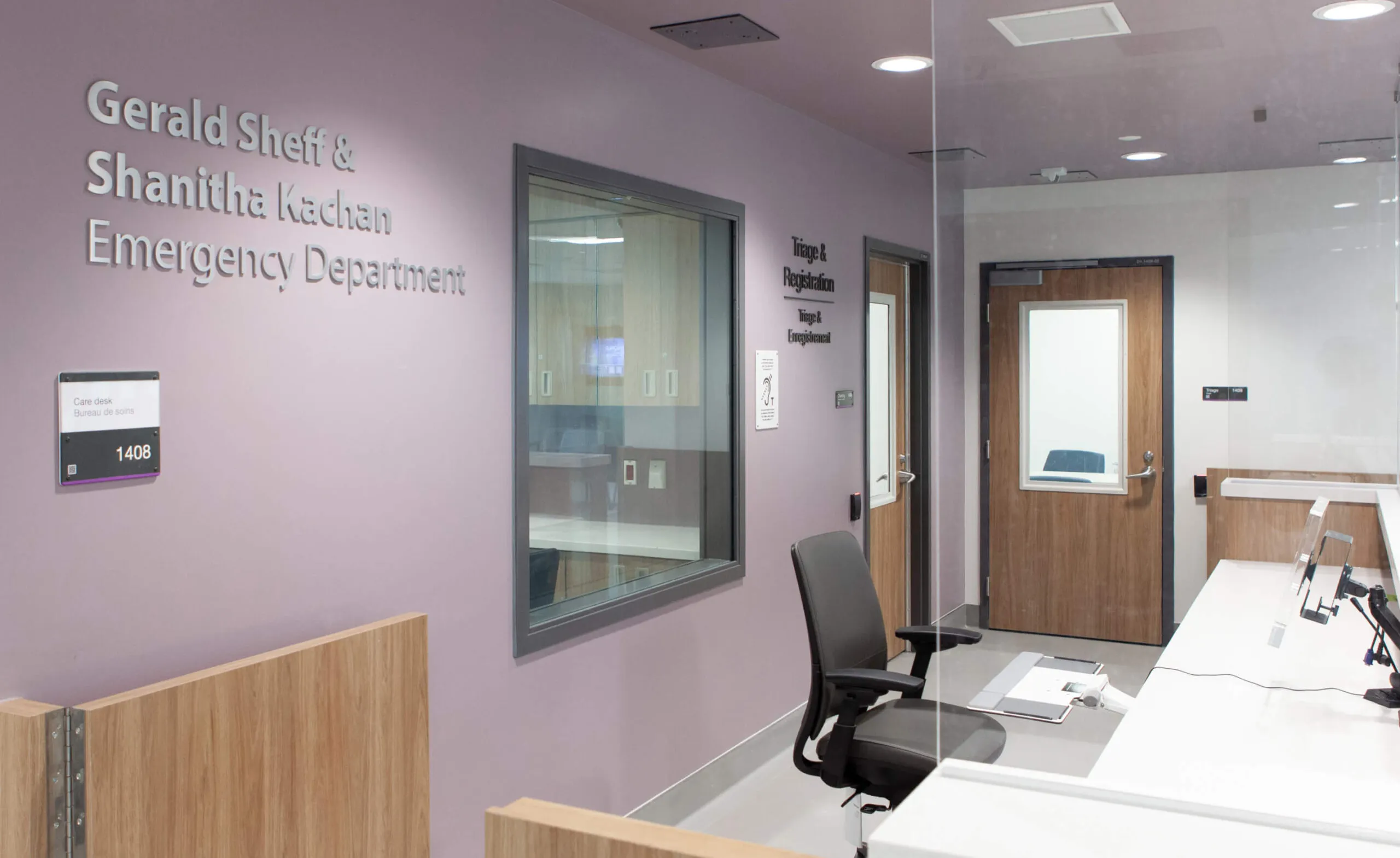
CAMH sign for Gerald Sheff & Shanitha Kachan Emergency Department.
Campus navigation
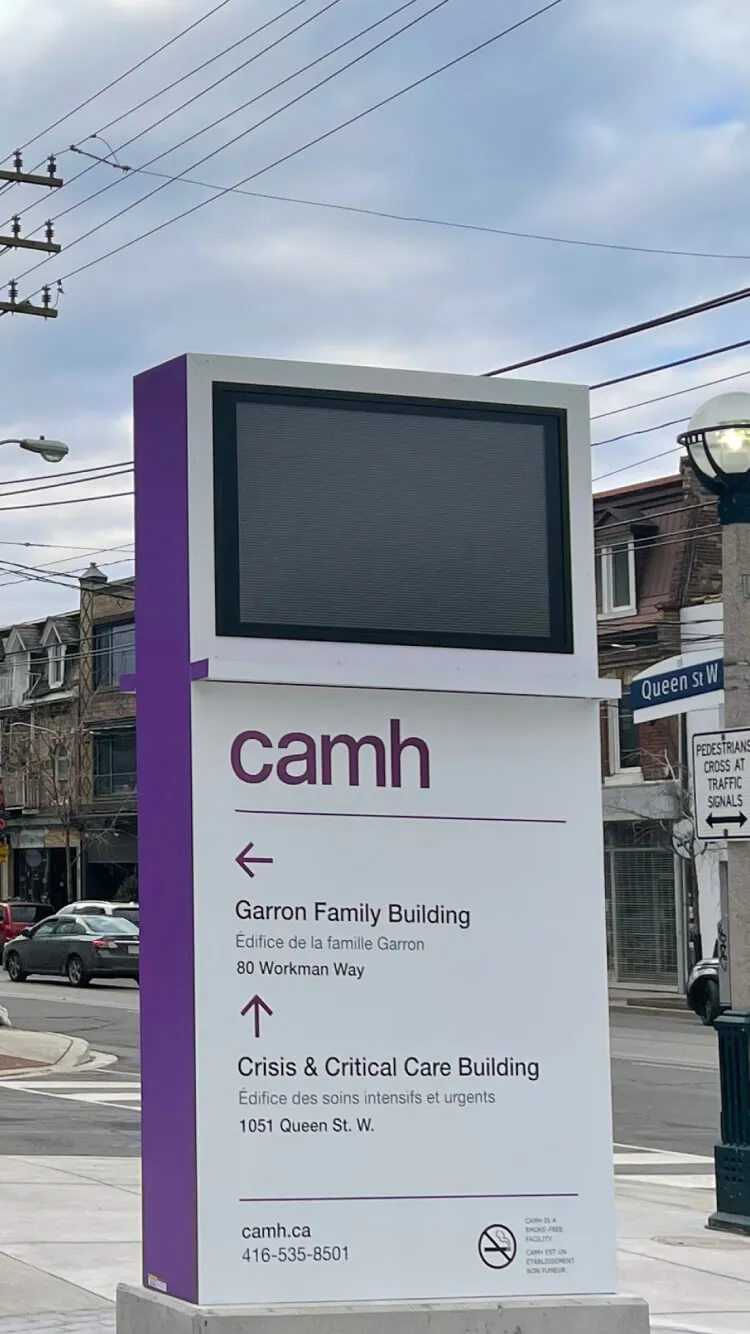
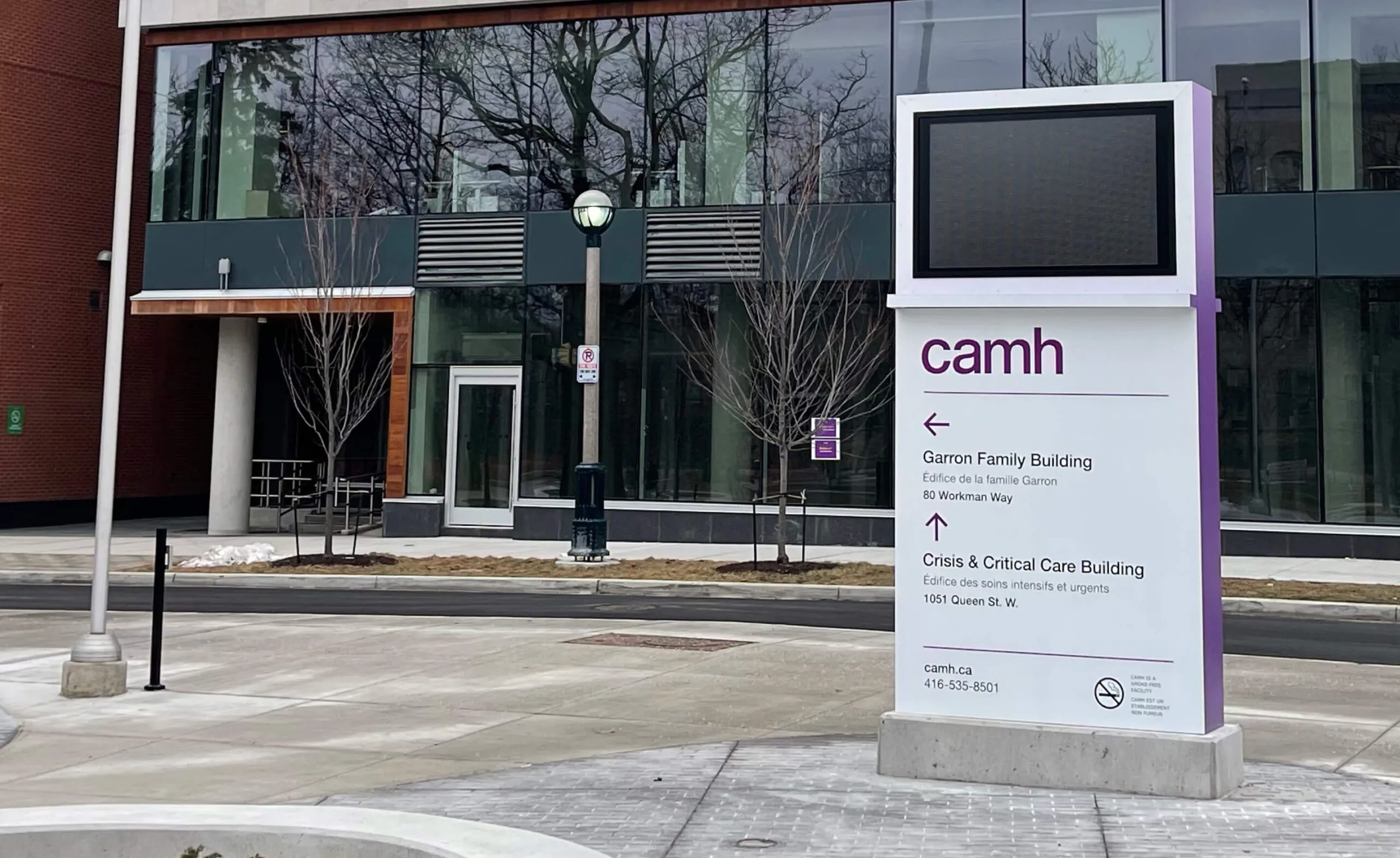
CAMH sign with directions to Garron Family Building and Crisis & Critical Care Building.
Expressing subtle brand cues with wayfinding

Improving the movement and flow of people in the space

The interior signage program for the new CAMH campus buildings improves the flow and movement of people throughout the space, as patients, visitors and staff have the tools they require to self-navigate the buildings. The signage welcomes the community and encourages people to utilize the building’s many resources.

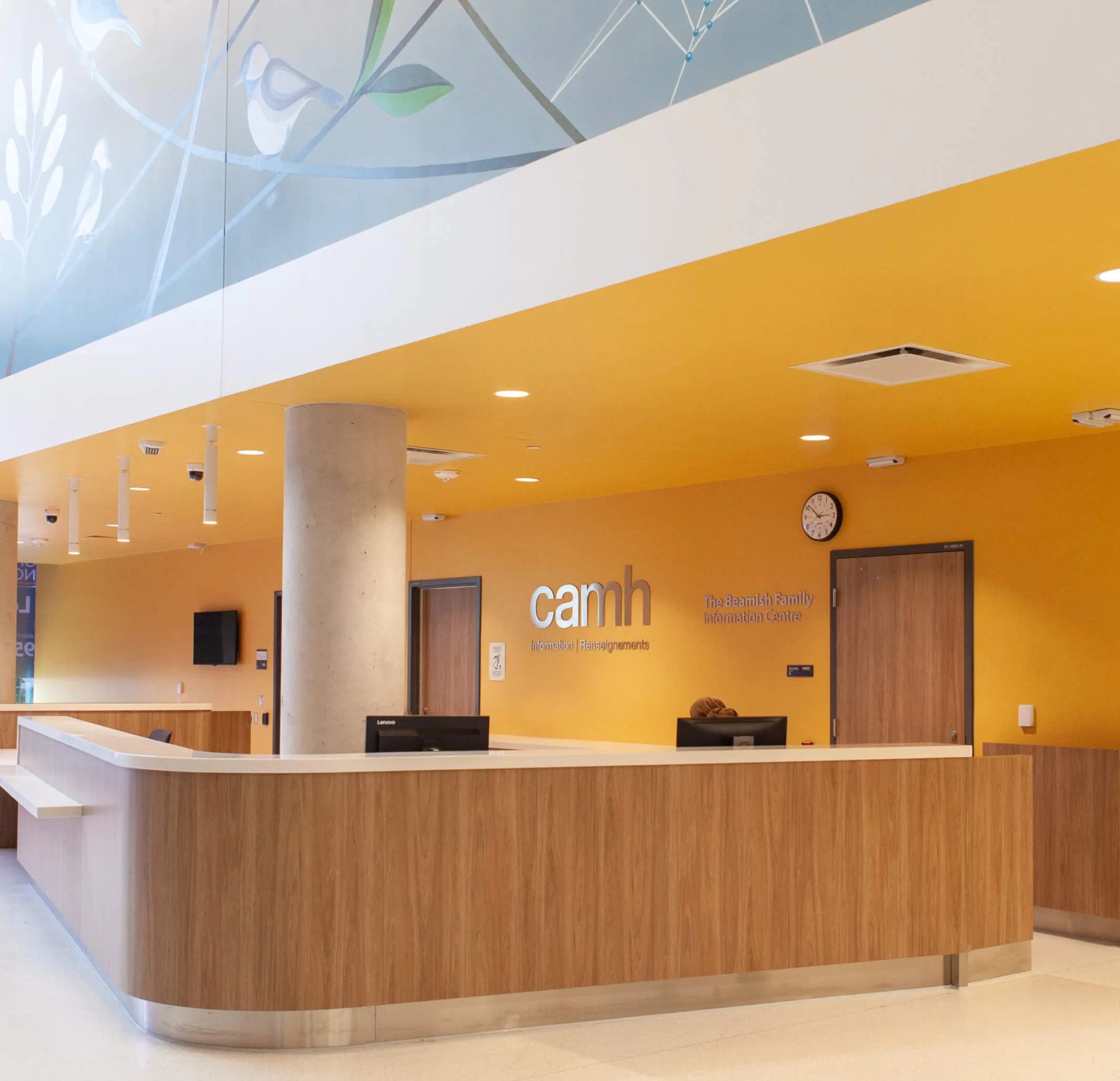
Modern reception desk with CAMH logo and artwork in a bright, yellow-walled building.
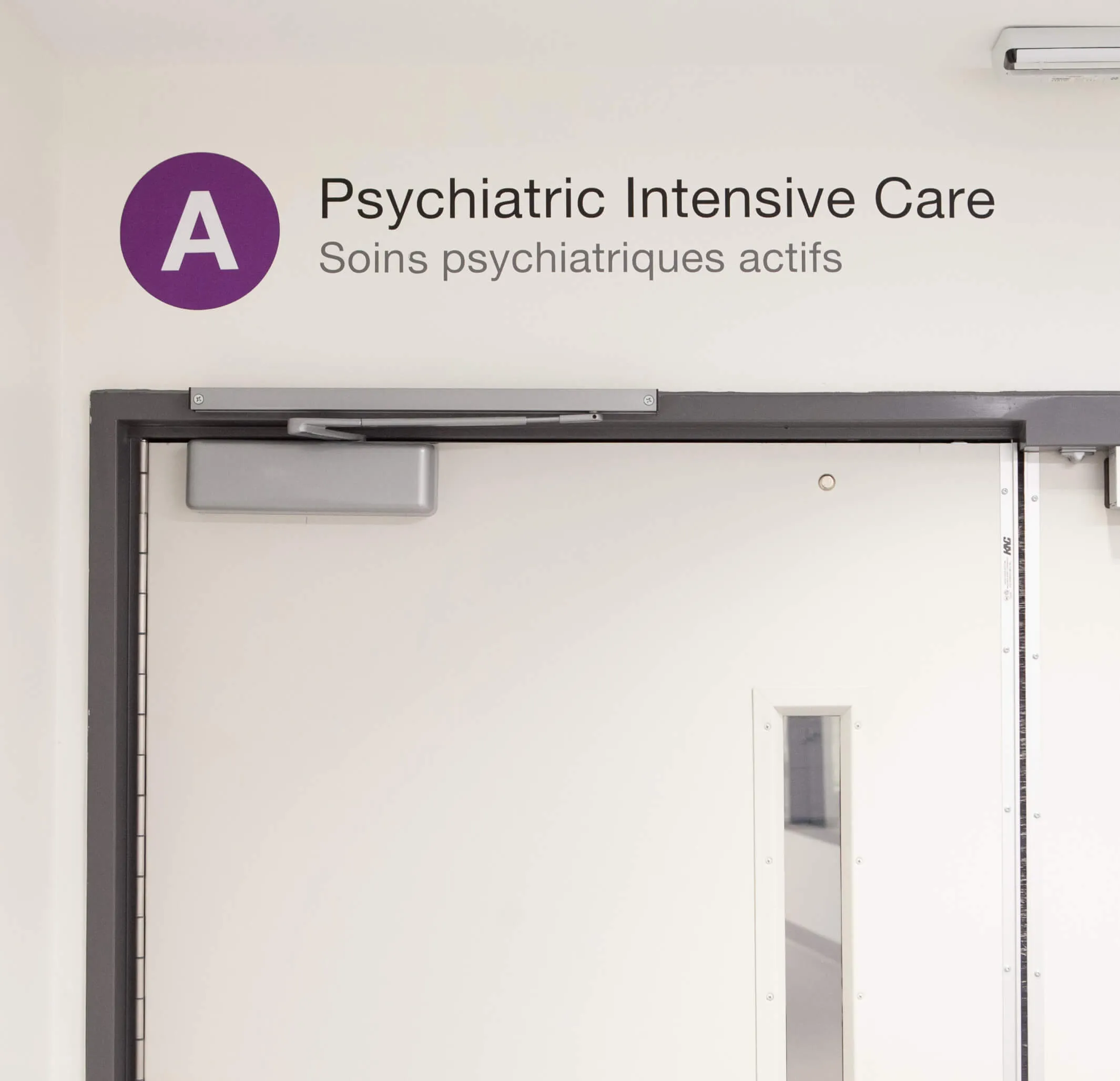
Sign for Psychiatric Intensive Care Unit A, with French translation.
Place and colour help inform wayfinding
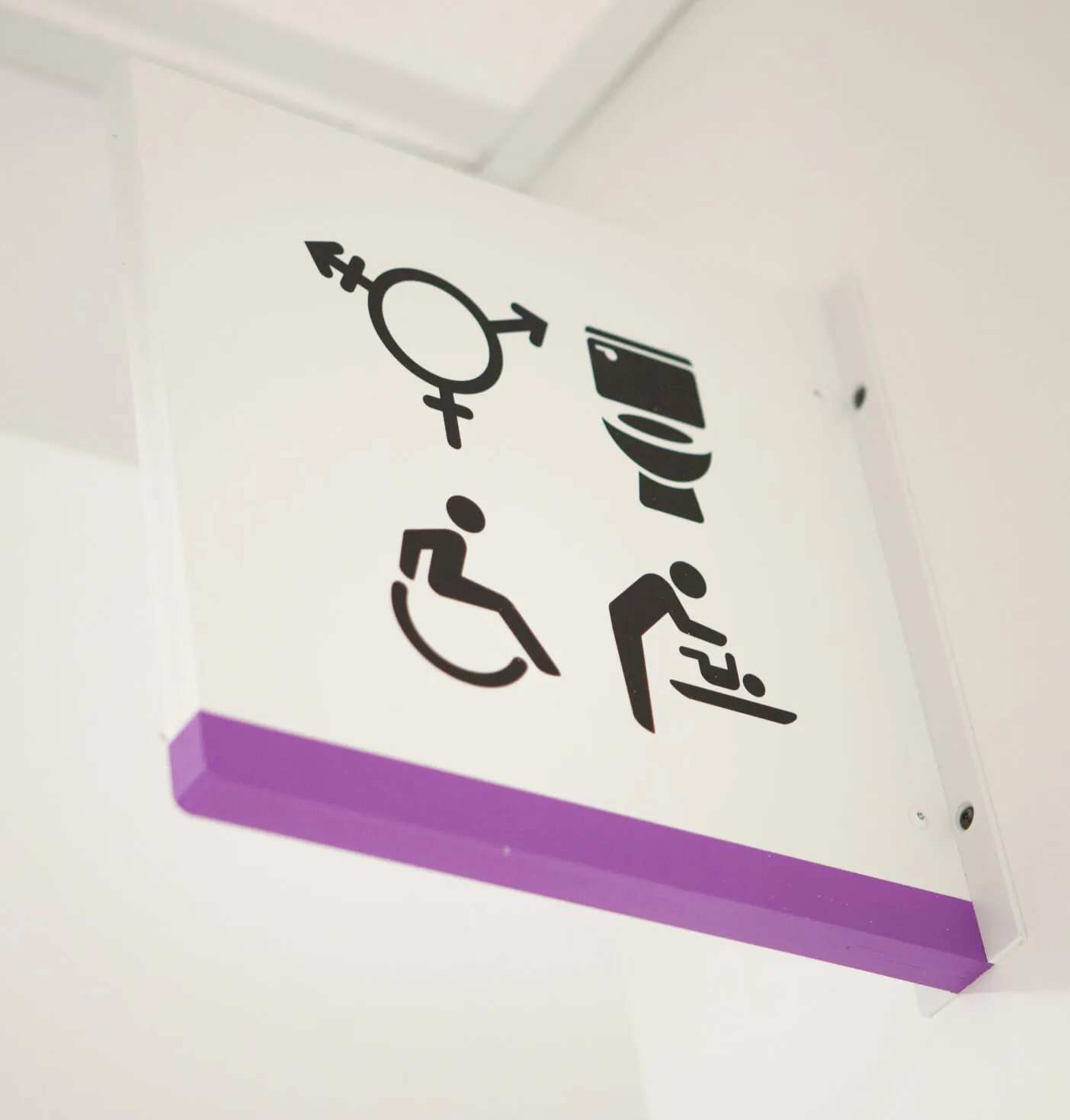
Restroom sign with symbols for transgender, toilet, wheelchair, and changing table.
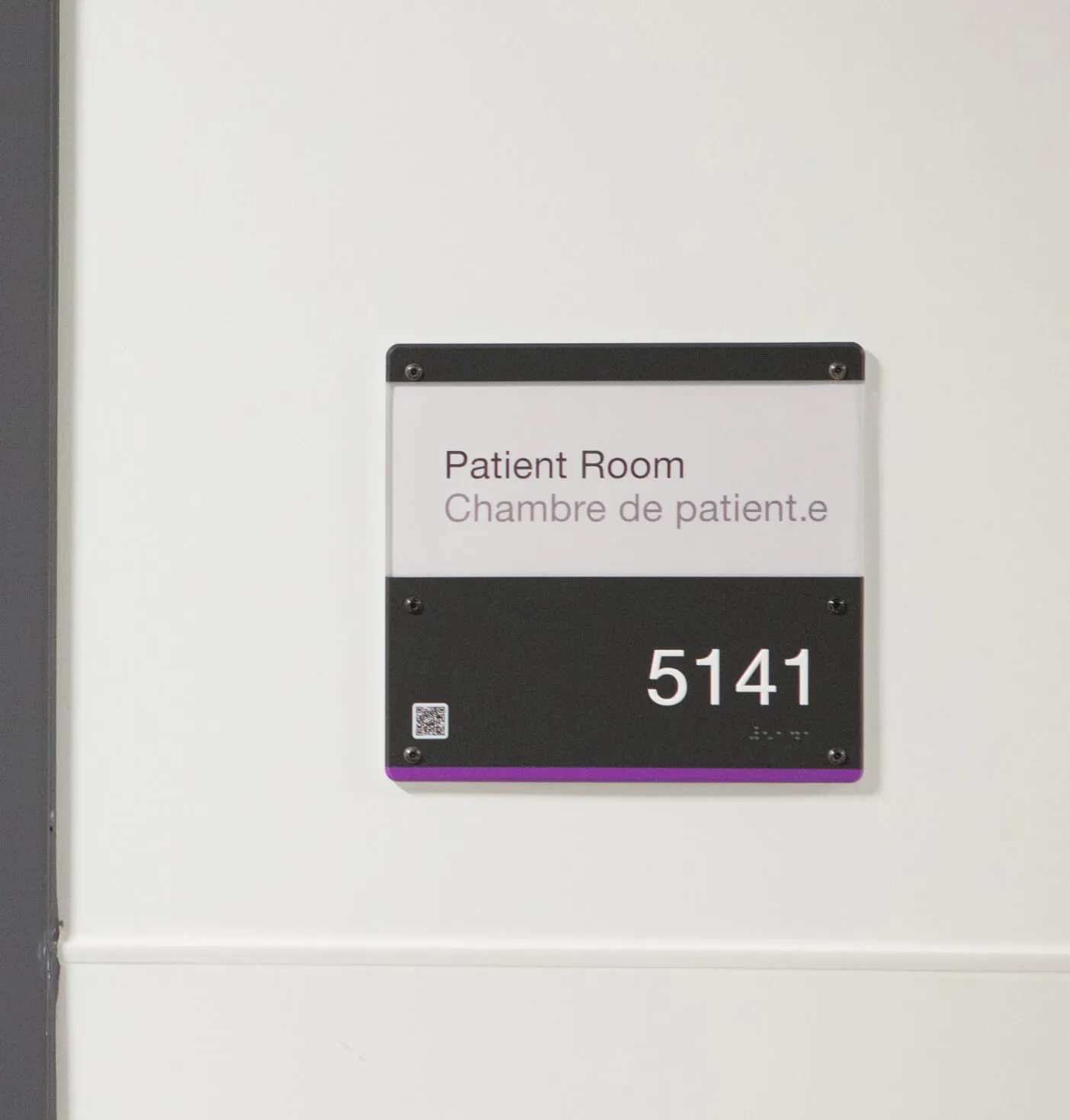
Patient room sign with number 5141 and QR code.
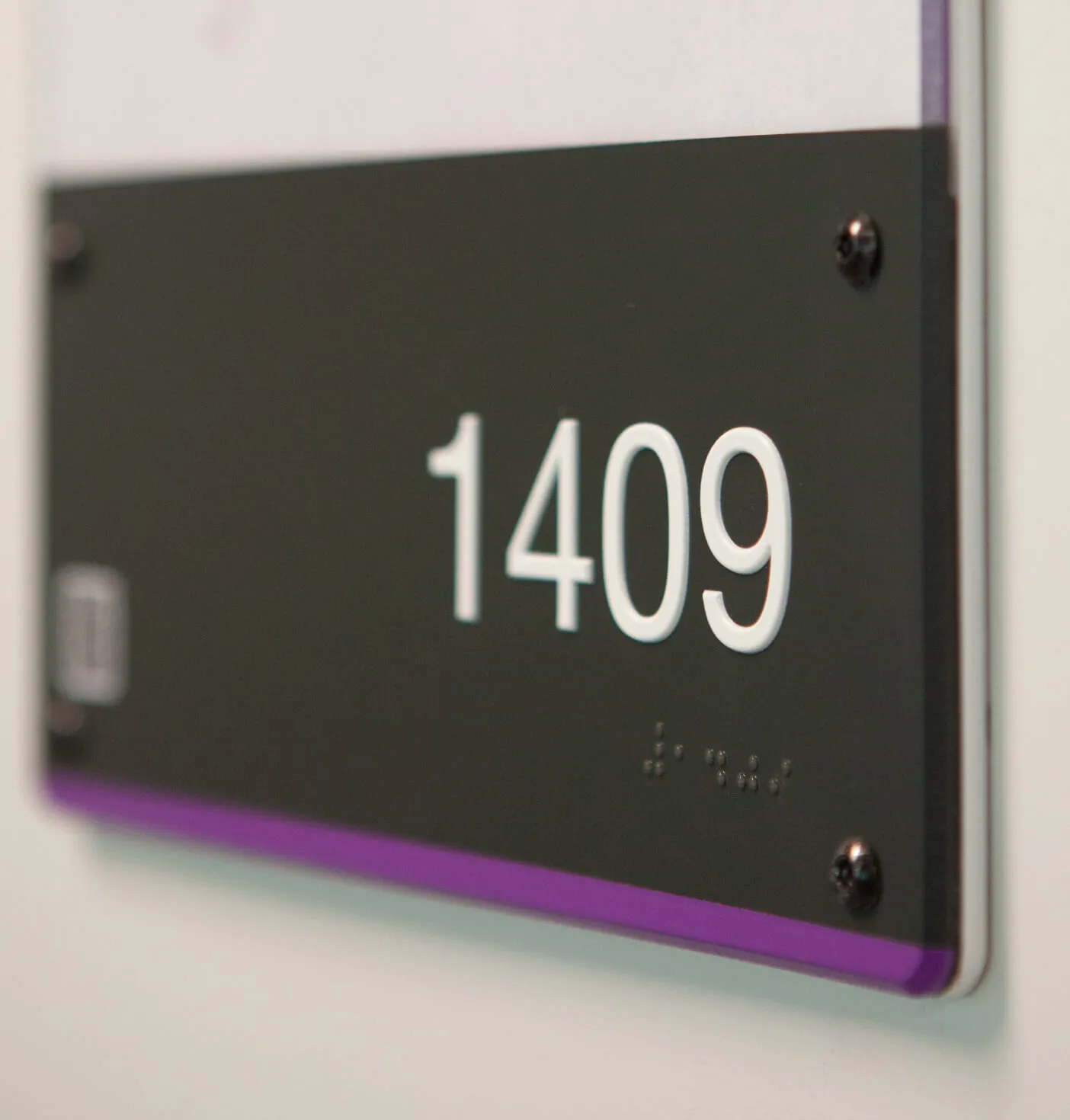
Room number 1409 sign with braille.
Gender inclusivity and secure mounting are key features
Interior view of the Gerald Sheff & Shanitha Kachan Emergency Department with signage and doors.
Creating calm with hierarchy of information

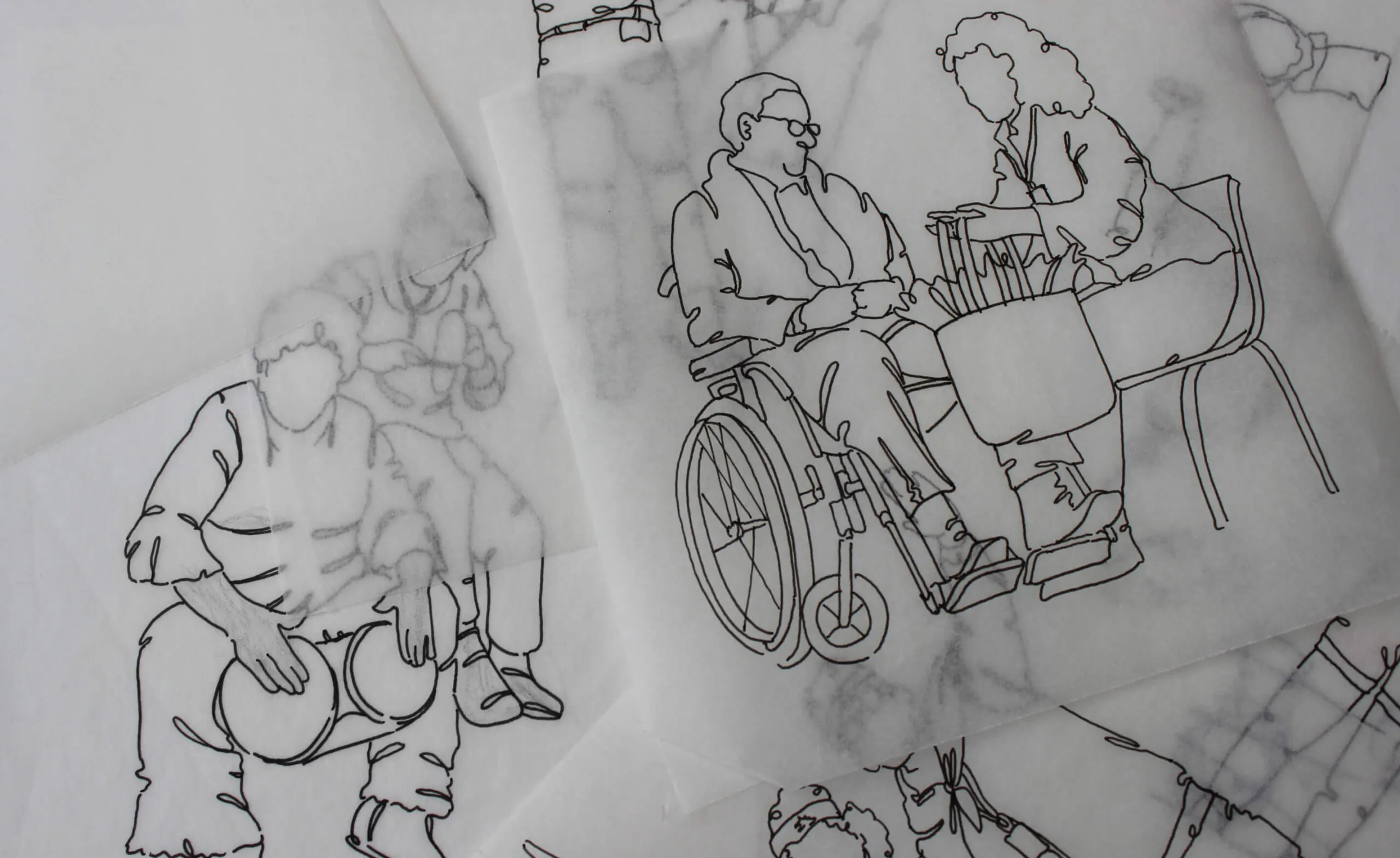
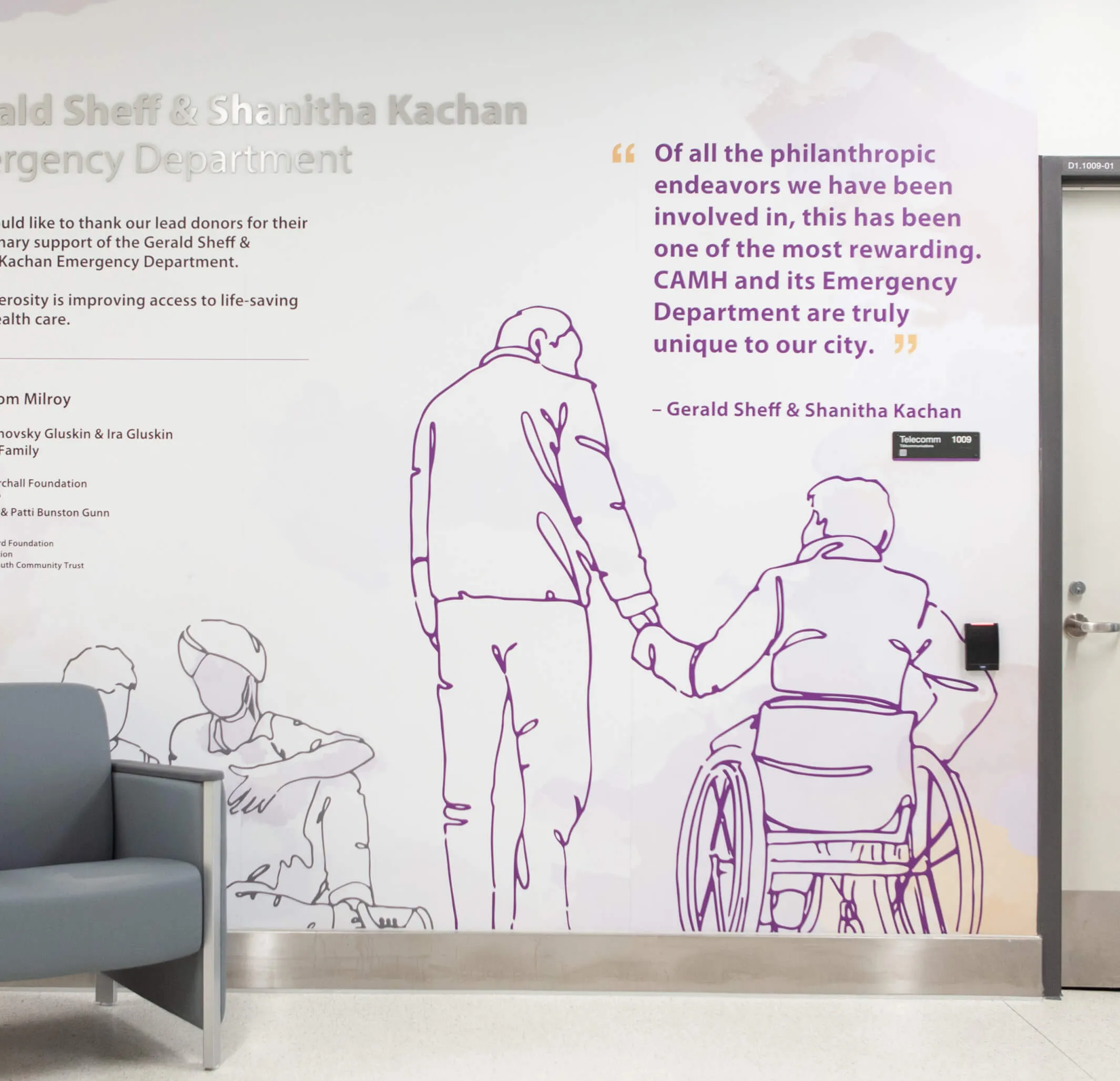
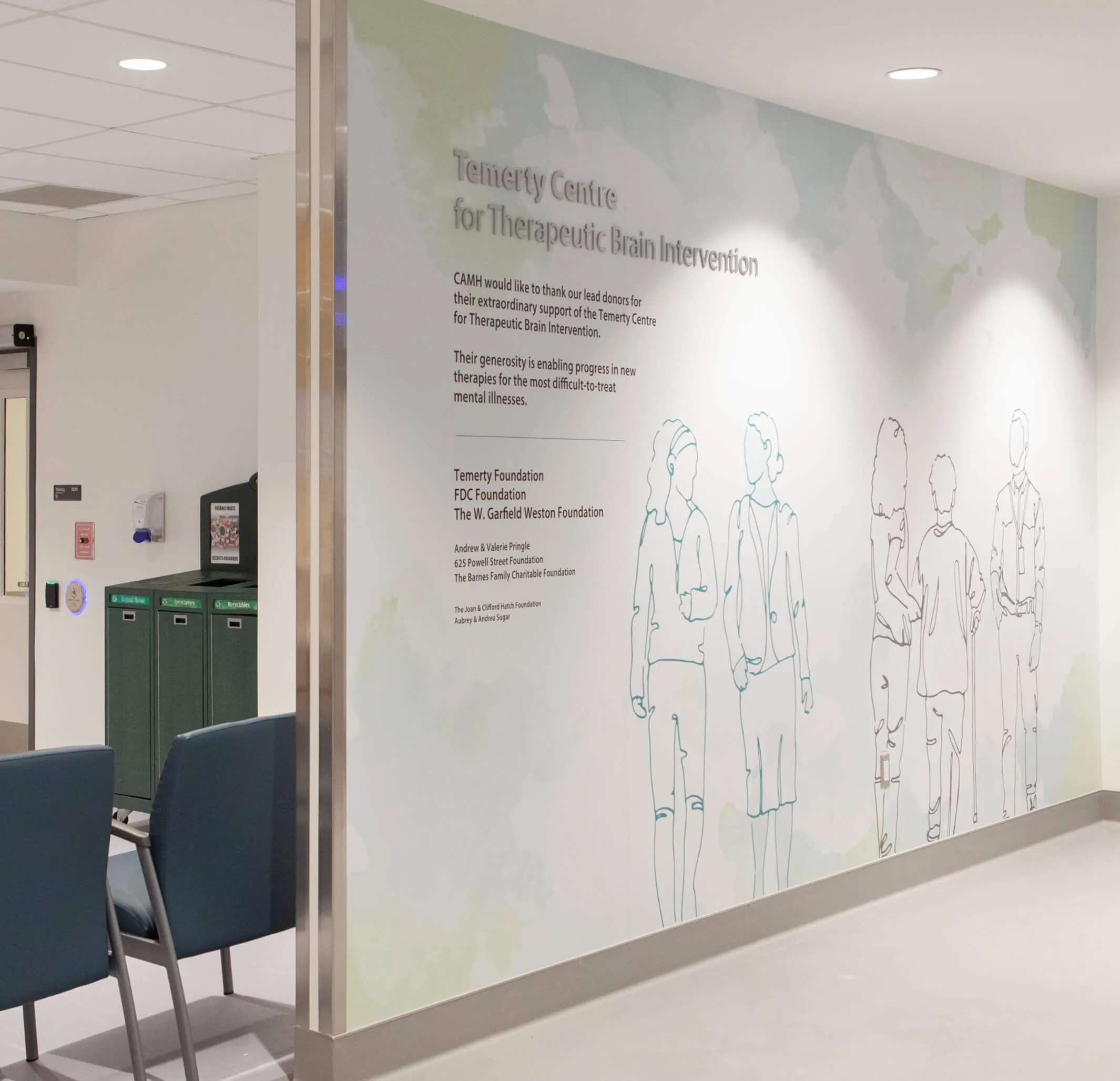
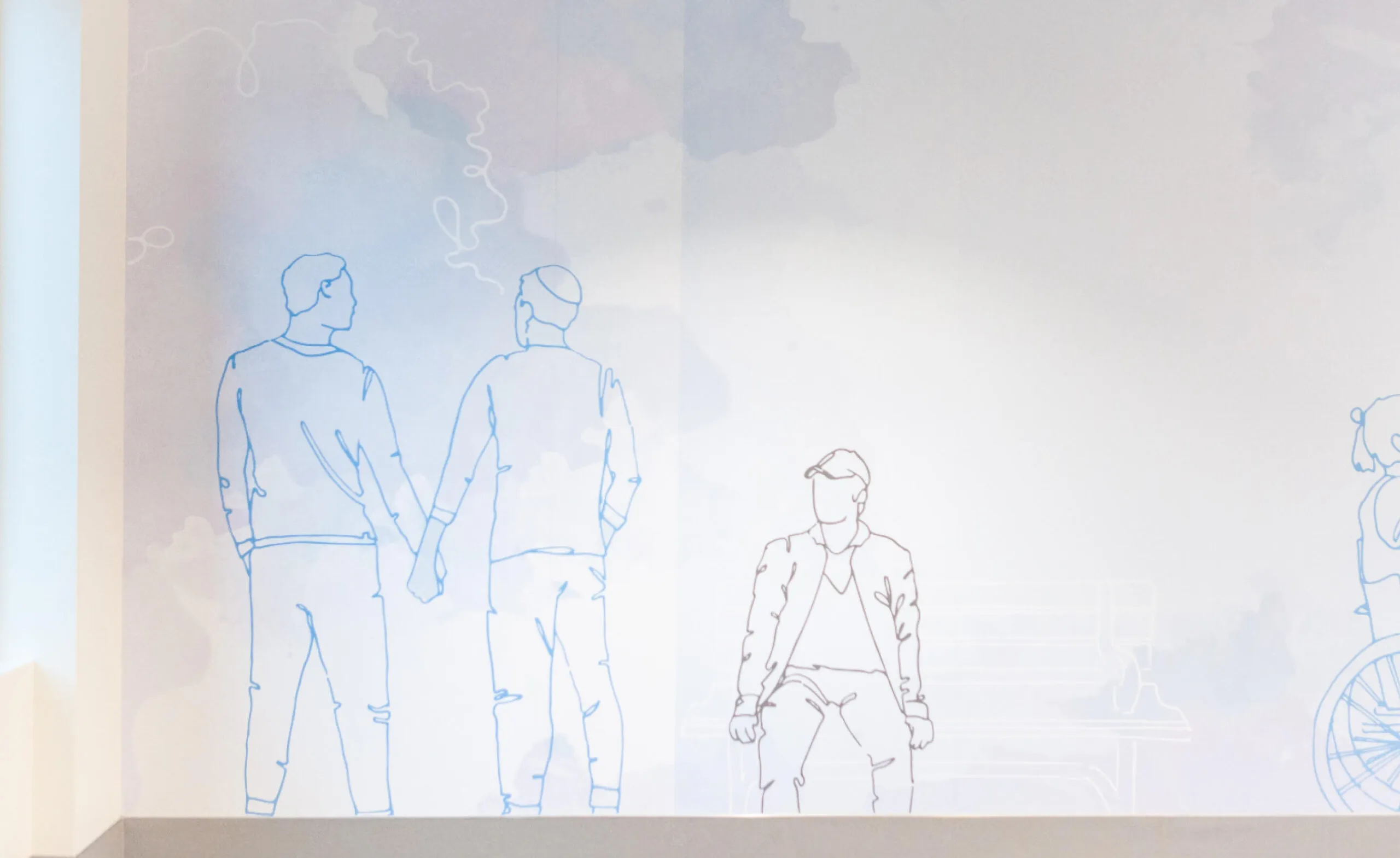
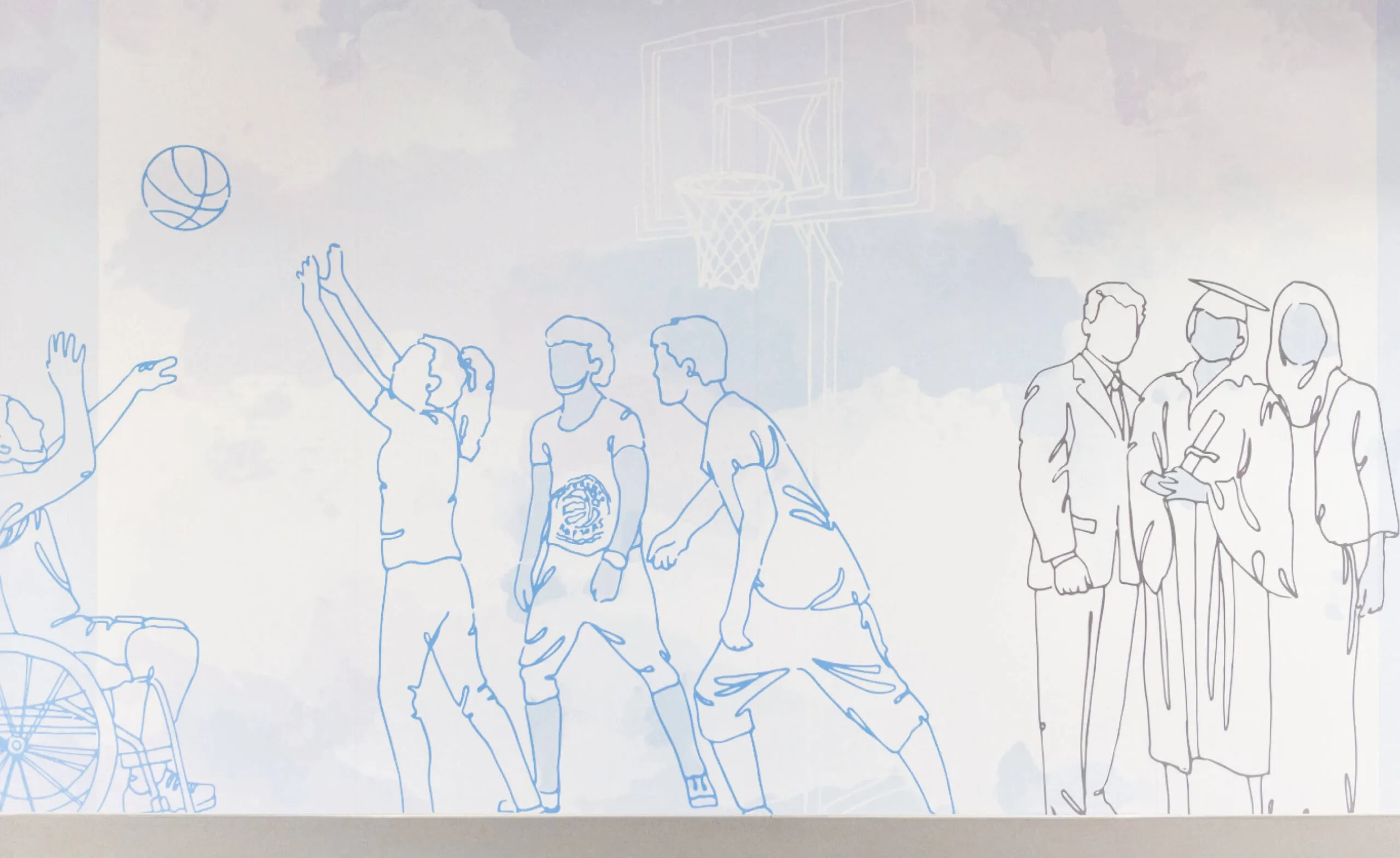
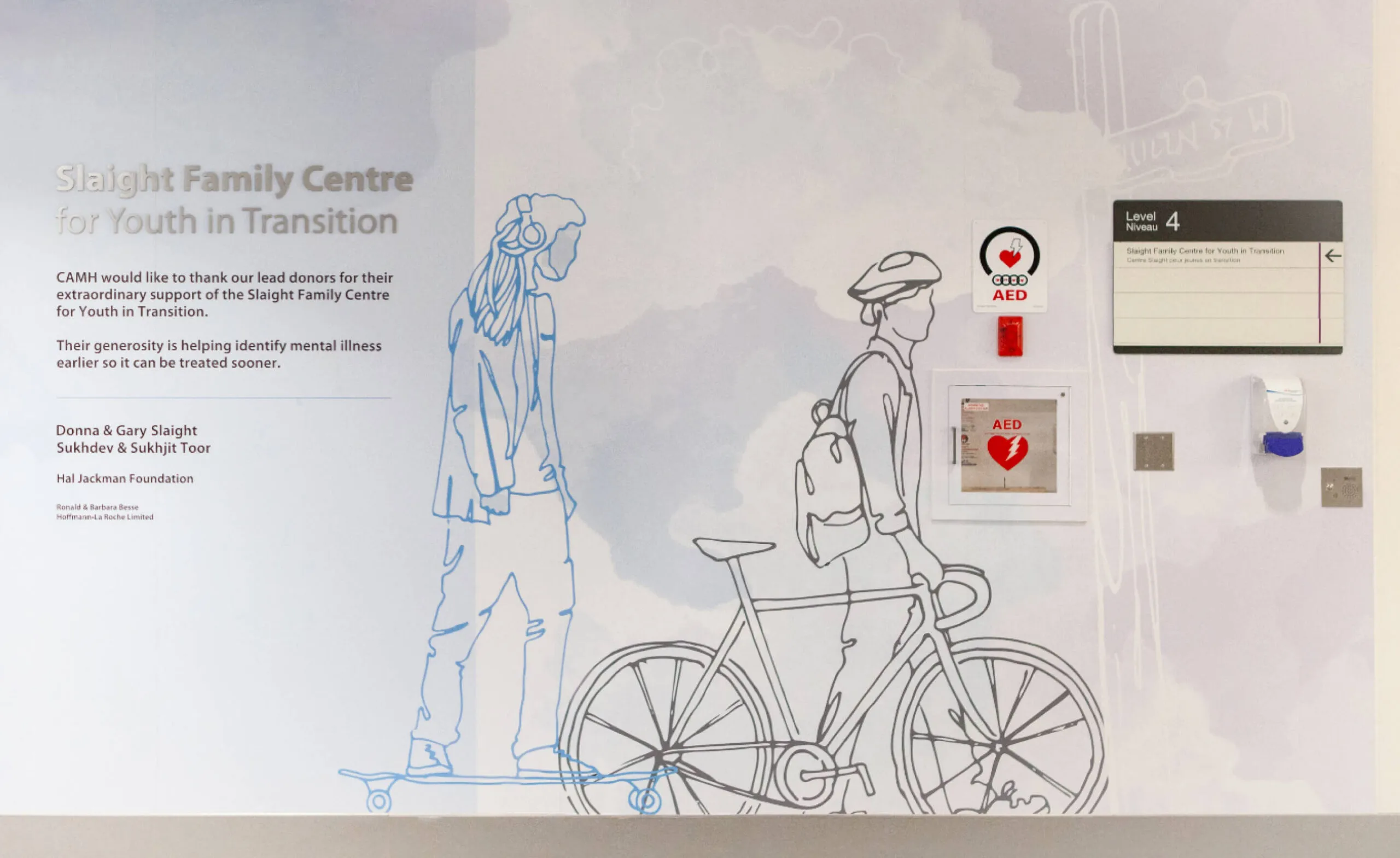
Hand-drawn expressions depicting the people of CAMH

Vibrant murals featuring hand-drawn characters accompanied the written words of donors at the Ossington and Queen Street Campus.⁠⁠ A wall for each department – representing the patients, the caregivers and the staff at CAMH – was thoughtfully designed and placed the patient’s unique journey at the forefront of one’s experience.

Line drawing of a person playing drums and another person in a wheelchair with a companion.
Concept sketches
Wall mural thanking donors to the Gerald Sheff & Shanitha Kachan Emergency Department at CAMH.
Wall mural at Temerty Centre for Therapeutic Brain Intervention thanking donors.
A moment of pause and recognition
  • $685M project value
  • 600K sq. ft. campus
  • 235 beds
Featured